Feeds:
Posts
Comments

Archive for the ‘Praise’ Category

In April of this year I shared an idea borrowed from blogger Michele Morin, about journaling through hymns and praise songs. Such an exercise allows us to meditate on the lyrics, discovering more meaning than when we quickly sing through the words.

In that post I shared from my thoughts on “Come, Thou Fount of Every Blessing.” (Here’s a link to that post, Opening Up New Spaces.)

Today, let’s look more closely at another hymn rich with implications, “Immortal, Invisible, God Only Wise.”

If you don’t know this hymn, you can listen to a contemporary version here,  https://www.youtube.com/watch?v=6S97XYCkJhY, then soak with me in the first verse:

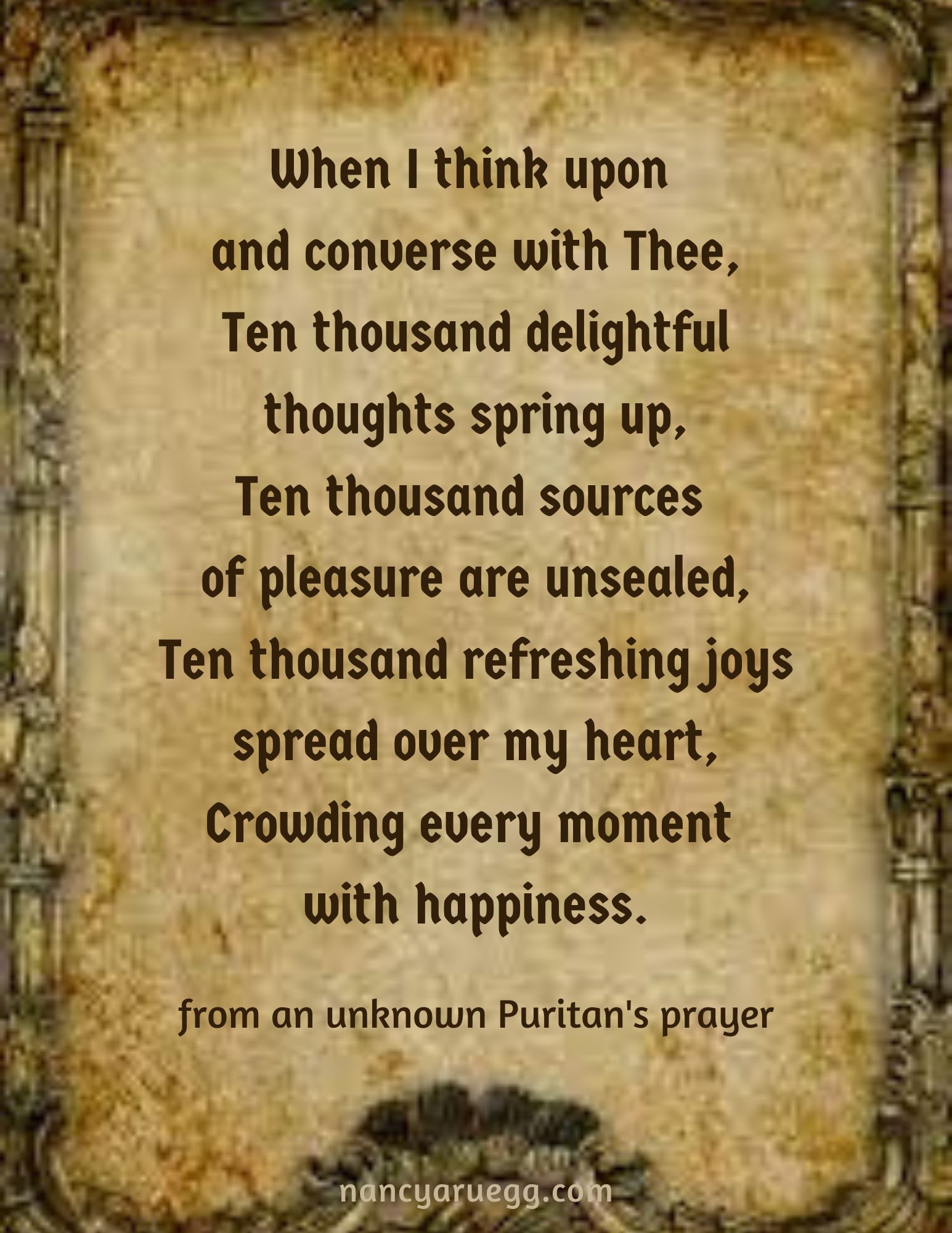
“Immortal, invisible, God only wise”

I praise You, O God, for your immortality. There is much comfort in the fact that you–in all your sovereignty, power, and wisdom–have always existed and always will.

I praise You for your invisibility, which allows you to reside within the spirits of all your children. We marvel at the wonder of such a phenomenon–such a privilege–to enjoy intimacy with you, the King of the universe!

I praise you for your incomparable wisdom. Nothing is ever a mystery to you. You’re never puzzled, confused, or uncertain.[1] You always know the best course of action that will best serve everyone involved—even those who are part of the ripple effect, perhaps years later.

How amazing that you make your wisdom available to us–including an ordinary person like me.[2]

“In light inaccessible hid from our eyes”

You are light.  Your radiance is like sunlight, and rays flash from your hands! No one can physically look upon such brilliance.

But your light also symbolizes the purity of your character. Just as sunlight brightens our world, your multi-beamed goodness brightens my soul with grace, strength, blessings, and more.

You also illuminate truth in my life, through the light of your Word. And by the power of your Spirit I can walk daily in the guiding, cheering light of your presence.[3] 

“Most blessed, most glorious, the Ancient of Days”

I praise You that you are most blessed. That is, you are fully satisfied within yourself. (Of course this is true–you’re perfect!)

You’re also most blessed because of your holiness–transcendent and “totally other” from anything else in the universe.

In addition, you’re “most glorious.” Your breath-taking attributes astound us, including your:

  • omnipotence, omniscience, and omnipresence
  • infinity, changelessness, and self-sufficiency
  • faithfulness, goodness, and justice
  • mercy, grace, and love
  • holiness, righteousness, and immanence

I praise you for demonstrating all these traits with acts of power. You perform wonders that cannot be fathomed, and miracles that cannot be counted![4]

Our family has witnessed numerous wonders and miracles. “We are filled with the good things of your house” (Psalm 65:46), many of which are recorded in my God -Is-Faithful journal.

I also praise you for being our Ancient of Days—a name that speaks of your regality, endurance, and sound judgment.  You have reigned in supremacy through eons past and will continue to reign into eternity yet to come.

Again, what sweet comfort and joyful wonder to contemplate that you, such an incredible God, are with me and within me, wielding your attributes for my benefit.

“Almighty, victorious—Thy great name we praise.”

King David wrote, “How majestic is your name in all the earth” (Psalm 8:1)! Perhaps he had in mind the multiplicity of your names, each one highlighting different facets of your character. You are:

  • Elohim, God of supreme power and might
  • El Roi, the God Who Sees, who watches over all
  • Jehovah Jireh, our God who provides
  • Jehovah Rapha, our God who heals
  • Yaweh Shalom, our God of peace

And that’s just a few out of many. I thank you that as each one reveals more truth about you, we grow to know you better. I also praise you for the hope and encouragement we find in your glorious names.

You, O God, are most worthy of praise because of your infinite excellencies. I praise you for your greatness–beyond human comprehension!


[1] Lloyd Stilley, https://www.lifeway.com/en/articles/sermon-wisdom-god-romans-16-1-corinthians-1

[2] James 1:5; Psalm 19:7 CEV

[3] 1 John 1:5; Habakkuk 3:4; 1 John 3:3; Psalm 12:6; 119:105; Psalm 89:15; John 8:12

[4] Psalm 150:2; Job 5:9

Photo credits: Nancy Ruegg; http://www.flickr.com; http://www.wikimedia.org; http://www.dailyverses.net; http://www.canva.com; http://www.pixnio.com; http://www.heartlight.org.

Read Full Post »

Approximately 250 times in scripture we’re told to praise the Lord[ 1].

Some would see all these calls to praise as the directives of an ego-maniacal god, but that’s hardly the case. Upon further investigation of scripture we find that praise of God is actually good for us.

Isn’t that just like our Heavenly Father? We seek to bless him by offering our praises, and he turns right around and blesses us when we do.

What are those blessings of praise? I’m so glad you asked. Here are just seven as a starter-list.  You may find a surprise or two.

Praising God alleviates anxieties.  

As we remind ourselves Who’s in charge and how he provides for those in his care, fears are calmed.  (Psalm 146 offers an example).

Praising God enhances prayer.

Instead of focusing on the problem which presses us downward, praise turns our attention to what God can do and lifts our spirit upward. (See Psalm 103.)

Praising God kicks Satan to the curb.

James 4:7 reminds us, “Resist the devil, and he will flee from you.” What better way to resist him than to focus on God’s power, promises, and past provisions?

Praise brings the consciousness of the presence of God,

and the liars from the pit cannot effectively market their wares

in the atmosphere of praise.

—Jack Taylor[2]

Praising God magnifies blessings.

When we look through a magnifying glass at an object, we often experience greater appreciation of that object. Hold a magnifying glass of praise to God for the day’s blessings and experience greater appreciation of Him and his benefits (Psalm 77:11-14).

Praising God offers comfort.

Are you disappointed? Praise God that he brings good out of every situation (Romans 8:28). Are you hurting? Celebrate God’s abundant goodness in spite of circumstances (Psalm 145:7). Are you fearful? Rejoice in God, a strong refuge in times of trouble; he is ready and willing to help (Psalm 46:1).

Praising God provides pleasure.

“Praise the Lord, for the Lord is good” encouraged one of the psalmists. “Sing praise to his name, for that is pleasant” (Psalm 135:3). Numerous times in scripture we’re urged to sing and shout for joy because of who God is and what he does. Why?

Praising God replenishes faith.

Meditate on Psalm 145 and note all the attributes of God highlighted, including: his greatness, (v. 3), the mighty acts he performs (v. 4), the splendor of his majesty (v. 5), his goodness and righteousness (v. 7).   

The more you praise God, the more you become God-conscious

and absorbed in His greatness, wisdom, faithfulness, and love.

Praise reminds you of all that God is able to do

and of great things He has already done.

Wesley L. Duewel

Add these to the list:

  • Praising God in the company of others encourages them (Colossians 3:16).
  • Praising God fine-tunes our perspective as our focus shifts from self to him (Psalm 121).
  • Praising God grows our hope, humbles our spirits, and ushers in peace (Psalm 33:18-22, Psalm 8, Psalm 62:1-2).

Surely there are still more blessings of praise to be discovered. No wonder G. K. Chesterton wrote:

  • * * * * * * * * * *

Thank you, Father, for these many blessings you lavishly supply as we learn to enjoy you through praise. May we grow each day in our capacity to celebrate you at every turn.

Did any of these blessings of praise surprise you? Tell us about it in the comment section below!


Notes:

[1] https://faithalone.org/grace-in-focus-articles/praise-the-lord/

[2] quoted in Satisfy the Thirsty Soul by Linda Dillow, 191.

Photo credits: http://www.heartlight.org; http://www.flickr.com; http://www.pxhere.com;www.maxpixel.net; http://www.flickr.com.

Read Full Post »

“The Lord is my Shepherd; I shall not want” (Psalm 23:1 KJV).

Many of us memorized those words as children. And some of us may have thought, “Wow! That means God will give me whatever I want!”

So we prayed for new bicycles, the latest gadgets, and swimming pools in our backyards—absolutely certain that if God gave us these hearts’ desires, we’d be truly satisfied.

Some of our prayers were answered affirmatively. A new bicycle with sparkling spokes actually materialized by the Christmas tree. Or Aunt Kate heard the pleas for Mattell’s Magical Music Thing, and sent it as a birthday gift.

But as the years went by, the wise and introspective among us realized:

1. When one desire is fulfilled, another quickly takes its place.

Years ago I heard that a famous actress had accumulated seven houses, each one a different style from the others. Why? Because moving from one to another eased her boredom. (I wonder how long it took to become discontented with House #4, or #5, or #6, before she hired an architect to start the next?)

2. God isn’t in the business of making wishes come true.

Psalm 23:1 doesn’t mean: “I’m one of God’s flock! I’m gonna live on Easy Street!”

If he did grant every whim, we’d soon become self-centered and spoiled.

Perhaps a clarifying interpretation of the opening scripture would be: “God is my loving Care-Giver. All that I enjoy in my relationship with him far outweighs anything this world has to offer. I really don’t need another single thing.”

Ah, to be as soul-satisfied as King David, the author of this psalm!  How can we become that contented?

One place to begin is with gratitude and praise.

Think of all we enjoy as a result of our relationship with God.  Peace, joy, and provision quickly come to mind.

Here are a few more:

  • Companionship with a perfect Friend—every moment of every day–into eternity.  He is always listening, always watchful, always diligent.
  • Hope. No situation is beyond the control of our Almighty God.
  • Settledness, because he is in control, and “makes good things even out of hard times” (Erica Hale).
  • Truth. We don’t have to muddle through life like a do-it-yourselfer with no instruction manual. “The unfolding of [God’s] words gives light; it gives understanding to the simple” (Psalm 119:130).

The bottom-line is this: No possession or position, no place or person on earth can fill our hearts with contentment.

3. True satisfaction flourishes when we affirm that in God we have all we need.

Remember Jesus’ invitation in Matthew 11:28?

Are you weary of the dissatisfaction that results from striving for the next desire?  Are you burdened by unfulfilled wishes and dreams?

Come to Jesus.  Count the scores of blessings he’s already provided in the past, is currently providing this very moment, and has already prepared in the glory of heaven yet to come.

Cultivate true satisfaction in your heart with gratitude and praise!

*     *     *     *     *     *     *     *     *     *

What helps you cultivate true satisfaction?  Please share in the Comments section below!

Art & photo credits: http://www.canva.com; http://www.flickr.com; http://www.rawpixel.com; http://www.wikimedia.org.

(Revised and reblogged from 7-10-14 while we enjoy house guests.)

Read Full Post »

Some time ago, wise-and-insightful blogger Michele Morin (at Living Our Days) shared that she was journaling through some of the old hymns. I imagined her digging into the meaning of some of the rich language and theology, personalizing the truths, and/or using them as the basis for prayer.

Putting pen or pencil to paper in such a way slows down our thinking, allowing wonderful blessings to emerge:

  • Increased knowledge of God and his Word
  • Clarity of understanding
  • A record of discoveries
  • A record of faith deposits for later encouragement
  • Renewal of the mind
  • Augmented intimacy with God

If writing a meditation sounds intimidating, adopt the attitude of Isaac Asimov:

“Writing to me is simply thinking through my fingers.”

Isaac Asimov

For Christian journalers, writing can be worshiping through our fingers.

But how do we even begin such a process? Try Anne Sexton’s approach:

When we invite Jesus into our lives, the Spirit of God takes up residence within our spirits (1). We can put our ears down close to our souls and listen hard for him to guide our thoughts and lead us to the insights he would have us discover.

And then, we fill our pages with the breathings of our hearts (2).

The following is an example of a journal entry, based on the first verse of the hymn, “Come, Thou Fount of Every Blessing”(3). The next four images contain the lyrics.
You, oh God, are the Source of every blessing—every provision, every answered prayer, every wise decision, every creative idea, every moment of joy. All good and perfect gifts come from you (4).

Out of your lavish generosity, blessings flow continually from your hand. May I be quick to praise you for each one as they demonstrate your lovingkindness.

This fount of blessing includes your mercy also. I praise you for your forgiveness, undeserving as I am. Thank you for looking upon me with compassion and tenderness in spite of my weaknesses, failures, and sins.

And I praise you that your mercy never ends! You are faithful to forgive me every time I come to you in repentance. Such grace is beyond comprehension. Yes, I want to sing songs of loudest praise, to honor you rightly for all you’ve done for me and continue to do.

Perhaps if I had the voice of an angel and knew the songs of heaven I could sing the full praise you deserve!

Nevertheless, I celebrate your name(s)—Shepherd, Lord of Peace, God of Grace, Father of Compassion and more. I glory in all the attributes indicated by each one. And I remember: the one trait that is part of them all: your unfailing love.

Thank you for loving me, in spite of my shortcomings; thank you for redeeming me from the consequences of my sins so I might enjoy you forever!

Should you decide to journal through a hymn or praise song, remember: perfection is not the goal, getting to know God better and worship him more passionately are the aims.

An added benefit? Our meditations will positively impact our words and actions (5).

Notes:

  1. 1 Corinthians 3:16
  2. based on a quote from William Wordsworth
  3. by Robert Robinson, text adapted by Margaret Clarkson
  4. James 1:17
  5. Joshua 1:8

Photo credits: http://www.pxfuel.com; http://www.canva.com; http://www.pxhere.com; http://www.canva.com (2); http://www.flicker.com; http://www.freebibleimages.org.

Read Full Post »

One of the psalmists proclaimed, “I will go to the altar of God, to God, my joy and my delight” (Psalm 43:4). The statement raises the question, How do you delight in someone who can’t be seen or touched?

Perhaps we can discover the answer by considering how we delight in the people around us. My father offers a perfect example.

First let me tell you: Dad worked miracles with his numerous tools.  He could fix or build practically anything, as well as paint and wallpaper like a pro.

We were probably among the first to have a built-in sound system.  Dad wired and hooked up a speaker in every room (each with its own on-and-off switch), so anything on the radio or hi-fi could be heard anywhere in the house. 

Dad also built custom-sized furniture:  in the living room–a bookcase (with open shelves above and enclosed shelves below) along with Mom’s music cabinet; in the kitchen—new cupboards and a storage cabinet; in Mom’s and Dad’s bedroom—a large dresser; and for my brother John and me—desks. Each project displayed his careful attention to detail.

But Dad’s admirable qualities weren’t only on display in his home improvement projects.  He demonstrated patience while teaching us how to play Muggins (an old card game), how to use his tools, and how to plant seeds.

He exemplified selflessness by taking us sledding and kite-flying in the park, swimming at the community pool, and biking around town. Dad proved his generosity by volunteering time and effort to help neighbors and fulfill various needs at church.  

When Dad said, “Who wants to pick up some lumber with me?” or “Who wants to go to the hardware store?” John and I were ready to drop whatever we were doing. 

It’s not that these were exciting activities in themselves, it was Dad who made them a special delight–conversing with us as we rode to and from, pointing out items of interest along the way, and holding our small hands in his big ones as we crossed streets.  

Now all this activity and industriousness took place decades ago of course, yet I still take pleasure in remembering his noteworthy undertakings and attributes. In fact, appreciation and admiration for him have only increased over time.  I consider myself privileged to have known Dad and spent time with him.

(Dad and me, mid-1960s)

To know our Heavenly Father we turn to the Bible, of course.  There we learn about his wonderful deeds and miracles. We see God’s glorious character traits on display, including his astounding abilities, his goodness, generosity, and love. We soon find ourselves delighting in all that he is.

We also delight in God as we spend time with him–celebrating what he’s done in our past and praising him for what he’s accomplishing today. We learn important life lessons from him.  And we consider the benefits bestowed by our Heavenly Father, his eternal commitment to us, unfailing love for us, and strength-infusing presence with us.

We find ourselves happily praising God:

This image has an empty alt attribute; its file name is 7335.jpeg

Then we turn all these contemplations into gratitude.

The daily practice of the discipline of gratitude

is the way to daily practice the delight of God.

–Ann Voskamp*

And what will be the result of such a practice?  Pleasurable wonder, resilient faith, and serene contentment—as a start. Doesn’t that sound glorious? Especially during these turbulent times.

In addition, we’ll bring delight to him also (Psalm 147:11). Imagine that!

Perhaps we’d do well to turn Psalm 43:4 into a New Year’s resolution for 2022:

[Daily] I will go to the altar of God,

to God, my joy and my [deep] delight.

____________________

*One Thousand Gifts, 82.

Photo credits: http://www.wikimedia.org (2); http://www.pixnio.com; Henry Mensinger (my grandfather); http://www.heartlight.org (2); http://www.pixabay.com.

Read Full Post »

The first Christmas carol ever composed rarely appears in a collection of Advent songs.  But you will find it in the Bible, Luke chapter one.  It’s Mary’s song, shared with her cousin Elizabeth soon after she arrived at the older woman’s home.

Using much scripture, Mary artfully wove this prayer-song to praise God for his work in her life and in the world-at-large, especially now that the Messiah would soon be born.

Mary’s prayer is often referred to as the Magnificat, because in a number of translations it begins, “My soul magnifies the Lord,” as if Mary is holding up a magnifying glass to God’s attributes while she draws attention to each one.

I too have seen God’s attributes at work, and have experienced countless blessings.  While contemplating Mary’s song recently, I wondered: could I compose a Magnificat? What follows is the result.

My soul proclaims your greatness, O Lord . . . (Luke 1:46 HCSB)

. . . on display in the wonders of creation, events that defy explanation, and in the transformed lives of people—including my own. 

“You are the God who performs miracles; you display your power among the peoples”[1] as needs are met, disasters avoided, and the way forward provided. You alone are omnipotent, with all resources at your disposal.

My spirit rejoices in God my Savior (v. 47 NIV).

I praise you for saving me from the consequences of my sin through the sacrifice of your Son.  Upon my last breath, you will take me to heaven to live with you forever. In that moment I’ll be healed of all ailments and released from all adversity.

Until that day, you gladly save me from worry, fear, discouragement and stress when I trust you and follow your ways. Thank you, dear Father!

You have looked [with loving care] on the humble state of your maidservant (v. 48 AMP).

By the world’s standards I’m a nobody–no wealth, no fame, no power. Little do some know my true status, the daughter of the King of the universe, and the numerous delights I enjoy as a result:

  • glorious moments in your presence
  • generous gifts not even asked for
  • friendships with your other children (augmented by your involvement and influence)
  • your frequent intervention in difficult circumstances, as only a powerful King could arrange

From one generation to another you have demonstrated your mercy (v. 50 GNT).

I think of my grandparents, each of whom you sustained and helped through difficulty.  I think of my parents who also experienced your faithfulness as they were faithful to you.

And now we can testify of your gracious kindness. You have dealt compassionately, especially in times of distress.

Your mighty power has been on display (v. 51 GWT) . . .

 . . . through healings that doctors can’t explain, needs met in miraculous ways, monetary gifts arriving just in time, and moments of desperation turned around in an instant.

“You satisfy the hungry with good things” (v. 53, HCSB). 

The list is lavishly long: your undeserved love, comforting presence, inexplicable peace, fullness of joy, heartening encouragement, fulfilling purpose, undying hope, sure promises, abundant provision, generous blessings, wise counsel, abiding strength—to mention a few! “In your giving we have a sea without a shore.”[2]

My God, the King, I exalt you for your glorious attributes,

and will praise your name forever and ever.

 Your ways are absolutely holy—no one is like you. 

You are the God who performs miracles!

Your power is on display in glorious ways all over the earth,

yet you have chosen to do great things for me and those I love.

My heart is filled with joy!

(Psalm 145:1; 77:13-14; 126:3)


[1] Psalm 77:14

[2] Herbert Lockyer, Seasons of the Lord, 255.

Photo credits: http://www.pixabay.com (twstringer); http://www.pxhere.com (dorothe); http://www.pxhere.com; http://www.pixaby.com (Simon); http://www.wikimedia.com (VinceTraveller); http://www.heartlight.org; http://www.pixabay.com (nastya_gepp); http://www.pix4free.

Read Full Post »

Imagine tagging along with the disciples during Christ’s ministry, listening to his teaching, watching his encounters, witnessing his miracles. 

One day your group encounters two blind men along the roadside in Capernaum.  The sightless men cry out, “Have mercy on us, Son of David!” Jesus touches their eyes, and instantly the two men can see (Matthew 9:27-31). After a collective gasp, everyone bursts into cheers and joyful laughter.

On a second occasion outside the town of Bethsaida, some people bring another sightless man to Jesus.  Perhaps he’s heard what happened to the two blind men of Capernaum, because he too begs Jesus to touch him and heal his blindness.  But that’s not what Jesus does.  Instead, he spits on the man’s eyes and then puts his hands on him. 

Even a second touch is added to restore this man to full sight (Mark 8:22-26). Amidst the celebrating for this miracle you wonder, Why did Jesus spit on this man’s eyes when one touch healed the blind man in Capernaum?

On a third occasion as Jesus and your entourage leave Jericho, you encounter yet another blind man, Bartimaeus.  Will Jesus touch him and/or spit on the man’s eyes to heal him?  Neither. Jesus simply speaks to the beggar and his sight is restored (Mark 10:46-52). Your bewilderment grows deeper still.

And then while in Jerusalem, Jesus heals a fifth blind man.  By now you’ve given up trying to predict what the Master might do.  Even so you blink in surprise as Jesus spits on the ground, makes a bit of mud, spreads it on the blind man’s eyes, and instructs him to go wash in the pool of Siloam (John 9:1-9). You catch yourself before throwing your hands up in disbelief as Jesus demonstrates one more way to heal sightless eyes.

You’ve now witnessed five men healed of blindness by four different methods.  The evidence speaks for itself:   

The Son of God is unpredictable.

The Old Testament provides proof that God the Father also acts in unexpected ways.  You may remember when he:

  • Raised up two humble shepherds to positions of leadership[1]
  • Spoke to one of his prophets through a donkey[2]
  • Made the sun stand still[3]
  • Used a blind slave to kill thousands of Israel’s archenemies[4]
  • Allowed another prophet to be swallowed by a big fish[5]

Numerous other examples from scripture could be cited to prove:

Our God is unconventional.

Even today he proves his penchant for the unexpected.

A few weeks ago our daughter H., a school psychologist, relayed to us a story about a student she worked with last year. We’ll call her Emma.  After frequent interactions, H. and Emma developed an easy rapport, the girl was making good progress, and H. grew to care deeply for her.

This image has an empty alt attribute; its file name is images-2.jpeg

But this fall as school resumed, she learned Emma had moved to Florida.  Not wanting the girl to lose momentum, H. called the new school and asked to speak to the psychologist there.  She hoped to offer some helpful background about Emma and set the tone for continued progress.

Imagine her surprise when the gentleman who answered the phone turned out to be Andrew __________, a colleague who’d been part of the same master’s program as H. at Florida State University.  Out of just twelve students in that program, Andrew just happened to be the one to oversee this little girl who’d won our daughter’s heart.  And Andrew assured H. he’d take good care of Emma.

Time and again our God has proven . . .

. . . He is full of surprises.

I for one take great delight in a Heavenly Father who mystifies me by his unpredictability, wows me with his unconventionality, and takes my breath away with his surprises. 

How about you?

Please share in the comment section below an example from your own experience of “a wonder that cannot be fathomed.” Let’s . . .


[1] Moses, Exodus 3; David, 1 Samuel 16

[2] Balaam, Numbers 22

[3] Joshua 10

[4] Samson, Judges 16

[5] Jonah, Jonah 1

Photo credits: http://www.freebibleimages (3); http://www.pxfuel.com; http://www.canva.com; http://www.pxfuel.com; http://www.uihere.com.

Read Full Post »

You’re going to be so glad you stopped by today.  I’ve prepared a pop quiz for you—a little trivia challenge!  But don’t worry–it’s multiple-choice and short.


How many stars do astronomers estimate occupy the universe?

A. 500 trillion

B. 750 quadrillion

C. 1 septillion

What are the objects in the above photograph?

A. Virus microbes

B. Husks

C. Starfish babies

What is the average weight of a cumulous cloud?

A. Over 10,000 pounds

B. Over 100,000 pounds

C. Over 1,000,000 pounds

Number one is a freebie, because an accurate count is impossible.  But there are those astronomers who would agree with Answer C—1 septillion. That’s a one with 24 zeroes after it![1]

For the second question the answer is B—husks.  In a few select areas of the Western Pacific Ocean, live tiny organisms called Foraminifera.  When they die, the tide carries their husks—millions of them–to beaches on the coasts of Japan and Okinawa.[2]  Visit those places and you can walk on the stars.

Look close! Can you see a few stars that are still intact?

The answer for #3 is C. Holding up even the largest of cumulous clouds is the air beneath them, which weighs even more.[3]

I’m guessing you know a few amazing trivia facts too.  Isn’t it astounding that the body of information about the universe continues to grow, even after centuries of study?

See Endnote #4.

The short sampling of creation’s wonders mentioned above gives us a glimpse of God’s glorious capacities at work:  his inventiveness, engineering skill, power and more.  But we also see evidence of his magnificence in:

  • The Bible.  No other book matches its wisdom.  And when put into practice, it transforms a person’s life.
  • God’s attributes at work in the world—his love, grace, faithfulness, and mercy—to mention a few.
  • Miracles—happening around us every day.  The problem is we’re so used to them we call them ordinary.[5]
  • The gracious actions and glowing faces of his saints–miracles in themselves.

Truly, God reveals his glory TO us every day in countless ways.

But perhaps even more astounding: God—in all his magnificence—chooses to reside IN us when we say yes to his Son, Jesus.

Imagine.  The fullness of God—all his glorious attributes—within us.  And over time, as his Spirit instructs and trains us, we become more and more like Christ—more joyful, hopeful, and contented; less self-centered, dissatisfied, and distressed.  Such a glorious reality![6]

“God is mercifully shaping our lives

into what is useful and beautiful.”

–Eugene Peterson[7]

And then God chooses to make us channels of his glory, working THROUGH us to impact others.

How?

Every time we choose to be generous instead of selfish, patient instead of peevish, mindful instead of thoughtless, or merciful instead of intolerant, we’re demonstrating the attributes of God to others.

And as we make ourselves available for him to work through us, we may very well become the answer to someone else’s prayer.

“To become the answer to someone else’s prayer

is to live a life of rich purpose.”

–Maggie Wallem Rowe[8]

*      *       *      *      *      *

O God, thank you for revealing yourself TO us in numerous ways, producing joy in our spirits as we earnestly seek you.  I praise you for dwelling IN us, providing all we need (and then some!) for the abundant life Jesus promised.  And I thank you for working THROUGH us to positively impact others and give us satisfying  purpose.  There is no one like you!


[1] https://www.space.com/26078-how-many-stars-are-there.html

[2] https://commons.wikimedia.org/wiki/File:2085f_Japon_Hatoma.jpg  

[3]https://www.usgs.gov/special-topic/water-science-school/science/how-much-does-a-cloud-weigh?qt-science_center_objects=0#qt-science_center_objects

[4] The heavens don’t only include the stars, other planets, and moons.  Our planet occupies a tiny corner of the universe, and everything in it also tells of the wonders of God.

[5] Hans Christian Anderson

[6] Ephesians 3:21; 2 Corinthians 3:18

[7] Run with the Horses, 79.

[8] This Life We Share, 242.

Photo credits: http://www.wikimedia.org (2); http://www.pixabay.com; http://www.wikimedia.org; http://www.canva.com; http://www.pxhere.com; http://www.pixnio.com; http://www.piqsels.com; http://www.canva.com.

Read Full Post »

This quote became the basis for a post in September 2017 titled Expect Great Things.  At the time Murray’s words were speaking new encouragement into my prayer life.  I copied the quote on a 3 x 5 and have kept it in my prayer box ever since.

Now four years later, I must confess my worship of God in his glory has become a bit stale.  I find myself using the same words to repeat such attributes as:  his wisdom to solve problems, his goodness to provide blessing, and his power to generate miracles. My loving Father deserves so much more than rote repetition.

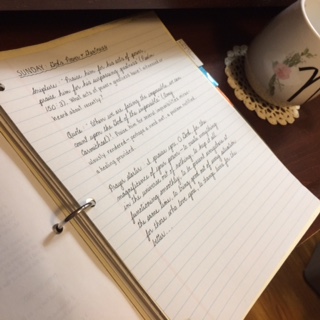
Then a new idea occurred to me, likely inspired by the Spirit himself.  What if I devoted each day of the week to a different aspect of God’s glory?  And what if I prepared a separate page in my quiet time notebook for each attribute and began collecting appropriate scriptures, quotes, personal thoughts—different praise-starters for each day so my worship might remain fresh?

To that end, I chose the following attributes to focus on first:

  • Sunday—God’s power and greatness
  • Monday—God’s splendorous names
  • Tuesday—God’s wisdom and counsel
  • Wednesday—God’s love
  • Thursday—God’s faithfulness
  • Friday—God’s goodness
  • Saturday—God’s grace and compassion

To keep this post of reasonable length, I’ll just include what I’ve collected so far for Sunday, Monday, and Tuesday.

Sunday—God’s power and greatness

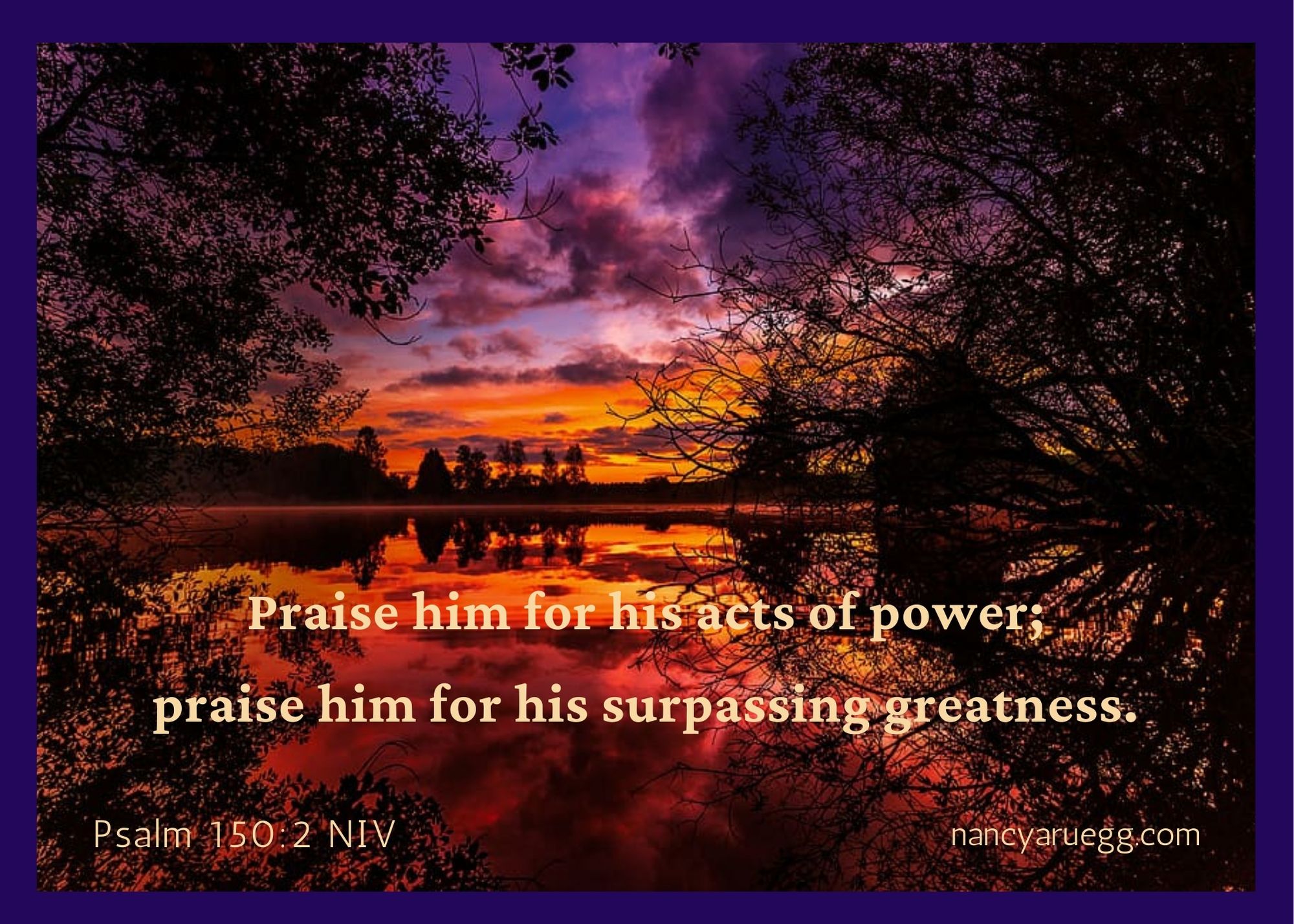
  • Scripture:  “Praise him for his acts of power; praise him for his surpassing greatness (Psalm 150:2).  What acts of God’s power and greatness have I witnessed or heard about recently?
  • Quote:  “When we are facing the impossible, we can count upon the God of the impossible” (Amy Carmichael).  Praise him for several impossibilities miraculously rendered—perhaps a need met, a problem rectified, a healing provided.  
  • Prayer starter: I praise you, O God, for the magnificence of your power—to create everything in the universe out of nothing, to keep it all functioning smoothly, to be present everywhere at the same time, to bring good out of every situation for those who love you, to change lives for the better, . . .  

Monday—God’s splendorous names and titles

Scripture: “Let the name of the Lord be praised, both now and forevermore” (Psalm 113:2).  Choose one or two to focus on each Monday.

  • Prayer starter for one name:  I praise you Jehovah-Nissi, The Lord My Banner. You are my focal point of hope and encouragement for every situation. How comforting to know that all of your attributes are always at work on behalf of your people.  I praise you for your marvelous promises of strength, provision, wisdom, and peace. . .

Tuesday—God’s wisdom and counsel

  • Scripture: “I will bless the Lord who has counseled me” (Psalm 16:7a NIV).  How has he counseled me recently as well as others?
  • Quote:  Praise God that his “infinite wisdom directs every event, brings order out of confusion, and light out of darkness, and, to those who love God, causes all things, whatever be their present aspect and apparent tendency, to work together for good”—J. L. Dagg.  Such glorious truths to hold close at heart! What else might I add?
  • Prayer Starter:  I also praise you, O God, for the gift of scripture to guide us through life with your truth and wisdom.  I praise you for your Holy Spirit who increases our understanding and enlightens our souls.  You never turn away anyone who seeks your wisdom! . . .

And what will be the result of such worship that enthusiastically affirms God’s transcendence?  Transformation—transformation of our prayers, transformation of our lives.

.

Nothing we do is more powerful

or more life-changing than praising God.

— Stormie Omartian

*from The Power of God’s Names

Image credits: http://www.canva.com; Nancy Ruegg; http://www.pxfuel.com; http://www.flickr.com; http://www.heartlight.org; http://www.pxfuel.com.

Read Full Post »


O God, numerous concerns vie for my attention: the state of our country, family needs, friends going through difficult circumstances, my own personal struggles.

Redirect my focus, Father, from what I’m yearning for to what you’ve already given, including:

  • your Spirit of wisdom and revelation
  • your enlightenment to experience hope
  • the riches of your glorious inheritance
  • your incomparably great power*

Each of these gifts is a priceless treasure and more than worthy of meditation and praise.  And so . . .


. . . I praise you for your spirit of wisdom to guide my thoughts, to equip me for perceiving reality accurately and applying truth correctly.

Help me to trust your all-wise ways and not play the fool, ignoring the treasure of your wisdom that’s always just a prayer away.


I praise you that year by year, you reveal more and more of yourself to me so our relationship can become increasingly intimate. Never will I tire of learning about you and experiencing you more fully.


I praise you for your gift of enlightenment to experience hope—complete and calm assurance that you will be victorious in the end, and we’ll live with you forever in the paradise of heaven.

That enlightenment also includes perspective for today. As I focus my thoughts on all you’ve done in the past, my confidence and expectation is affirmed for what you will do in the future.


I praise you for the riches of your glorious inheritance that we enjoy as your children: your mercy and grace, love and goodness, power and strength–all these and more provided to those who choose to do life with you.

And then there’s the staggering truth we are your inheritance. You look upon your children—even me—not as a liability but as part of your glorious wealth.


I praise you, O God, that with your incomparably great power, you can take every negative and turn it into a positive. In addition, your dynamic, eternal energy is within me and always available.

No circumstance intimidates you—not the problems of our country, the needs of our family, the difficulties faced by friends, or my own personal struggles. The tougher my day, the stronger your power will flow through me—as long as I stay close by your side.


I pray for the resolve, holy Father, to avail myself of all this you’ve already given, and may I do so with godly wisdom and constant diligence.

In the name of your Son Jesus who makes such wealth accessible, amen.


*from Ephesians 1:17-19a.


Photo credits:  http://www.piqsels.com (2); http://www.heartlight.org; http://www.piqsels.com; http://www.dailyverses.net; http://www.pixabay.com; http://www.heartlight.org; http://www.piqsels.com.


Read Full Post »

« Newer Posts - Older Posts »

When the House is Quiet

Impressions Becoming Expressions

Mitch Teemley

The Power of Story

Still Traveling

Impressions Becoming Expressions

Living Our Days

Gaining a heart of wisdom

He Said What?!

I'm Patty, and my husband and I are living with our adult son who has autism and epilepsy. I love sharing lessons learned from life around me, especially life with Aaron.

Meditations of my Heart

Impressions Becoming Expressions

Linda Stoll

Impressions Becoming Expressions

Signora Sheila

Where Faith Meets La Dolce Vita

Heidi Viars

Finding the Image of God