Feeds:
Posts
Comments

Archive for the ‘Uncategorized’ Category

kiddopotamus-by-summer-infant-swaddleme-micro-fleece-cc2iv_600


With quick, deft movements our daughter, Heather, enveloped her baby girl in a swaddling wrap.   It was bedtime, their first night of a week-long visit from Washington State to our home in Florida. Our younger son watched the swaddling process, fascinated by the flannel and Velcro contraption.

“Now what do you do?” he asked his sister. “Hang her upside down?”

Sophie did resemble a bat, all folded up into a neat little package. You would have thought she’d be squirming in discomfort, but her sleepy, contented expression said otherwise. Infants love the cozy, confined sensation that simulates the womb.

 

crying-boy


But within months even the openness of a childproof play space isn’t liberating enough for many toddlers. Given their way, the little tykes would wobble off down the street—make that the middle of the street–confident in their abilities to handle life. Efforts to hem them in are met with raucous dissent.

Even as adults, when circumstances hem us in, we balk at the confinement, which negatively impacts our time, energy, and choices.

So when we read, “You [God] hem me in—behind and before; you have laid your hand upon me” (Psalm 139:5 NIV), a person’s reaction might easily be: “I’ve got enough stuff in my life hemming me in—family responsibilities, long hours at work, financial obligations—you name it. I need God to free me up, not hem me in any further!”

 

frustrated_man_at_a_desk_cropped


But hemmed in by God IS freed up. According to Bible scholar, Warren Wiersbe, those italicized words in the ancient Hebrew of Old Testament times included the meaning, “to guard a valuable object.” ‘Brings to mind God’s protection, doesn’t it—being held in his strong, reliable hands. *

And don’t miss that adjective, valuable. God sees each one of us as precious. Otherwise, he would not have sent his Son to die in our place.

“Hemmed in” also provides imagery of loving affection. When Sophie was tucked snugly into her swaddling wrap, Heather or Tim would encircle her in their arms and hold her close until she fell asleep. Surely those moments of cozy contentedness were among the first when she realized Mommy and Daddy loved her very much.

Similarly, “The Lord’s unfailing love surrounds the one who trusts in him” (Psalm 32:10b).


64326ce85cdcb15cdec4db0058253821


“Hemmed in” brings to mind peace as well, because the all-powerful God of the universe is active in our lives. Psalm writer, King David, says we’re enclosed “behind” (in the past) and “before” (in the future). As for the present, God has laid his hand upon us (139:5).

 

ps139-5


That means, behind us there is God, redeeming the hurts, mistakes, and sins of the past. Before us there is God, preparing the way for the future chapters of our lives, chapters he has already written (v. 16). In the present, there is God—attentive to our needs, guiding us through each day, and enabling us to thrive.

We are not hemmed in because God desires to control us in some self-interested power-grab. He is motivated by his gracious, loving kindness to keep us safe and content.

_________________________


Thank you, Father, for hemming me in. What a relief to know that Someone much wiser than I am is in control. How comforting to contemplate your continual, unfailing love. Your hand upon me is not oppressive; it is restorative, as I learn to rest in your peace. You have freed me up to live in the joy of your presence, and I am humbly, overwhelmingly grateful.

(Psalm 73:23-24; 36:5-7; 63:7-8; 16:11)


* (See Isaiah 41:10.) Not that God surrounds us with virtual bubble wrap so problems and pain can’t impact our lives. Rather than insulate us from challenges and hurt, he most often brings us through them—with his strength, wisdom, and peace. He’s saving perfect bliss for heaven.


Art & photo credits:  www.justprems.com.au; http://www.centerforparentingeducation.org; http://www.wikipedia.org; http://www.pinterest.com; http://www.biblia.com.

 

Read Full Post »


SONY DSC


Sam leaned in close toward the center of the table, in order to be heard over the rowdy group nearby. In spite of the noise, the Green Dragon Tavern was a perfect place for Sam and his comrades to meet. No one paid much attention to them or their topic of conversation: resisting British tyranny.

“What we need,” Sam announced firmly but quietly, “are committees of correspondence in every town of Massachusetts, ready to pass on communication quickly from one to another, keep each other informed, and coordinate our efforts—in spite of the Brits’ nosy presence.”

Others at the table nodded in agreement. Almost all Bostonians longed for the removal of British soldiers, encamped in their harbor town since 1768. The men at table with Sam weren’t surprised by his idea for subterfuge. For eight years he had been writing newspaper articles in criticism of Britain’s oppressive policies and harsh taxation of the colonists.

Now it was 1772.  Samuel Adams and many others felt the colonies had endured enough. It was time for action. He began to organize Committees of Correspondence in Massachusetts, and soon more than 300 developed throughout the colonies.

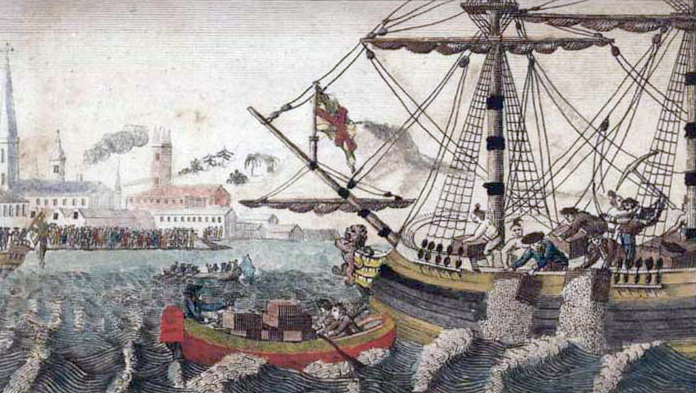
Sam also helped organize protests and boycotts. The most famous was the Boston Tea Party of 1773. He led fifty-some patriots to dump tea into the harbor, thus avoiding the high import duties, and sending Britain a clear message.


boston_tea_party_w


In 1774, Samuel Adams represented Massachusetts in the First Continental Congress. Their objective: to determine how best to deal with their grievances against Britain. The delegates readily agreed their first course of action should be prayer, but a disagreement ensued. Which clergyman from which denomination should be invited?

Samuel Adams told the congress he was “no bigot and could hear a prayer from any gentleman of piety and virtue, who was at the same time a friend of his country (1).” He nominated an Episcopalian clergyman, Mr. Duche. Sam did not know him, but the minister had been highly recommended. The motion passed.

From communicator to leader to unifier, Samuel Adams distinguished himself as a worthy patriot for the history books. But his character out shown his considerable abilities.


56049891-ab


Sam’s distinguishing traits included:

  • Courage.  He continually spoke out against the British crown. At least once, Sam narrowly escaped capture. In 1776, Adams (and fifty-five others) signed the Declaration of Independence. They knew it could likely be their death warrants. For some, it was.
  • “Incorruptible Integrity” (as described by one biographer (2).  For the eight years Sam served in the Continental Congress, he was known for his stamina, realism, and commitment, working tirelessly on numerous committees.
  • Wisdom.  Adams knew that devotion to God would strengthen the new nation (Proverbs 14:34). “Communities are dealt with in this world by the wise and just Ruler of the Universe,” Sam wrote in 1776. “He rewards or punishes them according to their general character (3).”

Samuel Adams was indeed a man of strong Christian faith, evidenced frequently in his writings:

“The name of the Lord (says the Scripture) is a strong tower; thither the righteous flee and are safe (Proverbs 18:10). Let us secure His favor and He will lead us through the journey of this life and at length receive us to a better (4).


094065741afa4d8fdd221ceea03aa7ae


Following the signing of the Declaration, Sam said, “We have this day restored the Sovereign to Whom all men ought to be obedient. He reigns in heaven and from the rising to the setting of the sun, let His kingdom come (5).

In his last will and testament Sam wrote: “I…[rely] on the merits of Jesus Christ for a pardon of all my sins (6).”

He was also a visionary, speaking wisdom for the generations to come. His statements ring true today, especially as we approach our presidential election:

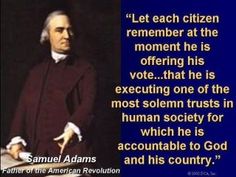
“Let each citizen remember at the moment he is offering his vote that…he is executing one of the most solemn trusts in human society for which he is accountable to God and his country” (7).


dd1671214dbdfc717a69b97f485feba5


“He who is void of virtuous attachments in private life is, or very soon will be, void of all regard of his country…The public cannot be too curious concerning the characters of public men” (8).

“Those who are to have a share in making as well as in judging and executing the laws should be men of singular wisdom and integrity” (9).

Samuel Adams:  Born 294 years ago tomorrow, on September 27, 1722–a man who lived what he believed.

Lord, help me to do the same.  And may I remember:

The privilege to vote is a solemn trust for which I am accountable to God.


Notes:

  1. http://www.renewamerica.com, “Continental Congress:  America Founded on Prayer,” Brian Fischer, May 2, 2007.
  2. http://www.belcherfoundation, “Samuel Adams.”
  3. From a letter to John Scollay, April 30, 1776.
  4. http://www.usa.church.
  5. http://www.faithofourfathers.net
  6. Founders’ Bible, ed. Brad Cummings & Lance Wubbels, p. 1732.
  7. From an article in the Boston Gazette, April 2, 1781.
  8. From The Writings of Samuel Adams, ed. Harry A. Cushing, 1907.
  9. From the Boston Gazette article, April 2, 1781.

Sources:

  1. http://www.belcherfoundation.org
  2. http://www.christianitytoday.com
  3. Founders’ Bible, Shiloh Road Publishers
  4. http://www.history.com
  5. http://www.notablebiographies.com

Art & photo credits:  www.pinterest.com; http://www.wikipedia.org; http://www.history.com; http://www.pinterest (2).


Read Full Post »

(a personal psalm)


Surrounded by tall, majestic trees,

I rest here on the deck with you, Father,

reveling in the quiet.

The stillness pervades my soul and I sense your peace.


img_0855


Bright morning sun dapples the landscape and spangles the leaves.

Dewdrops gild the grass.

Such radiant splendor ushers your joy into my spirit, oh God.

“Light is sweet, and it pleases the eyes to see the sun”

(Ecclesiastes 11:7 NIV).


grass_and_dew


Overhead a crystalline blue sky speaks of your majesty—

its unlimited vastness, a picture of your infinity;

its constant habitation over the earth,

a reminder of your omnipresence.

The heavens do indeed declare your glory (Psalm 19:1a),

and I worship you.


img_0865


Soft, refreshing breezes brush against my skin,

their arrival unannounced and unbidden.

They are invisible, yet cause leaves to dance and flowers to sway.

Such breezes bring to mind your Spirit—also invisible

yet always refreshing, guiding and encouraging me with gentle whispers

(2 Corinthians 3:18; 1 Kings 19:12).

I praise you for such gracious provision in my life.


14555516380_608bb6cf59_b


Leaves on the trees gracefully clap their hands (Isaiah 55:12),

drawing attention to their beauty.

Some of these trees are very old; roots reach deep and wide.

Their strength is a metaphor for your power:

proven over time, reliable, unchanging.

And that strength is available to me—

an ever-present help in trouble (Psalm 46:1).

“Thank you” is terribly inadequate.


img_0875


Two cardinals provide an antiphonal chorus;

a flicker chatters contentedly.

Other small birds tweet and cheep

in happy celebration of a splendrous morning.

I’m reminded how you care for the smallest,

most common sparrow (Matthew 6:26),

and my soul is comforted by your loving attentiveness.


Chipping Sparrow tree


Flowers still bloom in yards and planters.

How many thousands of flowers have you designed, God?

Surely one type of bloom would be sufficient for bees.

Yet you’ve created a glorious variety.

Your artistry is astounding— delicate petals and intricate shapes,

in numerous sizes from sunflower-grand to umbrellawort-small.

“I sing for joy at the work of your hands” (Psalm 92:4b NIV).


de69bd7a11329e42d3de13dbeeeebbdc


Oh, Lord, how I praise you for the many ways creation reveals your nature.

Daily you touch my soul through the beauty and majesty of your works.

The earth is teeming with evidence of your unfailing love (Psalm 33:5)!

And I stand in awe of you, the Creator of the universe, my Heavenly Father.


illinois-chain-o-lakes-state-park-beautiful-sunset


What attribute of God do you see revealed in nature?  How does his creative work touch your spirit?  Please share in the comment section below!


(Art & photo credits:  Nancy Ruegg; http://www.commons.wikimedia.org; Nancy Ruegg; http://www.flickr.com; Nancy Ruegg; http://www.public-domain-image.com; http://www.pinterest.com; http://www.goodfreephotos.com.)

Read Full Post »

A little over two years ago when Steve and I retired, God provided for us a perfect little ranch house built into the side of a hill. A strip of woods and a ravine separate our block from the one behind us, and large windows in the kitchen/family room offer a tranquil view of treetops.


img_0855


One of the projects we completed before moving in was the addition of a deck off the back of the house. The vista we enjoy from window and deck give us the sensation of living in a tree house, and we revel in the beauty and quiet.

Just about everyone loves tree houses. Even television now offers programs featuring their construction.

Why do they cause such delight?

Perhaps because tree houses provide:

  • A quiet, peaceful refuge, removed from the stressful responsibilities of our lives.  There’s something about being up among the trees that repairs our equilibrium. We breathe easier, the peace of the surroundings soaks into our spirits and tension is released.


37859696_4972c873d0_b


  • A respite from the ordinary. Most of us are surrounded by concrete and dry wall much of the time. To experience a vista of trees and sky is sweet relief.
  • A new perspective and fuel for the imagination. Away from daily routines and distractions, we can see our lives from a more objective viewpoint. In addition, our thoughts dance more freely, creativity flows more readily, and discoveries unfurl more frequently. No wonder many tree houses for adults are built as artist/writer retreats.


5989332892_eb56917fa1_b


All of these reasons make sense, but I have one more theory about why we love these structures: Tree houses provide a physical, tangible replica of the presence of God.

Jesus made the way for us to experience his company, like the ladder or staircase to a refuge in the trees (1).

God is always with us, whether we’re aware or not. The key is to draw near to him through prayerful conversation and mindful observation of his glory—in a sunset, a bird song, or the scent of wisteria on the breeze. Then his peace can pervade our thoughts, and God becomes our refuge (2).


e32fc36692cd1f941bec953ea8541363


With him there’s no such thing as ordinary living. He offers a God-enhanced, abundant life of joy in blessing, comfort in sorrow, sufficiency in trouble, and more (3).

New perspectives open up to us as we sit in quiet contemplation with our Heavenly Father, perspectives such as: contentment is a matter of choice not circumstances; my identity, security and purpose are not the result of events or effort; they are the result of who I am—a beloved child of God; God-thoughts change the atmosphere of my spirit (4).


psalms-16-8


Tree houses offer much; God offers much more. Best of all, he’s not limited to a small structure perched among the trees.

The high life with God is always available.


*     *     *     *     *     *     *     *     *     *


Thank you, God of the universe, for the incredible privilege of an intimate relationship with you. Anytime, anywhere, I can turn to you and breathe in your peace, admire the view of your glorious attributes, and experience rejuvenation of my spirit. I praise you, O Most High, for the restful shelter you provide. You are my refuge and fortress in whom I trust (Psalm 91:1-2).


8227863


What benefits of the high life with God do you especially appreciate? Please share your thoughts in the comment section below!


Notes:

  1. John 14:6; Ephesians 2:18
  2. Psalm 23:4; James 4:8; Isaiah 26:3; Proverbs 18:10
  3. John 10:10; John 16:24; Psalm 147:3; 2 Corinthians 12:9
  4. Philippians  4:11-13; Ephesians 4:24; Psalm 16:8


Art & photo credits:  Nancy Ruegg; http://www.flickr.com (2); http://www.pinterest.com; http://www.dailyverses.net; http://www.fellowshipsite.org.


Read Full Post »

Imagine eighty-year old Moses, tending sheep on a mountainside, just as he had for the previous 14,600 days (forty years)—give or take a few.   He had absolutely no reason to think this day would be different from the thousands before.

But it was.


Moses at the burning bush


This was the day he spotted the burning bush and God spoke to him:

“I have seen the misery of my people in Egypt, and I have heard them crying out because of the slave drivers. I know how much they’re suffering. I have come to rescue them from the power of the Egyptians and to bring them from that land to a good land with plenty of room [for everyone]. It is a land flowing with milk and honey” (Exodus 3:7-8, GWT).

According to Acts 7:6, God’s people had endured slavery for four hundred years. That’s 146,000 days—give or take a few. God saw their misery, heard them crying out, and was concerned about their suffering.

So why would God wait so long? Think of the generations who prayed for deliverance and the answer did not come.

Why?

They never knew. Even now, although Bible scholars have speculated, we have no definitive answer. God chose not to tell them/us.

But the experience of the ancient Israelites, as well as those of countless others through the centuries, prove:  even in the Christian life, questions go unanswered, uncertainty can become a constant companion, and doubts linger in the shadows.


b5d998777273b1dc973e595b42cfc38b


What’s to be done when the answers don’t come?

Actually, there are at least four categories of action to pursue:

1. Reaffirm what we know to be true. 

  • God has good reason to be silent or he wouldn’t do it. Whether he ever reveals the reason(s) is up to his discretion. But one reason is certain: If he answered every request immediately, we’d become very spoiled and never develop our faith. And faith is very important to him (Hebrews 11:6). Our trust in his always-perfect capabilities is to our benefit.


And-without-faith-it-is-impossible-to-please-God


  • Consider that at this very moment you are traveling 67,000 miles per hour. (And you thought you were sitting still!) The whole planet is orbiting the sun at that mind-boggling speed. Just as we forget we’re flying through space, so we sometimes forget that God is moving, always working on our behalf (Romans 8:28)—even when there’s no evidence of the fact. 
  • “His silence is the sign that he is bringing us into an even more wonderful understanding of himself” – Oswald Chambers.*  In the silence we seek him with more diligence.

2. Prayerfully analyze the possibilities why God may be silent: 

  • I have unconfessed sin in my life. 
  • He’s given me direction but I have yet to follow. He’s waiting for me to cooperate. 
  • I’m trying to work things out on my own, creating such a racket of busy-ness I can’t hear his gentle whisper (1 Kings 19:12).


cd2414786684b38df3513695754f56d6


  • He’s growing my faith (Isaiah 50:10) and building my character (James 1:2-4) to make me more useful for his purpose. Fulfilling his purpose will satisfy my soul also, on a level unknown to me now (Luke 6:38). 
  • He’s accomplishing a purpose only he knows about at present.

3. Implement these behaviors: 

  • Rely on scriptural fact, not emotions. God is loving, faithful, and present with us. He never overlooks a child, and will see us through whatever he deems best (Psalm 145:8, 13, 18, 20 and Psalm 23:4).
  • Take encouragement from Bible promises, even pray them back to God. But hold onto them with a light grasp because we are subject to God’s plan for fulfillment and his timetable. Good thing, too.  He is the all-wise One in total, proficient control of everything.


Pilgrims-Rock-god-is-sovereign-psalm47-7to8-300w-300x225


  • Take time to be quiet and receptive. Praise God for what’s right in your life. Chances are, current blessings far outweigh pending requests. Our praise can begin with another encouragement from Oswald Chambers*: “If God has given us a silence,…he is bringing us into the great run of his purpose.”

_________________________


Even as I wait in the silence for your intervention, Lord God, I praise you for your sovereignty and affirm: you know the best way and the best time to fulfill your plan. I thank you for your strength that empowers me to persevere, and the assurance of ultimate victory in the end as I rely upon you.  


Isaiah 55:9, Philippians 4:11-13, Romans 8:35-36


Is there a scripture, quote, or thought you find helpful when the answers don’t come?  Please share in the comment section below!


*My Utmost for His Highest, Dodd, Mead, & Co., 1966, p. 285.


(Photo & art credits:  www.cgtruth.org; http://www.pinterest.com; http://www.thekingjamesbible.us; http://www.pinterest.com; http://www.pilgrimsrock.com.)


Read Full Post »

DSCN1912


M.’s heart picked up its pace as her eyes took in the return address. Would this letter contain news to celebrate? It was her birthday—her fortieth. What could be more perfect than to receive the announcement she longed to read? M. tore open the envelope.


“Thank you for your recent manuscript submission. Regretfully

it does not coincide with our current publishing objectives…”


This was not the first rejection letter M. had received. In spite of early triumphs as an author, she had not written a successful book in a decade. This letter, on this day, brought tears to her eyes, and M. considered giving up.

“But I’m a writer,” she wrote in her journal. “That’s who I am, even if I’m never published again.”

M. began work on another book only to have it rejected nearly thirty times. Finally it sold. The book? A Wrinkle in Time, a beloved book of millions. And for it, Madeleine L’Engle was awarded the Newbery Medal for Children’s Literature in 1962 (1).


220px-Madeleine_lengle


Surely Mrs. L’Engle would be among those to tell us: Failure is a reality of everyone’s life. Even the most successful people have failed at one time or another.

But when we’re drowning in the despair of failure, we tend to forget its universality.

We also forget:

1. God always makes good use of failure—to develop maturity, wisdom, and humility. 

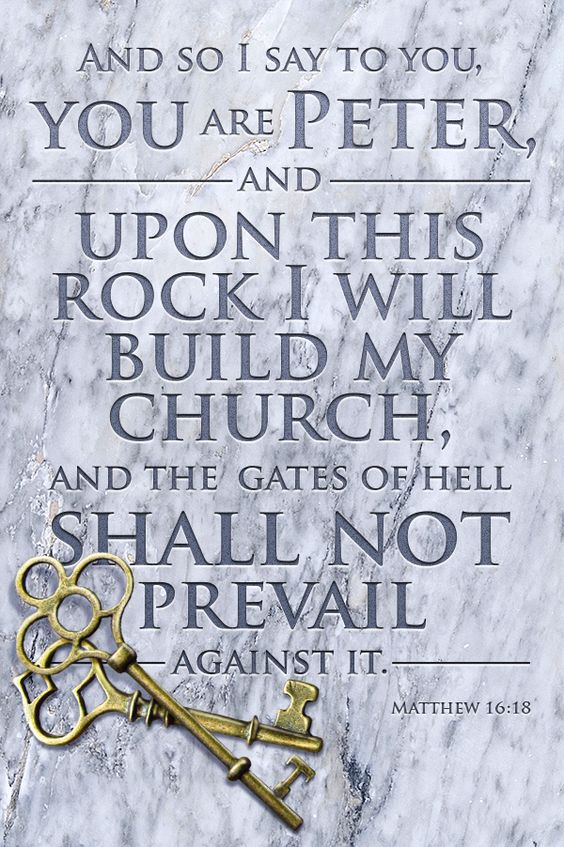
Think of Peter, who denied Jesus three times as his Messiah was being interrogated by the chief priests and Sanhedrin (Matthew 26). Yet Peter became the rock on which Christ built his church (Matthew 16:18).


6107b5eb17b92aa656e8515e449a5c41


2.  Our failures may well be part of God’s bigger purpose.

General Robert E. Lee, commander of the Confederate army during the Civil War, wrote this in 1869:


quote-we-failed-but-in-the-good-providence-of-god-apparent-failure-often-proves-a-blessing-robert-e-lee-17-15-42

(“We failed, but in the good providence of God

apparent failure often proves a blessing.”)


Even out of the horrific devastation of that war, God did bring blessing. Among them: The Red Cross was founded, a number of hospitals were established, and in the decades that followed, America rose from the ashes stronger than ever.


3,  The lack of results does not necessarily indicate failure.

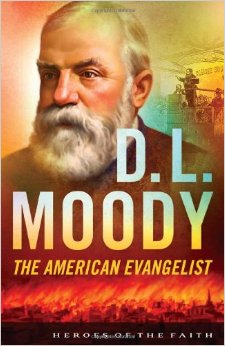
 ‘Ever hear of Edward Kimball? I hadn’t—until recently. Edward once introduced a young shoe salesman to Jesus. That salesman grew in faith by leaps and bounds, and strongly desired that others know the One who changed his life so dramatically. The salsman’s name: Dwight L. Moody—evangelist extraordinaire and founder of Moody Bible Institute.


51onpscfGYL._SY344_BO1,204,203,200_


By comparison to Moody’s stellar accomplishments and resulting fame within the Christian community, Mr. Kimball seems a nobody. But the ripple effect that still reaches around the world today through Moody (2) can be traced back to Kimball.

Most of us will never know the ripple effect emanating from our lives until we reach heaven. It’s probably just as well. What we don’t know can’t go to our heads.


4.  True success is not financial security, great respect from throngs of people, or high rank in the public arena.  “True success is growing intimacy with God” (3). 

My eyes are often distracted by the wrong prize.


Big Stones in Sand Hills of Samaria, Israel, Retro Effect

(“Our greatest fear should not be of  failure

but of succeeding at something

that doesn’t really matter.”

–D. L. Moody)


Failure is actually a blessing. God uses it to:

  • a) foster spiritual growth,
  • b) accomplish his purpose,
  • c) guide us into greater intimacy with him, and
  • d) redirect our focus.

Oh, God, help me to embrace failure and the blessed lessons it brings!


Notes:

(1) Information about Madeleine L’Engle from http://www.neh.gov.

(2) Thousands of graduates from Moody Bible Institute have served God as pastors, missionaries, and more over the 130 years since its founding in 1886. Millions more have been impacted by Moody Radio and Moody Publishing.

(3) J. I. Packer, Knowing God, 1973, p. 314.


Art & photo credits:  www.savannahnow.com; http://www.wikipedia.org; http://www.pinterest.com; http://www.azquotes.com; http://www.likesuccess.com; http://www.quotesgram.com.

 

Read Full Post »

The bright red ad demanded attention, its bold lettering enticing buyers with:

CoYCLL8WYAAGyuf

40% off entire store!

But then the small print at the bottom of the ad listed three top brands that were not included in the sale. (How do businesses get away with such blatant dishonesty?)

I can only imagine the frustration of an unsuspecting shopper, combing the racks of those “forbidden” brands, trying them all on to select those that fit best, only to take them to a counter (where she must wait in line with other bargain-hunters) and finally be told, “Oh, I’m sorry. Those brands are not included in the sale.”

fine-print-shadow

We have to read the fine print—of advertising, offers, and contracts.

And buyer beware:

quote-nothing-in-fine-print-is-ever-good-news-andy-rooney-157768

(“Nothing in fine print is ever good news.”

–Andy Rooney, radio and TV writer)

There is one exception however where the fine print does provide very good news. That’s because the word, fine, has many more definitions than small.

Among the eleven definitions in Webster’s Dictionary, fine can mean:

fine_gold_bullion_design_vector_set_584088

  1. Free from impurities, as in fine gold
  2. Very sharp, as in the fine edge of a knife or a fine intellect
  3. Exemplary of great skill, as in fine lace
  4. Capable of superior quality and craftsmanship, as in a fine carpenter
  5. Manifesting precision, as in a fine timepiece

breguet-ref.-1160-pocket-watch

With these definitions in mind, the finest print in the world is God’s Word, the Bible. It is:

  1. Free from the impurities of lies or even a stretching of the truth (Psalm 19:7a).

53a536fb81eb2d712845c314d8df272e

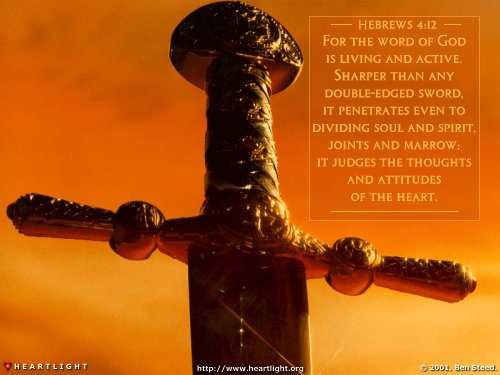
2. Very sharp, able to discern the thoughts and intentions of the heart (Heb. 4:12, NLT).

hebrews4_12

  1. Exemplary of great skill—God’s skill.

He brought together more than forty men from diverse cultures and all classes of citizens – from kings to fishermen – to record His Word. God extended his work over 1500 years and three continents (Asia, Africa, and Europe), three languages (Hebrew, Aramaic, and Greek), and nine different genres. Yet the diverse pieces fit together in one unified whole. What other book can compare?

  1. Superior in quality and craftsmanship.

007e7eed0d91527c56b9dc8f003be0a4

(“As for God, his way is perfect;

the word of the Lord is flawless.”

 –2 Samuel 22:31, NIV)

  1. A masterpiece of precision. Those who doubt the accuracy of the Bible would do well to learn about the:

a) hundreds of fulfilled prophecies contained within its pages,

b) scores of archaeological discoveries which verify people, places, and events mentioned in scripture,

c) thousands of manuscripts and fragments which validate the accuracy of the Bible, and

d) scientific and medical research affirming the truth of various passages – long before that truth could be verified.

Indeed, the fine print of scripture is of rare quality, demonstrating absolute purity and perfection. That’s because the Author is himself the epitome of purity, precision, and perfection.

So read the fine print of scripture . Marvel in its superior quality compared to other books.  Get to know the faithful and trustworthy Author through his Word.  And embrace its life-changing truth.

Also be mindful that:

3cd5612848334cec127daad7d5be1f15

(“A Bible that’s falling apart

usually belongs to someone who isn’t.

― Charles H. Spurgeon)

No other fine print can offer such stability.

Art & photo credits:  www.twitter.com; http://www.thedailysheeple.com; http://www.izquotes.com; http://www.all-free-download.com; http://www.pinterest.com (2), http://www.verseoftheday.com; http://www.pinterest.com (2).

Read Full Post »

(A personal psalm, based on Psalm 16)


psalms-16-2 


 Oh, God, I praise you for every blessing you bestow (v. 2).

You are the God of all Goodness, the Author of every benefit. Just recently you granted:

  • Timely encouragement from friends,
  • A memorable dinner celebrating four anniversaries—ours, along with those of our three children and spouses,
  • The announcement of a third grandchild, due to arrive in January.

As A. W. Tozer observed: Out of your goodness, Lord, comes your desire for my highest welfare, your wisdom to plan it, and your power to achieve it. What do I lack (Knowledge of the Holy, p. 70)?

It’s also true that anything good within me comes from you. I hate to think where I’d be today if it weren’t for your influence and direction in my life.


14096


Oh, God, I praise you for your godly people living heroic lives (v. 3).

I take great pleasure in knowing more than several, and gain encouragement from their examples—heroes such as:

  • Cheri, who cares for her elderly parents,
  • Buck and Nikki, who faithfully minister in nursing homes,
  • Bill, who soldiers on with ALS–with a sense of humor, no less—after years of paralysis, and
  • Charity, who is battling cancer with great doses of gratitude and praise, in addition to chemo.

These dear ones and more reflect your strength, Lord, your love, joy, peace, and courage. How dare I entertain the slightest bit of self-pity or discouragement?


191d97bca7f46a3f0db2169958a249a6


Oh, God, I praise you for being my grand and glorious inheritance (v. 6).

You possess all power, inhabit all corners of the universe, know all things.

You are all-wise, righteous and holy in all you do—absolutely perfect.

Everything in the universe belongs to you, the Creator of it all.

Yet you care for me.  Out of your unlimited resources, you supply everything I need—and then some. Even in the small matters, you are there. You’ve provided:

  • A woman to guide me through a hallway-maze in a medical building,
  • Two sons who can trouble-shoot my computer problems (!), and
  • Continual reminders that your Spirit is at work, even when circumstances seem stagnant.

You are a reliable God who keeps his promises. Always.

And when I leave this earth, you have reserved for me in heaven an eternal inheritance that will never decrease, including the privilege of living with you, basking in your glory.

Such wonders overwhelm the intellect, and my heart overflows with gratitude.


psalms-16-8


Oh, God, I praise you for your reliability (v. 8).

All the attributes mentioned above (and more) you bring to bear in my life—not as an impersonal monarch overseeing the general welfare of his kingdom—but as a gracious Father, lovingly guiding my individual course.

You will never leave me alone to fend for myself.

And you will also keep me safe until all the chapters of my life have been written (Psalm 139:16).


27295c0686e2888f64e2fdb2cc4117ed


Oh, God, I praise you with my whole being (vs. 9, 11). You fill: 

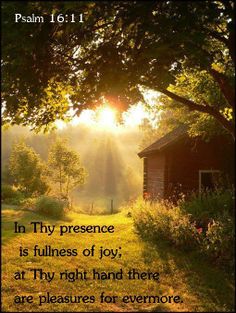
  • My heart with the joy of your presence,
  • My mind with the wisdom and truth of your Word, and
  • My spirit with the glory of your attributes. 

Oh, God, I praise you that these pleasures are available to your children for evermore.


27739807ece882a2d94e7b22d2c77482


May I keep my thoughts centered on you and on these, your precious gifts.


Art & photo credits:  www.dailyverses.net; http://www.biblepic.com; http://www.pinterest.com; http://www.dailyverses.net; http://www.pinterest.com (2).

Read Full Post »

Staff Sgt. Jacob DeShazer, a member of the famed Doolittle Raiders, was the bombardier of Crew No.16, the last of the 16 B-25 Mitchell bombers to launch from the USS Hornet April 18, 1942, on the famous bombing run over Tokyo. Sergeant DeShazer, 95, died March 15. (U.S. Air Force photo)

Jake DeShazer sat on a narrow bench facing the back wall of his cell, a position he was forced to keep hour after hour, day after day, as his imprisonment dragged on.

The year was 1945. DeShazer had been a prisoner of war in Japan for forty long months, enduring suffocating heat in summer, bitter cold in winter, solitary confinement, near-starvation, cruel treatment, and torture.

As he sat, perhaps Jake thought of his comrades among the eighty flyers of Dolittle’s Raiders, the bombing run over Japan that helped turn the tide of the war in favor of the Allies in 1942.

DeShazerTakeOffFinal_md

But DeShazer’s plane was among those shot down, its crew members captured. How many of the original eighty had survived? Jake had no way of knowing, except for the few in his own cell block.

During those long, solitary hours, perhaps Jake reviewed the encouragements from scripture he had learned and the verses he’d memorized when–for three short weeks–he was allowed to have a Bible. What a change had taken place in his heart.

Prior to his captivity, Jake had no interest in Christianity. But the cruel treatment from his captors month after month nearly drove him crazy. Hatred consumed him. He remembered that Christianity supposedly changed hatred into brotherly love. Was that really possible?

He had begged for that Bible, but it was a long time coming. When the emperor of Japan told prison guards to treat their captives better, DeShazer’s request was finally honored. And as a result of studying the scriptures, he put his faith in Jesus. Bitter hatred for the Japanese transformed into loving pity.

As Jake’s thoughts focused on his captors, he may have prayed again the words from scripture that first melted his heart: “Father, forgive them, for they know not what they do” (Luke 23:34). Perhaps DeShazer reaffirmed what God’s Spirit had revealed to him earlier: His captors knew nothing of a Savior.  Without Jesus it was only natural for them to be cruel.

And so, as he lifted up loved ones and fellow soldiers, as he expressed his longing for the war to end, Jake also prayed for his captors to know Christ.

Finally, on August 10, 1945  the emperor of Japan surrendered to the Allied forces, following the atomic bombings of Hiroshima and Nagasaki.

The horror was finally over; DeShazer and thousands of other soldiers returned home to pick up the pieces of their lives.

Jake chose to pursue a degree at Seattle Pacific University, which he accomplished in three years. By December of 1948, he and his wife, Florence, along with their first baby, were headed for the mission field, to—of all places—Japan.

Every time DeShazer met someone in his new home country and told his story, almost always the person would ask, “Why did you come back here?” And he would introduce them to Jesus.

DeShazer-with-kids-1952

(DeShazer with Japanese children, 1952)

It is estimated that some 30,000 people accepted Christ into their lives—just in the first year of Jake’s ministry in Japan. Among them, a number of former prison guards who had held Jake and his comrades captive.

Another surprising convert: Mitsuo Fuchida, the pilot who led the attack on Pearl Harbor. He “happened” to read a pamphlet Jake had written, “I Was A Prisoner of Japan.” Fuchida began to study the Bible, became a Christian, and served as a missionary himself in Asia. He and Jake eventually met and became friends.

fuchida

(DeShazer and Fuchida)

For nearly thirty years the DeShazers served God in Japan, helping to found sixteen churches throughout the country.

Someone has said:

e29eb6e78638f02633d911339071451d

(“Forgiveness does not change the past,

but it does change the future.”)

DeShazer’s story proves just how mind-boggling and miraculous that future can be.

*     *     *     *     *     *     *     *     *     *

Thank you, Father, for DeShazer’s story, proving it is possible to love our enemies, bless those who curse us, do good to those who hate us, and pray for those who persecute us (Matthew 5:44). By comparison to DeShazer’s horrific experiences, my hurts and resentments are embarrassingly puny. Yet I still need your Spirit to transform them into compassion and love. As a starting point, may I never lose sight of the totally underserved forgiveness you have lavished upon me.

You can access more of Jacob DeShazer’s story at:

(Art & photo credits:  www.verterantributes.org; http://www.worldevangelism.net; http://www.spu.edu; http://www.jacobdeshazer.com; http://www.pinterest.com.)

Read Full Post »


fairy-playing-harp_57800167


Confession time: During my growing up years I was a bit worried that life in heaven would involve a lot of cloud-sitting and harp-playing. To be honest, it sounded a bit boring to worship through all eternity. Just how many songs could we play and sing?

However, it sure beat the alternative, so I resigned myself to a bit of boredom and told myself, Once we get there, we won’t know any better, and we’ll be perfectly content singing and strumming.

That shows you how little I understood about heavenly worship (or earthly worship either, for that matter). It will not be a passive occupation of dreary repetition!

I expect our celestial worship will be something like a Christian concert by a favorite artist when…


Christian-Concert


…our hearts pump excitedly to experience the music of an admired vocalist. We thoroughly enjoy the performance of all the old, familiar songs we’ve grown to love. We are not bored, even though we know well the lyrics and melodies. We sing along, happily remembering the good old days when the song was first introduced.

But we also delight in a new melody—something fresh and different that thrills our spirits. And the whole time, through old and new, we revel in the companionship of others who share the memories and take great pleasure in the music with us. (Joy is augmented when shared with kindred spirits.) Each song concludes with much clapping and shouting among the concert-goers.

Of course, when we get to heaven, our favorite Artist will be the King of glory himself, who will rejoice over us with his singing (Zechariah 3:17).  Can you imagine it?!


Zephaniah317_1920x1080_2


It’s also likely we’ll enjoy familiar old songs we’ve heard before and grown to love. John the Revelator gives us indication.

When he was invited up to heaven, John heard the saints singing a song of Moses. Even in the first century A.D., that was an old song, celebrating the deliverance of the Israelites from Egypt (Revelation 15:3-4; Psalm 111:2-4).

More than likely, we, too, will remember and sing of the great and marvelous deeds the Lord God Almighty has performed (Psalm 86:10). We’ll celebrate his glorious attributes, and revel in the blessed companionship of other believers who also love the supreme Artist, and take great joy in joining the song.

Our praise will be further enhanced with musical instruments (1).   Each section of the orchestra provides symbolism of our King’s magnificence:

  • Horns – his splendor and majesty (just as trumpeters on earth have heralded royalty through the centuries.)
  • Strings – his peace and serenity
  • Percussion – his power and strength
  • Woodwinds – his love and gentle compassion

We will sing and play and perhaps even dance in a great crescendo of worship (2), celebrating God’s mighty acts of power and surpassing greatness (Psalm 150:2, 4). It will be a good and glorious time (147:1)!


d9e896a56750d07914d4165037d787d7


Shame on me for ever thinking that worship for eternity might become boring. It’s going to be the most heart-pumping, soul-stirring, exciting concert yet (3).

However!  The crescendo has already begun here on earth. Just as David urged, we can praise God every day and continue from now to eternity (Psalm 145:2).

The glorious crescendo of worship and celebration, praise and thanksgiving, joy and wonder will never end!

_________________________

Notes:

(1) Instruments are played in heaven. Revelation 5:8 and 8:6-12 give indication of harps and trumpets. Perhaps there are more which John did not see!

(2) That phrase, crescendo of worship, comes from Bible teacher and author, Warren Wiersbe, in his book, Be Exultant, p. 25

(3) In addition to glorious worship, we will be occupied by fulfilling, satisfying work, just as Adam and Eve were given responsibilities in the perfect Garden of Eden (Genesis 2:15).


(Art & photo credits:  www.clipart.me; http://www.rockingodhouse.com; http://www.defininggrace.com; http://www.pinterest.com.)

Read Full Post »

« Newer Posts - Older Posts »

Sylvia Schroeder

Impressions Becoming Expressions

Mitch Teemley

The Power of Story

Still Traveling

Impressions Becoming Expressions

Living Our Days

Gaining a heart of wisdom

He Said What?!

I'm Patty, and my husband and I are living with our adult son who has autism and epilepsy. I love sharing lessons learned from life around me, especially life with Aaron.

Meditations of my Heart

Impressions Becoming Expressions

Linda Stoll

Impressions Becoming Expressions

Signora Sheila

Where faith meets la dolce vita

Heidi Viars

Finding the Image of God