Feeds:
Posts
Comments

Posts Tagged ‘God’s Provision’

 picture-uh=715ce81d4af48c56d62e992073bfe9-ps=3da463e4536b201b56c385877e59a7

 (Photo from http://www.trulia.com.)

“There it is, Mom, “ Steve remarked, as he pointed to a little white house in the middle of a city block. “That’s where we lived when I was growing up.”

“Oh, yes,” she replied. But did Mom really remember?

We were on an excursion through Columbus, Ohio, taking Steve’s mother past the landmarks of her life. Alzheimer’s disease had already stolen away much of her vibrancy and warmth, and, of course, her memory.

 corner

Steve drove by West High School and continued his commentary. “That’s where we all went to school, you, Dad, Karen, and me. You were the very first homecoming queen.  How about that?  No wonder Dad asked you out.”

She murmured assent to Steve’s comments, but added nothing of her own.

 unnamed

We drove past the brick ranch they built out in the country in 1966. Horses used to reside beyond the back fence. Just a few houses had dotted the area back then. By this time, however, they had been swallowed up by dozens more. The saplings Mom and Dad had planted were now tall shade trees.  And the glorious flower beds and window boxes that Mom had tended were gone. She registered no recollection.

 unnamed

But when we approached her childhood home, a white Dutch Colonial on a quiet street, all of a sudden she perked up.  Pointing to a second-story window, Mom stated firmly, “That was my room, right up there.”

In the midst of the fog that is Alzheimer’s, one memory–one glimmer of light–shone through that morning. Steve and I almost gasped at the wonder of the moment. Mom remembered!

And the rarity of her memories pointed to the preciousness of this ability. Memory is a gift to be treasured. The older I grow, the more I appreciate the miraculous power of the brain to store millions of memories—with astounding detail–and yet access a particular one in a mille-second.

 1033249144001_2034162247001_900944612-159-1355440419795

Not only do sights trigger memories, but also smells. Researchers say this sense is the most powerful memory-inducer. For me, the aroma of fresh-baked bread always takes me back to my grandmother’s kitchen.

Sounds trigger memories as well—particularly music. Tastes and textures work the same phenomenon.

But surely God had more purpose in mind for giving us memory than the pleasant pastime of reminiscing.

Indeed.

Memories foster gratitude, as we contemplate God’s goodness to us in the past:

  • His countless blessings (even when we haven’t been a blessing to him).
  • Those times he led us through the shadow of death, so that we might experience more completely the glory of his light.
  • Moments when we almost gave up hope, and God surprised us with his creative, abundant provision.
  • Leaving behind what we once were and celebrating what we have become, solely because of his Son, Jesus.

Memories foster faith, as we remember how God has met our needs in the past. See if each phrase from Psalm 103 doesn’t trigger a memory in your mind, and a song of praise in your heart:

“Oh, my soul, bless God,

Don’t forget a single blessing!

He forgives your sins—every one.

He heals your diseases—every one.

He redeems you from hell—saves your life!

He crowns you with love and mercy—a paradise crown.

He wraps you in goodness—beauty eternal…

…God makes everything come out right.

He puts victims back on their feet…

…God is sheer mercy and grace;

Not easily angered, he’s rich in love.

He doesn’t treat us as our sins deserve,

Nor pay us back in full for our wrongs.

(Psalm 103:2-10, The Message)

Memories inform the present and provide hope for the future. As we meditate on all those times God has wrapped us in his goodness (v. 5), we are strengthened for what we face today. As we consider the many times he made everything come out right (v. 6), we can trust he will continue to make our paths straight.

Of course, there are some memories we would like to erase—those that generate sadness, hurt, or regret. How do we deal with those? Here are a few suggestions I’ve collected over the years:

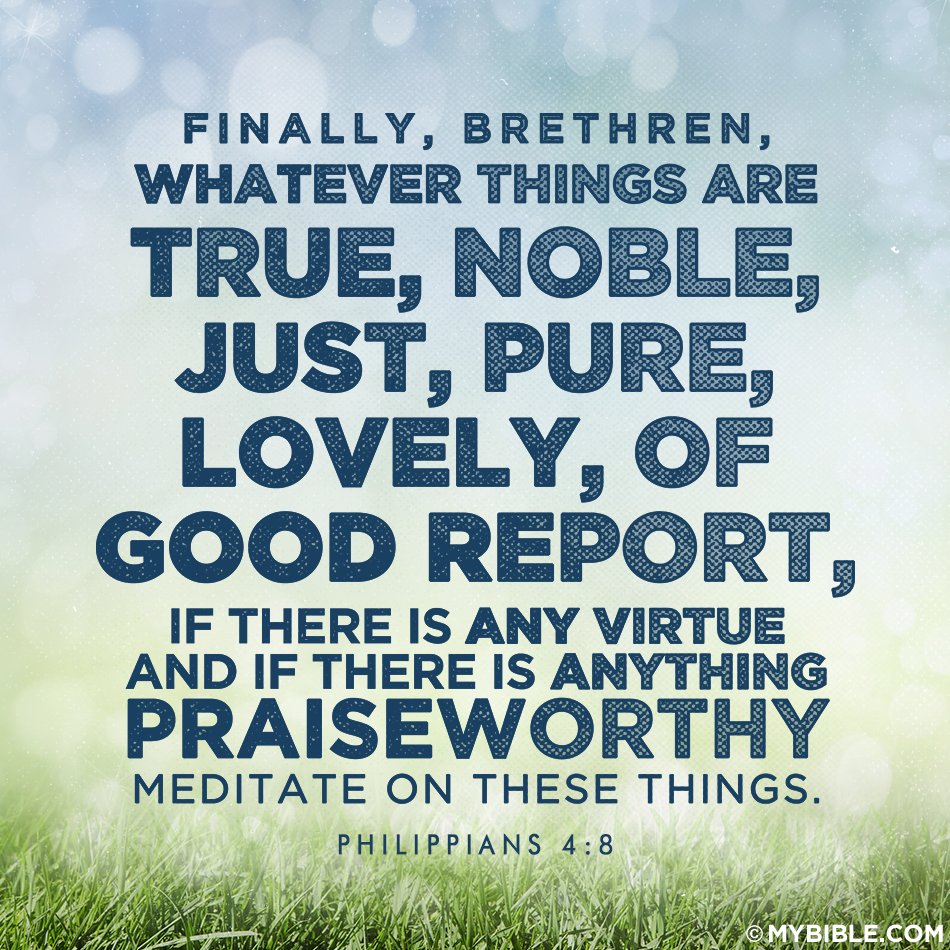
  1. We must resist self-pity—even in our thought life. Nowhere in scripture do we read that rehashing the negative is therapeutic. God’s way is to focus on the positive (Philippians 4:8).

Phil-4-8


  1. We can follow Paul’s example. He forgot what was in his past and pressed on to what lay ahead (Philippians 3:13). Not that amnesia had set in. Paul simply did not allow past failures to cripple his relationship with God and his service for God. God had forgiven and forgotten; Paul did too. No doubt he applied Philippians 4:8, not only to self-pity, but also to guilt. 
  1. We can leave the past in God’s hands. Oswald Chambers said it so well:

 c6d7d32bbdc18d2507a48f8aefa26359

(“Leave the irreparable Past in His hands, and step out into the Irresistible Future with Him”

–My Utmost for His Highest, Dec. 31.)


*     *     *     *     *     *     *     *    *     *    

Father, I do thank you for the gift of memories—the ability to remember with joy and appreciation the people, places, and experiences of the past. I even thank you for the not-so-good memories, knowing that you use every difficult situation for the development of my maturity (James 1:2-3). And may I take advantage of the wisdom gained in the past to guide me in the present, and lead me into the Irresistible Future with you.


Art & Photo credits:  www.trulia.com; http://www.westhighalumni.com; Steve’s photo collection; http://www.allrecipes.com; http://www.god.com; http://www.pinterest.com.

Read Full Post »

(In honor of Black History Month)


Isabella, the daughter of James and Elizabeth Baumfree, was born a slave in New York state about 1797. No one knows the exact date, because birth records weren’t kept for “property.”

Did her parents know the name means, “consecrated to God?” Even if they chose the name for its meaning, those parents could not have dreamed of the future awaiting their Baby Belle.

Her early years were difficult.  Belle was sold five times, several times to cruel masters.

At age eighteen or so, Belle fell in love with Robert, a young slave from a nearby farm. The couple had a daughter. But Belle’s master, John Dumont, forbade her to see Robert again. According to the law, all children of the union would belong to Robert’s master, not Dumont.

Two years later, Dumont forced Belle to marry an older slave. They had three children: Peter, Elizabeth, and Sophia.

In 1826, Belle escaped the Dumont farm with Baby Sophia. In a vision, God showed her a particular home to go to. That home belonged to a Quaker family, the Wageners, who took in the young woman and her baby. They even paid Belle’s price to Dumont and made her a free woman. Belle became a housekeeper, then a maid.

Shortly after her escape from slavery, Belle learned that her five-year old son, Peter, had been illegally sold in Alabama. She took the matter to court and won her case. Peter was returned to New York. That was the first time a black woman challenged a white man in a U.S. court. It was also the first time of many that Belle’s resolve and courage were put on display.

Several years later Belle was falsely accused of poisoning her former employer. In 1835 she took that case to court and won again.

Someone must have encouraged Belle to tell her story of being a slave and becoming a free woman. But she had never learned to read or write, so a friend wrote as Belle dictated. A Northern Slave was published in 1850.

In her book, Belle explained that several years after she was freed, God revealed himself to her, “with all the suddenness of a flash of lightning, showing her, in the twinkling of an eye, that he was all over, that he pervaded the universe, and that there was no place where God was not.”

The book sold many copies and Belle became well-known. She was asked to speak at a women’s rights convention in Massachusetts. Before long, Belle was traveling with abolitionist, George Thompson, speaking against slavery and for human rights.

In 1851, Belle gave a speech at another women’s conference, this time in Ohio. She spoke convincingly (and extemporaneously) about women being every bit as capable as a man:

“I have plowed and reaped and husked and chopped and mowed, and can any man do more than that?”

And, no doubt with a twinkle in her eye, she added:

“As for intellect, all I can say is, if a woman have a pint, and a man a quart — why can’t she have her little pint full? You need not be afraid to give us our rights for fear we will take too much, for we can’t take more than our pint’ll hold. The poor men seems to be all in confusion, and don’t know what to do. Why children, if you have woman’s rights, give it to her and you will feel better. You will have your own rights, and they won’t be so much trouble.”

She concluded by asking: “And how came Jesus into the world? Through God who created him and the woman who bore him. Man, where was your part?”

It’s not surprising that some were displeased with Belle’s speeches. One time she was told that the building where she was to preach would be burned down if she dared to speak. “Then I will speak to the ashes,” she replied.

Belle was also physically assaulted. One brutal attack caused permanent injury, and she had to walk with a cane for the rest of her life.

In 1863, Harriet Beecher Stowe wrote an article about Belle for the Atlantic Monthly:

“I do not recollect ever to have been conversant with anyone who had more of that silent and subtle power which we call personal presence…She seemed perfectly self-possessed and at her ease. An audience was what she wanted—it mattered not whether high or low, learned or ignorant. She had things to say, and was ready to say them at all times, and to anyone.”

Imagine. A slave woman who never had the opportunity to go to school, never learned to read or write. Yet the power of her spoken word helped bring the end of slavery and pave the way for women to be granted the right to vote.

Belle proved:

“There is no difficulty that cannot be defeated.

There is no victory that cannot be achieved,

if you believe in the power of God!”

— Anonymous

Of course, by the time she achieved notoriety, Belle was known by another name.

You see, Belle had asked God for a new name several decades before the Civil War. Again, it was the result of a vision. She said God chose her new first name based on the fact she would travel. Then Belle asked God for a second name, “’cause everybody has two names.” And the Lord granted her request. Her second name proclaimed what Belle always declared from her podium.

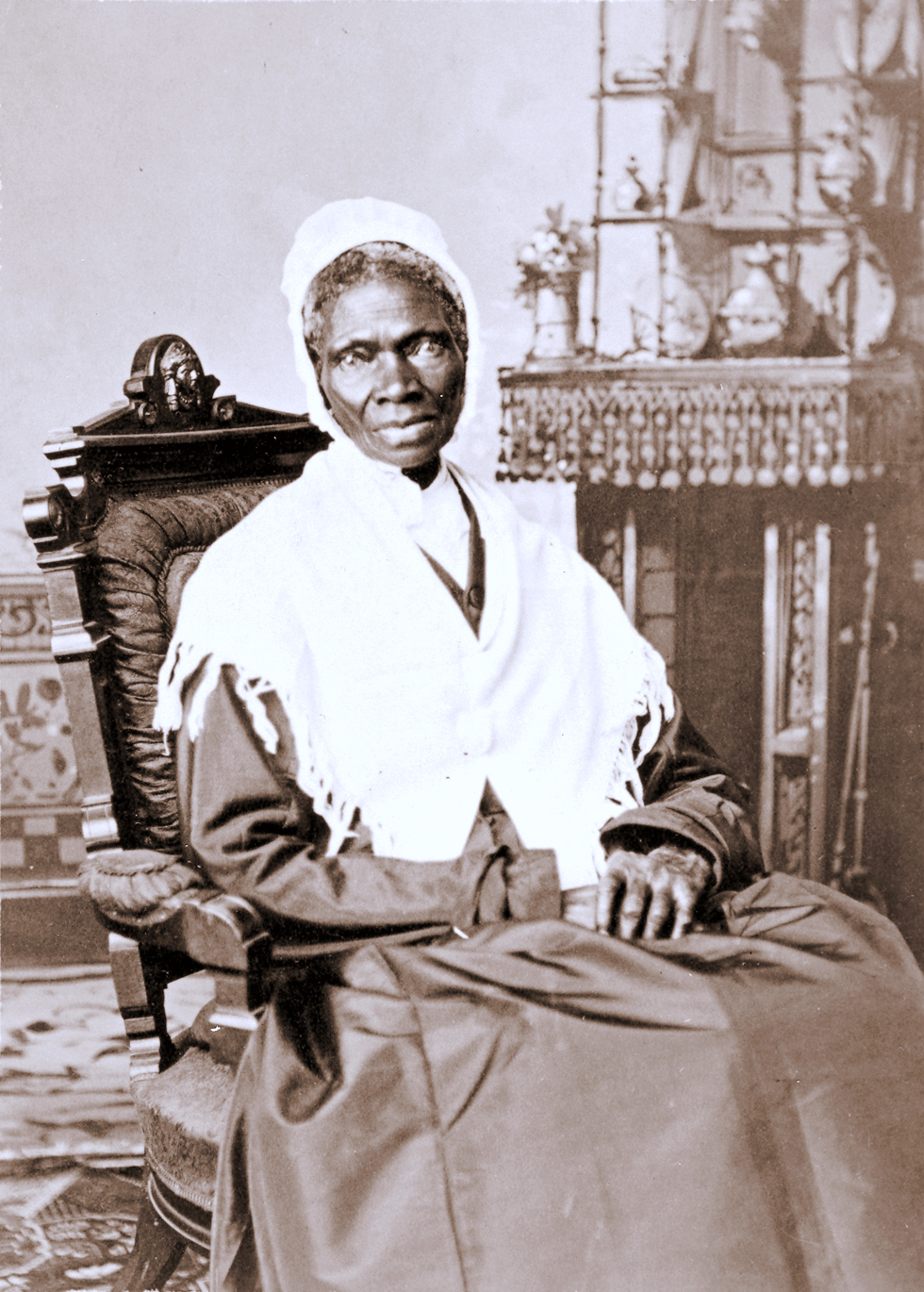
Perhaps you remember Sojourner Truth.


Sojourner_truth_c1870

(Photo from http://www.wikipedia.org.)


Sources:  www.biography.com; http://www.sojournertruth.org; http://www.; http://www.blackpast.org; http://www.americanswhotellthetruth.org; http://www.christianitytoday.com.)

Read Full Post »

F7007


Christmas. The first syllable surely needs no explanation of origin. It speaks of the One we celebrate.

But what about the second syllable, -mas?

Christmas is a term that has been around for nearly a thousand years, coming to us from Old English. Cristes Maesse meant “Mass of Christ.” It was established by church leaders to disconnect the church celebration of Jesus’ birth from pagan holidays and customs—holidays such as Winter Solstice. (Even before the birth of Christ, Romans were celebrating the shortest day of the year, in anticipation of the sun’s gradual return.)

As a matter of fact, as early as the fourth century, Christians were creating their own wintertime celebration. One theologian pointed out in 320 A.D.: “We hold this day holy, not like the pagans because of the birth of the sun, but because of Him who made it.”

Yet there are those who wish to keep the customs of Christmas without including the One being celebrated. Seems they’d like to take away the first syllable, Christ. But then all that’s left is –mas.

Sounds like mess.

Indeed. I am confident that without Christ, my life would be a mess. 

A mess of fears.

A mess of brokenness.

A mess of worry.

A mess of guilt.

A mess of dissatisfaction.

It’s possible that for a long while I’d be able to hide the mess under glittery packages of stuff, noise and distraction, busy-ness.

But eventually, a body must stop and rest. That’s when my mind would kick into high gear and the mess would wreak havoc in my soul. Chances are I’d develop sleep problems, depression, or perhaps even physical manifestations like ulcers. Stress can do that to a person.

Shouldn’t I at least consider the alternative? What if I do allow Christ in my life?

Oh, my. The list of precious gifts He bestows is astounding and practically endless. To begin, he provides:

  • Calm in place of fear.

“Do not let your hearts be troubled. Trust in God; trust also in me” (John 14:1), Jesus said.

  • Restoration in place of brokenness.

 “Anyone united with the Messiah gets a fresh start, is created new. The old life is gone; a new life burgeons” (2 Corinthians 5:17, The Message)!

  • Peace of mind in place of worry.

 “Steep your life in God-reality, God-initiative, God-provisions. Don’t worry about missing out. You’ll find all your everyday human concerns will be met…God will help you deal with whatever hard things come up when the time comes” (Matthew 6:33-34, The Message).

  • Forgiveness in place of guilt.

 “Everyone who believes in [Jesus] receives forgiveness of sins through his name” (Acts 10:43).

  • Contentment in place of dissatisfaction.

 “Godliness with contentment is great gain” (1 Timothy 6:6).

 And among his many other gifts to us, Jesus grants us the incredible privilege of eternal life (John 3:16)—with him in heaven.

But how will I be able to enjoy all these gifts if I don’t give Christ a chance?

I really have nothing of value to lose. Just the mess.


“Thanks be to God for his indescribable gift” (2 Corinthians 9:15)–the Christ of Christmas!


(Art credit:  www.emblibrary.com .)

Read Full Post »

thanksgiving-table-with-food-4-1

Abundance: a word that easily comes to mind as we contemplate Thanksgiving Day.

Many dining room tables will be filled to overflowing with delectable offerings this afternoon. Most Americans will consume a plentiful amount of turkey, salads, vegetables, and pies. Food in abundance has become synonymous with Thanksgiving.

Very soon Steve and I will head over to our son’s house to celebrate Thanksgiving with family–for the first time in about ten years.  We and our three children, their spouses, and children have lived states apart for that long, and we’ve had to wait until Christmas each year for get-togethers.  (Sadly, not all of us will be able to gather today, but most.)  In June, Steve and I moved close to our older son and his family, not far from our younger son and his wife.

Friends will also be joining us this afternoon, making for a full, heart-warming day. Even more than the abundant feasting, I look forward to the abundant togetherness—the camaraderie, affection, story-telling, reminiscing, and humor.

But abundance also describes the plentiful amount of blessings bestowed by another family member, our Heavenly Father.

His abundance includes:

Grace.

“Those who receive the abundance of grace and of the gift of righteousness will reign in life through the One, Jesus Christ(Rom. 5:17, Ryrie).

We were ruined by sin. But out of his loving forgiveness and acceptance, God offers the gift of eternal life through his Son, Jesus.

Mercy.

“Blessed be the God and Father of our Lord Jesus Christ, who with his ample mercy has given us new birth into a life of hope, due to the resurrection of Jesus Christ from the dead” (1 Peter 1:3, Berkely Version).

When God gives us what we do not deserve, that’s grace. When God does not give us what we do deserve, that’s mercy.   He is abundantly generous with both.

Peace and security.

 “I will heal my people and will let them enjoy abundant peace and security” (Jeremiah 33:6).

We can rest in calm assurance of God’s loving care and his provision of salvation.

Love and faithfulness.

“The Lord, the compassionate and gracious God, slow to anger, abounding in love and faithfulness(Exodus 34:6).

God expresses his love in countless ways.  He is faithful, never forgetting a promise.  And he never fails to provide for our needs.

Goodness.

“They will celebrate your abundant goodness and joyfully sing of your righteousness” (Psalm 145:7).

All of God’s glorious attributes are generously poured out upon us day by day.

Holy Spirit.

“He saved us, not because of righteous things we had done, but because of his mercy. He saved us through the washing of rebirth and renewal by the Holy Spirit, whom he poured out on us generously” (Titus 3:5-6).

Empowerment, renewal, guidance, and comfort are just a few of the benefits our precious Holy Spirit provides.

Life

“I am come that they might have life, and that they might have it more abundantly” (John 10:10, KJV).

 Not mere existence, but a rich, full, satisfying life, in relationship forever with The. King. Of. The. Universe.  Incredible.

*     *     *     *     *     *     *     *     *     *

How is it possible, Lord, you would even want to open the storehouses of heaven to pour out this abundance upon us? How do we begin to thank you for such rich, abounding blessings? Words are pathetically inadequate.  All we can offer you is our lives—to live for the praise of your abundant glory. Help me to do so—today and always.

(Photo credit:  www.happyfathersday.com.)

Read Full Post »

desert

Last Thursday we pondered these promises from Isaiah 58:11:

 “The Lord will guide you always,” and

“He will satisfy your needs in a sun-scorched land.”

 Today, more discoveries and encouragement await as we meditate upon the last two promises:

  • “[He] will strengthen your frame.”
  • “You will be like a well-watered garden, like a spring whose waters never fail.”

garden-waterfall-design


Do you long for strength within your frame, that is, inner strength? Perhaps you’re moving as fast as you can, but never quite reaching the end of the to-do list. And you’re bone-weary from the effort.

Perhaps the stresses of life—difficult relationships, a high-pressure job, financial obligations—are squeezing in hard.

Perhaps boredom or depression surround you in a gray shroud, and you haven’t the energy to fight against them.

“He will strengthen your frame.”

But God doesn’t wave a magic wand over us and suddenly turn weakness into strength. Usually he invites us to be part of the process.   And his solutions are radical.

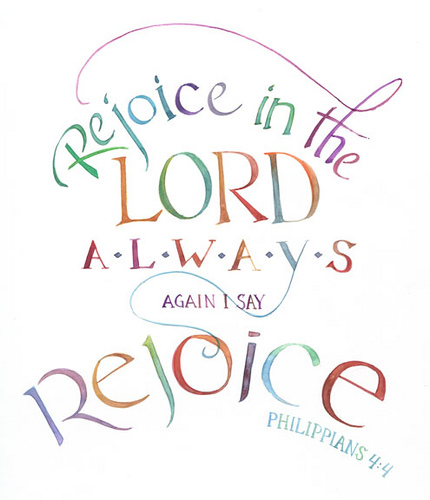
For example, celebrate anything and everything (Philippians 4:4).

3095781994_90a392c03f

Take joy in:

  • Your cozy robe to ward off the morning chill
  • That cute tuft of hair sticking up on your toddler’s head
  • A parking place opening up when and where you need it
  • Licking the stamp just as the mail carrier pulls up in her truck
  • An earring lost last week turns up between the counter and stove this week.

You see, joy and strength are closely related. Ezra told the people of Israel, “The joy of the Lord is your strength” (Nehemiah 8:10).

Those five examples above, and thousands like them, are gifts from your Heavenly Father. “Every good gift and perfect gift is from above, coming down from the Father of the heavenly lights” (James 1:17).

In the same way we can build up physical strength with exercise, we can build up spiritual strength with praise—by expressing gratitude and joy for every good and perfect gift.

And now, the last promise of this verse describes in metaphor the result of living according to God’s design.

“You will be like a well-watered garden, like a spring whose waters never fail.”

TotalChildCareVegetables7 

Visualize a flourishing garden, with rich, green plants overflowing with healthy, ripe produce.

Those can be descriptors of you and me.  We are:

  • Rich in God’s grace, which he has lavished on us with all wisdom and understanding (Ephesians 1:8).
  • Green and flourishing, because we spend time with the Master Gardener and allow him to cultivate our spirits (Psalm 1:2-3).
  • Healthy and prosperous of soul (v. 3). As we soak up God’s Word, we’ll produce actions and attitudes that honor God and bring us inner satisfaction.
  • Ripe and mature, lacking in nothing (James 1:3).

God offers us “a continual source of thirst-quenching, drought-ending, fruit-producing, spiritual hydration” (James MacDonald).

Doesn’t that sound refreshing?  Who could turn down such provision?

*     *     *     *     *     *    *     *     *     *

Thank you, Father, for the precious assurances of these promises: 

  • You are leading me along the path you preordained before time began.
  • Every day of this earthly journey I can count on you to supply my needs.
  • Every day you provide fresh strength. One way is through the exercise of praise.  
  • As I spend time in your presence, I will be transformed–like a garden replenished by hydration. In fact, I can grow into your likeness with ever-increasing glory!

 “Such knowledge is too wonderful for me. It is too lofty for me to attain.” Yet I know it to be true because these are truths from your reliable Word.  My heart overflows with wonder and gratitude.

(Psalm 139:16; Philippians 4:19; 2 Corinthians 3:18; Psalm 139:6)

(Photo and art credits:  www.dayofgrace.me; http://www.anativegarden.blogspot.com; http://www.flickr.com; http://www.naturalearning.org.)


Read Full Post »

blog-prayer-woman


How would you finish this prayer: 

“Oh, Lord, what I need most right now is ____________________.”

What word would you put in the blank?

Guidance?

Provision?

Strength?

Purpose?

One glorious Bible verse tucked into Isaiah presents four comforting promises that cover each of those needs:


Isaiah58.11 

“The Lord will guide you always;

He will satisfy your needs in a sun-scorched land

And will strengthen your frame.

You will be like a well-watered garden,

Like a spring whose waters never fail” (58:11).

Lots of truth packed into five short lines. Each phrase warrants careful consideration. For example:


1.  The Lord will guide you always.


He’s not a life coach, counselor, or psychologist. The almighty God of the universe promises to be your guide—free of charge! And he’s available 24/7. Think, too, of his astounding attributes that make him the perfect guide:

  • God is omniscient—He knows everything (Psalm 139:1-6), including every detail of your situation and the people involved.
  • God is righteous—Everything he does is good (Deuteronomy 32:4). He can be relied upon to lead you down a perfect path.
  • God is merciful—He responds in loving compassion (Psalm 116:5). He’s your understanding Father, your strongest ally.
  • God is truthful—All that he says can be trusted (Titus 1:2). He will not lead you astray.
  • God is faithful—He keeps his Word (Psalm 33:4). God does not lie or forget what he said. Neither does he change his mind.

Notice that first phrase says God will always be your guide. Not every once in a while when you’re really in a quandary, but always. You are never left alone to your own devices—unless that’s the way you want to live. God is a gentleman; he leaves the choice up to you.


2.  He will satisfy your needs in a sun-scorched land.


Not he might satisfy your needs if he feels like it. He will. 

No matter what the landscape of your life looks like, God will see that your needs are met.

Have you ever been surrounded by sun-scorched land, perhaps a desert or wilderness where no life is visible?

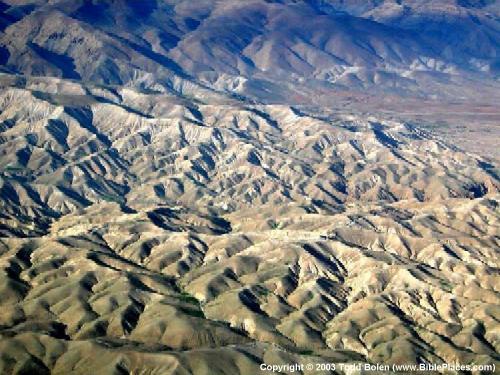
Steve and I visited Israel a number of years ago. One of our tour stops was in the Judean wilderness—a desolate and foreboding sight to behold. Not a single tuft of grass. No bushes or plants of any kind—not even cactus. Only two things are visible when standing in the midst of this desert: sky and pale gray-brown mountainous rock, as far as the eye can see.


judean_wilderness_west_of_jericho_ariel_tb_q010_03


Should you decide to live there, you’d have to bring with you everything necessary for survival: all your food, water, and clothing. For shelter, you might find a cave.

Ah! But what if there was Someone there ahead of you? Someone who already had at his disposal the supplies you required? And they would never run out? That’s the life-giving, unfailing provision of your Heavenly Father.

Let’s you and me rest in the assurance that the essentials—and even many delights!—will be generously supplied. If something is meant to be, he will take care of it—just as he’s been doing since each of us was born.

Think how he has led you through the wilderness of broken relationships and difficult circumstances. His grace has been sufficient for every challenge (2 Corinthians 12:9), right?

Now project that assurance into the future. Even if we walk through the valley of the shadow of death, we have no need to fear. Our all-powerful God is with us (Psalm 23:4)–guiding and providing.

(Please remind me of that when I come to a wilderness-patch, will you?)


*     *     *     *     *     *     *     *     *     *


Heavenly Father, I praise you that day by day, moment by moment, you are delighted to guide us in perfect wisdom. You generously provide for our needs and lovingly care for us body, soul, and spirit. Thank you for your compassion, your faithfulness, and grace to see us through the wilderness valleys. “I trust in you, O Lord; I say, ‘You are my God. My times are in your hands.’” (Psalm 31:14-15a).  


Please come back on Monday. We’ll meditate on the second half of Isaiah 58:11.


(Photo credits:  www.hischurchwomen.com; http://www.freerepublic.com; http://www.biblestudytools.com.)


Read Full Post »

Woman with piggy bank at rainy window


“Save for a rainy day,” financial experts advise.  And they’re right.  It is smart to have funds set aside in case of emergency.

But we would also be wise to save up for another kind of rainy day:

  • The day great disappointment shatters our joy
  • The day the doctor begins a consult by saying, “I’m terribly sorry, but…”
  • The day a loved one calls with disturbing news

What could we possibly save up that would help in such circumstances?

Consider: monetary deposits in a bank account insulate us against financial emergencies.

Similarly, we can make faith-statement deposits into our soul-accounts, to insulate us against life’s emergencies.  A healthy soul-account offers peace of mind, confidence, and a sense of well-being.

The most valuable faith statements are those straight from scripture, since the Bible is our source of truth.

Statements such as these are worthy starting points:

  • God is with me, even in the midst of trial.

“Those who know Your name will trust in You, for You, Lord, have never forsaken those who seek You” (Psalm 9:10).

  • God is my stronghold in time of trouble, offering help and deliverance.

“The salvation of the righteous comes from the Lord; he is their stronghold in time of trouble.  The Lord helps them and delivers them” (Psalm 37:39-40).

  • He will supply all my needs.

“My God will meet all your needs according to his glorious riches in Christ Jesus” (Philippians 4:19).


Sometimes God makes deposits in our soul-accounts through other reading.  Here are a few examples I’ve collected:

  • “God makes good things out of the hard times.” – Erica Hale
  • “Difficulties are sent to make us grow. Move from complaining to proclaiming what God is doing through the problem. Remind yourself, for every Calvary, there is an Easter.” – Barbara Johnson
  • “When we understand that life is not about us, we learn to overlook the trivial and fix our gaze on the eternal. What is an offense compared to His love? What is a rejection compared to His unconditional acceptance? What is a momentary trial compared to an eternity with Him?” – Emmanuelle Gomez


Faith statement deposits also come through experiences, such as:

  • The spontaneous hug of a good friend who knows of our struggles. That’s God’s way of assuring us…

…We are not alone.

  • An answered prayer—and the answer is far beyond what we asked for. That’s God’s way of showing us…

…His love and blessing never fail, even in the midst of difficulty.

  • A transformed spirit through worship.  Worry becomes faith. Fear becomes courage. Depression becomes gladness. That proves…

…The joy of the Lord is our strength (Nehemiah 4:8).


Faith-statements, deposited in our souls even before we have need of them, provide a deep, sweet sense of security.

When difficulties arise, and the time comes to make withdrawals, we can praise God for each truth. Praise will fill our hearts with song and drown out the voices of worry and fear.

*     *     *     *     *     *     *     *     *     *

Your faithfulness, O God, is unwavering and unfailing.   Oh, how I want to be faithful to you, especially during difficult circumstances.  You have provided the tools.  I praise you for the deposits your Spirit makes into my soul account, offering solace, perspective, strength, and wisdom.   Help me to avail myself of your gracious provision.  


(Photo credit:  www.dailyfinance.com.)


Read Full Post »

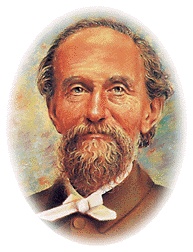
His name keeps popping up in books and blog posts: Andrew Murray.

His words are thought-provoking:

  • “Never try to arouse faith from within. You cannot stir up faith from the depths of your heart. Leave your heart, and look into the face of Christ.”
  • “Abiding fully means praying much.”
  • “Just as water ever seeks and fills the lowest place, so the moment God finds you abased and empty, His glory and power flow in.”

So who was this deeply thoughtful man, Andrew Murray(1828-1917)? Did his conversion experience turn him around 180 degrees like Paul’s? Did he face great danger like David or Daniel? Did he impact throngs of people with his preaching like Jonah or John the Baptist?


andrew_murray-gif


No. According to the Christian Classics Ethereal Library (www.ccel.org), Andrew grew up in a Christian home. No spectacular transformation from unbeliever to saint.

His father was a Scottish Presbyterian minister who served in the Dutch Reformed Church of South Africa. Andrew became a pastor himself and served several pastorates, also in South Africa.

Andrew helped found two schools, made several evangelistic tours of South Africa, and received an honorary doctorate for his contributions to world missions. Today he is best known for his devotional writings, found in the 240 publications to his credit.

Not a shabby list of accomplishments, but Andrew faced no giants or lions. There are no cliff-hanger stories to tell about him. He simply served God faithfully where he was.

No doubt there are some who would skim-read such a biography, yawn, and seek more exciting stories–Adoniram Judson’s or David Livingstone’s.

Andrew Murray may have written some thoughtful books and essays, but let’s face it. His life-story borders on ho-hum ordinary.

But wait. The Bible and annals of history are overflowing with the stories of ordinary people such as:

  • Jethro, a shepherd. Yet his wisdom greatly assisted his son-in-law–Moses (Exodus 18:1-27).
  • Mordecai, a captive. However, he was in the right place at the right time to hear of a plot against the Jews (the book of Esther).
  • Lydia, a dealer in fine purple cloth and dye. She just happened to provide housing for Paul and Silas, and became the first convert—in all of Europe (Acts 16).

No doubt these people considered themselves just ordinary folk. But God used them in astonishing ways.

The truth is, there is no such thing as an ordinary person in God’s kingdom.

So, guess who’s talking when that voice in your head whispers, “You are a nobody. You aren’t accomplishing anything worthwhile in your life.”

It’s not God!

He placed within each of us wondrous, unique gifts. Would God do that if we were worthless?

Second, he placed us within a circle of influence that includes family, neighbors, friends, church acquaintances, business contacts, and more. (And let’s not forget the ripple effect.)

Third, God provides opportunities within that circle for us to use our gifts, be a blessing to others, and  bring him praise.

So whether God ordains you or me to be a leader or follower, a platform personality or a behind-the-scenes helper, a larger-than-life Paul, or a lesser-known Andrew Murray, we each have a unique niche to fill—especially designed by God himself.


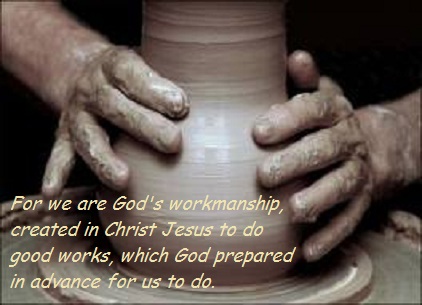
potter


For we are God’s workmanship, 

(Think of it—we are the handiwork of the Master Designer!)

Created in Christ Jesus to do good works, 

(Works that will bring glory to God and supreme satisfaction to our hearts.)

which God prepared in advance for us to do (Ephesians 2:10).”

(Availing ourselves to what he’s prepared results in supremely worthwhile accomplishment.)

*     *     *     *     *     *     *     *     *     *


Thank you, Father, for gifting each of us with unique abilities to fulfill your specially designed plans. Thank you that in your kingdom there is no such thing as ho-hum ordinary, because you, the Master of the universe only create masterpieces! May our joy be centered in faithfully completing the works you have prepared for each of us.


Art and photo credits:  www.newparadigmthinkers.wordpress.com; http://www.dayofgrace.me.)       


Read Full Post »

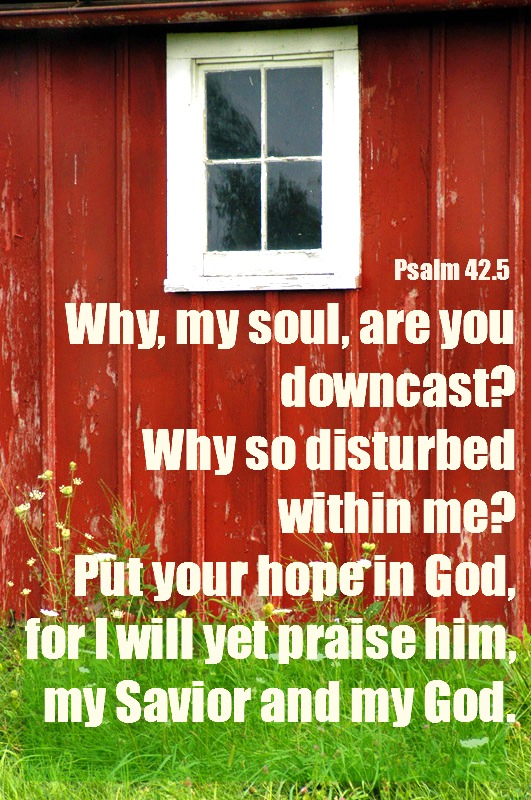
psalm-42.5


On Friday, September 26, my younger brother, John, called with the heartbreaking news that our mother, age 85, had suffered a massive stroke. Her entire right side was affected; she could neither see nor talk. The prognosis left little room for hope.

By Sunday morning I was on a plane for Austin, Texas, to see Mom and care for Dad (age 90) while John and his wife, Collene, took care of numerous business matters related to Mom’s and Dad’s welfare.

For at least ten years Mom has been Dad’s primary care giver, due to his degenerative arthritis and Parkinson’s disease. But she considered her responsibilities a privilege, often saying, “He took care of me for many years; now it’s my turn. He’s my ministry now.”

For ten days we put our hope in God and witnessed his power at work.  In spite of great sadness, we could say, “For we will yet praise him, our Savior and our God” (Psalm 42:5), as he blessed us with his presence, guidance, and provision.

Mom was taken to Brackenridge, a teaching hospital, where she received conscientious, compassionate care. Doctors and nurses alike spent time with us, patiently explaining Mom’s condition and what we could expect.

Though she could not speak, and her brain had sustained extensive damage due to swelling, Mom communicated her love with hand squeezes. She also drew our hands to her lips for kisses.

My daughter, Heather, received permission from her kind boss to take time away from work and fly to Austin. She was able to stay for three days, visiting her grandmother, offering help, and lifting the spirits of us all.

On Day Five, I believe, it was recommended that Mom be moved to Hospice.   Immediately the name of a highly respected facility came to Collene’s mind. Wouldn’t it be wonderful if Grandma were taken to Christopher House, she thought. But that particular hospice is small. What were the chances that a bed would be available? Collene kept the thought to herself, just in case Mom was assigned elsewhere.

Sure enough, a representative from Christopher House came to the hospital and directed us through the process to have Mom transferred there. An added blessing: John and Collene knew one of the nurses. She asked to be assigned to our mother for the duration of Mom’s stay.

Meanwhile, we visited three nursing homes for Dad. (He had told Mom on numerous occasions, “Just put me in a nursing home!” She wouldn’t hear of it. Only four months ago did she agree to have a care-giver come four hours a day.)

All three facilities were close to John and Collene, all relatively new.   One seemed a particularly good fit for Dad’s needs and interests.

Two doctor’s appointments, many phone calls, and much paperwork later, Dad was approved and processed for admittance to the nursing home we had hoped for.   The day before my flight home I did laundry for Dad, gathered toiletries and other items, and marked his name on all belongings.

The next morning, Wednesday, John and Collene got Dad settled, and I flew home.

Later, John sent me a video of Dad playing a piano duet with a staff member. Granted, he could only play with one finger, but he packed a lot of rhythm and soul into those single notes.  What a delight to see him having a good time–already.

That night we spoke by phone.  Dad told me the folks at his dining table enjoyed his jokes, and he’d already taken advantage of the library.

On Thursday, October 9, Mom graduated to heaven. It was her father’s birthday.

Do they celebrate birthdays in heaven? I’d like to think that my grandmother and grandfather stood at the gate to greet Mom, as Jesus ushered her in. Together with many family and friends who already reside in heaven, they celebrated her arrival as a precious gift for Gramps’ birthday. Somehow it seems very fitting.


*     *     *     *     *     *     *     *     *     *


You can read my mother’s story at http://www.memorialwebsites.legacy.com/gerischaub.


(Photo credit:  www.jeanierhoades.com )


Read Full Post »

article-step-by-step_ds-photo_getty_article_178_67_200377237-001_XS

Back in the 1970s somebody came up with the idea of worry stones—small, smooth pebbles that people could rub between their fingers to release their worries. (What a great money-maker, huh?  Collect some free pebbles, clean ’em up and sell for 100% profit.  Genius.)

According to enthusiasts, the constant rubbing activates the nerves at the base of the thumb, releasing endorphins. As a result, a sense of calmness purportedly settles in the user’s mind.

Even if that’s true, what happens when the person stops rubbing? Since the worry has not been resolved; isn’t it likely to return? I can’t see myself rubbing a stone until I fall asleep at night, can you?

Here’s a better idea.  Instead of going to a small pebble for worry-relief, go to the Rock.

What Rock, you ask?

“There is no one holy like the Lord; there is no one besides you; there is no Rock like our God” (1 Samuel 2:2).

Next question:  Why go to the Rock?

1.  God our Rock is more stable and reliable than Gibraltar.

igibrat001p4

The Rock of Gibraltar has become a symbol for stability, having stood sentry on the southern coast of Spain for centuries. Some say it dates back to the Jurassic Period.

But our God is older still, isn’t he.

“Trust in the Lord forever, for the Lord is the Rock eternal” (Isaiah 26:4).

And he is the same yesterday, today, and forever (Hebrews 13:8).  Now that’s reliable.

2.  God our Rock is more sheltering than a deep cave.

Verteba_Cave

(Verteba Cave, Ukraine)

During World War II, a small group of Ukrainian Jews found a way to escape the Nazis. They lived underground in caves for a year and a half.

At night they foraged for food. They even built showers and latrines deep inside.

But imagine living every day in pitch blackness and in fear of being discovered.

One day it happened. Nazi soldiers stumbled upon their hiding place. A courageous woman spoke for the group, as German guns pointed straight at her.

“What are you afraid of here?” she said. “Is the Furhrer going to lose the war because we live here?” Miraculously the soldiers left without doing anyone harm.

The band of Jewish villagers found relative safety in those caves,  and in April, 1944, the cave dwellers were liberated, able to return to the light.

But God our Rock offers guaranteed eternal safety for our souls. His Son, Jesus “became the source of eternal salvation for all who obey Him” (Hebrews 5:9)

3.  God our Rock is more protective than Masada.

slide-static

Perhaps you’re familiar with the mountaintop fortress, towering 1500 ft. above the Dead Sea.   The refuge was built by Herod the Great, from 37 to 31 B.C., to showcase his power.

Infamous for his brutality, Herod had good cause to be paranoid. He spared no expense to make sure this desert fortress could withstand attack and provide long-term refuge. His plan included protective casement walls, an ingenious water-collection system and cisterns for storage, storehouses, barracks, palaces, an armory and more.

Impregnable? Almost.

When Herod died, Jewish rebels were able to overtake the Roman guard remaining at the fortress. A thousand Jewish zealots lived atop Masada for three years.

Yet nothing or no one on earth can compare to God our Rock.

“Lead me to the Rock that is higher than I,” cried David. “For you have been my refuge, a strong tower against the foe” (Psalm 61:2-3).

And how do we avail ourselves of God’s refuge?  Through gratitude, praise, and prayer.  We can:

  • Thank him for his promises, for the times he has protected and provided in the past.  We must feed our confidence in God rather than our fear.
  • Praise him for his glorious attributes that he is bringing to bear upon our situations–attributes such as power, wisdom, trustworthiness, and love.
  • Affirm our faith. If we occupy our minds with expressions of trust, there won’t be room for thoughts of worry.

“My soul finds rest in God alone;

my salvation comes from him.  

He alone is my rock and my salvation;

he is my fortress, I will never be shaken…

Find rest, O my soul, in God alone;

my hope comes from him”

(Psalm 62:1-2, 5).

(Photo credits:  www.ehow.com; http://www.kids.brittanica.com; http://www.noplaceonearthfilm.com; http://www.masada.org.il.)

Read Full Post »

« Newer Posts - Older Posts »

Still Traveling

Impressions Becoming Expressions

Living Our Days

Gaining a heart of wisdom

He Said What?!

I'm Patty, and my husband and I are living with our adult son who has autism and epilepsy. I love sharing lessons learned from life around me, especially life with Aaron.

Meditations of my Heart

Impressions Becoming Expressions

Linda Stoll

Impressions Becoming Expressions

Debby Thompson

Impressions Becoming Expressions

Signora Sheila

Notes on Life, Faith & Italy

Colleen Scheid

Writing, Acting, Living in God's Love

Mitch Teemley

The Power of Story

Heidi Viars

Finding the Image of God