Feeds:
Posts
Comments

Archive for the ‘God’s Faithfulness’ Category

Remember Christmas morning as a child—the first glimpse of the enticing packages tucked under the tree?  Did you hop and clap with delight?

Or how about that winning touchdown for your team—in the last few moments of the game with your school’s arch rival? Did you jump up and shout in celebration?

Perhaps a family member or dear friend recently announced glorious news—a baby on the way, better employment obtained, or a clean bill of health finally received.  Did you find yourself dancing for joy?

Over-the-top pleasure and exciting events will do that to us. And although the body may no longer respond with hops, jumps, or dance, our spirits certainly soar in the moment.

The prophet Habakkuk of Old Testament times wrote about just such a response.  I love the way Eugene Peterson paraphrased the verse: “I’m turning cartwheels of joy to my Savior God” (Habakkuk 3:18 MSG). Sounds like the prophet received the answer to a heartfelt prayer or perhaps a miracle had occurred.

Truth is, Habakkuk’s home city of Jerusalem faced imminent invasion by the brutal Babylonians.  Recent conquests of other kingdoms left no question about the city’s fate.

God had made clear why disaster loomed.  The people of Jerusalem had continually ignored his wise ways and reveled in wickedness. Multiple warnings had been proclaimed and disregarded.

In response God was about to provide a means of saving his people—not from the ruin of their city—but from the ruin of their souls.  He would allow the invasion and a period of captivity in a foreign culture 900 miles away (Isaiah 39:5-8; Jeremiah 25:1-11).
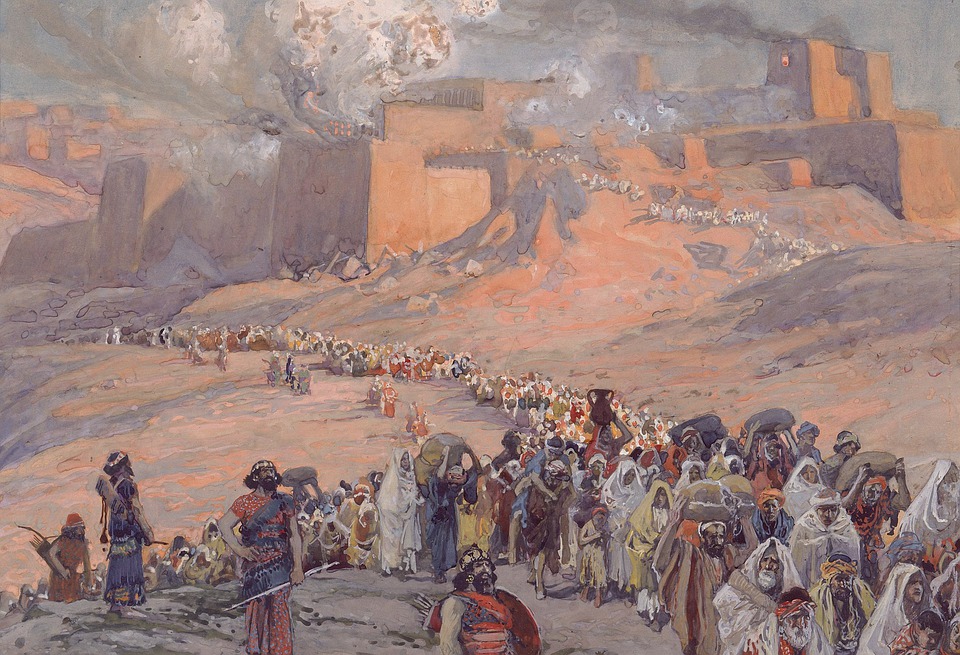
(Isaiah foretold this scene in the latter half of the eighth century BC,
Jeremiah in 605 BC. The invasion took place in 586 BC.)

Habakkuk questioned God’s decision, wondering why he would allow the Babylonians, a people more wicked than the inhabitants of Jerusalem, to “swallow those who are more righteous than they are (Habakkuk 1:13)?”

By the end of his book, however, the prophet’s doubts had turned to faith and he declared—in the face of calamity–“Yet I will celebrate the Lord. I will rejoice in the God of my salvation” (3:18 NIV).

The word rejoice in this verse is ‘alaz’ in the original Hebrew, and means to “spin around for joy.”* Can you imagine? Disaster loomed. All Habakkuk had ever known would be destroyed.  If not killed, he would be forced into captivity in a hostile country.

Yet Habakkuk determined to dance for joy in his spirit—spin cartwheels even.

How does a person acquire such joy? Not by setting her sights on things that make her momentarily happy.  Deep-down dancing joy grows in proportion to our trust in God, and our trust grows in proportion to our knowledge of God—knowledge gained as we spend time in His Word.
We’d also do well to remember the close relationship between joy and gratitude.

As 2022 unfolds, a number of crises threaten—in our cities and states, our country, and around the world.  With Habakkuk of old we have a choice: to sink into despair over the real possibility of disaster, or to rejoice in our God who will enable us to endure whatever we may face (James 1:2-4).

It is our turn to spin for joy–in the God of our salvation!

*Linda Dillow, Satisfy My Thirsty Soul, 202.

Art & photo credits: http://www.flickr.com; http://www.hippopx.com; http://www.maxpixelnet; http://www.wikimedia.org; http://www.pxhere.com; http://www.pixabay.com.


Read Full Post »

(From Morning by Morning, March 4.)

S. Truett Cathy (1921-2014) was just such a person, who grew up in poverty during the Great Depression to become a steadfast and unmovable masterwork of God.

At age eight he started his own business, inspired by a woman in his Atlanta, Georgia neighborhood. She sold cupcakes from her front yard.

M-m-m.  What could I sell to earn some money? Truett wondered. 

The answer: soft drinks. He purchased six bottles for a quarter and sold them for a nickel apiece. Just twenty six-packs, he figured, and I’ll have a whole dollar.

Truett quickly realized he could expand sales by enticing the door-to-door salesmen with cold drinks. He began to serve ice with the soda.

Soon the young entrepreneur had saved four dollars—enough to buy an old bicycle. Now he could make quicker profits by delivering newspapers.  But competition for customers was stiff with three well-established papers in Atlanta.

Truett had learned the value of customer satisfaction, however, so he made sure his papers landed on porches. On rainy days he put them inside the screen doors, and his customer list grew.

Truett delivered papers until high school graduation, after which he was drafted into the Army. Upon honorable discharge in 1945, Truett returned home to pursue his lifelong dream:  owning a business.

He decided to open a restaurant, knowing a bit about cooking for a crowd.  For years he’d helped his mother as she daily prepared meals not only for their family of nine but also for six boarders.

Truett and his younger brother Ben pooled their resources, took out a loan and bought a piece of land near a Ford assembly plant and Delta Airlines at the airport which provided a large customer base.

The tiny restaurant, aptly named the Dwarf Grill, included just ten counter stools and four tables.  The brothers served quick-to-fix burgers and steaks.

(The Dwarf Grill is still in operation, but in a new building with a revised name.)

They worked hard and the business thrived. But in 1949 tragedy struck. Ben, another brother, and two friends were killed.

Later Truett would remark, “I lost two brothers in an airplane crash, both of them leaving a wife and kids.  When I get to heaven, that’s probably the first question I’d like to ask: Why was it necessary?”[1]

The heartbreak did not erode Truett’s strong faith in God, which had been inspired by his devout mother and nurtured by Sunday School teacher and life-long mentor, Theo Abbey.

Then more trouble ensued.  In 1959 Truett was diagnosed with colon cancer. In an interview he explained that just prior to the successful surgery he experienced a new peace, knowing that whether he lived or died, he would be with God.[2] God granted another fifty-six years.

In 1960 the second restaurant burned to the ground, and then the original Dwarf Grill caught fire in 1965. But instead of becoming discouraged, Truett leaned on his God, growing stronger in faith and more determined than ever.

With only one restaurant to oversee, he focused his time on developing the menu. Truett remembered his mother’s impressive fried chicken, how she seasoned it the night before and put it in the ice box to marinate. 

He experimented with recipes, tried his efforts on regular customers and soon created a new menu item: the Chick-fil-A sandwich—a play on the word fillet, but also indicating the meat was grade A.

Customers loved the new sandwich, and in 1967, Truett opened the first Chick-fil-A restaurant. One successful opening followed another until, in the year 2000, the restaurant chain grossed one billion dollars in sales. By 2018, it surpassed $10 billion in sales.

(Double-click and enlarge this image to read about
Truett Cathy’s winning habits
based on Biblical principles.)

Today, the company generates more revenue per restaurant than any other fast-food chain, even though all locations are closed on Sundays. (Since his first day in the restaurant business, Truett set aside that day for his employees and himself “to rest and worship if they choose.”[3])

Truett’s commitment to put God first is expressed in the company’s statement of purpose: “To glorify God by being a faithful steward of all that is entrusted to us and to have a positive influence on all who come in contact with Chick-fil-A.”[4]

Truett also delighted to glorify God by spending his fortune to encourage others.

How do you identify someone who needs encouragement?

That person is breathing.

–Truett Cathy

Since 1973, Chick-fil-A has given more than $35 million in college scholarships to its employees. Truett also founded the WinShape Foundation, providing approximately $18 million dollars for the development of foster homes and summer camps.

His legacy of planting Christian ideals in the lives of others continues, even though Masterwork Samuel Truett Cathy now resides in heaven. (He is survived by his wife of sixty-six years, three children, eighteen grandchildren, and nineteen great-grandchildren.)


[1] https://www.quotetab.com/quote/by-s-truett-cathy/i-lost-two-brothers-in-an-airplane-crash-both-of-them-leaving-a-wife-and-kids-w

[2] https://www.11alive.com/article/news/thank-you-god-that-im-alive-in-book-chick-fil-a-founder-s-truett-cathy-shared-faith-affirming-brush-with-mortality/85-48c52862-7a53-4167-9e7a-1a37bd8d6185

[3] https://thechickenwire.chick-fil-a.com/inside-chick-fil-a/secret-menus-and-closed-on-sundays-chick-fil-a-fact-or-fiction

[4] https://billygraham.org/story/a-conversation-with-truett-cathy

Other Sources:

http://www.academicstar.us/UploadFile/Picture/2015-7/20157331854318.pdf

https://www.entrepreneur.com/article/311452

http://www.giantsforgod.com/s-truett-cathy/

https://www.thextraordinary.org/s-truett-cathy

Photo credits: http://www.pixhive.com; http://www.quotefancy.com; http://www.flickr.com; http://www.dailyverses.net; http://www.samiskelton.com; http://www.flickr.com; http://www.pxfuel.com.

Read Full Post »

One of the psalmists proclaimed, “I will go to the altar of God, to God, my joy and my delight” (Psalm 43:4). The statement raises the question, How do you delight in someone who can’t be seen or touched?

Perhaps we can discover the answer by considering how we delight in the people around us. My father offers a perfect example.

First let me tell you: Dad worked miracles with his numerous tools.  He could fix or build practically anything, as well as paint and wallpaper like a pro.

We were probably among the first to have a built-in sound system.  Dad wired and hooked up a speaker in every room (each with its own on-and-off switch), so anything on the radio or hi-fi could be heard anywhere in the house. 

Dad also built custom-sized furniture:  in the living room–a bookcase (with open shelves above and enclosed shelves below) along with Mom’s music cabinet; in the kitchen—new cupboards and a storage cabinet; in Mom’s and Dad’s bedroom—a large dresser; and for my brother John and me—desks. Each project displayed his careful attention to detail.

But Dad’s admirable qualities weren’t only on display in his home improvement projects.  He demonstrated patience while teaching us how to play Muggins (an old card game), how to use his tools, and how to plant seeds.

He exemplified selflessness by taking us sledding and kite-flying in the park, swimming at the community pool, and biking around town. Dad proved his generosity by volunteering time and effort to help neighbors and fulfill various needs at church.  

When Dad said, “Who wants to pick up some lumber with me?” or “Who wants to go to the hardware store?” John and I were ready to drop whatever we were doing. 

It’s not that these were exciting activities in themselves, it was Dad who made them a special delight–conversing with us as we rode to and from, pointing out items of interest along the way, and holding our small hands in his big ones as we crossed streets.  

Now all this activity and industriousness took place decades ago of course, yet I still take pleasure in remembering his noteworthy undertakings and attributes. In fact, appreciation and admiration for him have only increased over time.  I consider myself privileged to have known Dad and spent time with him.

(Dad and me, mid-1960s)

To know our Heavenly Father we turn to the Bible, of course.  There we learn about his wonderful deeds and miracles. We see God’s glorious character traits on display, including his astounding abilities, his goodness, generosity, and love. We soon find ourselves delighting in all that he is.

We also delight in God as we spend time with him–celebrating what he’s done in our past and praising him for what he’s accomplishing today. We learn important life lessons from him.  And we consider the benefits bestowed by our Heavenly Father, his eternal commitment to us, unfailing love for us, and strength-infusing presence with us.

We find ourselves happily praising God:

This image has an empty alt attribute; its file name is 7335.jpeg

Then we turn all these contemplations into gratitude.

The daily practice of the discipline of gratitude

is the way to daily practice the delight of God.

–Ann Voskamp*

And what will be the result of such a practice?  Pleasurable wonder, resilient faith, and serene contentment—as a start. Doesn’t that sound glorious? Especially during these turbulent times.

In addition, we’ll bring delight to him also (Psalm 147:11). Imagine that!

Perhaps we’d do well to turn Psalm 43:4 into a New Year’s resolution for 2022:

[Daily] I will go to the altar of God,

to God, my joy and my [deep] delight.

____________________

*One Thousand Gifts, 82.

Photo credits: http://www.wikimedia.org (2); http://www.pixnio.com; Henry Mensinger (my grandfather); http://www.heartlight.org (2); http://www.pixabay.com.

Read Full Post »

The first Christmas carol ever composed rarely appears in a collection of Advent songs.  But you will find it in the Bible, Luke chapter one.  It’s Mary’s song, shared with her cousin Elizabeth soon after she arrived at the older woman’s home.

Using much scripture, Mary artfully wove this prayer-song to praise God for his work in her life and in the world-at-large, especially now that the Messiah would soon be born.

Mary’s prayer is often referred to as the Magnificat, because in a number of translations it begins, “My soul magnifies the Lord,” as if Mary is holding up a magnifying glass to God’s attributes while she draws attention to each one.

I too have seen God’s attributes at work, and have experienced countless blessings.  While contemplating Mary’s song recently, I wondered: could I compose a Magnificat? What follows is the result.

My soul proclaims your greatness, O Lord . . . (Luke 1:46 HCSB)

. . . on display in the wonders of creation, events that defy explanation, and in the transformed lives of people—including my own. 

“You are the God who performs miracles; you display your power among the peoples”[1] as needs are met, disasters avoided, and the way forward provided. You alone are omnipotent, with all resources at your disposal.

My spirit rejoices in God my Savior (v. 47 NIV).

I praise you for saving me from the consequences of my sin through the sacrifice of your Son.  Upon my last breath, you will take me to heaven to live with you forever. In that moment I’ll be healed of all ailments and released from all adversity.

Until that day, you gladly save me from worry, fear, discouragement and stress when I trust you and follow your ways. Thank you, dear Father!

You have looked [with loving care] on the humble state of your maidservant (v. 48 AMP).

By the world’s standards I’m a nobody–no wealth, no fame, no power. Little do some know my true status, the daughter of the King of the universe, and the numerous delights I enjoy as a result:

  • glorious moments in your presence
  • generous gifts not even asked for
  • friendships with your other children (augmented by your involvement and influence)
  • your frequent intervention in difficult circumstances, as only a powerful King could arrange

From one generation to another you have demonstrated your mercy (v. 50 GNT).

I think of my grandparents, each of whom you sustained and helped through difficulty.  I think of my parents who also experienced your faithfulness as they were faithful to you.

And now we can testify of your gracious kindness. You have dealt compassionately, especially in times of distress.

Your mighty power has been on display (v. 51 GWT) . . .

 . . . through healings that doctors can’t explain, needs met in miraculous ways, monetary gifts arriving just in time, and moments of desperation turned around in an instant.

“You satisfy the hungry with good things” (v. 53, HCSB). 

The list is lavishly long: your undeserved love, comforting presence, inexplicable peace, fullness of joy, heartening encouragement, fulfilling purpose, undying hope, sure promises, abundant provision, generous blessings, wise counsel, abiding strength—to mention a few! “In your giving we have a sea without a shore.”[2]

My God, the King, I exalt you for your glorious attributes,

and will praise your name forever and ever.

 Your ways are absolutely holy—no one is like you. 

You are the God who performs miracles!

Your power is on display in glorious ways all over the earth,

yet you have chosen to do great things for me and those I love.

My heart is filled with joy!

(Psalm 145:1; 77:13-14; 126:3)


[1] Psalm 77:14

[2] Herbert Lockyer, Seasons of the Lord, 255.

Photo credits: http://www.pixabay.com (twstringer); http://www.pxhere.com (dorothe); http://www.pxhere.com; http://www.pixaby.com (Simon); http://www.wikimedia.com (VinceTraveller); http://www.heartlight.org; http://www.pixabay.com (nastya_gepp); http://www.pix4free.

Read Full Post »

“Father, please try to understand. I cannot go back to medical school. I’m not well-suited to be a doctor.” Francis looked hopefully into his father’s eyes. Perhaps this discussion would finally convince Father to let him follow his heart’s desire:  to become a writer.

“Son, you’ve spent six years in training,” began his father, a physician himself. “It would be foolish to throw away all that time and effort. Besides, think of the security provided by a position in the medical field. If you pursue this notion of becoming a writer, there is no guarantee of success or even a steady income.”

Once again, father and son had reached an impasse. And so, with only a few coins in his pocket, Francis set out on his own.  He traveled more than 220 miles to London, found a job as a bookseller, and wrote in earnest as time permitted. The year was 1885.

Francis’ health began to suffer and he lost one job after another until he ended up selling matches in the Whitechapel slums of London’s East End.

That barely provided food much less rent.  Soon Francis was homeless. To make matters worse, he found himself addicted to the opium he had first taken for relief of neuralgia pain. At one point he attempted suicide.

In 1887 Francis sent some of his poems, “scribbled on sugar paper” [1], to Wilfred Meynell, the editor of a journal, Merrie England. Meynell was highly impressed, in spite of the humble presentation, and agreed to publish them. But the proceeds were meager.

The following year Jack the Ripper stalked the streets of Whitechapel. Francis did what he could to protect the murderer’s would-be victims, the prostitutes of the make-shift brothels. Perhaps it was one of these women who saw Francis collapse in the street one day.  She allowed him to stay with her and even cared for him for a while. (Francis later referred to her as his “savior,” though he never revealed her identity.)

When the publisher Meynell discovered Francis’ dire circumstances, he arranged for the young poet to live at a monastery where he could regain his health and overcome his addiction. The process took five years. As Francis began to heal physically, Meynell and his wife helped Francis renew his faith in God. Sometimes as he walked the peaceful grounds of the monastery, Francis would become overwhelmed by God’s grace to save him, and he’d break out into songs of praise.

(Perhaps scenes such as this caused Francis’ outbursts of praise.)

During this time Francis continued to write—poetry, essays, and short stories—including his most famous work, “The Hound of Heaven.” The autobiographical poem recounts his experience of being lost and God’s persistent pursuit of him.

“Hound of Heaven” begins:

I fled Him down the nights and down the days

I fled Him down the arches of the years

I fled Him down the labyrinthine ways

Of my own mind, and in the midst of tears.

(Such a monastery chapel as this may have inspired line 2 above.)

Later in the poem Francis described God’s pursuit:

From those strong Feet that followed, followed after

But with unhurrying chase and unperturbed pace,

Deliberate speed, majestic instancy,

They beat–and a Voice beat

More instant than the Feet–

‘All things betray thee who betrayest Me.’

Another section provides God’s explanation for removing certain pleasures from the speaker’s life, because they were leading him in the wrong direction. God’s purpose was to guide him toward choosing the right path.

In the end God tells the speaker that “the happiness he sought by running away was following him all the time” (Cummings [2]). And the darkness of deprivation had been but “the shadow of the Divine hand stretched over him in love” (Blamires [3]).

Once Francis had regained his health in 1893, the Meynells invited him to stay with them. That same year Meynell helped Francis publish his first book of poems. “Hound of Heaven” was included.

“It was immediately recognized as a masterpiece” [4]. One critic called it “one of the great odes of which the English language can boast” [5].

Over the ensuing years, “Hound of Heaven” was praised by such respected authors as Oscar Wilde, G. K. Chesterton, Eugene O’Neill, and J. R. R. Tolkien. O’Neill showed his high respect for the poem by memorizing it—all 182 lines. Chesterton said, “it is the most magnificent poem ever written in English,” to which Tolkien responded that Chesterton wasn’t giving the poem the credit it deserved [6].

Francis Thompson subsequently became a well-known, respected poet, essayist, and spiritual writer. But his health suffered due to the hardship of those years in Whitechapel, and he succumbed to tuberculosis in 1907 at the age of 47.

Across the decades since his homegoing to heaven, Francis would surely have us remember these words of the apostle Paul:

Notes:

[1] https://www.christianity.com/church/church-history/timeline/1901-2000/heavens-hound-got-francis-thompson-11630688.html

[2] https://www.cummingsstudyguides.net/Guides3/hound.html

[3] Harry Blamires as quoted in Oxley, The Hound of Heaven: A Modern Adaptation, 81, as quoted by

www.hopechristianchurch.org

[4] http://houndofheaven.com/product/the-hound-of-heaven-the-story-of-francis-thompson/

[5] https://www.patheos.com/catholic/hound-of-heaven-pat-mcnamara-07-10-2012

[6] https://reasonsforhopejesus.com/is-hound-of-heaven-a-name-for-god/

Additional  Sources:

  1. https://www.americamagazine.org/issue/601/faith-focus/poet-return-god
  2. https://www.christiantoday.com/article/opium-addict-and-derelict-the-extraordinary-life-of-francis-thompson-christian-poet/130930.htm
  3. http://www.teleiaphilia.com/a-modern-adaptation-of-thompsons-hound-of-heaven/
  4. https://warwick.ac.uk/fac/arts/english/currentstudents/undergraduate/modules/fulllist/second/en227/texts/thompson-hound.pdf

Art & photo credits: http://www.wikimedia.org; http://www.geograph.org.uk; http://www.pixabay.com (2); http://www.canva.com.

Read Full Post »

Fixate on current events and become anxious.

Consider the bleak projections for the future and become fearful.

Dwell on your own struggles and become discouraged.

Focus on personal inadequacies and become doubtful.

Mull over regrets and become guilt-ridden.

Contemplate fading dreams and become despondent.

Permit negativity free reign and become depressed.

How easy it is to drift away from the truths that provide prosperity of soul.

We must choose to remember the following.

NO MATTER what we see happening, no matter the fear beginning to build, we can affirm: “For every visible reason for terror, there is an invisible and immensely more powerful reason for trust.” [1]

O Lord, God of our ancestors,

you alone are the God who is in heaven.

You are ruler of all the kingdoms of the earth.

You are powerful and mighty;

no one can stand against you!

–2 Chronicles 20:6 NLT

NO MATTER that we may not know the way forward; we do know the loving, all-powerful, and trustworthy Way Maker who has promised:

NO MATTER that life is a struggle right now, God will use it for good.  “There is coming a day [when] . . . We will have the glorious truth of our difficult ‘now’ laid out before us in a way that makes perfect sense, that will leave us panting a breathless ‘hallelujah’ for the process we’ve walked to get there.” [2]

“You do not realize now what I am doing,

but later you will understand.”

–John 13:7

NO MATTER how inadequate you feel because of failures, shortcomings, and doubts, you must remember:  “Weakness . . . is the very thing that qualifies you. Never mind your feelings of inadequacy; it is God’s work, not yours. 

“Simply make yourself available, and let go of any need to impress others, or prove yourself worthy, or achieve ‘success.’  What matters is that God has chosen you, and that God claims you as His own.” [3]

NO MATTER what you’ve done, “You no longer have to fear the consequences of your past, for your sovereign God promises that he will cause everything in your life to work together for your good and Christlikeness.” [4]

“Blessed are those whose transgressions are forgiven. . .

. . . Blessed is the one whose sin

 the Lord will never count against them.”

–Romans 4:7-8

NO MATTER that your dreams may be fading; “the death of your dream [is] not the death of God’s dreams for [you].” [5]

NO MATTER that circumstances conspire to steal your joy, you can . . . “Begin to rejoice in the Lord and your bones will flourish like an herb, and your cheeks will glow with the bloom of health and freshness. Worry, fear, distrust, care-all are poisonous! Joy is balm and healing, and if you will but rejoice, God will give power.” [6]

“Do not be worried,

for the joy of the Lord

is your strength and your stronghold.”

Nehemiah 8:10 AMP

NO MATTER the uncertainties and challenges of life, we have an all-powerful, wise and caring Companion for the journey, who provides all we need to experience prosperity of soul.

Stanza #3 from “Leaning on the Everlasting Arms” by Elisha A. Hoffman

[1] Elisabeth Elliot, These Bold Ashes, 11.

[2] F. Elaine Olson, Peace for the Journey, 101.

[3] Brother David Vryhof

[4] Kay Arthur, His Imprint, My Expression, 274 and Romans 8:28.

[5] Tasha June, Take Heart, 25.

[6] A. B. Simpson

Photo credits: http://www.pxfuel.com; http://www.piqsels.com; http://www.www.pixfuel.com; http://www.wikimedia.org; http://www.canva.com; http://www.heartlight.org; Nancy Ruegg.

Read Full Post »

More than 1,000 miles east of the Philippines lies the Mariana Trench, the deepest point of earth’s oceans—so deep it reaches into the earth farther than Mount Everest reaches into the sky.  That’s more than 36,000 feet, or close to seven miles.

Not even today’s sophisticated submarines can submerge to that depth without imploding from the pressure of 15,000 pounds per square inch–the equivalent of a full-grown elephant standing on your big toe.

But in 2014 oceanographers constructed a cube-shaped basket, attached it to cables, and dropped it into the depths of the trench.  The descent took four hours. 

They left the basket in place for twenty-four hours, to gather data by camera and hopefully collect samples of life—if it existed at all in such inhospitable conditions.

At the end of twenty-four hours, they used acoustic signals to release the weights that had caused the basket to fall.   With the help of flotation devices, it then rose to the surface.  Against all odds, here is what the scientists found in the trap:

The new species of fish, about eleven inches long, received the name Mariana Snailfish.

Video revealed their activity in the depths—swimming, tail-swishing, foraging—what you’d expect from healthy fish.  They appeared to be perfectly content, unfazed by the bone-crushing pressure of the water around them.

So how do they survive?

God has especially equipped them.  For example, instead of bones snailfish skeletons are made of cartilage that can withstand pressure. These fish also produce certain fatty acids that help cell membranes stay flexible. Even at the molecular level, the muscles of the Mariana Snailfish contain certain enzymes that help them flourish at the bottom of the ocean.

In addition, scientists believe the following characteristics also contribute to their survival: big stomachs,  transparent skin, thinner muscles, and incompletely closed skulls. 

Just as the Mariana Snailfish can withstand extreme physical pressure, we can endure extreme mental, emotional and spiritual pressure—with God’s special equipping.

First, he’ll gladly help us develop resiliency—the ability to handle significant sources of stress. The snailfish manifests several characteristics in the physical realm that can be applied in the spiritual.

A Big Appetite

The large stomach reminds us that those who have a big appetite for God’s truth in the Bible also tend to be survivors; they’re strengthened to withstand the pressures of life.

Abraham Lincoln was just such a person, enduring great pressure from politicians, the press, and the burden of civil war.  He had this to say about scripture:

Transparency

This quality reminds us to be transparent about our concerns–before God and a few good friends. Just telling someone else about our stresses has been proven by researchers to reduce anxiety—a truth scripture has taught all along.[1]

It’s worth noting that just as the Mariana Snailfish lives completely at peace in the midst of physical pressure, we can live completely at peace in the midst of emotional stress as God frees us from worry and trusted, grace-filled friends support and encourage.[2]

Flexibility

These fish are also examples of flexibility—deep down at the cellular level.  You’ve probably heard the maxim, “Blessed are the flexible for they shall not be bent out of shape.”  The flexible person will look to God for the adjustments needed to handle the pressures of life  and search out his guidance for how to cope.

The great missionary to China, Hudson Taylor, would have us remember:

If we allow the stresses of life to accomplish the latter, they will not only be survivable, they will be accompanied by the deep contentment of nearness to God.[3]

Notes:

[1] Ecclesiastes 4:9-10

[2] James 1:2-4; Philippians 4:6-7; Proverbs 12:25

[3] Philippians 4:11-13; Psalm 23:4; Psalm 27:1

Sources:

  1. https://www.washington.edu/news/2017/11/28/theres-a-deeper-fish-in-the-sea/
  2. https://www.nature.com/articles/d41586-019-01158-x
  3. https://theconversation.com/the-deepest-dwelling-fish-in-the-sea-is-small-pink-and-delicate-88991
  4. https://www.natureasia.com/en/research/highlight/12923

Art & photo credits: http://www.wikimedia.com; http://www.flickr.com (3); http://www.rawpixel.com; http://www.pxfuel.com and http://www.maxpixel.com; http://www.piqsels.com; http://www.maxpixel.net.

Read Full Post »

(a personalized psalm, based on Psalm 143)

O Lord, we are in serious trouble as a nation.  Selfish gain and a lust for power have taken precedence over the common good.  E pluribus unum is deteriorating into tribalism; “In God We Trust” is being replaced by “In US We Trust.”

Have mercy upon us, O God!  Our arch enemy Satan is wreaking havoc across our land; numerous problems vie for attention. Among them: soaring crime rates in our cities, increasing drug addiction and homelessness, failing schools, mounting national debt, escalating inflation, and threats to our national security.

If I focus on these monumental problems, my spirit is overwhelmed, my heart overcome with dismay (2).

BUT!  THIS I KNOW:

You are a faithful God who never leaves his children to fend for themselves.  You never forget, never fail, and never falter (3).

I KNOW you are a righteous God of complete integrity and consistency, always acting in accordance to the perfections of your character, always at the right time.

I KNOW you are a reliable God.  Scripture, history, the lives of present-day saints, and events in my own life provide countless examples of your miraculous care for your children.  As I consider all your hands have accomplished my spirit is lifted, my faith increased.

There is no trouble so great, no situation so hopeless that you cannot resolve it.  If you do not provide rescue, you supply ample strength and courage to endure.  Even more wondrous, during times of distress you grant heightened awareness of your glorious presence, your infinite peace, and radiant joy.

Therefore, I not only cry out for rescue from ruin; I cry out for you.  Like a little child who raises her hands for a loved one to pick her up and hold her close, I desire intimacy with you, the only One who can help me and keep me from falling (4).

I KNOW you are a loving God of never-failing devotion. I can trust you for guidance and support, whatever the future holds.  And as I bask in the warmth of your lavish love, anxiety and fear will melt away.  Your love is active, seeking my good more than my pleasure, working toward my divine transformation more than my comfort. And as your wisdom grows within me, I see the supreme value of the former over the latter.

I KNOW you are my God.  I’m in awe that you, the Creator and Sustainer of the universe, are my Heavenly Father! You are the almighty One leading everything to the conclusion you ordained before time began–by the same power, wisdom, and love with which you made it (4). Yet in spite of that power, in spite of your perfection and majestic glory, you desire to be my constant Companion and Friend. 

So I humbly ask:

Hear me as I pray (v. 1). 

Show me the way I should go (v. 8).

Hide me in you (v. 9).

Teach me and lead me (v. 10).

Bring me out of trouble and into the shelter of your refuge  (v. 11; Psalm 46:1-3).

For America I pray we’d corporately look to you for the way we should go. Bring us out of our troubles and rescue us from our enemies, including those that war within the spirit.  Preserve us, I pray (vs. 9, 11).

Amen.

Notes:

  1. Psalm 143:4 AMP and HCSB
  2. A. W. Pink
  3. Psalm 54:4 CEV
  4. Julian of Norwich

Photo credits: http://www.dailyverses.net; http://www.picryl.com; http://www.depositphotos.com; http://www.pxfuel.com; http://www.pixabaycom; http://www.dailyverses.net (3); http://www.wikimedia.com.

Read Full Post »

You, O Spirit of God, have made me. Your breath has indeed given me life—physically and spiritually. Just as a deep breath of fresh air refreshes the body, so a deep breath of your Spirit and all your benefits rejuvenates my soul:

I can breathe in your BLESSINGS.

“Every day is a treasure box of gifts from you, waiting to be opened”—gifts like wisdom to choose what’s best, grace to forgive all wrongs, and peace that transcends understanding.[1]

I can breathe in your RESTORATION. 

“You are the divine Gardener, perfect at the task of transforming withered trees”—trees withered by discouragement, trouble, and pain. 

You renew me day by day, refreshing my weary soul with your Word and your presence.[2]

I can breathe in the truth of your EXCELLENCIES. 

Attentive living provides the opportunity to discover the golden threads of your perfections woven into common, everyday experience. 

I see your love expressed in a rainbow, your grace in a stranger’s smile, your wisdom on a page, your joy in a butterfly’s dance, your peace in a sunset. [3]

I can breathe in the comfort of your AUTHORITY. 

“[You are] the stage manager in control of all players on the stage.”  You are ordering events to the conclusion you ordained before time began—by your power over all things, your wisdom in all matters, and out of love for all people.[4]

I can breathe in your TRUTH. 

“The Bible is an armory of heavenly weapons, a laboratory of infallible medicines, a mine of exhaustless wealth.  It is a guidebook for every road, a chart for every sea, a medicine for every malady, a balm for every wound.”

These statements only begin to name the benefits of your Word.  The more time I spend absorbing its truths, the more time I want to spend.  “I rejoice at Your word, as one who finds great treasure.”[5]

I can breathe in your ETERNAL PERSPECTIVE. 

All the difficulties of life I can view as slight, temporary distresses that are producing a transcendent Glory never to cease.

“The joys of heaven will surely compensate for the sorrows of earth.  This world is but a narrow span, and we will soon have passed it.  Time, how short—eternity, how long!  Death, how brief—immortality, how endless!” [6]

As tensions increase around us and around the world,

may I continually BREATHE in the realities of your . . .

B lessing

R estoration

E xcellencies

A uthority

T ruth

H ealing and

E ternal perspective . . .

. . . so that I’m refreshed and strengthened to be for the praise of your glory (Ephesians 1:11-12).


[1] Psalm 68:19; quote from Joan Clayton

[2] Isaiah 40:29-31; quote from Henry Drummond; 2 Corinthians 4:16; Jeremiah 31:25

[3] Deuteronomy 32:4

[4] Psalm 22:27-28; quote from Alice Mathews in A Woman God Can Use, p. 77; Proverbs 16:4; 1 Chronicles 29:11; Romans 11:33; John 3:16

[5] Psalm 119:160; quote from Thomas Guthrie; Psalm 119:162 AMP

[6] 1 Peter 5:10; 2 Corinthians 4:17 AMP; quote from Charles Spurgeon

Photo credits: http://www.piqsels.com; http://www.heartlight.org; http://www.pixabay.com’ http://www.publicdomainpictures.net; http://www.canva.com

Read Full Post »

One of my favorite passages of scripture wraps up chapter eleven of Romans.  The last four verses remind me (with authoritative yet beautiful language) that my wise and powerful God is in control of all things. 

Paul concludes with this statement of praise:

The following affirmations provide an opportunity to offer God our Father, Savior, and Holy Spirit the praise he deserves. You may wish to pause briefly after each one for a moment of meditation.

With our incredible triune God, we find:

Every need addressed

Every blessing bestowed

Every promise fulfilled

Every prayer answered

Every sin forgiven

Every shame erased

Every step ordered

Every decision guided

Every circumstance controlled

Every distress redeemed

Every worry calmed

Every fear assuaged

Every pain comforted

Every delight enhanced

Every God-given task empowered

Every necessary truth revealed

Every enemy vanquished

Every injustice made right

Every purpose realized

Every spiritual hunger satisfied

Every moment inhabited by his presence

Every weakness overcome by his strength

Every trouble defeated by His power

Every judgment executed by His wisdom

No doubt the list could continue.

To meditate on God’s glorious realities one after the other increases the wonder for me.  Do you feel it too?

We’re wise to review now and then all that God lavishly provides.

No doubt we’ll find our spirits lifted and our faith increased.

And then let’s not keep the delicious wonder to ourselves but tell others about his marvelous deeds. 

With whom will you share today about the glorious realities of God?


Scripture references:

Section #1—Philippians 4:19; Psalm 84:11-12; Psalm 145:13b; John 15:7 (Every prayer is answered with yes, no, or not yet.)

Section #2—1 John 1:9; Isaiah 43:25; Psalm 37:23; Psalm 23:3b

Section #3—Psalm 103:19; Psalm 25:22; Philippians 4:6-7; John 14:27

Section #4—2 Peter 1:3; John 16:13; Psalm 147:3; John 10:10

Section #5—Matthew 5:6; Romans 8:31; Colossians 3:25; Job 42:1;

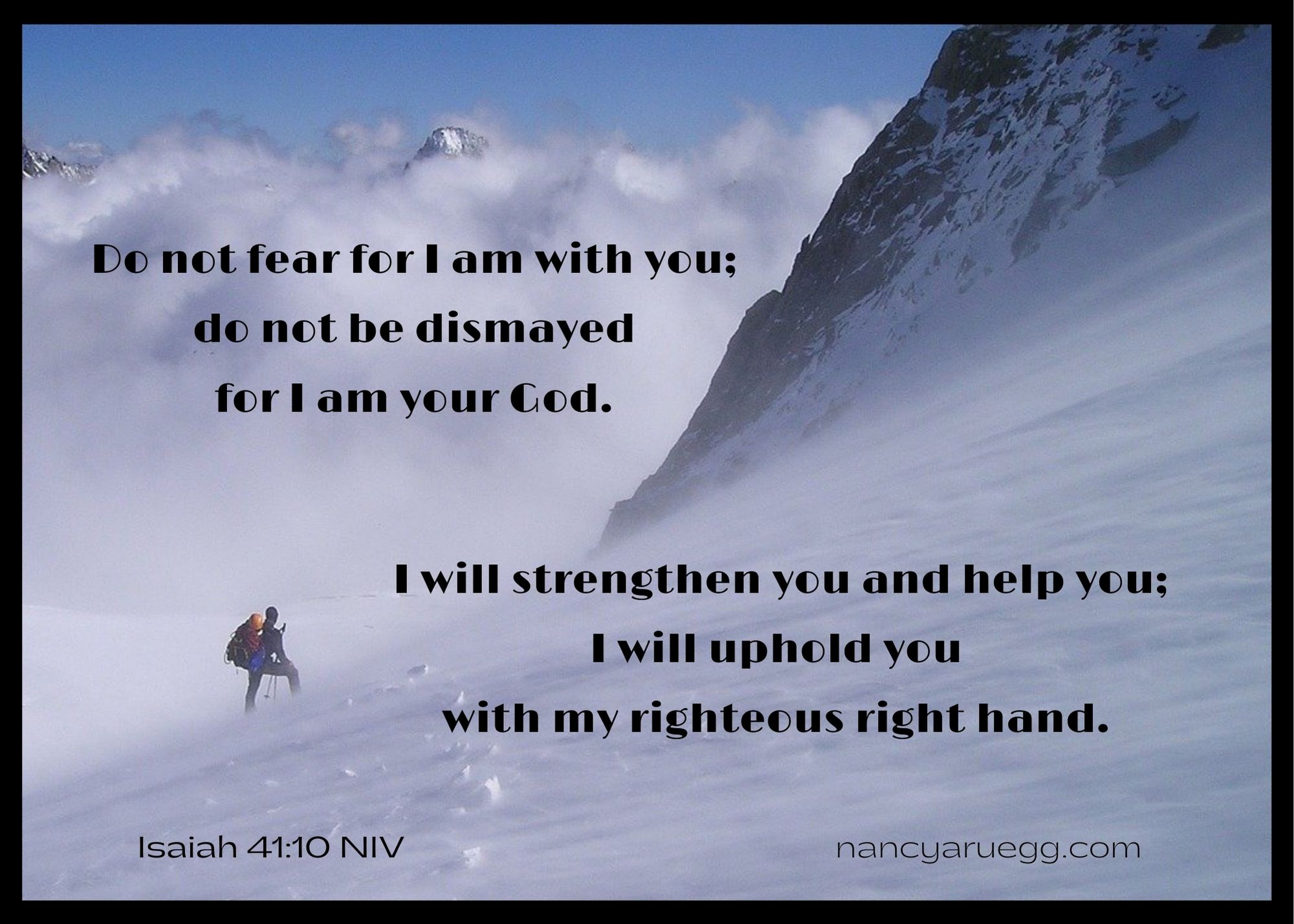
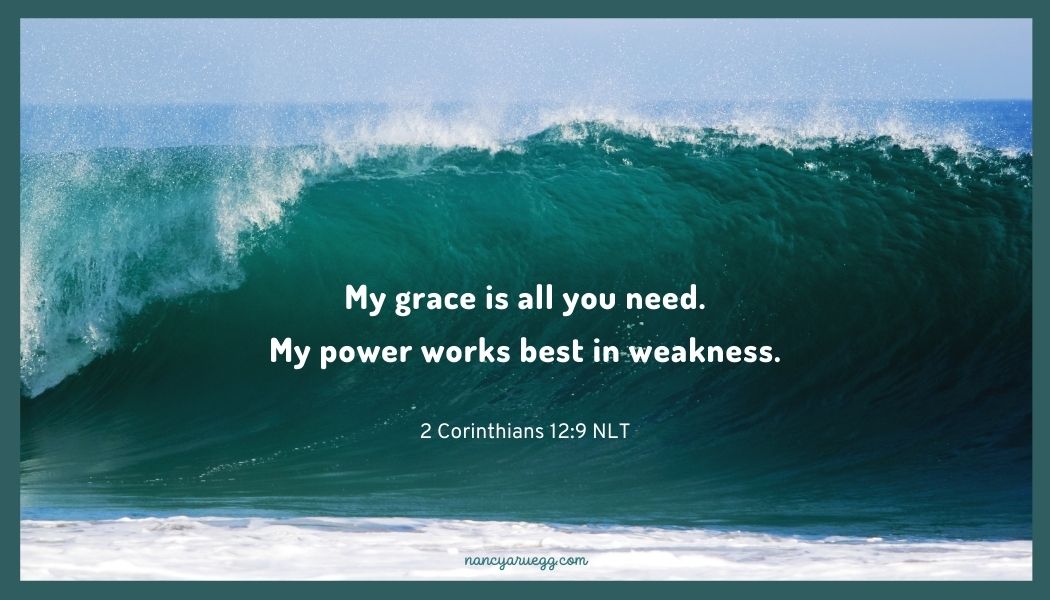
Section #6—Isaiah 41:10; 2 Corinthians 12:9; Ephesians 3:20-21; Deuteronomy 32:4

Photo credits: http://www.dailyverses.net; http://www.canva.com; http://www.pixabay.com; http://www.bibleverseimages.com; http://www.canva.com (2); http://www.heartlight.org; http://www.canva.com; http://www.heartlight.org; http://www.dailyverses.net.

Read Full Post »

« Newer Posts - Older Posts »

When the House is Quiet

Impressions Becoming Expressions

Mitch Teemley

The Power of Story

Still Traveling

Impressions Becoming Expressions

Living Our Days

Gaining a heart of wisdom

He Said What?!

I'm Patty, and my husband and I are living with our adult son who has autism and epilepsy. I love sharing lessons learned from life around me, especially life with Aaron.

Meditations of my Heart

Impressions Becoming Expressions

Linda Stoll

Impressions Becoming Expressions

Signora Sheila

Where faith meets la dolce vita

Heidi Viars

Finding the Image of God