Feeds:
Posts
Comments

Archive for the ‘God’s Strength’ Category

(An imaginary conversation between God and me.)

ME:

You know me, Lord. If I’m not careful my mind can slide into fear and worry, especially about the needs and struggles of loved ones. Or I can slip backward into hurts or regrets of the past. Release from such thoughts is not always easy.

But I’ve heard it said, “What is IM-possible is HIM-possible” (Unknown).

So when negativity seeks to pull me down, I want to be quick to remember who YOU are, your promises, and what you can do that make all things HIM-possible.

GOD:

Indeed, nothing is IM-possible with me (Luke 1:37).

Here are four important truths to keep in mind that make for HIM-possible-living:

I am greater than your fears.

Think on My sovereignty and might.

I am in control of all things. I have established My throne in heaven and My kingdom rules over all. Therefore, the one who fears Me need not fear anything else [1].

I am all-wise and all-powerful, always with you and ready to offer counsel.

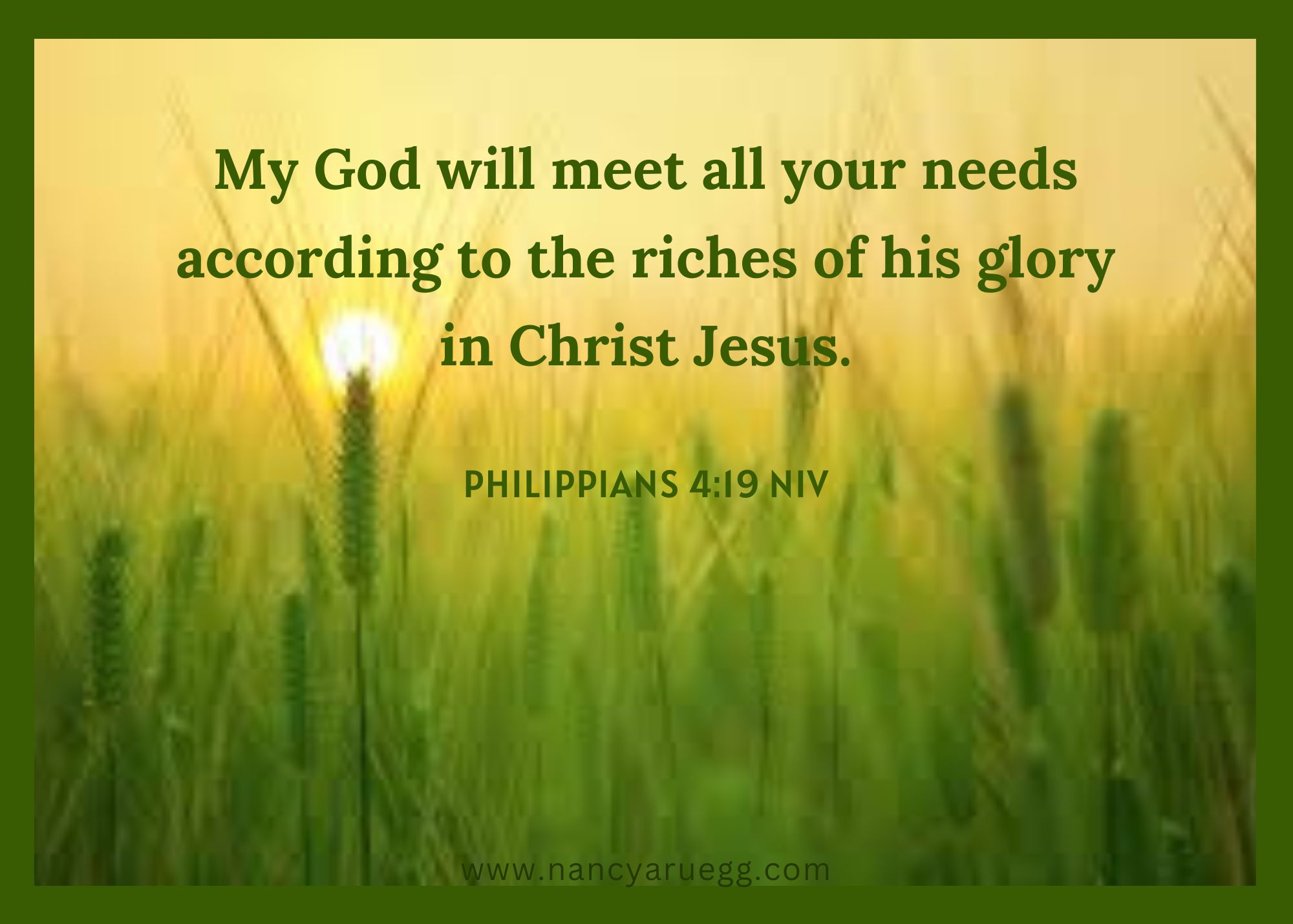
I am your all-sufficient Father, able to provide everything and anything you’ll ever need.

ME:

I praise You, Lord, for equipping me to contend with whatever circumstances unfold. You are the Mighty Warrior who saves!

(Psalm 103:19; 1 John 4:18a; Romans 11:33; Psalm 15:3, 46:1; Ephesians 3:20; Zephaniah 3:17)

GOD:

I am greater than your troubles.

Remember My power and strength.

Out of My omnipotence, I promise to supply you with strength sufficient for the day. Each morning I provide a fresh supply of all my mercies.

No matter what the future may hold, you can keep on bearing all things through My Son, Jesus Christ, who constantly infuses you with His strength.

Every trouble produces benefit–strong, honorable character in you, and blessing for others as they see My peace and joy reflected in you.

ME:

I praise you, Lord, for being a present-and-active help in times of trouble.

(2 Chronicles 20:6; Psalm 18:32; Lamentations 3:22-23; Philippians 4:13;

Romans 8:28; James 1:2-4; Matthew 5:16; Psalm 46:1)

GOD:

I am greater than your hurts.

Remember my love and tenderness, my grace and kindness.

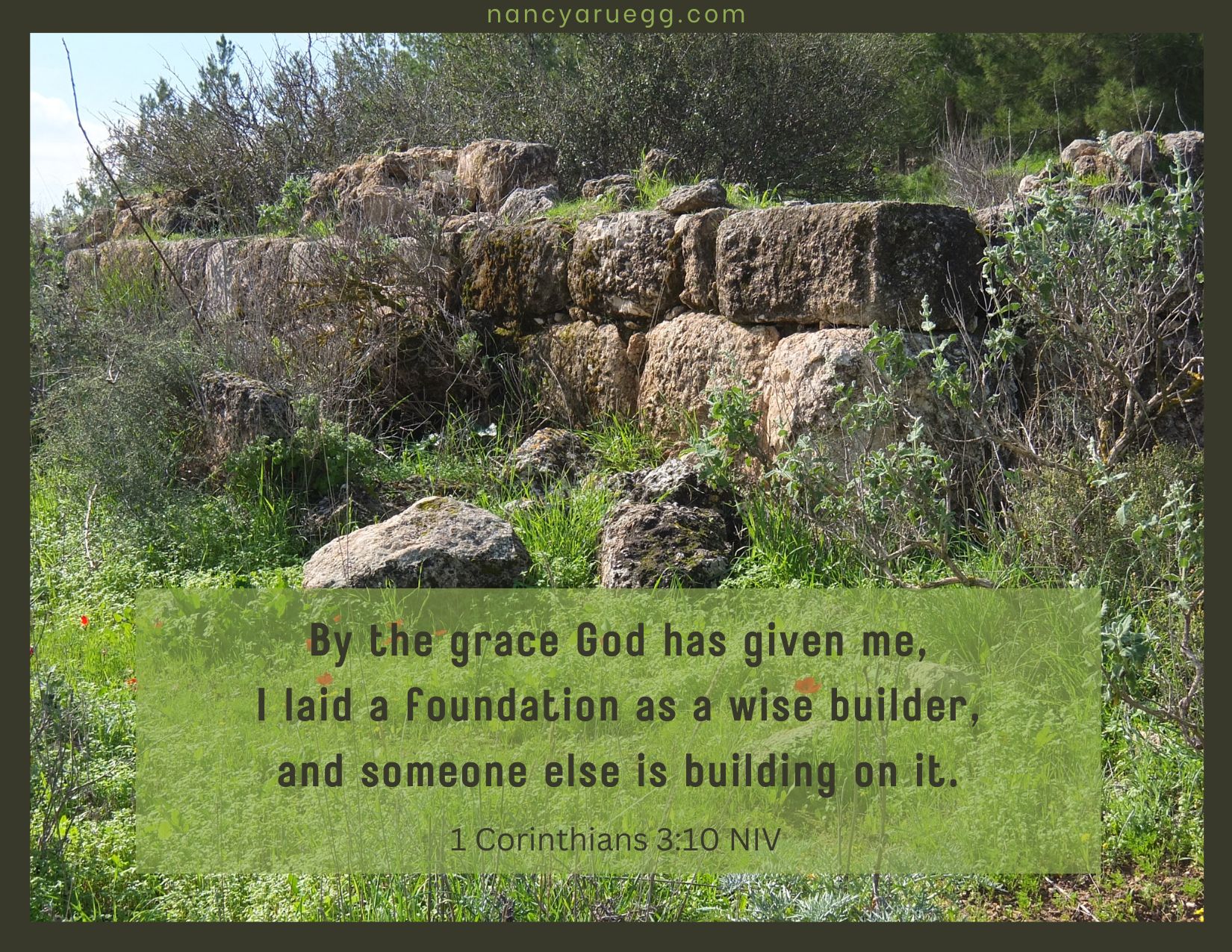
I provide a solid foundation on which to rest, even when wave after wave of challenge sweeps through your life [2].

I am your Great Physician. Cling to Me by immersing yourself in My Word and find the cure for your heartache.

I am patiently transfiguring all the notes of your life into the song of My Son, Jesus . . . All is grace, as your hurts and heartaches become tools in My hands, to transform you into the image of Christ [3].

ME:

I praise you, Lord, for your devoted, attentive care.

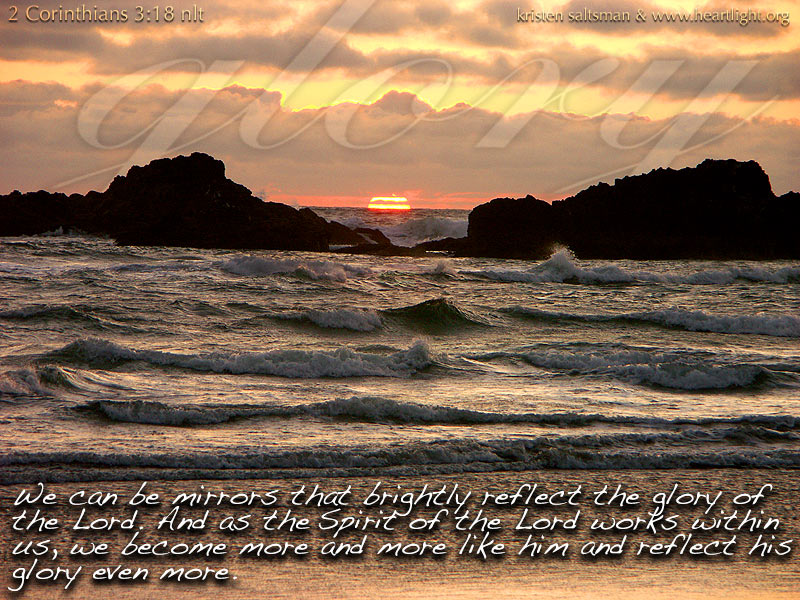
(Isaiah 66:13a; Psalm 86:15; Psalm 147:3; Psalm 119:49-50; 2 Corinthians 3:18)

GOD:

I am greater than your regrets.

Remember my compassion and forgiveness.

Dwell on regrets and you’ll stir up a whirlpool of excruciating details. It’s an easy place to drown [4].

Leave the irreparable past in My hands, and step into the irresistible future with Me [5]. You’ll find joy replacing remorse and peace replacing agitation.

When thoughts of your failures do push their way into your consciousness, allow my total forgiveness to relieve your pangs of guilt. Then offer Me praise for accepting you just as you are, thanking Me for growing you into more than you were yesterday [6].

ME:

I praise you, Lord, for your mercy to forgive and your grace that meets me where I am but does not leave me where it found me [7].

I praise you that victory over fears, troubles, hurts, and regrets is more than HIM-possible with you!

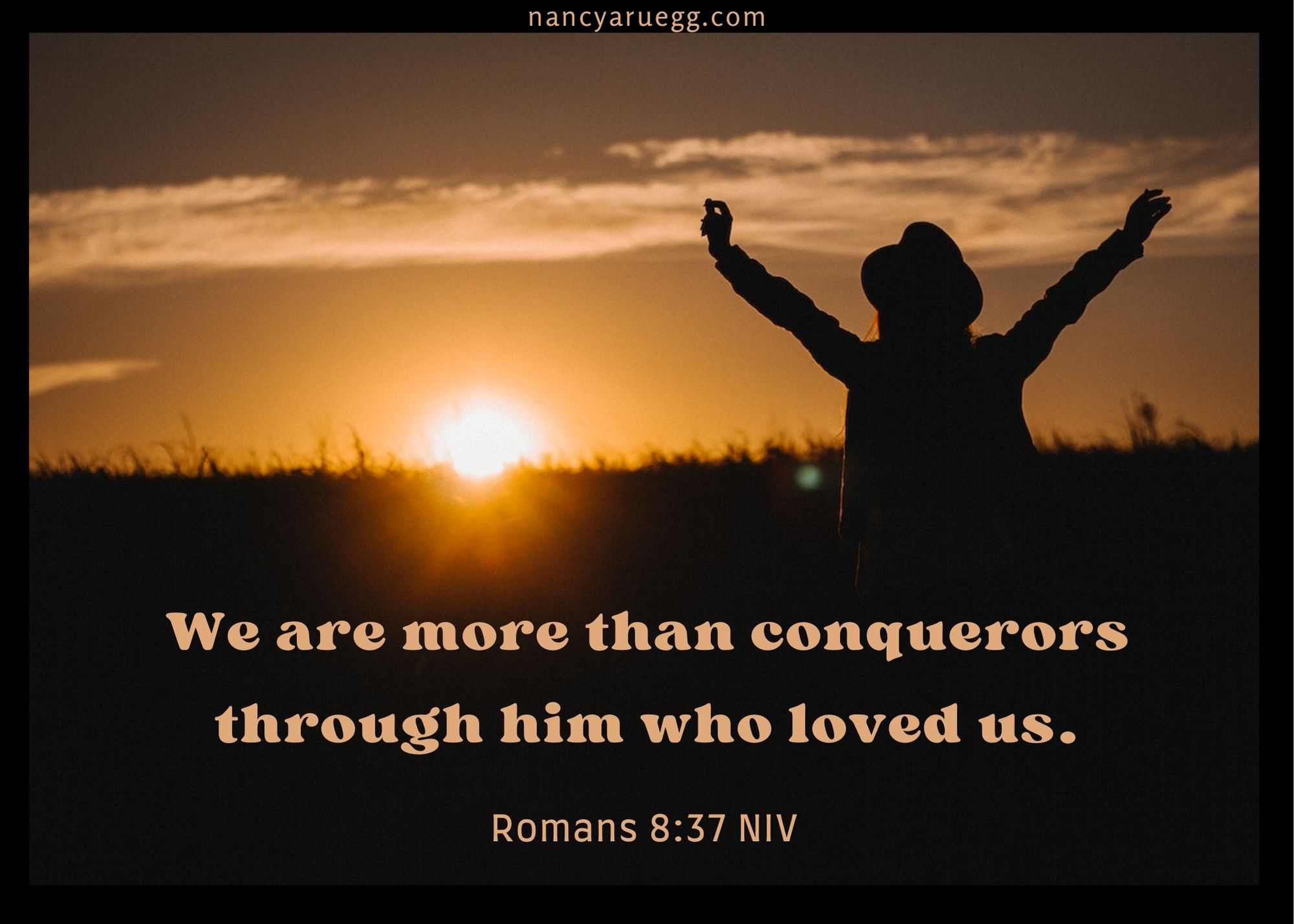
(Psalm 103:8, 13; Romans 8:37)


[1] The fear of God in the original language doesn’t mean to be afraid. It means sustaining a joyful, astonished, awe and wonder before Him—Timothy Keller.

[2] Jane Fryar, Be Blessed, 34-35.

[3] Ann Voskamp, One Thousand Gifts, 100; Kay Arthur, His Imprint, My Expression, 180.

[4] Based on a David Powlison quote, https://www.sgclouisville.org/blog/2024/01/16/sermon-quotes-what-do-we-do-with-regret.

[5] Oswald Chambers, My Utmost for His Highest, Dec. 31.

[6] Ruth Bell Graham, Blessings for a Mother’s Day, 101.

[7] Anne Lamott, GRACE Eventually.

Art & photo credits: http://www.canva.com; http://www.heartlight.org; http://www.pxhere.com; http://www.canva.com; http://www.heartlight.org; http://www.dailyverses.net; http://www.rawpixels.com.

Read Full Post »

For me, the best way to begin a day is to head outdoors with a journal, pen, and mug of coffee, to watch God make a morning—especially this time of year with its temperate breezes, lush foliage, and dazzling flowers—all enjoyed to the accompaniment of birdsong.

And while soaking in the glory of late springtime, I reaffirm: nature illuminates many glorious truths about our Heavenly Father.

The following impressions come from my journals, as I’ve tried to listen to God while observing various features in my little corner of creation:

LIGHT

Let the golden light of morning remind you of My presence surrounding you, the Light of My Word to counsel, the Light of My joy to give delight, and the Light of My hope to dispel discouragement (1).

SKY

See the cloudless sky soaring into infinity?  My love for you is as high as the heavens.  And just as the sky is always over you wherever you go, I am always, tenderly watching over you (2).

FOLIAGE

Look closely at the bushes and trees. Note how their thickly-leafed branches create a cathedral of calm amidst urban-frenzy. Within the cool environs, numerous birds and animals find peace and protection.

You can find absolute rest and refuge in Me. Not that trials do not come. But they “cannot penetrate the sanctuary of your soul” when you dwell in My shelter (3).

TREES

As the sun rises, your eyes are drawn to the back-lit leaves of the trees, transformed into glowing, emerald-like jewels. But the trees themselves live unaware of their luminous splendor.

I’ve created My children to also glow with the Light of My Son . Often they’re unaware of the Sonlight radiating through them, but know this: there are those who see and find themselves drawn to My Light as a result (4).

(Please forgive the mixed metaphor—this quote was too good to pass up!)

BIRDS

Let the variety of birds remind you that I value uniqueness. Celebrate who I’ve made you to be: the colors of your personality, the pattern of your life, the song of gifts and talents I’ve given you to share with the world, the habits of goodness I’ve formed in you to impact others.

Join the birds in singing My praise, and keep your heart filled with joy (5).

FLOWERS

Sunbeams now illuminate each flower, so they glow with vibrancy of color. Let the various hues, shapes, and scents remind you of My creativity and care producing beauty in your life—beauty of character.

Like the flowers that keep their faces toward the sun, you also keep yours toward the Son throughout the day (6).

SQUIRRELS

Here come the squirrels, jumping from limb to limb with confidence. You too can live in confidence, because I’ve equipped you to accomplish what I desire for you.

Even when the squirrels walk upside down on a branch, they do not fall. Similarly, I make firm your steps and keep you from falling.

When it’s time to rest, a squirrel can nap on the end of a branch and never concern himself that he might fall or the branch might break—an example of perfect trust. I am your unfailing security; you can trust Me implicitly (7).

Do you see? Right here in your backyard you can: find examples of My wonders, experience Me in the sanctuary of My creation, and behold My power and glory (8).

Let the tranquility and delight of these moments carry you through this day with peace and joy!

Notes

1.Psalm 119:105, 130; 16:11; 62:5-8

2. Psalm 103:11; 121:8; 1 John 4:18

3. Psalm 4:8; 5:11b; 91:1-4, quoted clause from Hannah Whitehall Smith

4. Psalm 34:5

5. Isaiah 43:7; Ephesians 2:10; Titus 2:11-14; Psalm 148:8-13

6. Isaiah 26:3; Hebrews 12:2a; Romans 8:5-6

7. Ephesians 4:12; Hebrews 13:20-21; Psalm 37:24; Jude 1:24

8. Psalm 31:21a; 104:24, 33-34; 63:2

Art & photo credits: http://www.pxhere.com; Nancy Ruegg (2); http://www.wikimedia.com (Toby Webster); http://www.pexels.com (Patricia Luquet); http://www.canva.com.

Read Full Post »

Gunfire blasts and booming cannons surrounded Union Army Private, William Carney. His regiment’s objective: to capture Fort Wagner near Charleston, South, Carolina.

The 54th Regiment of Massachusetts at the Civil War battle for Ft. Wagner, July 18, 1863.

Jerking movement nearby caught Carney’s eye. The color guard had been shot. As the dying man fell, the U.S. flag he carried began billowing toward the ground. Carney scrambled to rescue the flag from desecration and took a bullet himself.

Carney continued to crawl toward the fort, holding the flag high and calling encouragement for his fellow soldiers to follow. He was hit at least three more times, but made it to the walls of Fort Wagner, planting the flag into the sandy soil and holding it upright “until his near-lifeless body was rescued” [1] .

Even then Carney refused to let go of the flag until he was returned to his regiment’s camp. His heroism that day inspired a vital victory for the Union Army.

W. H. Carney with the flag he carried that day.

Years later Carney explained his motivation for joining the Union cause: “I had a strong inclination to prepare myself for the ministry; but when the country called for all persons, I could best serve my God by serving my country and my oppressed brothers. The sequel is short – I enlisted for the war” [2] .

Yes, Carney had been an oppressed brother himself, born into slavery in 1840. But during the 1850s he arrived in Massachusetts, either through the Underground Railroad, or perhaps his father—already a freed slave—was able to purchase his son.

Either way, Carney began to enjoy the freedoms that Blacks of the South were denied—freedoms like traveling, assembling, learning to read and write, and receiving pay for work. He passionately desired other slaves to experience the same.

That God-given passion for his fellow man surely inspired Carney that day at Fort Wagner, to give the fight his all no matter what duty fell to him. And for his tenacity and courage, William Carney received the Medal of Honor in 1900. He was the first Black soldier to do so.

Someone might ask, how was William Carney able to stay so strong?

Undoubtedly his firm stance was the result of:

  • Strong attention toward his God
  • Strong determination to live by God’s ways
  • Strong faith in God’s promises, confident that whether he lived or died, all would be well

We too can stand firm in what we face by applying the same.

Strong attention toward God includes not allowing our emotions to control us. For example, sorrow, fear, and exhaustion will insist we can’t go on, but God tells us he gives strength to the weary and increases power for the weak [3] .

Strong attention toward God includes being in relationship with him, through prayer, Bible reading, worship, and more. We can’t expect to sense his peace and strengthening presence if we never spend time with him.

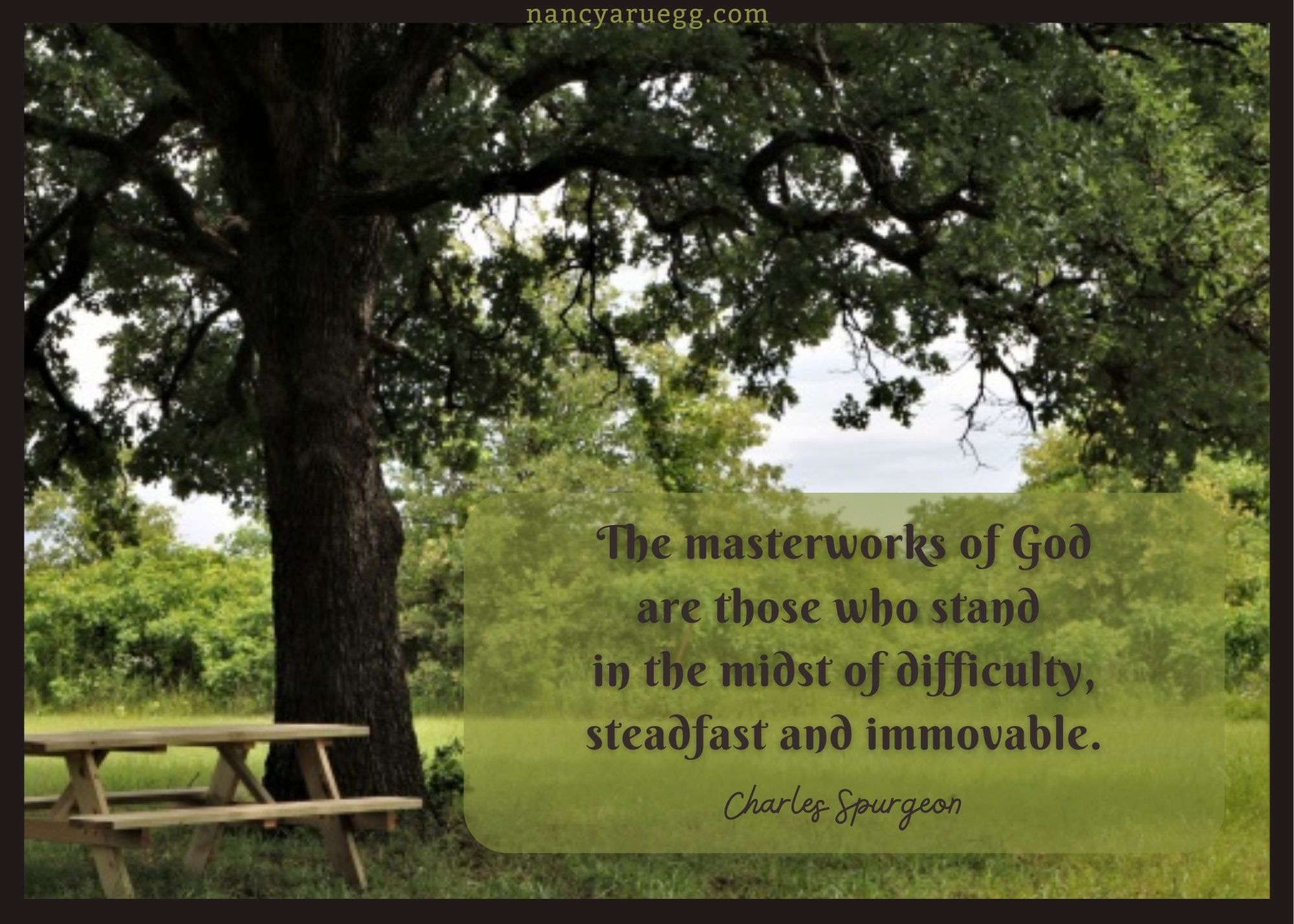
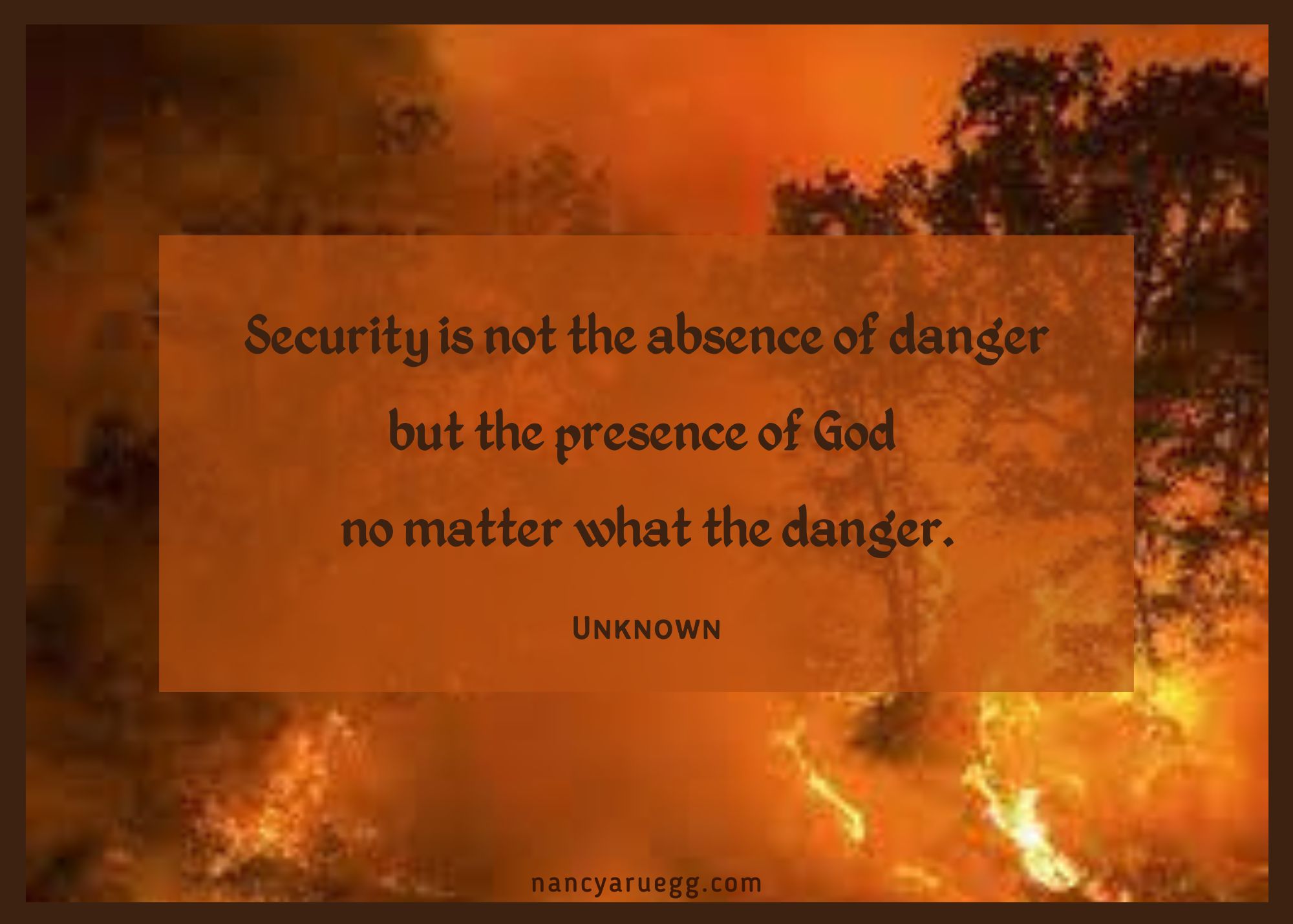
Security is not the absence of danger

but the presence of God

no matter what the danger.

Unknown

Strong determination to follow God means choosing to live by his truth. Scripture is full of examples of men and women shaped by their faith and obedience in God, becoming as strong as steel: Huldah, Jeremiah, Daniel, Mary (Mother of Jesus), Peter, and Paul are among them.

We see such Bible heroes as extraordinary, but I’m sure they’d tell us they were just ordinary people who trusted in their extra-ordinary God.

Strong faith in God’s promises means we can hold on to hope with confidence and courage.

I wonder if scripture-promises echoed in William Carney’s mind as he held that flag high and emboldened his comrades–promises such as these?


  • “The Lord gives strength to his people; the Lord blesses his people with peace” (Psalm 29:11).
  • “With your help I can advance against a troop; with my God I can scale a wall. It is God who arms me with strength and makes my way perfect” (2 Samuel 22:30, 33).
  • “If I live, it will be for Christ, and if I die, I will gain even more.” (Philippians 1:21 CEV).

You and I may never fight in battle, but these same promises can echo in our minds as we confront such enemies of our souls as discouragement, anxiety, stress, guilt, and temptation.

Like William Carney WE can stand steadfast and strong [4] .

What helps you to stand strong? Please share your experience in the comment section!


[1]https://www.army.mil/article/181896/meet_sgt_william_carney_the_first_african_american_medal_of_honor_recipient

[2] https://www.nps.gov/articles/william-h-carney.htm

[3] Isaiah 40:29

[4] 1 Corinthians 15:58

Photo credits: http://www.picryl.com (2); http://www.nypl.getarchive.net; http://www.dir.es/album/hiking-in-wales-2019; http://www.wallpaperflare.com.

Read Full Post »

I know—that’s not a title you expect to see on a blog for Jesus-followers or those curious about him. But please, hear (read) me out!

You see, the word fast has a number of meanings. The definition of “wild, reckless, and self-indulgent” is only one of them. Fast can also denote:

  • fixed, secure, and immovable as in “The rope held the boat fast to the dock.”
  • firmly loyal, as in “They became fast friends.”
  • completely and deeply, as in “She fell fast asleep.”

These definitions can give new meaning to” life in the fast lane,” when considered in the context of faith in Jesus:

  • Our future destinies are fast; they are fixed and secure
  • He is our fast, firmly loyal Friend now and forever
  • His love for us is fast—it’s complete and runs deep[1]

The Bible also includes other references to fast[2], instructing us to hold on to certain entities as we walk this lane/path of life. For example, we’re told to:

  • Hold fast to instruction and never let it go (Proverbs 4:13 NAB).
  • Stand firm in the faith (1 Corinthians 16:13 NIV)
  • Stand fast in the Lord (Philippians 4:1 ERV); that is, keep our relationship with the Lord firm (same verse, GWT).
  • Hold fast to that which is good (1 Thessalonians 5:21 NIV)
  • Hold firmly to our confidence and the hope in which we glory (Hebrews 3:6, NIV).
  • Hold fast to Christ’s name (Revelation 2:13 MSB)

And what are the results when life is lived in this fast lane with God?

The Bible tells us:

In other words, when we seek to follow the above directives and live in God’s fast lane, we’ll enjoy some high living!

What does that include?

  • The wise instruction of God’s Word, providing guidance, peace, comfort, and encouragement (Psalm 119:24, 28, 103; 111, 165)
  • Strong faith, protecting us from fear and anxiety (Philippians 4:6-7)
  • An intimate relationship with God, enjoying his unfailing kindness (Jeremiah 31:3)
  • Good thoughts that result in a continual feast of delight; good actions that result in blessing and fulfillment (Proverbs 15:15b, Psalm 107:9, Acts 20:35)
  • Confidence in the promise of heaven that fosters spiritual strength (2 Corinthians 4:16-17)
  • Reliance upon all that Christ is (indicated by his many names), contributing to our well-being, and the added joy of reflecting his radiance to others (Colossians 3:17; 2 Corinthians 2:15a)

In a nutshell, the benefits of life in this fast lane include: guidance, peace, comfort, encouragement, serenity, joy, contentment, delight, blessing, fulfillment, spiritual strength, a sense of well-being, purpose, and more. Whew!

That sounds like high living to me—of the heavenly sort!

The question is, will we choose to live in this fast lane?

*     *     *     *     *     *     *     *     *     *

Lord God, thank you for making possible this thrilling journey—accompanied by you, led by you, loved by you, empowered by you, blessed by you.  Keep me in your fast lane where I can live life to the fullest as you intended. And may others choose to join us.


[1] 1 Peter 1:3-5; John 15:12-15; Ephesians 3:17-19

[2] Some translations use synonyms such as firm and firmly

Art & photo credits: http://www.publicdomainpictures.net; http://www.canva.com (3); http://www.rawpixel.com.

Read Full Post »

Whitney sought a foothold and pulled herself up, then changed her hand grips and found another foothold above the previous one. Slowly she inched her way up the 40-foot climbing wall. Though only her first attempt, the four-year-old showed no fear.

Dad recorded the feat, and the video is available on YouTube.

We marvel that such a young child could climb with such confidence. But Whitney knew she was tethered to a rope held secure by the belayer, who also gave wise advice as she climbed. And Dad offered encouragement the whole way up and down.

When she touched ground again, Whitney’s broad smile indicated her delight in conquering the wall.

And the preschooler’s experience proves:

Security, wisdom, and encouragement

contribute to confidence. 

What held true during that preschooler’s rock-climb holds true for us in life. We need a strong Belayer to keep us secure, wise instruction to help us succeed, and inspiring encouragement to help us persevere.

Security

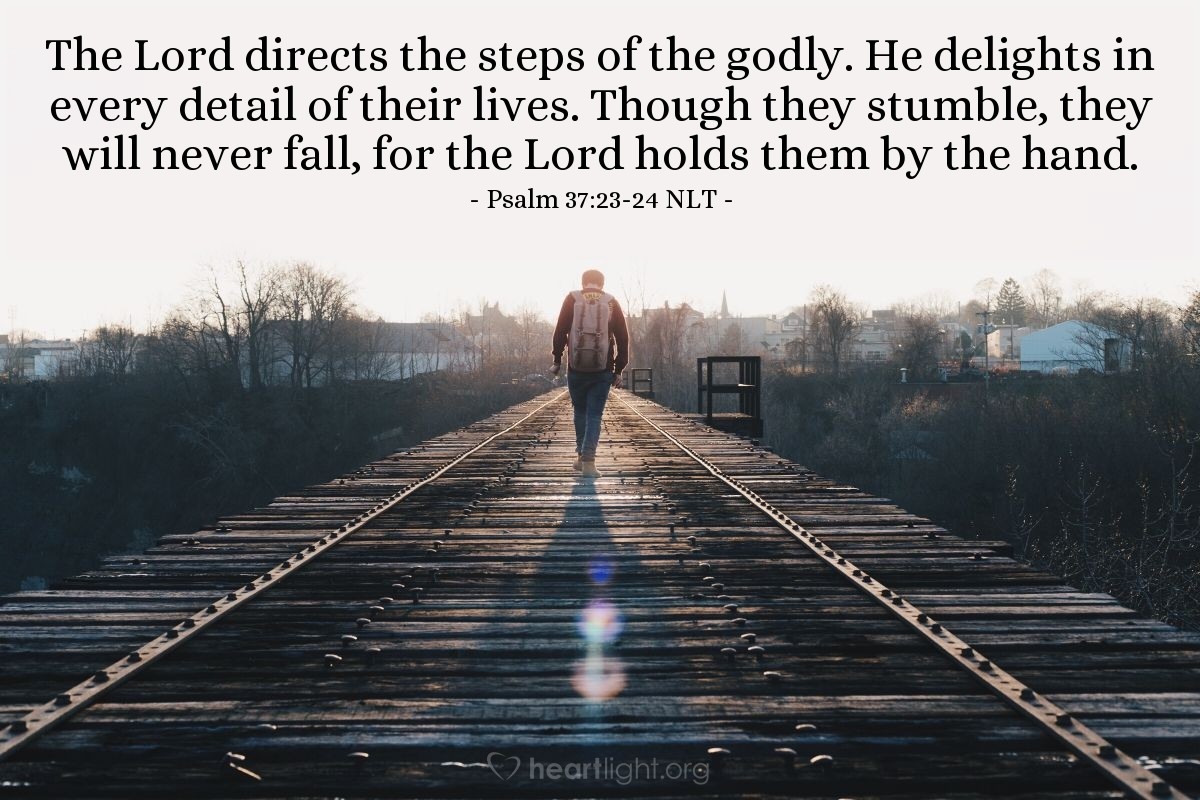
First, our Belayer is God himself. He holds us fast and will never let us go.[1]

And just as Whitney’s security did not depend on her gripping the rope, our security of help, strength, and heaven-to-come doesn’t originate with our grip on God, but his forever grip on us.[2] What we cannot do for ourselves, he has accomplished.[3]

Just as Whitney put her trust in the belayer, we must actively trust God to be our lifeline.

Wisdom

A short distance up the wall, Whitney glanced toward the floor. The belayer wisely advised, “Don’t look down, Whitney! Keep looking up!”

She didn’t look down until the belayer gave her instructions for the descent.

God also offers wise advice through his Word. He wants us to know:

  • True wisdom comes from him.
  • It begins with reverence and humility before God, to be in awe of his holiness, his power over all things–including life and death.
  • He gladly provides this gift to all who ask.
  • Whoever heeds his wisdom will dwell secure.[4]

Encouragement

Last, we have a Father who encourages us, just as Whitney’s dad encouraged her. Again, what we need is found in scripture—passages such as these that inspire hope:

  • “I keep my eyes always on the LORD. With him at my right hand, I shall not be shaken” (Psalm 16:8).
  • “The Lord Almighty is with us; the God of Jacob is our fortress” (Psalm 46:11).
  • “I remain confident of this: I will see the goodness of the Lord in the land of the living. Wait for the Lord; be strong and take heart” (Psalm 27:13-14).

Of course there are hundreds more, assuring us that:

When I allow fearful thoughts to whirl in my mind, I’m really asking, Is God going to see me through this?

How much better to affirm that God will hold me fast until he’s ready to take me home to heaven. He will provide the wisdom and guidance I need for what lies ahead, just as he has in the past. And His Word will continue to offer encouragement, to inspire and strengthen.

Truth leads to confidence.

What contributes to your confidence when facing challenging situations? Please share in the comment section below!


[1] Psalm 37:23-24

[2] https://www.seeyouinheaven.life/secure-forever-in-christ/

[3] Romans 8:3-4

[4] Proverbs 2:7; 1:7, James 1:5; Proverbs 1:33

Photo credits: http://www.youtube.com; http://www.heartlight.org; http://www.flickr.com (Noah Berger); http://www.heartlight.org; http://www.canva.com; http://www.commons.wikimedia.org.

Read Full Post »

A nail is driven out by another nail;

habit is overcome by habit.

So said Desiderius Erasmus, Dutch philosopher and theologian of the 1500s.

Desiderius Erasmus

Research in recent times has proven his statement true.  One of the best ways to break a bad habit is to replace it with a good one.

That’s why President Reagan replaced his cigarettes with jelly beans, dieters replace chips with popcorn, and late-night TV addicts forego talk shows to read calming books.

Some of the most stubborn bad habits are those that occur in the mind. It’s no easy task to shut down anxious, negative, or covetous thoughts—even when we know they contribute nothing to our well-being.

But if we apply Desiderius’ advice, we can retrain our brains toward healthy, even delightful thinking. For example, we can:

Replace anxiety with trust.

Worry spirals us downward into fear; trust-statements provide the way out–trust-statements such as these:

  • I can trust the One who died for me. He will thwart every plan that should be stopped and complete each one that results in his greatest glory and my highest good.[1]
  • God is with me and for me. His strength enables me, and his light guides my way.
  • Time and again I’ve witnessed God’s provision and protection, his miracles and blessings. “All that I have seen has taught me to trust him for all that I have not seen.”[2]

As other trust statements come to our attention, we can record them in our journals or in Notes on our phones. Then we’ll be prepared when the slide into worry begins.

Replace negativity with positivity and praise.

Continual praise is what changes the emotions,

lifts the darkness, offers hope, frees the mood

and blesses God so that evil is driven out.

Praise changes everything.

–Arnold Prater[3]

Throughout the day take a praise-pause now and then. Praise God for his power to keep this world on its axis, tilted just right to support life. Praise him for the proofs of his creativity in nature, for his goodness and loving mercy that prompted him to make a way to heaven for us.

Of course, the demands of the day often distract us from such thoughts. But if we post reminders here and there—around the house, on the visor of the car, at our places of work—we can jump-start this habit.

Replace covetousness with gratitude.

Gratitude doesn’t change the scenery;

it merely washes clean the glass you look through

so you can clearly see the colors.

–Richelle E. Goodrich

Too often our attention gravitates toward wants instead of haves, fostering discontentment and envy–emotions we’d do well to eliminate.

One helpful strategy is keeping a gratitude journal. Even brief entries can be effective. I only record one or two things each day, but discovered there’s benefit in the process of reviewing the day to glean the highlights. An added delight: rereading old entries and feeling grateful all over again.

Of course, developing good habits is not as easy as driving out a nail. What about those days when we fail? That’s the time to remember: even in failure there is progress.

Failure points to the inadequacy of striving on our own, and turns us toward greater dependence on God.

We learn, on the one hand,

that we cannot trust ourselves

even in our best moments,

and, on the other,

that we need not despair even in our worst,

for our failures are forgiven.

–C. S. Lewis[4]

We can begin our habits of trust-statements, praise, and gratitude right there!


[1] Based on a quote from J.H.M., Streams in the Desert (Zondervan, 1997) 295.

[2] Ralph Waldo Emerson

[3] Bonding with God (Marno Books, 2000) 78.

[4] Mere Christianity (MacMillan, 1952) 78.

Photo credits: http://www.flickr.com (2); http://www.heartlight.org (2); Nancy Ruegg; http://www.wikipedia.org; http://www.heartlight.org.

Read Full Post »

Imagine tagging along with the disciples during Christ’s ministry, listening to his teaching, watching his encounters, witnessing his miracles. 

One day your group encounters two blind men along the roadside in Capernaum.  The sightless men cry out, “Have mercy on us, Son of David!” Jesus touches their eyes, and instantly the two men can see (Matthew 9:27-31). After a collective gasp, everyone bursts into cheers and joyful laughter.

On a second occasion outside the town of Bethsaida, some people bring another sightless man to Jesus.  Perhaps he’s heard what happened to the two blind men of Capernaum, because he too begs Jesus to touch him and heal his blindness.  But that’s not what Jesus does.  Instead, he spits on the man’s eyes and then puts his hands on him. 

Even a second touch is added to restore this man to full sight (Mark 8:22-26). Amidst the celebrating for this miracle you wonder, Why did Jesus spit on this man’s eyes when one touch healed the blind man in Capernaum?

On a third occasion as Jesus and your entourage leave Jericho, you encounter yet another blind man, Bartimaeus.  Will Jesus touch him and/or spit on the man’s eyes to heal him?  Neither. Jesus simply speaks to the beggar and his sight is restored (Mark 10:46-52). Your bewilderment grows deeper still.

And then while in Jerusalem, Jesus heals a fifth blind man.  By now you’ve given up trying to predict what the Master might do.  Even so you blink in surprise as Jesus spits on the ground, makes a bit of mud, spreads it on the blind man’s eyes, and instructs him to go wash in the pool of Siloam (John 9:1-9). You catch yourself before throwing your hands up in disbelief as Jesus demonstrates one more way to heal sightless eyes.

You’ve now witnessed five men healed of blindness by four different methods.  The evidence speaks for itself:   

The Son of God is unpredictable.

The Old Testament provides proof that God the Father also acts in unexpected ways.  You may remember when he:

  • Raised up two humble shepherds to positions of leadership[1]
  • Spoke to one of his prophets through a donkey[2]
  • Made the sun stand still[3]
  • Used a blind slave to kill thousands of Israel’s archenemies[4]
  • Allowed another prophet to be swallowed by a big fish[5]

Numerous other examples from scripture could be cited to prove:

Our God is unconventional.

Even today he proves his penchant for the unexpected.

A few weeks ago our daughter H., a school psychologist, relayed to us a story about a student she worked with last year. We’ll call her Emma.  After frequent interactions, H. and Emma developed an easy rapport, the girl was making good progress, and H. grew to care deeply for her.

This image has an empty alt attribute; its file name is images-2.jpeg

But this fall as school resumed, she learned Emma had moved to Florida.  Not wanting the girl to lose momentum, H. called the new school and asked to speak to the psychologist there.  She hoped to offer some helpful background about Emma and set the tone for continued progress.

Imagine her surprise when the gentleman who answered the phone turned out to be Andrew __________, a colleague who’d been part of the same master’s program as H. at Florida State University.  Out of just twelve students in that program, Andrew just happened to be the one to oversee this little girl who’d won our daughter’s heart.  And Andrew assured H. he’d take good care of Emma.

Time and again our God has proven . . .

. . . He is full of surprises.

I for one take great delight in a Heavenly Father who mystifies me by his unpredictability, wows me with his unconventionality, and takes my breath away with his surprises. 

How about you?

Please share in the comment section below an example from your own experience of “a wonder that cannot be fathomed.” Let’s . . .


[1] Moses, Exodus 3; David, 1 Samuel 16

[2] Balaam, Numbers 22

[3] Joshua 10

[4] Samson, Judges 16

[5] Jonah, Jonah 1

Photo credits: http://www.freebibleimages (3); http://www.pxfuel.com; http://www.canva.com; http://www.pxfuel.com; http://www.uihere.com.

Read Full Post »

More than 1,000 miles east of the Philippines lies the Mariana Trench, the deepest point of earth’s oceans—so deep it reaches into the earth farther than Mount Everest reaches into the sky.  That’s more than 36,000 feet, or close to seven miles.

Not even today’s sophisticated submarines can submerge to that depth without imploding from the pressure of 15,000 pounds per square inch–the equivalent of a full-grown elephant standing on your big toe.

But in 2014 oceanographers constructed a cube-shaped basket, attached it to cables, and dropped it into the depths of the trench.  The descent took four hours. 

They left the basket in place for twenty-four hours, to gather data by camera and hopefully collect samples of life—if it existed at all in such inhospitable conditions.

At the end of twenty-four hours, they used acoustic signals to release the weights that had caused the basket to fall.   With the help of flotation devices, it then rose to the surface.  Against all odds, here is what the scientists found in the trap:

The new species of fish, about eleven inches long, received the name Mariana Snailfish.

Video revealed their activity in the depths—swimming, tail-swishing, foraging—what you’d expect from healthy fish.  They appeared to be perfectly content, unfazed by the bone-crushing pressure of the water around them.

So how do they survive?

God has especially equipped them.  For example, instead of bones snailfish skeletons are made of cartilage that can withstand pressure. These fish also produce certain fatty acids that help cell membranes stay flexible. Even at the molecular level, the muscles of the Mariana Snailfish contain certain enzymes that help them flourish at the bottom of the ocean.

In addition, scientists believe the following characteristics also contribute to their survival: big stomachs,  transparent skin, thinner muscles, and incompletely closed skulls. 

Just as the Mariana Snailfish can withstand extreme physical pressure, we can endure extreme mental, emotional and spiritual pressure—with God’s special equipping.

First, he’ll gladly help us develop resiliency—the ability to handle significant sources of stress. The snailfish manifests several characteristics in the physical realm that can be applied in the spiritual.

A Big Appetite

The large stomach reminds us that those who have a big appetite for God’s truth in the Bible also tend to be survivors; they’re strengthened to withstand the pressures of life.

Abraham Lincoln was just such a person, enduring great pressure from politicians, the press, and the burden of civil war.  He had this to say about scripture:

Transparency

This quality reminds us to be transparent about our concerns–before God and a few good friends. Just telling someone else about our stresses has been proven by researchers to reduce anxiety—a truth scripture has taught all along.[1]

It’s worth noting that just as the Mariana Snailfish lives completely at peace in the midst of physical pressure, we can live completely at peace in the midst of emotional stress as God frees us from worry and trusted, grace-filled friends support and encourage.[2]

Flexibility

These fish are also examples of flexibility—deep down at the cellular level.  You’ve probably heard the maxim, “Blessed are the flexible for they shall not be bent out of shape.”  The flexible person will look to God for the adjustments needed to handle the pressures of life  and search out his guidance for how to cope.

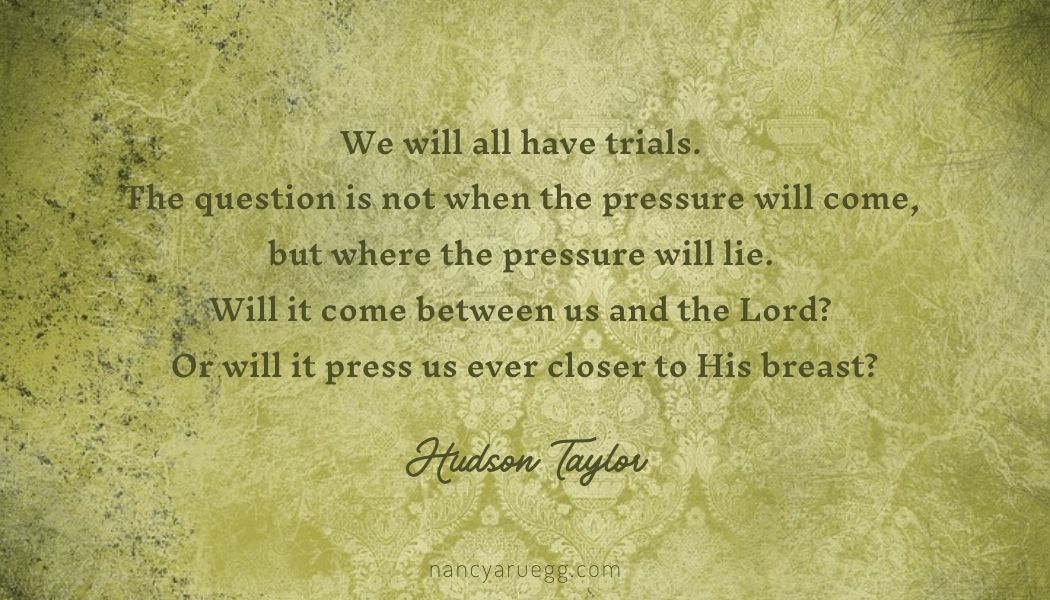
The great missionary to China, Hudson Taylor, would have us remember:

If we allow the stresses of life to accomplish the latter, they will not only be survivable, they will be accompanied by the deep contentment of nearness to God.[3]

Notes:

[1] Ecclesiastes 4:9-10

[2] James 1:2-4; Philippians 4:6-7; Proverbs 12:25

[3] Philippians 4:11-13; Psalm 23:4; Psalm 27:1

Sources:

  1. https://www.washington.edu/news/2017/11/28/theres-a-deeper-fish-in-the-sea/
  2. https://www.nature.com/articles/d41586-019-01158-x
  3. https://theconversation.com/the-deepest-dwelling-fish-in-the-sea-is-small-pink-and-delicate-88991
  4. https://www.natureasia.com/en/research/highlight/12923

Art & photo credits: http://www.wikimedia.com; http://www.flickr.com (3); http://www.rawpixel.com; http://www.pxfuel.com and http://www.maxpixel.com; http://www.piqsels.com; http://www.maxpixel.net.

Read Full Post »


Attend a graduation ceremony, participate in a work-related seminar, or just join in a break room conversation, and you might hear one of these statements:

  1. God helps those who help themselves.
  2. If you can dream it, you can achieve it.
  3. Success = living life on your own terms.
  4. Believe in yourself.
  5. Follow your heart.
  6. You’ve got this.


Such statements are meant to encourage. But are they based on truth, or should a few be tossed in the trash?

Let’s consider:


Does God help those who help themselves?

Many people believe this idea comes from scripture. But the Bible teaches God helps those who recognize they can’t help themselves. The wisest course of action is to present each troubling situation to him in prayer before attempting any solution (1).


If I can dream it, is it a given I’ll able to achieve it?

Nowhere in the Bible are we told to pursue our dreams. Instead, God tells us to pursue righteousness, faith, love, and peace.

Not that God doesn’t place desires for the future on our hearts. He gladly helps us achieve all the good works He’s prepared in advance for us to do.

This is what we need to remember: “A God-given dream is never about position . . . it’s always about contribution.” And it’s through God-ordained contribution that we find satisfaction and fulfillment (2).


Is success a matter of living life on our own terms?

That kind of living most often leads to disappointment and dissatisfaction. Instead, God invites us to live the abundant life on his terms.

Some would say, “But God’s ways are so constrictive!” Actually, his truth provides freedom—freedom from the misery of sin and misguided choices. On the other hand, when we live the way he’s expertly designed for us, we enjoy a myriad of blessings (3).


Should we believe in ourselves?

That puts us in charge, which sounds appealing until you factor in our limited knowledge, imperfect judgment, and inadequate abilities. Due to these restrictions, stress and anxiety become constant companions while we try to keep control over our lives.

How much wiser to trust God who knows all things and can accomplish all things—including the best way to proceed through all our tomorrows.


Does it make good sense to follow our hearts?

No, our hearts are guided by feelings, desires, and emotions, which cannot always be trusted. Just ask Jennifer—Wife #2 of Jack. She believed his stories about self-centered, temperamental Wife #1. Jennifer told herself, Our marriage will be different. But she is now facing divorce herself as Jack’s eyes have wandered toward someone else.

No, we can’t just follow our hearts. We need the guidance of God’s perfect wisdom (4).


Have we got this?

Not really. Life can be turned upside down in a moment—bosses terminate employment, sure investments for retirement turn to ashes, doctors reveal devastating diagnoses. What then? I can’t imagine facing such hardships without God.

How much more encouraging to remember: he’s got this. Numerous experiences of others as well as my own have proven: God always sees us through with his perfect wisdom and almighty strength—whatever we face (5).


Notice how each of these statements in bold print revolves around usour effort, our planning, our confidence—even though we’re prone to make mistakes and foolish choices. God is the only One with the wherewithal to achieve what’s best for us—100% of the time.

As it happens, all these common statements can be tossed in the trash.

So when someone says, “Believe in yourself ,”or “You’ve got this,” perhaps we could respond with a gentle nudge toward truth:

Actually, I’m eternally grateful that Someone much stronger and wiser than I am is in charge. Experience has taught me, I am much better off trusting in God than in myself.


Notes:

  1. Isaiah 41:10; Psalm 56:3; 2 Chronicles 14:11; https://www.christianity.com/wiki/christian-life/why-god-helps-those-who-help-themselves-is-presumed-to-be-biblical.html
  2. 1 Timothy 2:22; Ephesians 2:10; https://www.crosswalk.com/faith/women/why-god-doesn-t-necessarily-want-you-to-pursue-your-dreams.html
  3. Proverbs 12:15; John 8:32; see Alphabet of Joy for examples of such blessings
  4. Romans 11:33
  5. Philippians 4:19


Art & photo credits:  http://www.pxhere.com; http://www.canva.com; http://www.dailyverses.net; http://www.heartlight.org; http://www.pixabay.com; http://www.geograph.org.uk; http://www.dailyveres.net; http://www.canva.com.


Read Full Post »


“It is not mere reading, but meditation…

…which extracts the sweetness and the power out of Scripture.”

—James Stalker


I like the sound of that, don’t you—extracting all the sweetness and power out of Scripture?

To that end, I chose to follow a suggested psalm for meditating, #116, allowing those verses that apply to speak sweetness and power to my spirit. Then I framed my response as a prayer back to God.

Following is part of the result. It’s my hope you’ll find your heart responding too. You can add your own verse of personalized psalm in the comment section below!


PSALM 116:1-5, 7,

PERSONALIZED


“I love the Lord, for he heard my voice; he heard my cry for mercy” (v. 1).

Time and again you have heard my voice, O God as I’ve cried out in need. Your answers have flowed in countless mercies of provision, guidance, protection, strength, wisdom, and more.

 I remember: 

  • Your provision of a short-term assignment my seventeenth summer that turned into employment, enabling me to pay a good share of my college expenses.
  • Your guidance to marry Steve, even though he was headed toward the pastorate (and becoming a minister’s wife raised serious apprehensions in my heart).


(Just a few years ago–August 1, 1970)


  • Your protection from relationships that wouldn’t have been good for me, which I only recognized in hindsight.
  • Your strength to withstand stormy circumstances now and then–like the uncomfortable and stressful moves to new churches.
  • Your wisdom slowly but surely seeping into my soul over the decades, one discovery or lesson at a time—an ongoing process.

How can I not love you, my generous and attentive Heavenly Father?


“Because he turned his ear to me, I will call on him as long as I live” (v. 2).

Why would I turn anywhere else? You are the only One who can truly help in every situation.

At the first whisper of your name you draw near–such a precious reality. And just as you’ve promised, you give strength and bless me with peace in your presence (Psalm 29:11).

I’ll never forget that morning during a particularly difficult time, when I randomly opened my Bible first, before turning to the day’s assignment in the study guide. 

To my amazement, the first instruction directed me to a Bible verse already on display, at the top of the page no less.  I could almost hear your voice saying, “This verse is for you, Nancy”:


Granted, that understanding may not come this side of heaven, but one day I’ll know. In the meantime I trust you, my loving, sovereign Father.


“The cords of death entangled me, the anguish of the grave came over me; I was overcome by distress and sorrow (v. 3).”

Remember the time we rushed Heather (1) to the hospital, after severe pain awakened her in the middle of the night?

Few distresses cause anguish like seeing your child suffer and being helpless to stop it.


“Then I called on the name of the Lord: ‘Lord, save [us] (v. 4)!’”


All the way to the hospital I prayed, “Jesus!  Jesus”  Jesus!”  That was all my troubled spirit could muster.

But even such a simple prayer wields power, because your name, O God, represents your character. To call on your name is to trust you will work on our behalf.

By 9:00 a.m., we were heading home, with Heather sleeping peacefully (2).


“The Lord is gracious and righteous; our God is full of compassion” (v. 5).

You have been incredibly gracious over the years.

 I remember: 

  • Scholarships and grants provided for our children’s education.
  • Funds arriving at just the right time, like the unexpected tax return–three years late–that paid for the new refrigerator we needed.
  • God-enhanced moments, as I’ve breathed in the glory of…

…your nighttime sky filled with stars,


or the tiny wonder of a single star hidden within a flower.


 …the delight of a newborn grandchild in my arms, and the moment months later when those little arms wrapped around me.


 …friends who are family, and family who are friends.


“Return to your rest, my soul, for the Lord has been good to you” (v. 7).

 I do seek rest in your love and faithfulness, O God, your gracious kindness and wisdom. Even if not one more blessing came my way, I couldn’t complain.

 Glorious and majestic are your deeds, and your righteousness endures forever (Psalm 111:3)!

________________________________________________


Now it’s your turn, to add in the comment section below a bit of sweetness and power you’ve extracted from Psalm 116:1-5, 7.

Remember with me the wonderful works He has done, His miracles (Psalm 105:5a)!


Notes:

  1. Our daughter
  2. More details of the story can be found in a previous post, “When Circumstances Spin Out of Control.”

Photo credits:  http://www.pickpik.com; http://www.wallpaperflare.com; Richard Schruel; http://www.canva.com (2); http://www.publicdomainpictures.net; Nancy Ruegg; http://www.pickpik.com; Nancy Ruegg.


Read Full Post »

« Newer Posts - Older Posts »

Sylvia Schroeder

Impressions Becoming Expressions

Mitch Teemley

The Power of Story

Still Traveling

Impressions Becoming Expressions

Living Our Days

Gaining a heart of wisdom

He Said What?!

I'm Patty, and my husband and I are living with our adult son who has autism and epilepsy. I love sharing lessons learned from life around me, especially life with Aaron.

Meditations of my Heart

Impressions Becoming Expressions

Linda Stoll

Impressions Becoming Expressions

Signora Sheila

Where faith meets la dolce vita

Heidi Viars

Finding the Image of God