Feeds:
Posts
Comments

Archive for the ‘Maturity’ Category

personal-trainer-t-shirt1


Many people these days hire personal trainers to help them achieve their fitness goals. The benefits they site include:

  • Motivation and encouragement
  • A personalized routine, designed to produce maximum benefit for the time and effort invested
  • Injury prevention
  • Up-to-date information on health, nutrition, and fitness

Actually I have a Personal Trainer (you do, too) but for a far more important aspect of life than physical fitness. God is at work to “enlarge my heart.”


Pressing-toward-the-goal 


“I shall run the way of your commandments,

for you will enlarge my heart.”

Psalm 119:32, HCSB


In other words, God is working in me (Philippians 1:6) and with me (Psalm 23:4a) to develop my faith and mold my character into his likeness.

I do need his help to “run the way of [his] commandments,” just as the psalmist wrote eons ago (quoted above). Too often I’m side tracked onto self-chosen paths.

But how does God enlarge my heart to run his way?

First he initiates a change of heart.


8350127978_634d866931_z-2


And one day he will complete the process. We will be like Jesus (1 John 3:2). Can you imagine? One day we’ll finally become the holy and perfect people we’ve always wanted to be!

In between initiation and final transformation, we run:

The Christian life involves effort on our part, much as physical fitness requires effort. Just hiring a personal trainer won’t get us healthy and strong; we must take responsibility to follow the trainer’s instructions.

Similarly, while being responsible to exercise diligence and discipline in order to become spiritually mature, we also depend completely on what God supplies.


“We must work out what God has worked in.”

–John MacArthur


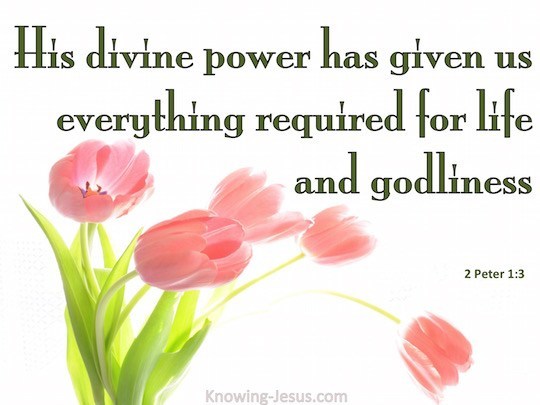
And what has God worked in? Everything we need for life and godliness:


2-Peter-1-3-His-Diving-Power-Has-Given-Us-Everything-green-copy


Yes, even our faith comes from him (Hebrews 12:2).

Now perhaps you’re one of those who have experienced the euphoria of being in “the zone,” during your workout. Once your heart rate is up, the blood is pumping, and your muscles are executing every move with precision, you experience a surge of energy and great pleasure in the activity.

I have never experienced that zone. My daily workouts involve uncomfortable huffing and puffing, aching muscles that beg me to “Stop with the push-ups already!” and downright boredom. (After decades of jumping jacks, they’re getting a bit old.)


img_08811


But it’s the results we’re after, isn’t it, including better heart health.

The function of our spiritual hearts is also improved by the application of exercise in the form of difficulties, hurt, illness, discouragement, and more.

Wait a minute! How does hardship improve spiritual heart health?

God uses such circumstances to produce such results as fully developed maturity.


“When troubles of any kind come your way,

consider it an opportunity for great joy.

For you know that when your faith is tested,

your endurance has a chance to grow.

So let it grow, for when your endurance is fully developed,

you will be perfect and complete, needing nothing.”

James 1:2-4, NLT


9a2544d9327a7da1f434c3cfa2c08232


I may never experience the euphoria of the zone during physical exercise, but James’ assurance here promises a zone of joy as I allow God to enlarge my heart and choose to persevere through the challenges of life his way.

Talk about perfect results!

*     *     *     *     *     *     *     *     *     *

Heavenly Father, I praise you for working into my life everything I need in order to become “perfect, complete, and needing nothing.” With your gracious provision, may I pursue the way of your commandments, and experience your euphoric joy!


(Art & photo credits:  www.tampabayathletics.com; http://www.successandfailure.net; http://www.flickr.com; http://www.knowing-jesus.com; http://www.321delish.com; http://www.pinterest.com.)

Read Full Post »

4294b8e0861224468e7e42b56456b714


My first teaching job was in a small community southwest of Lexington, Kentucky. Although the school included first through sixth grades, there were only five teachers. Second grade was divided, some students included in first, the rest with third. I was assigned the first/second split.

The first morning of school went by quickly as we read stories, played a few learning games, and completed a class chart of favorite summer activities. Soon it was time to march to the cafeteria for lunch.

The children lined up to receive their plates of food, and then were instructed to pick up napkins, utensils, cartons of milk, and straws – all without benefit of trays. Little hands struggled to hold so many items–much less carry them all without accident. (And why were the first and second graders seated farthest from the serving line? I never had the nerve to ask.)

lunch

So began my habit of standing at the end of the counter, wrapping utensils and a straw in a napkin, then perching a milk carton on an empty corner of the plate as the students passed by.

One second grader, Ricky, was much too manly to use a straw. Each day he would proclaim, “I don’t need no straw.”

Each day I would patiently correct him: “I don’t need a straw.” Ricky would repeat it again after me.  It almost became a joke between us, as the exchange occurred day after day, month after month.

One noontime in March, while focused on wrapping the next set of flatware, I heard Ricky’s voice proudly proclaim, “I DON’T NEED A STRAW!”

My eyes popped, Ricky’s twinkled, and his broad smile indicated his pleasure in remembering–all by himself–how to correctly form his request.

A quick hug, a few pats on the back, and an “I-am-so-PROUD-of-you!” let him know how I felt.

It never occurred to me to say, “Well, it’s about time, Bud! You DO realize we’ve repeated this little ceremony over one hundred times, don’t you?”

No. This was a moment to celebrate! Our perseverance had paid off. And perhaps this one little grammatical victory would prompt Ricky to conquer the next. I was thrilled.

Do you suppose that’s how God feels when our “practice makes perfect?”

When:

1313

  • Our quiet time with him finally becomes a near-daily habit?
  • We remember to express gratitude and praise to him throughout the day?
  • We’re able to think before we speak more consistently?
  • We forgo some purchase for pleasure in order to supply someone else with necessities?
  • We put aside our agenda to do a favor for someone else?

Yes, I believe God is thrilled with our steps of progress, just as I was with Ricky’s effort. If God withheld his pleasure until we reached perfection, we’d never experience even one good thing (Psalm 84:11). He’d always be in discipline-mode.

But Isaiah tells us: “The Lord longs to be gracious to you; he rises to show you compassion” (30:18).

David reminds us that out of his grace and compassion he guides our steps and takes delight when we follow his way (Psalm 37:23).

Another psalmist proclaimed that the Lord delights in those who fear him, who put their hope in his unfailing love (147:11).   No mention of delight reserved only for those who are perfect.

Ah, but what about Jesus’ statement in Matthew 5:48:   “Be perfect as your Heavenly Father is perfect?”

Yes, that is the standard, but God does not disapprove of us because we have not achieved that goal.   He knows perfection this side of heaven is impossible. What he does approve of is effort—to press on like Paul to “receive the heavenly prize for which God through Christ Jesus, is calling us” (Philippians 3:12-14).

When we stumble, we keep going. When we fall, we get up and try again.

But listen closely.  You’ll hear God celebrating our progress (Zephaniah 3:17).

Zephaniah-317-

*    *     *     *     *   *     *     *     *     *

We praise you, Heavenly Father, for being a gracious, compassionate God,

who is slow to become angry and always abounding in loving-kindness.

Even as we strive to be more like you,

we can rest in the knowledge that you will not condemn us

when we stumble and fall.

Thank you for your readiness to forgive and your everlasting love.  

Thank you for continually drawing us closer to you and your perfection. 

(Psalm 103:1-2, Romans 8:1; 1 John 1:9; Jeremiah 31:3).

Photo credits:  www.pinterest.com; http://www.grist.org; http://www.neabscobaptist.org; http://www.untilsheflies.com.)


Read Full Post »

il_570xN.485491692_idn6

“Mom, what’s that lovely perfume you’re wearing?” I exclaimed while greeting my mother-in-law with a hug.

“It’s called White Linen,” she responded. “I like it because it’s crisp and clean and not too heavy.”

The scent stayed with me, but I didn’t mind. Not only did the perfume have a pleasing aroma, but it belonged to one of the sweetest, most generous women I’ve ever known.

The apostle Paul taught that we should leave a pleasant scent wherever we go. But he wasn’t talking about perfume or cologne. He meant that our very lives ought to emit the fragrance of Christ:

“Through us, [God] brings knowledge of Christ.

Everywhere we go, people breathe in the exquisite fragrance.

Because of Christ, we give off a sweet scent rising to God,

which is recognized by those on the way of salvation—

an aroma redolent with life.”

(2 Corinthians 2:14-15, The Message)

 I’ve been privileged to enjoy the exquisite fragrance of a number of saints over the years:

  • My grandmother, who loved and served Jesus with a passion. She demonstrated kindness and thoughtfulness, and never raised her voice. (At least not that I heard!)
  • My parents, who lovingly guided me, and demonstrated what a Christian marriage should be:  two people committed to the best interest of the other.
  • A youth pastor who showed personal interest in each kid, and whose prayers were so heartfelt, we knew this guy was up-close-and-personal with God.
  • A professor and his wife at the seminary Steve attended, who took us under their wings and lovingly mentored us with great wisdom.
  • A mother of three who led the first women’s Bible study I attended.  She provided strong teaching, but better yet, an example of what it means to be a godly woman of excellence.
  • An older couple who listened, supported, and encouraged us as Steve began his pastoral career.
  • A younger couple who came alongside us in ministry over thirty years ago and are still caring friends to this day.
  • A choir director who taught by example what a calm and gentle spirit (2 Peter 3:4) looks like.
  • Countless friends and acquaintances over the years who have loved on us and prayed for us.

Some of these wonderful people have already departed for heaven. Yet their beautiful fragrance lingers in my life to this day—a memorable blend of selflessness, generosity, and grace.

And I wonder, Where would I be without their enduring examples providing strength and guidance?

To be honest, I would surely have ruined my life with poor choices, spurred by emotional immaturity, and spiritual depravity. But God provided all these saints and more, that I might acquire even a faint aroma of Christ. 

And now I plead with myself, YOU serve Jesus by being a sweet fragrance for others, redolent with the life of Christ. YOU be the listener, encourager, and grace-giver. YOU provide the example of Christian maturity. 

*     *     *     *     *   *     *    *     *     *

Oh, Father, I thank you for the countless people you have brought into my life, whose positive impact provided wisdom, direction, and inspiration. Guide me, I pray, to live just as fragrantly, spreading your love, grace, and joy wherever I go.

Whose exquisite aroma lingers in your life?  Tell us about him/her in the comments below.

(Photo credit:  www.etsy.com.)

Read Full Post »

200270098-001_XS

 “By myself!” “By myself!” “By myself!” Numerous times each day our granddaughter asserts herself, announcing with much gusto that whatever the task, she can handle it.

But Elena just turned two. Although her confidence is high, skills are limited. When it’s time to go upstairs, “by myself” means down on all fours, one limb at a time. One hand up, and then the other. One foot up and then the other. It is a slow and laborious process.

In addition, the grown-up in her wake must be very sly about offering support. No hand on the back, or even hovering where Elena can see it. She’ll cast aside such safety precautions and announce firmly once again, “By myself!”

Child Washing Hands

Hand washing is another activity she prefers to do independently. But her attempts to pump out a dollop of liquid soap often end unsuccessfully. The soap usually lands in or around the sink—not in her hand.

And once the soap is in her palm, Elena reaches for the faucet. Forget the actual washing. If we try to help, she pulls her hands away. “By myself!” Even when she acquiesces, her scrubbing efforts leave much to be desired. Squeezing is her version.

And rinsing is another issue. “By myself” often results in enthusiastic splattering of water on dry dishes, counter, and backsplash.

spoons

Mealtimes offer more opportunities for autonomy. “By myself” means she will hold her spoon or fork as she chooses, not as the grown-ups have shown her numerous times. Elena has yet to figure out that holding a utensil at the very end of the handle is not very efficient.  (The child in the photo is not our Elena, but is demonstrating the same technique.)

Because of her unwieldy grip, Elena ends up turning the spoon upside down as it approaches her mouth. Needless to say, most of the food ends up on her chin, in her bib pocket, on her clothes, on the tray, or back in the dish.

We shake our heads and roll our eyes. Toddlers!

Then it dawns on me. Sometimes I’m not much more mature than a toddler in God’s family. I’ve been known to proclaim “by myself,” too:

  • “Yes, Lord, I need you to take care of the important matters, but I can handle the small stuff by myself. ”
  • “I’ll make this decision by myself, Lord, because—to be honest–I’m not sure I’ll like your choice.”
  • “I can decide by myself what will make me happy, Lord.”

Yep, I can be as foolish as a toddler, even though great wisdom is available to me.

way of wisdom the_t_nv

Wisdom such as:

“Start with God.

The first step in learning

is bowing down to God.

Only fools thumb their noses

at such wisdom and learning”

(Proverbs 1:7, MSG).

Ouch. But Solomon is right.  God made me; he knows the best course for me. Over and over again he has proven himself worthy of my trust — guiding my way, providing for my needs, empowering me to accomplish his plans.

If I can’t trust the One who died for me, who can I trust?

Any time I’m tempted to approach a situation or decision by myself, I need to remember:

“God always gives the best

to those who leave the choice to him”

–Selwyn Hughes

*     *     *     *     *     *     *     *     *     *

Oh, Father, forgive me for the times I have foolishly asserted my independence. Help me to relinquish control to you. I’ve lived long enough to know from experience that living life by myself does not result in satisfaction. Help me become a person who turns to you first, and asks, “What do YOU want me to do, Lord?” because you are the all-wise One of the universe.  And I know the benefits of following you will far outweigh any costs.

(Photo credits:  www.motherhood.modernmom.com; http://www.childcare.oxfordcounty.ca; http://www.cleftstories.com; http://www.covedevotions2010.blogspot.com.)

Read Full Post »

 picture-uh=715ce81d4af48c56d62e992073bfe9-ps=3da463e4536b201b56c385877e59a7

 (Photo from http://www.trulia.com.)

“There it is, Mom, “ Steve remarked, as he pointed to a little white house in the middle of a city block. “That’s where we lived when I was growing up.”

“Oh, yes,” she replied. But did Mom really remember?

We were on an excursion through Columbus, Ohio, taking Steve’s mother past the landmarks of her life. Alzheimer’s disease had already stolen away much of her vibrancy and warmth, and, of course, her memory.

 corner

Steve drove by West High School and continued his commentary. “That’s where we all went to school, you, Dad, Karen, and me. You were the very first homecoming queen.  How about that?  No wonder Dad asked you out.”

She murmured assent to Steve’s comments, but added nothing of her own.

 unnamed

We drove past the brick ranch they built out in the country in 1966. Horses used to reside beyond the back fence. Just a few houses had dotted the area back then. By this time, however, they had been swallowed up by dozens more. The saplings Mom and Dad had planted were now tall shade trees.  And the glorious flower beds and window boxes that Mom had tended were gone. She registered no recollection.

 unnamed

But when we approached her childhood home, a white Dutch Colonial on a quiet street, all of a sudden she perked up.  Pointing to a second-story window, Mom stated firmly, “That was my room, right up there.”

In the midst of the fog that is Alzheimer’s, one memory–one glimmer of light–shone through that morning. Steve and I almost gasped at the wonder of the moment. Mom remembered!

And the rarity of her memories pointed to the preciousness of this ability. Memory is a gift to be treasured. The older I grow, the more I appreciate the miraculous power of the brain to store millions of memories—with astounding detail–and yet access a particular one in a mille-second.

 1033249144001_2034162247001_900944612-159-1355440419795

Not only do sights trigger memories, but also smells. Researchers say this sense is the most powerful memory-inducer. For me, the aroma of fresh-baked bread always takes me back to my grandmother’s kitchen.

Sounds trigger memories as well—particularly music. Tastes and textures work the same phenomenon.

But surely God had more purpose in mind for giving us memory than the pleasant pastime of reminiscing.

Indeed.

Memories foster gratitude, as we contemplate God’s goodness to us in the past:

  • His countless blessings (even when we haven’t been a blessing to him).
  • Those times he led us through the shadow of death, so that we might experience more completely the glory of his light.
  • Moments when we almost gave up hope, and God surprised us with his creative, abundant provision.
  • Leaving behind what we once were and celebrating what we have become, solely because of his Son, Jesus.

Memories foster faith, as we remember how God has met our needs in the past. See if each phrase from Psalm 103 doesn’t trigger a memory in your mind, and a song of praise in your heart:

“Oh, my soul, bless God,

Don’t forget a single blessing!

He forgives your sins—every one.

He heals your diseases—every one.

He redeems you from hell—saves your life!

He crowns you with love and mercy—a paradise crown.

He wraps you in goodness—beauty eternal…

…God makes everything come out right.

He puts victims back on their feet…

…God is sheer mercy and grace;

Not easily angered, he’s rich in love.

He doesn’t treat us as our sins deserve,

Nor pay us back in full for our wrongs.

(Psalm 103:2-10, The Message)

Memories inform the present and provide hope for the future. As we meditate on all those times God has wrapped us in his goodness (v. 5), we are strengthened for what we face today. As we consider the many times he made everything come out right (v. 6), we can trust he will continue to make our paths straight.

Of course, there are some memories we would like to erase—those that generate sadness, hurt, or regret. How do we deal with those? Here are a few suggestions I’ve collected over the years:

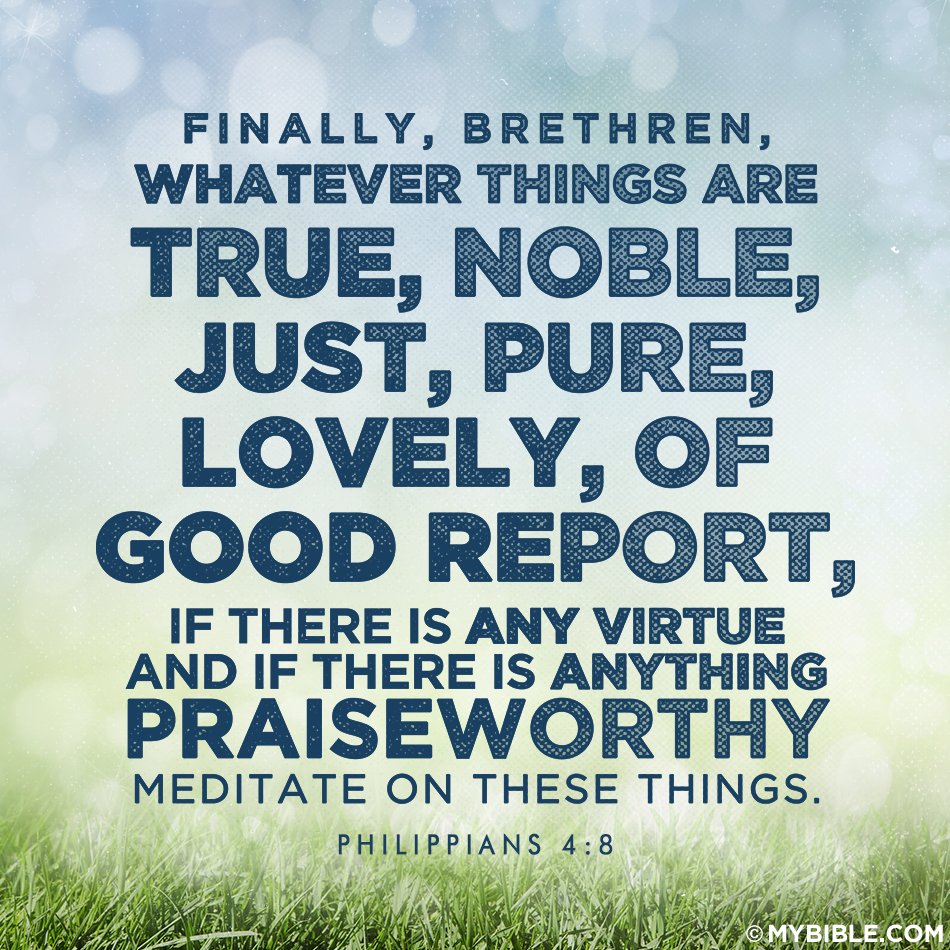
  1. We must resist self-pity—even in our thought life. Nowhere in scripture do we read that rehashing the negative is therapeutic. God’s way is to focus on the positive (Philippians 4:8).

Phil-4-8


  1. We can follow Paul’s example. He forgot what was in his past and pressed on to what lay ahead (Philippians 3:13). Not that amnesia had set in. Paul simply did not allow past failures to cripple his relationship with God and his service for God. God had forgiven and forgotten; Paul did too. No doubt he applied Philippians 4:8, not only to self-pity, but also to guilt. 
  1. We can leave the past in God’s hands. Oswald Chambers said it so well:

 c6d7d32bbdc18d2507a48f8aefa26359

(“Leave the irreparable Past in His hands, and step out into the Irresistible Future with Him”

–My Utmost for His Highest, Dec. 31.)


*     *     *     *     *     *     *     *    *     *    

Father, I do thank you for the gift of memories—the ability to remember with joy and appreciation the people, places, and experiences of the past. I even thank you for the not-so-good memories, knowing that you use every difficult situation for the development of my maturity (James 1:2-3). And may I take advantage of the wisdom gained in the past to guide me in the present, and lead me into the Irresistible Future with you.


Art & Photo credits:  www.trulia.com; http://www.westhighalumni.com; Steve’s photo collection; http://www.allrecipes.com; http://www.god.com; http://www.pinterest.com.

Read Full Post »

Check a map that traces the trek of the Israelites from Egypt to Canaan, and you’ll see a meandering, looping pathway:

Wilderness Journey

God could have taken them along the coast of the Mediterranean Sea, a much more direct route. One commentator says that route would have required just days of travel. A short journey would have been so much easier on everyone, right?  Less chance of fatigue, boredom, and impatience to develop and create problems.

But God had his reasons for a long, winding route.

Reason #1: The Philistines. That’s not conjecture; that’s exactly what scripture tells us. “When Pharaoh let the people go, God did not lead them on the road through the Philistine country though that was shorter. For God said, ‘If they face war, they might change their minds and return to Egypt’ ” (Exodus 13:17).

The Philistines’ territory stretched for fifty miles along the Mediterranean Sea, with the southern border touching Egypt. They were a well-organized, warring people. Five great cities, strategically located throughout their coastal holdings, created an alliance, the famous Philistine pentapolis.

A people suppressed by slavery for four hundred years would not be able to fight such an adversary. The Israelites didn’t have any trained soldiers among them either. Could God have given them a rousing victory over the Philistines anyway? Of course. But he chose not to.

Reason #2: Perhaps God determined his people needed some wilderness experience to train them in his ways and build their trust in him. Instead of quick and easy, God chose slow, step-by-step progress. He was like an eagle, teaching his fledglings by degrees how to fly (Deuteronomy 32:11).

4ffd5fa25fbd4e401e15ae1fe344938f

I wonder if the Israelites thought, Does God have any idea where he’s taking us? What is he DOING?!

In hindsight we can see God’s purpose:

  • To prepare them to be his holy people by giving them the law. (By the way, according to Exodus 19:1, Moses went up to Mount Sinai during the third month after they left Egypt. God was certainly in no hurry to get his children to the Promised Land.)
  • To teach them.  Through the laws he gave Moses, God taught the Israelites how to treat one another and how to worship him. They were to be different from all other peoples on earth.   “I am the Lord your God; consecrate yourselves and be holy,” he said, “because I am holy” (Leviticus 11:44).
  • To challenge them. For example, God let them experience great thirst and hunger. Then he stepped in and supplied their needs. By degrees God taught them to trust him.

I have to admit: my life experiences have paralleled the Israelites’ in a number of ways. I’ve encountered a few winding roads, puzzling detours, uncomfortable wait times, and unanswered questions of my own.

You, too?

Here’s what we can remind ourselves of: God may not direct us by the nearest, fastest way—even though he could. In his omnipotent wisdom, he knows a better way. And he has perfectly sound reasons for his decision.

My choice in the matter? I can plead for the shorter route, complain about the delay, try to forge ahead on my own self-chosen fast track, OR…

…trust my all-knowing, all-wise Heavenly Father.

5db138f980d331b5ee31f939d399464e

Seeing the choices laid out in black and white, here on my computer screen, the decision is easy. However, complete trust in the moment of uncertainty, fatigue, and discomfort is much more challenging.

Perhaps I can encourage myself by reviewing God’s purposes for the Israelites. Chances are, he desires the same results in me:

  • God prepared the Israelites; he may be preparing me for the next chapter in my life.
  • God taught the Israelites; he may be teaching me what the next level of maturity includes.  (Yes, even an old Christian like me still has growing to do!)
  • God challenged the Israelites; he may be challenging me to trust him—in spite of a long, winding road and uncomfortable wait time.

In summary:  As I cooperate with him, God can transform me into a prepared, mature, trusting servant for the next chapter of my life.   I like the sound of that!

You, too?

*     *     *     *     *     *     *     *     *     *

“Who compares with you, O God?  Who compares with you in power, in holy majesty, in awesome praises, wonder-working God” (Exodus 15:11, The Message)?  You are over-the-top trustworthy!  So, in advance, I thank you for the good that will come out of the winding road, detours, and wait time in my life–experiences you ordained for me, before one of them came to be (Psalm 139:16).  I place my hand in yours, my caring, constant Companion.  Help me to focus on your strong grip, not the uncertainties ahead.  Amen.


(Art credits:  www.registrypartners.net; http://www.pinterest.com.)

Read Full Post »

desert

Last Thursday we pondered these promises from Isaiah 58:11:

 “The Lord will guide you always,” and

“He will satisfy your needs in a sun-scorched land.”

 Today, more discoveries and encouragement await as we meditate upon the last two promises:

  • “[He] will strengthen your frame.”
  • “You will be like a well-watered garden, like a spring whose waters never fail.”

garden-waterfall-design


Do you long for strength within your frame, that is, inner strength? Perhaps you’re moving as fast as you can, but never quite reaching the end of the to-do list. And you’re bone-weary from the effort.

Perhaps the stresses of life—difficult relationships, a high-pressure job, financial obligations—are squeezing in hard.

Perhaps boredom or depression surround you in a gray shroud, and you haven’t the energy to fight against them.

“He will strengthen your frame.”

But God doesn’t wave a magic wand over us and suddenly turn weakness into strength. Usually he invites us to be part of the process.   And his solutions are radical.

For example, celebrate anything and everything (Philippians 4:4).

3095781994_90a392c03f

Take joy in:

  • Your cozy robe to ward off the morning chill
  • That cute tuft of hair sticking up on your toddler’s head
  • A parking place opening up when and where you need it
  • Licking the stamp just as the mail carrier pulls up in her truck
  • An earring lost last week turns up between the counter and stove this week.

You see, joy and strength are closely related. Ezra told the people of Israel, “The joy of the Lord is your strength” (Nehemiah 8:10).

Those five examples above, and thousands like them, are gifts from your Heavenly Father. “Every good gift and perfect gift is from above, coming down from the Father of the heavenly lights” (James 1:17).

In the same way we can build up physical strength with exercise, we can build up spiritual strength with praise—by expressing gratitude and joy for every good and perfect gift.

And now, the last promise of this verse describes in metaphor the result of living according to God’s design.

“You will be like a well-watered garden, like a spring whose waters never fail.”

TotalChildCareVegetables7 

Visualize a flourishing garden, with rich, green plants overflowing with healthy, ripe produce.

Those can be descriptors of you and me.  We are:

  • Rich in God’s grace, which he has lavished on us with all wisdom and understanding (Ephesians 1:8).
  • Green and flourishing, because we spend time with the Master Gardener and allow him to cultivate our spirits (Psalm 1:2-3).
  • Healthy and prosperous of soul (v. 3). As we soak up God’s Word, we’ll produce actions and attitudes that honor God and bring us inner satisfaction.
  • Ripe and mature, lacking in nothing (James 1:3).

God offers us “a continual source of thirst-quenching, drought-ending, fruit-producing, spiritual hydration” (James MacDonald).

Doesn’t that sound refreshing?  Who could turn down such provision?

*     *     *     *     *     *    *     *     *     *

Thank you, Father, for the precious assurances of these promises: 

  • You are leading me along the path you preordained before time began.
  • Every day of this earthly journey I can count on you to supply my needs.
  • Every day you provide fresh strength. One way is through the exercise of praise.  
  • As I spend time in your presence, I will be transformed–like a garden replenished by hydration. In fact, I can grow into your likeness with ever-increasing glory!

 “Such knowledge is too wonderful for me. It is too lofty for me to attain.” Yet I know it to be true because these are truths from your reliable Word.  My heart overflows with wonder and gratitude.

(Psalm 139:16; Philippians 4:19; 2 Corinthians 3:18; Psalm 139:6)

(Photo and art credits:  www.dayofgrace.me; http://www.anativegarden.blogspot.com; http://www.flickr.com; http://www.naturalearning.org.)


Read Full Post »

“Who has known the mind of the Lord?” Paul asked (1 Corinthians 2:16).

That’s an easy question to answer: Nobody! His intellect and wisdom are far beyond our human ability to comprehend.

After all…

God has worked out the complexities of every living cell–with perfect precision.


yeast-front

(X-ray microscopy combine to picture interior of living cell)


He has engineered a staggering number of specialized plants and creatures, carefully interrelated in a web of reliance upon one another.


wshedcrosscut2


He has created the unfathomable reaches of the universe filled with countless heavenly bodies of immeasurable proportions.


hs-2007-41-a-small_web

(Spiral Galaxy M74)


Such intellect and wisdom to accomplish these feats is incredible.

Yet, at the end of that same verse above, Paul makes a statement even more astounding. In fact, at first glance it seems ludicrous.


Unknown

 “We have the mind of Christ.”


What? How is that possible? His knowledge and wisdom are infinite; ours is markedly limited.

But Paul makes clear:  we have the mind of Christ because he lives within us (Galatians 2:20).


Galatians-21


Not that we can know everything and respond with pure wisdom in all situations. Our perfection is a process that won’t be completed until Jesus returns (Philippians 1:6).

But my heart beats a little bit faster to realize that, each day and for all my tomorrows, I might think more like Jesus, understand more like Jesus, and react more like Jesus.

One particular action will encourage progress: spending time with him, especially in his Word.


Young woman reading bible


Here’s an analogy, though far from perfect. Steve and I have been married a very long time—forty-four years.  At this point, we can finish each other’s sentences, supply missing information or words in a conversation, and sometimes even know what the other is thinking.

It’s as if we’ve acquired a bit of the other person’s mind. And it’s happened bit by bit, over time.

So I repeat: We will have the mind of Christ as we spend time with him day by day– especially in his Word.

And how will we know that his way of thinking is becoming our way of thinking? After all, there’s no measuring stick for spiritual growth.


tapemeasure


Oswald Chambers, in My Utmost for His Highest, posed an excellent question that can help us determine our progress:

“Are other people beginning to see God in my life more and more (p. 78)?” Because a person with the mind of Christ will demonstrate Christ-like behavior.

Perhaps we could take an occasional inventory, based on the fruit of the Spirit (Galatians 5:22-23). The attributes listed in these two verses characterize a person with the mind of Christ–someone who is loving, joyful, peace-filled, patient, kind, good, and so on.  We could ask ourselves, how have I demonstrated these attributes this week?

And what will be the result of cultivating the mind of Christ? “The mind controlled by the Spirit is life and peace” (Romans 8:6).


Romans8_6


Life that is characterized by vitality and purpose.

Peace that includes inner-contentment, freedom from guilt, and security for eternity.

That sounds awfully good to me.

*     *     *     *     *     *     *     *     *     *

Heavenly Father, we praise you for taking us into the high places of blessing in Jesus. That includes this gift: the mind of Christ. And day by day you are transforming us into his likeness, with ever-increasing glory. May I seize this day and its opportunities to think like you, understand like you, and react like you.  

(Ephesians 1:3; 2 Corinthians 3:18)


Art and photo credits:  www.lbl.gov; http://www.chesapeakebay.net; http://www.hubblesite.org; http://www.crosspointenwa.com; http://www.pinterest.com; http://www.changingthefaceof christianity.com; http://www.footsoldier4christ.com; http://www.motivationalquotes.com.


Read Full Post »

‘Ever watch one of those television shows that provides a person with a complete makeover? By the end of the hour she (or sometimes he) has acquired a personalized, updated wardrobe, learned how to apply make-up, and received a new hair-do.  The physical transformation is always stunning.

However, there is a transformation even more amazing.  Paul explains it this way:

“If anyone is in Christ, he is a new creation; the old has gone, the new has come” (2 Corinthians 5:17).


new-creation


Those of us in Christ haven’t just been adjusted, primped, polished, or camouflaged.  We have become new people with clean slates, strong purpose, deep joy, and vibrant enthusiasm for life.

And that’s not all.  Each day we’re becoming better than the day before–a bit more perfected–if we remain in Christ.  Sarah Young (Jesus Calling) says we’re becoming more fully our true selves–the ones God designed us to be.  I like that.

Each day in Christ is an opportunity to grow more completely into his glorious image.  These changes have nothing to do with outward appearance.  They take place on the inside, impacting our personalities, emotions, minds, and spirits.

That expression, in Christ (also “in the Lord” and “in him”), occurs 164 times in Paul’s letters.  Such repetition would indicate the importance of the concept.

So how would we define the meaning of being “in Christ?”  Here are a few possibilities.

1.  In Christ means we live within his presence.  Now that’s a rather abstract concept. Perhaps an analogy would increase our understanding.

Picture yourself surrounded by trees in a forest.  The woods fill your senses—the sight of tall, stately trees, the sound of chirping birds, the aroma of pine and earth, the textures of rough bark and velvety moss, the taste of cold, clear water from a stream.


SunShiningThroughDustInWood

Similarly, the presence of Christ completely surrounds us as believers.  Christ fills the senses of our hearts, if we avail ourselves. We see more fully the glory of his creation, hear his truth, breathe in his love like a fine fragrance, feel his strength upholding us, and taste his goodness in the feast of blessings he provides.

Such sensations change who we are.  In Christ, we can become stable, contented, joy-filled people.

2.  In Christ means we are united with him, like a branch fused to the vine (John 15:1-8). He is the Source of everything we need, but we must stay in contact with him. How do we do that with Someone who’s invisible? Possibilities include prayer, praise, gratitude, and worship–throughout the day.

And when we’re united with him, his peace and strength are infused into us.

3.  In Christ means we’re in close relationship with him. Never should there “be day when we give ourselves a chance to forget him” (William Barclay).

And when we live in the presence of Christ, and in union with Christ, the inner transformation he has instituted will most definitely become visible. Jesus’ character will begin to flow through our attitudes and actions, just as sap flows through the vine into the branches. Attitudes like kindness, understanding, and forgiveness will give strong evidence that we’re living in Christ.


Woman praising with arms raised in the air


And what will the people around us see?  Folks who…

  • exude joy and optimism.
  • are gracious to others.
  • exhibit self-control.
  • make wise choices.
  • aim to express love–always.

Such delightful, purposeful living awaits those who center themselves  in Christ.

*     *     *     *     *     *     *     *     *     *

Thank you, Lord Jesus, for the supreme privilege of living in your presence.  You are the King of the universe, yet you want to be united with us in close relationship.  And as we avail ourselves, you infuse us with your attributes, your strength, your peace.  All praise to you, gracious Savior, the Author and Perfecter of our faith, as we abide in you.

(Photo credits:  www.brotherransome.com, http://www.wikipedia.org., and alishagratehouse.com.)


Read Full Post »

White_Oak-15_acorns


Elena, almost eighteen months old, loves to collect acorns. A grand oak tree on the church property across the street from her home provides perfect hunting grounds. She trundles along the edge of the sidewalk, her eyes on the grassy edge. Now and then she bends over, chooses a prime specimen, and clutches it tightly to her chest.

Yesterday was a banner day for acorns. Way too many shiny nuts with perfect caps. Her little hands couldn’t carry them all. I was given the honor of transporting a few of her treasures home. And this opportunity became the starting point for a train of thoughts.

You’ve no doubt noticed this yourself:  acorns do not appear capable of producing oak trees.  They’re too small and too hard.  How can the seeds inside even escape those tough shells?   Yet given the right soil, the right climate, and plenty of time, the miracle of growth occurs.  White oak trees can reach the height of 150 feet, growing twelve to fourteen inches per year.  Acorns do not appear until the twentieth year.  In the end, the majestic giant provides hundreds of benefits (www.arborday.org and http://www.ehow.com).


white_oak_5036-320


Now a few tall plants, like bamboo, grow very quickly. But not tall, strong trees.  I wonder why?

We humans are also slow-growing–in body and spirit. And I wonder about that, too.  Why didn’t God make us more like bamboo, able to reach maturity quickly? Instead, we progress through a protracted, sometimes painful learning process to become “mature, lacking in nothing” (James 1:4).

Perhaps God willed our development to happen slowly so we have many opportunities to follow his chosen path and fulfill the potential he’s especially prepared for each of us. A false step in the wrong direction can be corrected, just as a crooked tree can be straightened if attended to promptly.


 HardMaple1


Yes, there are those who choose not to mature, not to participate with God.

But we know that God is good, that what he does is good. I want him to train and teach me (Psalm 119:68). My guess is you feel the same.

Day by day, choice by choice, we can progress along the spectrum from self-centered to selfless, from impatient to patient, from lesser to greater.  But we have to realize: it happens slowly over time.

Here’s another possibility, even better than just accepting slow progress.  Let’s embrace it.

You see, our culture tends to look at time as a thief who steals away our youth, worth, mental acuity, and energy.

But what if we view time as a gift–a gift of countless opportunities provided day by day, choice by choice–to grow into the mature and gracious people God ordained? Instead of regretting the passage of time we can celebrate:

  • Our progress to become rooted and built up in Jesus, strengthened in our faith (Colossians 2:6).
  • The growing ability to bear fruit (the fruit of the Spirit, exemplary living, glorifying God to others)–even into old age (Psalm 92:14).
  • Becoming “oaks of righteousness, a planting of the Lord, for the display of his splendor” (Isaiah 61:3).

Oh, I like that last verse especially, don’t you?

And it can happen through  slow and steady perseverance, with God as our guide.


(Photo credits:  www.bio.brandeis.edu; http://www.treetopics.com; http://www.awesometools.com.)


Read Full Post »

« Newer Posts - Older Posts »

When the House is Quiet

Impressions Becoming Expressions

Mitch Teemley

The Power of Story

Still Traveling

Impressions Becoming Expressions

Living Our Days

Gaining a heart of wisdom

He Said What?!

I'm Patty, and my husband and I are living with our adult son who has autism and epilepsy. I love sharing lessons learned from life around me, especially life with Aaron.

Meditations of my Heart

Impressions Becoming Expressions

Linda Stoll

Impressions Becoming Expressions

Signora Sheila

Notes on Life, Faith & Italy

Heidi Viars

Finding the Image of God