Feeds:
Posts
Comments

Archive for the ‘Renewing the Mind’ Category


Generations ago, an ancestor of pastor Fred Craddock suggested that Sunday afternoons be spent on nature walks to find and admire God’s handiwork. He called it, “going marveling (1).”

That phrase brought to mind the old Christmas carol, “Here We Come A-Wassailing.”  ‘Remember the first few lines?


Here we come a-wassailing

Among the leaves so green,

Here we come a-wand’ring

So fair to be seen.


If we’d accompanied Pastor Craddock’s forbearers on one of those woodland hikes, perhaps we would have sung:


Here we go a-marveling

Among the leaves so green,

All around creation charms;

Such fairness to be seen.


Indeed, our God of wonders provides fairness (as a synonym for splendor) in countless ways:


from the majestic…


…to the minute,


From the firm…


…to the fragile,


From the colorful…


…to the camouflaged.


“Wows come in all shapes and sizes.”

–Anne Lamott


But there are many more sources of jaw-dropping awe that deserve our attention.

We can go a-marveling at the wonder of us.

Consider these wows:

  • Approximately sixty thousand miles of blood vessels course through the human body—enough to wrap the earth more than twice (2).
  • Blood travels 12,000 miles per day through the vascular system.  That’s equivalent to the distance from coast to coast across the U.S.—four times (3).
  • Human hemoglobin that makes our blood red is made up of extremely complex molecules. Each contains 9520 atoms of various elements, hooked together in a precise pattern (4).


Hemoglobin Molecule


Astounding, isn’t it?  And with King David we can certainly affirm:


We can go a-marveling through our memories. Perhaps you remember such delights as these: 

  • Coming in from the cold to be warmed by thick, hot soup and familial love around the table
  • Almost floating down the sidewalk on the first warm day of spring—with no coat or boots to weigh you down
  • A board game with friends—complete with popcorn and laughter


Even such ordinary events as these inspire wonder, because they point to a God who orchestrates satisfying moments into all our days.

We can also go a-marveling through the memories of miracles.

No doubt you’ve experienced spectacular moments such as these:

  • A new job provided just as the old one was terminated
  • The cost of a new refrigerator covered by a surprise check in the mail
  •  A baby born dangerously premature that not only survives but thrives


And while marveling at the miracles…

…We can go a-marveling at the wonder of prayer, which often precedes God’s astounding works.

First, our all-powerful God allows mere humans to come alongside him as he engineers events and accomplishes his good purposes.

Second, and even more marvelous, his Spirit comes alongside us as our partner in prayer, helping us pray as we should.


How wondrous is that?

Finally, we can go a-marveling through scripture.

The Bible was written by at least forty authors from different walks of life, over the span of 1500+ years, on three continents. No other book has come into existence out of such wide-reaching diversity. And yet the reader can’t help but notice the unity of its content.

Within the pages of scripture we find wisdom and inspiration for living, strength for difficulty, comfort for pain, and peace for unrest.

It’s true:  those who know their Bibles best, marvel at its truths the most. They notice “wonder after wonder, and every wonder true” (St. Brude).


And where might all this marveling lead?  To still more wonders:   stronger faith, deeper contentment, and greater joy.


*     *     *     *     *    *     *     *     *     *


Who is like you, O God—majestic in holiness, awesome in glory, continually working wonders? Our lives are FULL of marvels, O God!  May we be lost in wonder, love, and praise, just like the old hymn writer proclaimed. 

(Exodus 15:11; “Love Divine, All Loves Excelling” by Charles Wesley)


What are you marveling in today?  Tell us in the comment section below!


Notes:

  1. Fred B. Craddock, Craddock Stories, ed. Mike Graves and Richard F. Ward, p. 65.
  2. https://my.cleveleandclinic.org>health>articles>17059
  3. https://iheartintelligence.com/35-incredible-facts-about-the-human-body-that-might-surprise-you/
  4. John Phillips, Exploring John’s First Epistle, Kregel Publications, 2003, p. 36.


Art & photo credits:  http://www.pixabay.com (2); http://www.pxhere.com; http://www.usnhistory.navylive.dodlive.mil; http://www.maxpixel.net; http://www.flickr.com (2); http://www.wikipedia.org; http://www.heartlight.org; http://www.maxpixel.net; http://www.usafe.af.mil; http://www.dailyverses.net; http://www.needpix.com.


Read Full Post »


“I made soup,” she says.

I peer into the pot to see a chicken leg, a whole apple, a cluster of green beans and an ice cream cone.

“Eat some!” she coaxes.

I spoon a bite and assure her, “Oh, this is delicious.”

She smiles broadly. “I make dessert.” And two-year old Maarit (Mah-rit), our granddaughter, trots back to her child-size kitchen to bake a plastic cake or pie.


It’s such fun to watch little ones enjoy their vivid imaginations, and it comes so naturally to them. No one has to teach toddlers how to pretend; they just do. But as we grow and leave childish things behind, most of us abandon our imaginings.

Oh, what we’re missing.

In a post a couple of years ago (Oh, Say Can You See), we looked at three ways an active imagination can positively impact our faith, helping us to better understand God, add insight to Bible reading, and see more in this incredible world he’s created.

Today let’s consider three more ways. 

  1. With an active imagination, we are more likely to see people and situations the way God sees them. 

In his Word he calls us to see people for what they could be and will be as they avail themselves of his transforming power. We’re also called to see situations with forward-looking faith in God’s ability to do far more than we can imagine (1).

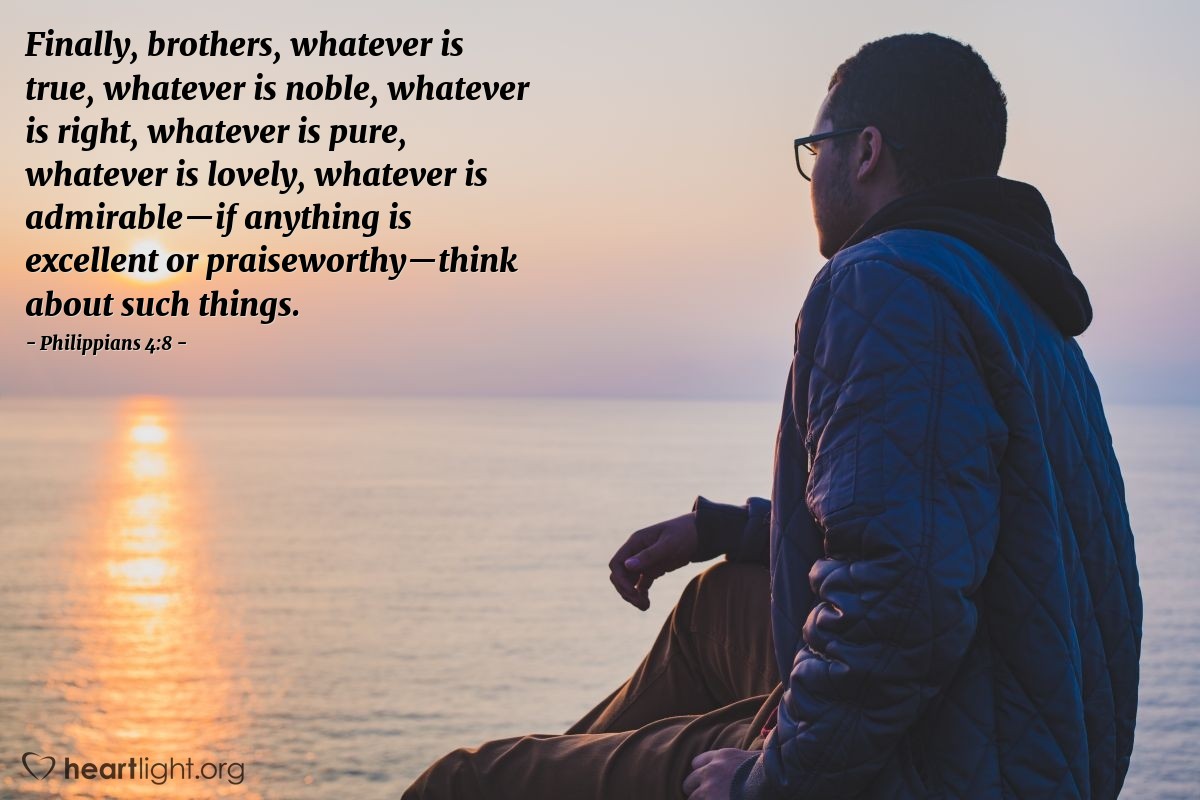
By contrast, our thoughts too often veer to the negative. We forget what the Apostle Paul told us in Philippians 4:8—to think on excellent and praiseworthy things.


C. S. Lewis helped a woman do just that in a letter he wrote as she lay in a hospital contemplating the possibility of death:

“Think of yourself,” he said, “just as a seed patiently waiting in the earth: waiting to come up a flower in the Gardener’s good time, up into the real world, the real waking. I suppose that our whole present life, looked back on from there, will seem only a drowsy half-waking. We are here in the land of dreams. But the cock-crow is coming” (2).

Surely Lewis’s words stirred fresh hope in her heart as he awakened her imagination to a new perspective. In your mind’s eye, can you see excellent, praiseworthy events unfolding in the situation that most concerns you? Allow such imaginings to provide fresh hope for your heart.

  1. With an active imagination we can envision the kingdom of God that exists here and now, even though hidden from view. 

The very nature of faith requires imagination, because the kingdom of God cannot be perceived by the senses. It exists invisibly among and within those who invite King Jesus to rule in their lives (3). But our imaginations can help us access the invisible through the visible as we contemplate:


  • The glory of God in the splendor of creation
  • The rule of God in the organization of the universe
  • The goodness of God in our numerous blessings
  • The wisdom of God in his precepts that usher in abundant life
  • The power of God, as he transforms misery to joy, trouble to triumph, and even bitterness to forgiveness
  1. With an active imagination we can experience God more fully. 

For example, what if we:


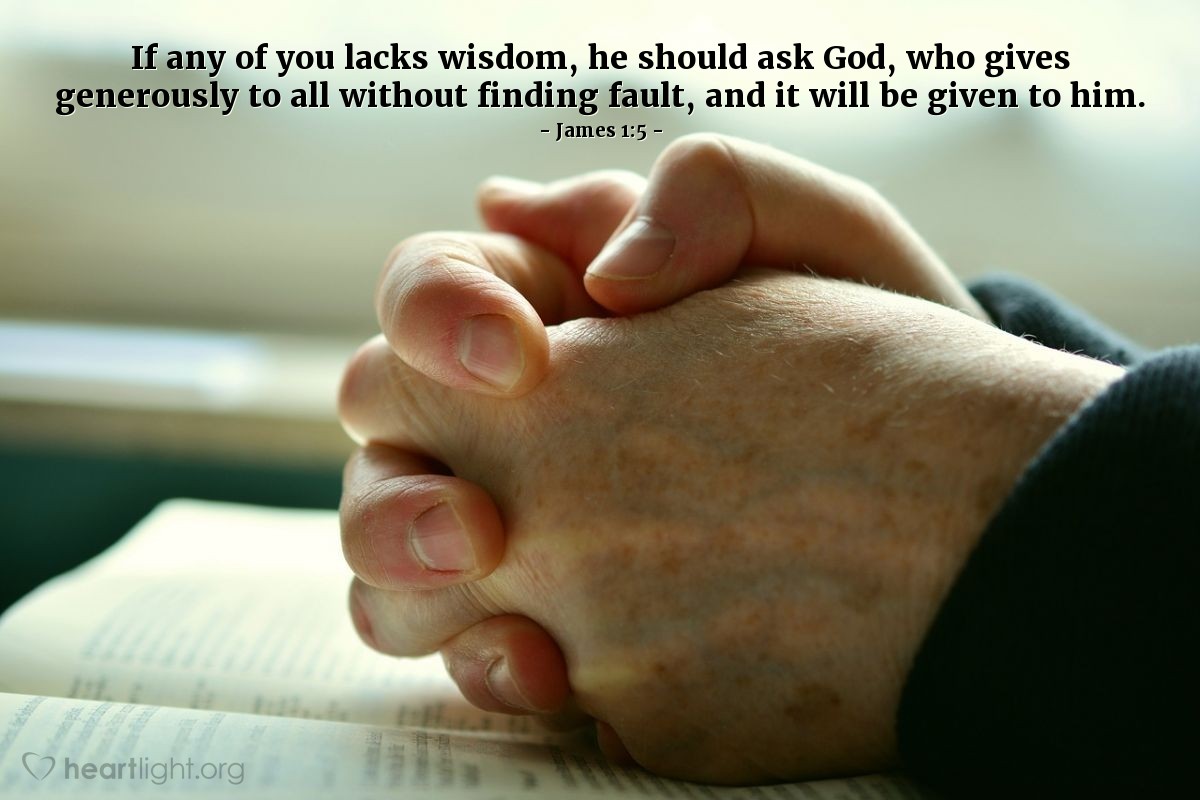
  • Imagine God sitting with us as we pray, our hands pressed between his, his head leaning in close to hear our every word. Would it be easier to sense his presence, stay focused, and pray with more intensity?
  • Imagine God at our right hand as we work through our days (Psalm 121:5). He is our ever-present Protector, Guide, and Help. Might such visualization reduce stress? Could mindless tasks become sublime opportunities to enjoy his presence and access his strength?
  • Imagine God on his throne as we worship, with his dazzling radiance signifying splendor, and his voluminous robe representing power (4). Might the joy and passion of our worship-experience be enhanced as we contemplate his magnificence?


You might remember that Jesus held children in great regard. He suggested that adults become like little children to enter the kingdom of God (Matthew 18:1-5). Granted, his emphasis was upon trust, loyalty and humility. But responding to him with the imagination of a child as well will help us fly beyond the stars.


I don’t want to miss that. I’m guessing you don’t either.    


Notes:

  1. Philippians 1:6; Ephesians 3:20
  2. The Collected Letters of C. S. Lewis, vol. 3: Narnia, Cambridge, and Joy, 1950-1963, [2007]
  3. Hebrews 11:1; Luke 17:21
  4. Ezekiel 1:27; Isaiah 6:1-2


Photo credits:  http://www.pxhere.com; http://www.edwards.af.mil; http://www.heartlight.org; http://www.goodfreephotos.com; http://www.pixabay.com; http://www.flickr.com.; http://www.quotefancy.com.


Read Full Post »


The summers of my childhood included a blend of games and activities with neighborhood friends, afternoons at the community pool, bike rides to the library, and a few weeks spent with Grandma Clara and Grandpa Henry who lived four hours away in Iowa.

No doubt some would describe our summer experiences as mundane, not realizing the joy hidden among the ordinary:

  • The delight of lazy Monopoly marathons
  • The wonder of fireflies in a jar
  • The satisfaction of a big bowl of buttery popcorn–after biking to the park and spending several hours of nonstop cavorting in the pool, then biking home again
  • The pleasure of tucking ourselves under the willow tree to read
  • The fun of an evening bike ride with Dad


It’s the small, happy moments—not the grand events—that contribute to satisfying days and a joy-filled life.


The joy of small…makes life large.

–Ann Voskamp (1)


However, I have to admit: my childhood-self took those lovely moments for granted. I lived unaware of God’s glory pervading my everyday experiences: his creative genius on display—even in the backyard, his love, peace, and security within a family grounded on Christian values, and his goodness to provide joy-filled moments that shimmer in my memory with holy perfection.

Now, as the decades have passed, I’m learning to identify more of the transcendent moments God provides, including:


  • A cardinal filling the silence of the woods with his hope-inspiring “Cheer! Cheer! Cheer!”
  • A toddler wrapping her arms around my neck and crying, “I love you!”
  • A devotional that speaks exactly what I need to hear
  • An opportunity to encourage a waitress and see her concern turn to hope
  • A small gathering of family and friends quickly ballooning to twelve—with much laughter, camaraderie, and delightful conversation


God’s glory is on display right “in the middle of our minutes” (2).


So each night before falling asleep, let’s measure the moments of our days:

  • Taking note of God’s blessings and the delights of his creation; singing our praise for his breath-taking handiwork (Psalm 92:4; Job 5:9).
  • Thanking God for the camaraderie and conversation, hugs and support among family members and friends who keep us strong (Ecclesiastes 4:9-10).
  • Counting the riches that result from abiding in God, beginning with peace (Isaiah 26:3), stability (Psalm 16:8), and contentment (1 Timothy 6:6).
  • Celebrating the honor of ministering to others in Jesus’ name (Matthew 25:40), giving us purpose and cultivating fulfillment in our spirits.
  • Delighting in the opportunities to smile, laugh, and find moments of joy—even in the midst of trouble or frustration (Proverbs 17:22).


“Laughter is to life what shock absorbers are to automobiles.

It won’t take the potholes out of the road,

but it sure makes the ride smoother.”

–Barbara Johnson


And just as inches are measured into feet, so we can measure meaningful moments into satisfying days and a joy-filled life–because God is in them.


What meaningful moments are at the top of your list for today?  Please share in the comments section below!


Notes:

  1. One Thousand Gifts, Zondervan, 2010, p. 167.
  2. Sara Hagerty, Unseen, Zondervan, 2017, p. 109.


(Photo credits:  http://www.geauxguard.la.gov; http://www.pixnio.com; http://www.flickr.com; http://www.pxhere.com; http://www.flickr.com; http://www.pexels.com.)


Read Full Post »


Along with spring-cleaning of the house, I thought perhaps a purging of the blog-post-ideas file would be worthwhile. Six years of collecting starters has produced thirty-five pages of possibilities.

Some ideas have languished in a notebook nearly the whole six years. It’s probably time to admit they’re never going to amount to anything, I decided.

Then you came to mind! Maybe you’ll see potential where I’ve given up hope. And with a deft question or suggestion you’ll send me off researching and keyboarding with your fresh insight.

Or, you’ll say, “I’d like to know more about that. Keep that one in the hopper!” And the life of that idea will thus be saved.

So what occurs to you about these topics, dear readers? Do you see any possibilities here for a worthwhile post or two?

  1. From Anxiety to Joy. Psalm 94:19 says, “When anxiety was great within me, your consolation brought me joy.” What might those consolations be that can bring joy in the midst of anxiety? (That’s quite a feat!)


2.  God’s ways are an outgrowth of his character—even when tragedy strikes. How can hurt and pain be the outgrowth of God’s beautiful and perfect attributes?

3.  Delight and Desire. Psalm 37:4 says, “Take delight in the Lord, and he will give you the desires of your heart.” How do we learn to delight in the Lord and desire what he desires?

4.  The Adventure of Grace. What insight might we gain from the definition of adventure? How is the life of grace is like an adventure, and why is that attitude helpful? How can we embrace the adventure more enthusiastically?


5.  The power of right attitudes over body, mind, and spirit. What have medical science and psychology discovered about the impact of attitudes? What does scripture have to say? How can we change our attitudes?

6.  “He who keeps one end in view makes all things serve”—Robert Browning.   That statement is true in the Christian life: if our main ambition is to fulfill God’s purpose, then all events will serve equally well.

7.  Goodness is not only good for those around us, it’s good for us.

8.  How do we accept with grace the circumstances that are unpleasant and outside our control?

9.  Turning Boredom into Contentment. Life can be full of mundane tasks that sap the joy right out of our spirits. What’s a person to do?!


10.  Game-Changers. Our viewpoints of life’s circumstances are perhaps more important than the circumstances themselves. Sometimes all it takes is a pithy statement to change our attitude. Possibilities include: “We obey God, not because we have to but because we get to” (A quote from one of the lay pastors at our church.) Or, how about this statement: “If the Lord does not change the place for the better, he will make us better in the place” (Charles Spurgeon). What other perspective-changers can we apply on a circumstantial rainy day?

11. Taking offense at less and less provocation seems to have pervaded our culture. What happened to resilience? Is it important? Does the Bible give us instruction for this attribute? How do we develop it?

12.  Rock Climbing—a metaphor for life. We need the handholds of God’s character when life becomes a difficult climb. We must cling to his attributes.


That’s enough for today. I’ll look forward to reading your creative suggestions in the comment section below!


(Photo credits:  http://www.thebluediamondgallery.com; http://www.heartlight.org; http://www.pixabay.com; http://www.nps.gov; http://www.flickr.com.)


Read Full Post »


Every now and then, even positive people are bothered by a niggling, accusatory voice in their heads, offering such (Please note the sarcasm.) helpful comments as:

  • “Look at that guy—one successful venture after another. What have you accomplished lately, Ms./Mr. Nobody?”
  • “Everybody in that group was so articulate compared to you. Why are you such an idiot?”
  • “This assignment is way beyond your abilities. You’re gonna make a fool of yourself.”

Such self-talk is destructive; you know it. But how do you turn it off?  With affirmative battle cries. Positive rebuttal will send those self-critical thoughts into retreat—back to the darkness where they came from.

A proper battle cry can stir up encouragement, inspire perseverance, and be a reminder of who you really are, as well as what you can actually do.

And the very best battle cries are based on scripture.  These examples may provide a good place to start:

  1. You are a cherished daughter/son of God!

You may be focused on your inadequacies and failures, but God is not. His attention is riveted on what you will be—completely perfect and whole.

And as he works within you toward that goal, he rejoices in your progress. Follow his example, and celebrate your steps on the right path.


  1. You are a masterpiece–not a mess!

Consider what constitutes a masterpiece: artistic genius, extraordinary design, superlative craftsmanship, and originality—among other glorious qualities.  That’s YOU!

Never forget: the greatest Artistic Genius of the universe created you. He fashioned a one-of-a-kind mold for your personality, your particular traits and talents, your specific purpose.  Embrace who he made you to be.


  1. You have been created in the image of God himself!

And he’s given you the privilege to brightly reflect his magnificent image to those around you.

Consider yourself a stained glass window, with God’s light (all his magnificent attributes) gleaming through the shapes and colors of your individuality, your abilities, in order to bless those around you.


  1. You are a true Superman/Superwoman!

More than a conqueror,” Paul said.  That makes you a super-conqueror (!), through the one who loves you–Jesus.

And because of him, you are guaranteed victory in the end.  Now each day can be viewed as an adventure with God, not an affliction.


  1. You are capable to accomplish anything God prepares for you to do!

That’s because nothing is impossible for him. He goes ahead of you to prepare the way, and supplies the abilities necessary to complete your mission.

In addition, “[He] will help you deal with whatever hard things come up–when the time comes” (Matthew 6:34, MSG).


  1. You are equipped to thrive!

In the soil of God’s unfailing love, and with the nourishment of his encouraging Word, you can grow seeds of contentment, and they will produce the fruit of joy and peace.


So!  Are you feeling inadequate for the day or frustrated by what you face?

Perhaps a few of these battle cries speak to your situation. State them firmly out loud, and for greater impact, speak in front of a mirror.

Affirm to yourself who you are really.

___________________________________


Scriptural support for each battle cry:

  1. 1 John 3:1-2; Hebrews 10:14; Philippians 1:6; Psalm 147:11; Psalm 119:35.
  2. Ephesians 2:10 NLT; Psalm 139:16; Proverbs 19:21.
  3. Genesis 1:27; 2 Corinthians 3:18.
  4. Romans 8:37; 1 Corinthians 15:57.
  5. Philippians 4:13; Matthew 19:26; Ephesians 2:10; Psalm 37:23 CSB; 1 Peter 4:11; Matthew 6:34 MSG, emphasis added.
  6. John 10:10; Jeremiah 29:11; 2 Timothy 3:17; Ephesians 3:17-19; Psalm 119:24; Philippians 4:12-13; 1 Peter 1:8-9; Isaiah 26:3.


What battle cry against the negative self-talk helps you?  Please add your suggestion in the Comment section below!


(Photo credits:  http://www.pxhere.com; http://www.wikimedia.com; http://www.pxhere.com; http://www.wikimedia.com; http://www.pixabay.com; http://www.dailyverses.net; http://www.pixabay.com.)

Read Full Post »


In the midst of my harried day

When I seem farthest from myself

A moment comes to me and beckons,

“Let us fly away.”


Shutting out the din

Of the never-ending to-do

I close my eyes and begin

To wander in thoughts sublime;

And gather flowers in my mind.


–Tara Afriat*


Such delightful imagery Tara creates with that last line. But I wonder, what sublime thoughts might be worthy of a bouquet in my mind?  So far, five varieties have occurred to me:


1. Humor offers blooms of joy.


Just recently my husband was hospitalized and underwent a number of tests. When an orderly came to accompany Steve to a procedure he announced, “One CT scan, coming up. Would you like fries with that?”

I’m thinking a new journal specifically for humor might be fun to keep (and savor later).


2. Quotes provide blooms of wisdom, encouragement, and beauty.

Isn’t it amazing how a few well-chosen words can suddenly enlighten our understanding or give us eyes to see what was invisible just moments before?

A recent addition in my quote journal offers wisdom, encouragement, and the potential for beauty:


“Make one person happy every day and in forty years

you’ll have made 14,600 human beings happy

for a little time at least.”

–Unknown


Such encouragement gives wise perspective to the impact of small kindnesses, doesn’t it?   And what fun to cause 14,600 beautiful smiles!


3. Observations become blooms of refreshment.


Another journal on my shelf is titled “A Celebration of Small Things.” Each day I record at least one observation worth noting, because:


“A grateful heart is one

that finds the countless blessings of God

in the seemingly mundane of

every day life.”

–Anonymous


Pages of entries over the last two years remind me of just how blessed I am. For example:

January 10, 2017: “The birds are singing a “Hallelujah Chorus” of their own this morning, in celebration of the sudden balmy temperatures—into the upper 50s!”


Review of such moments does refresh my attitude.


4. Kindness creates blooms of grace.

In 1983 I began a journal to document God’s grace. So far, the record of more than 1300 entries offers sublime flower-gathering in my mind. Again, one example:

1996/97 proved to be a particularly challenging year at the school where I taught. Frustration plagued many of us faculty members. In late September I confessed to my early morning prayer group my difficulty in letting go of annoyance, and Betty prayed for me.

Minutes later as I drove to school, my attention was drawn to bright sunbeams radiating from behind great billowing clouds. It seemed the windows of heaven had been opened, and the glory of God on his throne radiated from just beyond that cloud bank. I could almost hear him saying, “You’re going to be fine—I’m right here to help you!”


Betty’s kind prayer and that God-given sky-reminder provided perfect affirmation. And now, that entry and many like it remind me: My Heavenly Father has been ever-faithful in the past; I can trust him for the future.


5. Scripture provides blooms of truth.

Within the pages of the Bible we find a variety of flowers for the mind, including those mentioned here: wisdom, encouragement, beauty, refreshment, and grace. But the most important is truth. Absolute truth.

We live in a time when relative truth is embraced by many, but:


(“Truth is incontrovertible. Malice may attack it,

ignorance may deride it, but in the end, there it is.”

–Winston Churchill)


The wise person seeks after truth—truth that revives the soul, gives joy to the heart, and provides insight for a well-lived life. That’s exactly what the Bible provides (Psalm 19:7-8).**

One psalmist who reveled in scripture wrote: “Oh, how I love your law! I meditate on it all day long” (Psalm 119:97).

And no wonder. The Bible is a continual source of flowers for the mind—of the very best, wisest, and most beautiful kind.


Where do you gather flowers of the mind? Share with us in the Comment section below!

__________________________________


*Quoted from Soul Retreats for Busy People, compiled by Lila Emspon


**If you’re not sure whether scripture is reliable truth or not, I recommend Mere Christianity by C. S. Lewis, The Reason for God by Timothy Keller, or The Reason Why Faith Makes Sense by Mark Mittleberg. It is the honest person who invites God to reveal himself.


Photo credits:  http://www.pexels.com; http://www.wikimedia.com; http://www.pixabay.com (2); http://www.nps.gov;  http://www.pocketshare.speedofcreativity.org; http://www.azquotes.com.


Read Full Post »


The first time I saw the above painting by Richard Schem, Times Square in New York City came to mind. If you’ve ever stood at the intersection of Broadway and Seventh Avenue at night, you too may have been overwhelmed by the cacophony of color produced by thousands of neon lights.

But Richard’s painting is titled, “See the World.” That provides a very different perspective.  Now I see the colors of the sea, the brilliant hues of silken saris from India, the verdant hillsides of Ireland, the rich crimson of Chinese lacquer, the terracotta and ochre tones of the Grand Canyon.


In one painting, he’s captured the glory of color that pervades much of our world.

Of course, Richard Schem isn’t the only artist who sees the world with fresh perspective and provides a delicious moment of discovery for those who pause long enough to experience a work of art, not just view it.

I wonder what would happen if we became artists of our days—pausing long enough to find fresh perspective now and then? Might we make a delicious discovery or two? Might our days explode with colorful moments, like Richard Schem’s canvas?

If that sounds enticing, the next question would be: How do we become artists of the everyday? I’m thinking the following strategies might provide a good place to start.


1. Paint the day with positivity.


Why let the drab colors of disappointment, difficulty, and frustration shroud the day when we can choose the cheerful hues of optimism, opportunity, and blessing?


“A joyful heart makes a face cheerful.”

–Proverbs 15:13a


Just this morning (It’s Monday as I begin to draft), Steve and I had to go to the hospital for his weekly blood draw. Unfortunately, Mother Nature played an April Fool’s joke during the night: the SUV was covered in frost. Not being quite tall enough for the job, I attacked the ice on the windshield with some difficulty, and was soon huffing and puffing.**

Well, at least this is good exercise, I thought. And listen to the birds, happily trilling and chirping, not the least bit deterred by the chill this morning. My frustration began to subside.


2. Weave gratitude from morning till night.


(This photo taken last September)


Recent threads in my gratitude tapestry include: hot coffee in a thermal mug, sunshine streaming in the windows, a trio of deer feasting on the backyard hillside, candle-lighting time each evening, and a delightful book intertwining mystery and humor.

God’s goodness comes in many colors and textures.


3. Mold moments into sanctuaries of joyful worship.


 Instead of just waiting for joy to find us, we can create it. Here are a few possibilities:


  • Celebrate the prize of a smile from each person you meet—especially if you’re the one to smile and say hello first.


  • Savor virtual snapshots of delightful observations: a squirrel perched at the very tip of a branch, feather duster clouds sweeping the sky, the dimples on the back of a small child’s hand.


  • Find richness in the commonplace: the miracle of crocus blooming through the snow, fire flames leaping on the hearth (never the same way twice), and raindrop jewels glistening on the foliage.


“For you, O Lord,

have made me glad by your work;

at the works of your hands

I sing for joy.”

–Psalm 92:4 ESV


Design to bless others.

Becoming artists of the everyday for our own hearts’ sake is certainly beneficial, but inspiring others to connect with the Master Artist as the result of our optimism, gratitude, and good cheer? Well, that just multiplies the blessing.

How have you painted your day with positivity, woven gratitude into the hours, or molded moments into sanctuaries of joy? Share with us in the Comment section below!


______________________________


*A phrase borrowed from Run with the Horses by Eugene Peterson.

**My thoughtful husband usually takes care of this chore, but he’s recovering from a subdural hematoma as many of you know. Such exertions as frost removal are not allowed for at least three months.

Art & photo credits:  http://www.horchow.com (Richard Schem); http://www.wikimedia.com; http://www.pexels.com; Nancy Ruegg; http://www.flickr.com; Nancy Ruegg.


Read Full Post »

Tony always loved team sports. In his teens he focused on football, and at the University of Minnesota he distinguished himself as a talented quarterback.


But no pro team picked him up after graduation in 1977. He finally signed on with the Pittsburgh Steelers as a free agent.

Over the next three years he played for three different teams.  His career seemed to be going nowhere.  And at the end of that third year Tony anticipated transitioning from football to something else.

But his alma mater drafted him as assistant coach for their team. And the following year he was offered the same position with the Pittsburgh Steelers.


Over the next fifteen years, Tony held two different coaching positions with two more teams before becoming head coach for Tampa Bay.  The Buccaneers did well for five years, making it to the playoffs three years in a row, 1998-2000. But the fifth year did not go well, and Tony was fired.

Now what, he wondered.

Within days Tony’s question was answered.   The Indianapolis Colts offered him the position of head coach. And in 2007 they won the Super Bowl. Tony Dungy became the first African-American coach to achieve that distinction.


Then-President George W. Bush receives an honorary jersey from the Super Bowl champs of 2007.  Quarterback Peyton Manning is to the president’s right, Tony Dungy is to the left.


It certainly hadn’t come easy. But after thirty years of ups and downs and hard work, Tony had finally achieved a long-held dream.

Tony’s story and the experiences of countless other persevering people have proved:


“The desires of the diligent are fully satisfied.”

–Proverbs 13:4b NIV


However, there is much more to that proverb than success in one’s work, as valuable as that is (Ecclesiastes 5:19).


And there’s much more to Tony’s story than a struggling football player who became a successful coach.

Tony is a Christian. And while he taught and trained athletes all those years, Tony was diligently applying himself to desires of eternal value.  He always felt that Christian principles were more important than everything else. Whatever position he held, Tony kept his faith at the forefront.

Proof of that statement lies in the choices he’s made—on the field as a calm, self-disciplined coach and off the field as a dedicated servant of God.


He’s been the national spokesman for “All Pro Dad,” and has worked with a number of organizations like Fellowship of Christian Athletes, Athletes in Action, Mentors of Life, Big Brothers/ Big Sisters, Boys and Girls Clubs, and the Prison Crusade Ministry.

In addition, he and his wife Lauren have adopted seven children to round out their family of three biological children.  They also established the Dungy Family Foundation that works with Christian organizations, including pregnancy centers and youth ministries.

Tony says he loved coaching and winning the Super Bowl, but that was never his ultimate objective. “My purpose in life is simply to glorify God,” he says.*


(Tony receives the prestigious American Spirit Award

in November, 2007.)


There’s the secret to satisfaction in life.  Those who diligently desire to glorify God are the ones fully satisfied in their spirits.

But diligence requires effort—efforts such as:


  • Conditioning of the mind (Romans 12:1-2)


Tony would be the first to tell you the positive impact of scripture study in his own life. To highlight its importance, he put a Bible in his Hall of Fame locker, prominently displayed on the top shelf.


  • Humble submission (1 Peter 5:6)


Tony surrendered his expectations, knowing that God would bring fulfillment to his life, though not always in the ways Tony anticipated.


  • Patience (Galatians 6:9)


All the while Tony was playing football and coaching, he was learning to be a man of integrity, self-discipline, and courage.

Years spent in the public eye has also provided Tony a unique platform for: 1) mentoring players and coaches, 2) speaking at meetings and conferences on such topics as integrity, personal discipline, and overcoming adversity, and 3) writing books, including Quiet Strength and Uncommon–all endeavors of eternal worth.


  • Allowing pressure to achieve purpose (2 Corinthians 1:3-5)


At the onset of each setback in his career, Tony wondered what God was doing. But he knew God could be trusted.

Then came the most painful setback of all—the suicide of his son in 2007.

Even then Tony did not falter. He allowed the pain to press him closer to his Heavenly Father, and he set about to use the tragedy as a way to honor God and help others.

In the final analysis, satisfaction is the outcome of diligent surrender to God’s purpose and diligent rest in God’s providence.


Just ask Tony Dungy.


*     *     *     *     *     *     *     *     *     *

I thank you, Father, for brothers and sisters like Tony Dungy who diligently spend their time and energy in usefulness to you, and all for the praise of your glory.  May I, too, diligently follow the narrow path of such uncommon people.


(Art & photo credits:  http://www.wikimedia.org (2), http://www.georgewbush-whitehouse.archives.gov; http://www.dailyverses.net; http://www.wikimedia.org (2); http://www.dailyverses.net; http://www.bibleversestogo.com; http://www.heartlight.org; http://www.macdill.af.mil; http://www.dailyverses.net; http://www.canva.com.)


*https://www.I/20160802/hof16-tony-dungys-faith-is-central-to-his-success.com


Sources:

  1. https://www.cantonrep.com/special/20160802/hof16-tony-dungys-faith-is-central-to-his-success
  2. https://www.faithwire.com/2018/08/30/former-nfl-coach-tony-dungy-one-of-the-reasons-god-has-me-at-nbc-is-to-give-christians-like-nick-foles-a-voice/
  3. https://www.l/20160802/hof16-tony-dungys-faith-is-central-to-his-success
  4. http://www.bpnews.net/22595/tony-dungy-voices-the-pain-and-lessons-from-his-sons-suicide
  5. https://www.sun-sentinel.com/news/fl-xpm-2007-01-31-0701300302-story.html
  6. https://billygraham.org/story/tony-dungys-31-year-faith-journey-to-canton-ohio/
  7. http://www.enccylopedia.com/people/sports-and-games/sports-biographies/tony-dungy


Read Full Post »

No doubt about it.  Our senses are bombarded with stimuli during the Christmas season.

Decorated trees, wreaths, and garlands; figures, swags, and fairy lights festoon building after building, home after home.


Carols and holiday songs accompany every errand run and shopping excursion.

The scent of cinnamon, pine, and gingerbread; peppermint, vanilla, and clove urge us to breathe deep—frequently.


Velvet dresses, satin bows, and cloud-soft batting; feathery bird-ornaments, and fuzzy teddy bears beg to be touched.

Grandma’s stuffing, Butterball turkey, and squash casserole; Wassail, snowball cookies, and cranberry coffee cake all tantalize the tongue.


Some days, however, we practically drown from total immersion in everything Christmas. What is a worn out sensory system supposed to do?

If you Google “strategies for stress relief” you’ll be presented numerous options from the experts.  Some suggestions require more time than many of us can sacrifice during December. Examples include working on hobbies, getting a massage, or taking a vacation.


I can hear you through my computer screen: “NOT gonna happen this month!”

But there are other strategies we can weave into our days no matter what the to-do list requires. And SURPRISE! The experts often echo what scripture has taught all along.

We can calm ourselves through:


Meditation

Not mind-numbing exercises that supposedly elevate us to euphoria, but meditation on scripture, God’s works and mighty deeds (Psalm 119:97; 77:12). For me, that includes starting each morning with him and his Word, to set the tone for the day.

And as we fix our thoughts upon him, God has promised to keep us in perfect peace (Isaiah 26:3). He is our source of equilibrium and tranquility, prosperity and contentment of soul. Daily he supplies what we need to accomplish what is necessary (2 Corinthians 9:8).

The rest we can let go.


Music

“How good it is to sing praises to our God, how pleasant and fitting to praise him” (Psalm 147:1, emphasis added).

Sometimes that means a loud and majestic “Hallelujah Chorus.”

But when nerves are frazzled, the experts recommend slow, quiet music. And many of our favorite carols offer just such repose.

So, when tension rises, be ready to select “Silent Night” or “What Child Is This.”  Save “Ring Christmas Bells” and “Sleigh Ride!” until the stress subsides!


Prayer

We can allow all the sensory input to turn our minds toward Jesus “by praying continually–simple, short prayers flowing out of the present moment” (Romans 12:12 and Sarah Young, Jesus Calling).

Sentence prayers such as these:


Thank you, Jesus, for the laughter of children that opens my heart to your joy.

Thank you for the power of delectable aromas—like clove-studded ham, vanilla sugar cookies, and cinnamon rolls–that conjure up sweet memories of Christmases long ago.

Thank you for the family and friends represented in this stack of Christmas cards, who’ve left their love stamped upon our hearts.


Thank you for the familiar carols, reminding me of that wonder-filled first Christmas.

And thank you, Jesus, for lights that glimmer and candles that glow, celebrating you, the Light of the world, our Emmanuel.


They say it takes just three weeks to learn a new habit. With all the sensory reminders around us, this may be the most opportune time to become continual pray-ers.

And as we seek to turn everything Christmas into gratitude and praise, the joy of the Lord will surely follow.


Art & photo credits:  http://www.pixabay.com; http://www.maxpixel.net; http://www.publicdomainpictures.net; http://www.pexels.com; http://www.goodfreephotos.com; http://www.flickr.com; http://www.doncio.navy.mil (photographer:  Diana Quinlan); Nancy Ruegg; http://www.pexels.com; http://www.heartlight.org.


Read Full Post »

English poet, William Blake (1757-1827) penned those words of the title.

We don’t have to look far to see that he was right:

  • Children pick up mannerisms, inflections, even body language from their parents.
  • Couples who have been married a long time often begin to look alike (1).
  • Transplants to another part of the country frequently pick up the accent of that region.

In addition, modern neurological research has proven Mr. Blake’s statement in ways even he never imagined.

Here’s what scientists have discovered: Thoughts travel along specific pathways to various destinations in our brains. As we consider the same thought frequently, the pathway for that thought becomes more deeply entrenched. The final result? The more often we contemplate something, the more it will affect our thought patterns, how we feel, and how we behave (2).

No wonder God inspired Paul to write:

According to that research mentioned above, to behold (observe and take in) such things as Paul lists will lead us to become honorable, pure, admirable, etc. In fact, we’ll gradually begin to resemble Jesus.

But how do we contemplate the Lord’s glory on a day-to-day basis? How do we train our thoughts to etch worthwhile pathways in our brains, so we’re thinking, feeling, and behaving in Jesus-like ways?

To begin, we might check the stimuli for our thoughts:

  • the book(s), magazines, and websites we read
  • the programs and movies we watch
  • the music and podcasts we listen to
  • the kind of entertainment we choose
  • the conversations we participate in—in person and on social media

Can we describe these activities with the adjectives Paul used in Philippians 4:8? Is our reading material pure? Our entertainment admirable? Our conversations worthy of praise?

O God,

Second, we set aside a quiet time with God each day.

It’s surely one of the loveliest and most excellent activities for beholding him, as we immerse ourselves in truth for life from his Word, revel in his glorious attributes, and talk to him about the concerns on our hearts.

“Look up into his lovely face and as you behold him,

he will transform you into his likeness.

You do the beholding—he does the transforming.”

—Alan Redpath

Third, we infuse the hours of each day with praise.

All those descriptors in Philippians 4:8 apply to Jesus. Day in and day out we can enjoy the uplift of praise, celebrating that he is:

  • the epitome of truth (John 14:6).
  • honorable and worthy of all tribute, because he lived a sinless life and sacrificed himself on the cross for us (Revelation 5:12).
  • right in all he does (Jeremiah 23:5).
  • pure in all he is (1 Peter 2:22).
  • lovely, as the radiance of God’s glory (Hebrews 1:3).
  • admirable, as the only man tempted in every way and yet never sinned (Hebrews 4:15).
  • excellent in all ways, including his servitude, humility, and obedience (Philippians 2:6-8).
  • praiseworthy, as ruler of all things (Matthew 28:18).

In addition, Jesus was a man of peace, joy, wisdom, kindness, courage and more (3).

And God wants us to be the same, to become like his Son (Philippians 1:6).

Can you think of any greater aspiration?

_______________________________________________

Notes:

  1. One theory to explain this phenomenon: We unconsciously mimic the facial expressions of our spouses, as we empathize with their experiences and emotions. Over time, repeated expressions shape our faces in similar ways.
  2. https://www.maxanders.com/we-become-what-we-behold.
  3. John 14:27; John 15:11; Luke 2:40; Matthew 9:36; Philippians 2:8.

Art & photo credits:  http://www.pxhere.com; http://www.heartlight.org; http://www.dailyverses.net; http://www.pxhere.com; http://www.canva.com; http://www.pxhere.com; http://www.canva.com.

Read Full Post »

« Newer Posts - Older Posts »

When the House is Quiet

Impressions Becoming Expressions

Mitch Teemley

The Power of Story

Still Traveling

Impressions Becoming Expressions

Living Our Days

Gaining a heart of wisdom

He Said What?!

I'm Patty, and my husband and I are living with our adult son who has autism and epilepsy. I love sharing lessons learned from life around me, especially life with Aaron.

Meditations of my Heart

Impressions Becoming Expressions

Linda Stoll

Impressions Becoming Expressions

Signora Sheila

Where faith meets la dolce vita

Heidi Viars

Finding the Image of God