Feeds:
Posts
Comments

Archive for the ‘Renewing the Mind’ Category


Some believe that indulging in memories is a waste of time, that past events have no meaning for the present. But nothing could be further from the truth— especially if we acknowledge God’s part in those events.

When we include God in our remembering:

  1. We gain a sense of perspective.

Even difficult times are part of God’s plan. Sometimes, with the gift of hindsight, we catch a glimpse of his purpose later.

For example, how many students have struggled through school, yet in adulthood flourished in careers well matched to their gifts? Most of them are actually thankful for the early challenges, because they learned perseverance and developed strength of character. Those late-bloomers are often compassionate and understanding toward other strugglers, because they remember the difficulties of those formative years.


  1. We acquire wisdom for today.

“Reflective thinking turns experience into insight.”

–John Maxwell

In my younger days I used to be a champion talker. But somewhere along the way I began to notice the listeners—caring folks who often demonstrated the gentle and quiet spirit Peter spoke of (1 Peter 3:3). They reminded me of my sweet grandmother.

I valued that demeanor and began to turn insight into a new experience of focused listening. (Please understand: practice hasn’t achieved perfection yet. But improvement? Yes.)


  1. We build a foundation of stability for today as we remember God’s grace and faithfulness in the past.

But memories easily fade. So some believers keep a book of remembrance or a praise journal, as a way to savor God’s faithfulness.

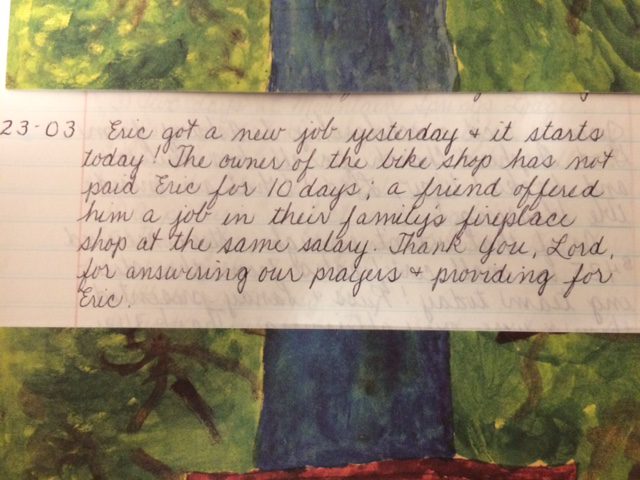
Just for fun, I randomly opened my loose leaf praise journal in search of an entry to share with you. Here’s what I wrote, December 23, 2003, about our older son, who was in college at the time:


(“Eric got a new job yesterday and it starts today! The owner of the bike shop has not paid Eric for ten days, but a friend offered him a job in their family’s fireplace shop at the same salary.”)

Entry after entry highlight God’s provision, protection, and guidance through the years. And each memory contributes to my foundation of stability.


  1. We foster gratitude in our hearts.

As you can see, the entry recorded above ends with: “Thank you, Lord, for answering our prayers and providing for Eric.”  Joy just naturally overflowed into appreciation.

On the opposing page I wrote, “I am overwhelmed, Lord, by this continuing string of blessings. You are SO good to us, always demonstrating your faithfulness and grace. May your praise continually be on my lips!”

Research has now proven a number of benefits of gratitude.*  But surely one of the best: it nurtures a contented soul.


  1. We can turn remembering into a beautiful act of worship. 

That’s exactly what scripture invites us to do: 

“Rejoice in all the good which the Lord your God has given to you and your house” (Deuteronomy 26:11).

Praise the name of the Lord your God, who has done wondrously with you” (Joel 2:26b).

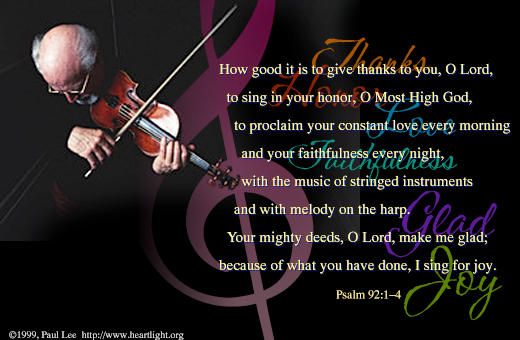
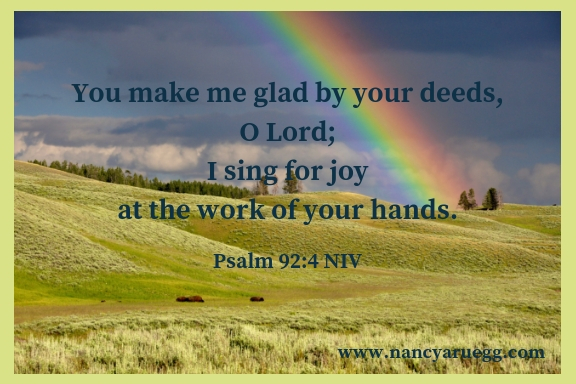
“You make me glad by your deeds, O Lord; I sing for joy at the works of your hands” (Psalm 92:4).


Such glorious cause and effect! Remembering God’s wonderful deeds of the past turns our hearts to worship, which causes a powerful, positive impact on the present.


  1. We can tell our stories of God’s miracles and mercies, to encourage the faith of others and refresh our own.

Scripture invites us to do that too: 

“I will tell of the kindness of the Lord, the deeds for which he is to be praised, according to all he has done for us” (Isaiah 63:7).

.


So let’s begin here! Please share in the comment section below about a kindness, miracle, or mercy of God from your memory. And together we can praise the name of the Lord who has worked wonders for us!


* Another post details some of those benefits, “Happiness.”


Art & photo credits:  http://www.flickr.com; http://www.nellis.af.mil; Nancy Ruegg (3); http://www.heartlight.org.


Read Full Post »


Expect to find trouble in this day.

At the same time, trust that [God’s] way is perfect,

even in the midst of such messy imperfection.

—Sarah Young (1)


Wait a minute. Trouble and perfection sound like opposites to me. Trouble is pain; perfection is bliss. How can those two concepts possibly coexist in our experience?

Sarah didn’t answer my question, so I headed to scripture to find out how God’s way could possibly be perfect for us in the midst of trouble.

My first stop occurred in Deuteronomy 32:4. “He is the Rock, his works are perfect, and all his ways are just. A faithful God who does no wrong, upright and just is he.”


And if I virtually click on a few words of that verse, the following truths reveal themselves:

  • God my Rock is utterly reliable and unshakably trustworthy
  • All of his works perfectly execute all of his plans
  • His ways reflect right judgments and highest wisdom
  • God is devoted to his children and faithful to his Word
  • All his actions are founded on absolute justice and supreme equity

But when trouble enters our lives, our Rock foundation can feel unreliable and untrustworthy. We might question the perfection of his plans, the wisdom of his ways, and the trustworthiness of his promises.


Then more than ever we must affirm: “Our inability to discern why bad things sometimes happen to us does not disprove God’s benevolence, it merely exposes our ignorance” (2).

Our finite minds cannot understand the all-wise, far-reaching, untraceable workings of a perfectly blameless and righteous God (3).


So the choice becomes ours. Will we: A) give in to worry, defeatism, and frustration, or B) seek to displace those emotions with scriptural truth and perhaps discover a better way to live?

I prefer Plan B!  I’m guessing you do too.  And a profitable place to begin is in the book of Psalms. We can collect numerous statements of God’s perfections at work on our behalf, even as we navigate through trouble.

For example, our Heavenly Father:


  • Watches over us (1:6). He knows what’s happening.
  • Gives us refuge (2:12)—not from trouble, but in the trouble.
  • Sustains us (3:5) with hope.
  • Hears us when we call to him (4:3), and is already working to bring beauty out of the ashes of adversity.


  • Fills our hearts with great joy (4:7)—despite the circumstances.
  • Encourages us (10:17) with his Word.
  • Turns our darkness into light (18:28), as he brings bright blessings out of dismal situations.
  • Arms us with strength (18:32) to endure.


  • Makes our ways perfect (18:32) as he gives us everything we need.
  • Guides us along right paths (23:3) toward maturity, serenity, and fulfillment.
  • Infuses us with peace (29:11) as we remember all things are possible with God.
  • Shows his wonderful love to us (31:21). And as we celebrate each day the manifestations of that love, our trust and contentment grow (4).


There you have it—a perfect dozen promises for troublesome times, gleaned from the first thirty-one chapters of just one biblical book. Many more are tucked within the pages of our Bibles, waiting to be discovered and embraced.

But worry, confusion, and discouragement don’t easily give up front-and-center attention in our minds. We must continually replace such thoughts with statements of faith, reminding ourselves: “The God who made us can equip us for the road ahead, even if it is an unpleasant road” (5).


After all, he’s in the driver’s seat, he has an impeccable driving record, and he deeply desires to accompany us toward our destination in heaven—to perfectly protect us, counsel us, and guide us safely all the way home–even through trouble.


P.S.  An update on my husband, Steve:  Many of you know he is fighting liver cancer right now.  Next week he will undergo another chemo treatment and radiation.  Our prayer is these procedures will eradicate the last tumor and no more will develop before he receives a transplant, perhaps early winter.  Thank you again for your love, support, encouragement, and prayer.  We are cocooned in God’s peace!


Notes:

(1) Jesus Calling, Thomas Nelson, 2004 p. 160.

(2) Ravi Zacharias and Norman Geisler, Who Made God? and Answers to Over 100 Other Tough Questions of Faith, Zondervan, 2003, p. 46.

(3) Romans 11:33-36.

(4) The following twelve scriptures provide further support: Psalm 139:1-6; 2 Thessalonians 3:16; Romans 15:13; Isaiah 61:3; Psalm 94:19; Psalm 119:50; Romans 8:28; Philippians 4:13; 2 Peter 1:3-4; James 1:2-4; Luke 1:37; Philippians 4:4, 12.

(5) Karol Ladd, Thrive, Don’t Simply Survive, Howard Books, 2009, p. 47.


Photo credits:  http://www.ymi.today; http://www.pexels.com; http://www.dailyverses.net’ http://www.canva.com; http://www.pixabay.com; http://www.flickr (Chris Bartnik); http://www.geograph.org.uk.


Read Full Post »


“Stand with me and sing!” invites the enthusiastic worship leader on the church platform, while guitars begin an upbeat tune and drums rap out a foot-tapping rhythm.

Around me people sway a bit to the music, some raise their hands, others worship with eyes closed.

And though I, too, sway and raise my hands, I have to admit my heart’s not in it. For some reason, lyrics that have brought me to joyful tears on other occasions are not penetrating today.

My spirit seems paralyzed—no feeling whatsoever. Efforts to engage—focusing on the words and imagining my Heavenly Father on his throne, listening with parental pleasure—don’t seem to help.

What’s wrong with me? I wonder.

Perhaps you’ve experienced the same numbness in corporate worship, maybe during personal quiet time or at prayer. And like me, you’ve felt certain that something must be wrong.


Granted, we worship God to honor him. Our end goal is not to rustle up feel-good endorphins for us.

But, according to the Westminster Shorter Catechism, we were created to glorify God and enjoy him forever. How is that even possible when we come down with a case of the spiritual blahs?

Actually, days and even seasons of spiritual dryness are a normal part of our faith-walk, experienced by almost every Christian at one time or another. And there is comfort in that, knowing we’re not alone.

Theologian Sam Storms offers us further encouragement:


“God is glorified by your longing for the joy to be found in him,

even if you are not yet experiencing it” (1).


But are there strategies we can implement to jump-start our hearts into exuberant responsiveness?

As a matter of fact, yes.


We can: 

1. Be honest with God.

King David certainly was. “I spread out my hands to you;” he cried. “My soul thirsts for you like a parched land” (143:6).

Yet in spite of his emotional tailspin, David writes, “I have put my trust in you. Show me the way I should go, for to you I lift up my soul (v. 8).


David provides a worthy example to follow: acknowledge the truth; affirm our trust, and seek God’s guidance.


2. Rehearse what we know about God’s character, his promises. 

Our minds are renewable resources (Romans 12:2). We can turn our thoughts away from the numbness we’re experiencing at the moment, and focus on what is lovely and true, excellent and praiseworthy about our God.

Sometimes such thought processes are all that’s necessary to bring us out of the doldrums (Psalm 92:4).


3. Persevere in spite of our emotions.

Keep showing up in God’s presence whether we feel like it or not.

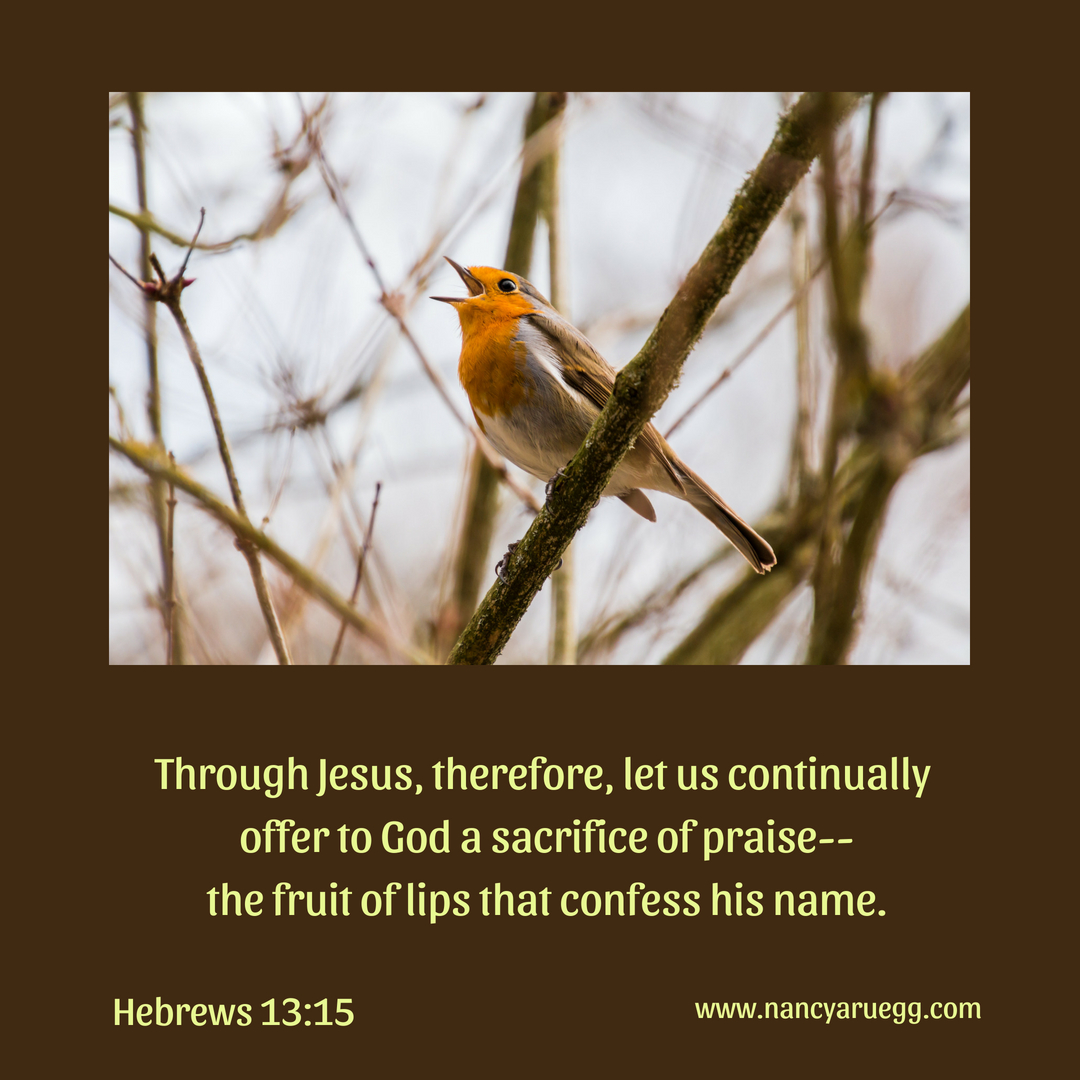
Our emotions must not be allowed to control actions. In fact, God especially appreciates a sacrifice of praise (Hebrews 13:15), which surely includes offering him our worship when the fervency just isn’t there.


4. Anticipate.

Worship with an outlook on the future (Psalm 42:1-2). We can look forward to the day when our hearts will overflow again with ecstatic praise—even to the point of joyful tears.


5. Pray. 

Perhaps something like this: 

“Father in heaven, flood the dry places of my soul with your presence; lift the gray clouds that conceal you. Within my spirit I want to feel the warmth of your radiant Light, be wrapped in your unfailing love, and fly with you on the wings of the dawn!

In trusting expectancy I wait for you, O Lord. I know you will answer.”


(Isaiah 44:3; Psalm 4:6, 32:10, 139:9, 38:15)


What helps you beat the spiritual blahs?  Please share your thoughts in the comment section below!


Note:

(1) https://www.crosswalk.com/church/worship/how-can-i-worship-when-i-feel-nothing.html


Photo credits:  http://www.wikimedia.com; http://www.pixabay.com; http://www.pxhere.com; http://www.dailyverses.net; http://www.heartlight.org; http://www.canva.com (2).


Read Full Post »


Recently I read about a woman named Rachel, persevering through very difficult circumstances. She knew that praising God was a smart strategy to implement.  Praise invites his presence, and it is in God’s presence we can experience absolute joy (Psalm 16:11)—even in the midst of trouble.

But putting praise into practice proved challenging. Her situation wanted front and center attention; her mind kept returning to the worry and what-ifs.

Rachel decided to make her morning swim a time of praise. For each letter of the alphabet, she tried to name a descriptor of God’s goodness while she lapped the pool.

Her tactic worked. Focusing on praise first thing in the morning helped to establish a positive frame of mind, easing stress and worry for the rest of the day (1).


The author did not include Rachel’s list. I had to wonder: Could I name twenty-six facets of God’s goodness, each beginning with a different letter and affirmed by scripture?

The effort turned out to be a delightful, uplifting exercise.  Below is my alphabet of praise.

Our God is:

A – Attentive to every need of every person in his realm (Matthew 6:25-33)

B – Benevolent beyond our dreams (Ephesians 3:20-21)

C – Compassionate toward those who are hurting (Psalm 86:15)

D – Dependable to support, sustain, and keep us secure (Psalm 55:22)


E – Eager for all to know and understand truth, to receive his gift of eternal life (1 Timothy 2:3-4)

F – Faithful through all generations, as enduring as the earth he created (Psalm 119:90)

G – Gentle in his guidance and care for his children (Isaiah 40:11)

H – Honoring us (!) with all needful favor in this life and admittance to glory in the world to come (Psalm 84:11 and Barnes Commentary)

I – Impartial to all who come to him, no matter our circumstance or appearance (Romans 2:11; Psalm 145:8-9)


J – Just in all his ways, choosing what is exactly right (Isaiah 5:16)

K – Kind, considerate, and helpful as he continually demonstrates his caring nature (Jeremiah 9:24)

L – Loving to the extreme; sending his Son to the cross as the supreme sacrifice for our sins (1 John 4:10)

M – Merciful beyond belief, exchanging our shame for his glory when we turn to him (Ephesians 2:4-7)

N – Never-failing to accomplish his purposes (Isaiah 46:10)


O – Omnipotent over every event, every circumstance (Psalm 103:19)

P – Patient to refine us, day by day, into the best version of ourselves (Philippians 1:6)

Q – Qualified to rectify or redeem any situation (Matthew 19:26)

R – Righteous and perfect in all his ways (Psalm 145:17)


S – Sheltering us under his powerful, protective wings (Psalm 57:1)

T – Tender yet practical in his continual thoughts of each of us (Psalm 139:17-18, 32:8)

U – Understanding of our foibles and weaknesses (Psalm 103:14)

V – Victorious over all sorrow, crying, pain—even death—when Jesus returns (Revelation 21:4)


W – Wise beyond human understanding (Romans 11:33-36)

X – X-pert at all he does (Deuteronomy 32:4)

Y – Yearning for all his children to come home to him (2 Peter 3:9)

Z – Zealous to fill us with hope, joy, and peace (Romans 15:13)


And this is just a sampling of who our God is!

Think of it: ALL that we need is found in ALL that he is.


“With the goodness of God

to desire our highest welfare,

the wisdom of God to plan it,

and the power of God to achieve it,

what do we lack?”

—A. W. Tozer


*     *     *     *     *     *     *     *     *     *

Help me, O God, to soar on wings of praise, even in the storms of life. May I keep my eyes on you, my sovereign and powerful Heavenly Father, in whom I can wholly trust. Hallelujah!


(1) ______, God’s Little Lessons on Life, Honor Books, 2001.


What facets of God’s goodness would you add to the list?  Share your thoughts in the comment section below!


(Art & photo credits:  http://www.peterson.af.mil; http://www.maxpixel.net; http://www.dailyverses.net; http://www.canva.com (2); http://www.dailyverses.net; http://www.publicdomainpictures.net; http://www.dailyverses.net.)


Read Full Post »


Which would you say is the most common human weakness?

A. Living unaware?

B. Greed?

C. Pride?

D. Selfishness?

According to pastor and author, Lou Guntzelman, the answer is A.*

Even twenty years ago when Guntzelman wrote his book, he saw many people living superficially, busily, and distractedly –moving too fast and focusing too much on insignificant matters.


Maybe those descriptors don’t apply to you. But I have been guilty on all counts.

And those of us who tend to fly through our days are at great risk of missing life.

We don’t see the unique qualities of the people around us.


We don’t hear the laughter of our children.


We don’t even think to take in deep gulps of rain-scented air, just for the pleasure of breathing.


We don’t taste and see God’s goodness in the world.


(Blackwater Falls, WV)


We don’t sense His presence.


But!


When we learn to engage the mind and especially the spirit in the moment at hand, we discover the splendor of God’s glory tucked into surprising places–right in front of us.


“The moment one gives close attention to anything,

even a blade of grass,

it becomes a mysterious, awesome,

indescribably magnificent world in itself.”

–Henry Miller


The obvious question is: how do we reprogram ourselves to live more aware?


Perhaps the first step is to condition our minds through quiet reflection.


In a place of solitude, we avail ourselves of his presence and redirect our attention from the day’s cares to God’s truth.


Sometimes that might include:

  • Studying and contemplating scripture, open to a change of heart or a change of direction.
  • Naming God’s attributes and celebrating how he’s demonstrated those attributes in our lives.
  • Keeping a gratitude journal, to help us tune in to the positive.  (It’s a transformative habit!)
  • Reading books by thought-provoking Christian authors, then mentally processing their tenets, and seeking ways of application to life when appropriate.


The state of our minds affects our perception of everything.


Second, we condition our focus.


We determine to:


(Backyard beauties at our house,

on display the end of April)


  • Appreciate more fully the natural wonders around us—even in the backyard, on the way to work, while running errands.
  • Honor each person we meet with eye contact, smiles, and a kind word.
  • Sift out the immaterial and apply ourselves to the important.
  • Refuse pointless worry and find priceless treasure in scriptural reassurance and God’s inimitable peace.
  • Pursue wholeness—the state of being perfectly well in body, soul (mind, will, and emotions) and spirit.  That happens as we submit more and more to God’s perfect ways (Psalm 119:1-2).


And what will be the result?

Each day there will be the anticipation of discovery and delight, joyful praise and expectant hope. We’ll find ourselves speaking to God more and more often, and hearing his whispers in our hearts. We’ll experience greater satisfaction in life as we train our focus on him and savor his endless blessings.


Bottom line: We will live on the threshold of heaven.


*     *     *     *     *     *     *     *     *     *


Oh, this is where I want to live, Father—on the precipice of your glory. Though responsibilities must be taken care of, I can still take note and inwardly digest all the beauty, blessings, discoveries, and lessons that you bring to my attention. Help me to live aware!


*Lou Guntzelman, So Heart and Mind Can Fill, St. Mary’s Press, 1998.


Art & photo credits:  http://www.publicdomainpictures.net; http://www.commons.wikimedia.org; wwwpxhere.com; http://www.pixabay.com (2); http://www.commons.wikimedia.org; http://www.pxhere.com (2); http://www.pixabay.com; http://www.pixnio.com; Nancy Ruegg; http://www.quotefancy.com; Nancy Ruegg; http://www.pxhere.com.


Read Full Post »

(A personal psalm)


When thoughts are allowed free rein…


…I worry about the future, forgetting who’s in charge–You!–The all-powerful, all-wise God of the universe, Master Controller of all things (1 Chronicles 29:11-12). The truth is, if I’m worrying, I’m not trusting.


…I become overwhelmed by the tasks ahead, overlooking your reliability in all situations (Philippians 4:13). Key word: in. You provide strength in the midst of the journey, not before it has begun.


…I question the reason for difficult circumstances, failing to remember all the benefits you bring out of trials, including maturity, strong faith, and deficiency in nothing (James 1:2-4).


…I feel inadequate to handle new responsibilities, forgetting you will not leave me to muddle through on my own. I can confidently depend on your help and put my hope in your promises (Psalm 46:1; Numbers 23:19).


…I allow disbelief to fester in my mind, neglecting to “dismantle doubts with declarations” (1)—declarations of stabilizing truth from your Word (Psalm 119:93, 160).


…I become discouraged in prayer, not considering that You grant what we would have asked for, if we knew everything you know (2) (Isaiah 55:9).


…I feel like a failure, losing sight of how you can turn weakness into strength and redeem any situation (1 Corinthians 1:26-31). How miraculous that even “worthless dross [you] transform into pure gold”(3).


…I make poor choices, ignoring the wisdom of your ways and what it cost you to pay for my sin (Psalm 119:137-138; Galatians 2:20).


…I experience despair, giving no thought to your over-all objective:  to accomplish what is good and right–always. That good purpose may not be fulfilled today or to my preference, but it is certain nonetheless (Psalm 42:5 and 145:17; Jeremiah 29:11).


…I am discontented,  forgetting to clarify my perspective with praise–for who you are and what you’ve already done (Psalm 31:19; Psalm 145).


…I become jealous of others, neglecting to celebrate your uniquely designed plans and specially chosen blessings for me (Ephesians 2:10).


…I feel weak, overlooking “the inner dynamic of grateful joy that empowers the greatest efforts” (4) (Colossians 3:15-17; Nehemiah 8:10).


For every troublesome emotion, every problem, every insufficiency that plays in my mind:  you, O God, are El Shaddai–the All-Sufficient One.


You are the answer for everything I face.


I will praise you, O Lord, with all my heart;

I will tell of all your wonders. 

I will be glad and rejoice in you;

I will sing praise to your name, O Most High. 

–Psalm 9:1-2  NIV


Notes:

(1)  Jody Collins, author of Living the Season Well and blogger at https://jodyleecollins.com/blog/

(2)  Timothy Keller with Kathy Keller, The Songs of Jesus, Viking Press, 2015, p. 52.

(3)  Charles Spurgeon, Morning by Morning, December 8.

(4)  Timothy Keller with Kathy Keller, The Songs of Jesus, Viking Press, 2015, p. 31.


Art & photo credits:  http://www.flickr.com, by Giogio Montersino; http://www.pixabay.com; http://www.heartlight.org (2); http://www.canva.com; http://www.dailyverses.net; http://www.canva.com (2).


Read Full Post »


Numerous times in the Bible we’re reminded that the Lord is our strength. We’re promised that out of his infinite power he will supply the wherewithal to withstand any strain, force, or stress.


The question becomes, how do we avail ourselves of God’s glorious might?

The answer may lie in just three strategies: affirm, trust, and thank.


1) AFFIRM such scriptural realities as God’s sovereignty over all things, his power at work on our behalf, and his constant, loving presence to sustain us (1).


We can direct our thoughts toward the promises he’s made to help, guide, and protect (2). In fact, scripture contains dozens of promises that offer hope and encouragement for any situation, because:  “He who promised is faithful” (Hebrews 10:23 NIV).


Asserting biblical truth hour by hour, even moment by moment, results in spiritual strength, much as repetitive moves with weights build physical strength.

Also beneficial to affirm: what we’ve seen God do in the past. Has a surprise check arrived in the mail—almost to the penny of what was needed? Have you escaped a car collision by that much? Has the answer to a prayer far exceeded the request? God has granted such miracles in our family, too.


And that brings us to the second strategy, trust.


2) TRUST that the God of perfection will be true to his Word and keep his promises.

But when fretful thoughts do threaten, we can bring them before God with total honesty, just as King David did in the psalms (3). Next, we can return to the Affirm Strategy (above)—which David also embraced. Third, we simply do the next thing, refusing to worry about tomorrow.


And a trusting heart is a thankful heart.


3) THANK God at every opportunity. Even in the midst of trials, we can find joy:

  • In Him and all his glorious attributes
  • In his Word, where we find comfort and encouragement
  • In creation, with all his meticulous handiwork and grand displays
  • In the people around us, with their expressions of loving concern and help
  • Through the five senses, providing unlimited delight

And the joy of the Lord will be our strength (Nehemiah 8:10).


These three strategies–affirming, trusting, and thanking—will enable us to move through each day with grace and a light spirit, just as a deer gracefully and lightly clears obstacles and scales rocky peaks, because:


*     *     *     *     *     *     *     *     *     *

Oh, Lord, keep me mindful that no one is exempt from trouble in this sin-wracked world, but you rule supreme and will engineer good even from the worst of circumstances. Help me to be ever-conscious of the ways I can avail myself of your strength. And may I learn not just to withstand stressful times, but actually flourish in the midst of them.


Notes:

(1) 1 Chronicles 29:11-12; Isaiah 64:4; Deuteronomy 31:6

(2) Isaiah 41:10; Psalm 32:8 & 12:5b

(3) Psalm 10, 13, 31, and 102 offer examples of psalms that begin with lament and end with praise.


P.S. A personal update: Steve received his first chemo treatment this week to keep the cancer from growing and spreading to other organs as we wait for a liver transplant. The anti-cancer drug was applied directly to the tumors. We were warned he might experience pain, nausea, fever, and/or other side effects. But except for some discomfort and fatigue he has been fine. We continue to praise God for his faithfulness!


(Art & photo credits:  http://www.canva.com (2); http://www.christianqotes.info; http://www.dailyverses.net; http://www.brainyquote.com; http://www.quotefancy.com; http://www.canva.com; http://www.dailyverses.net; http://www.brainquotes.org.)


Read Full Post »

Saturday afternoon provided the perfect circumstances for a cozy sit by the fire.   The calendar was clear for the day and we could burrow into the quiet. Snow showers added to the tranquility as they gently outlined backyard trees in white.


The serenity of our sitting area is enhanced by the beloved hand-me-down decor: the clock, oil lamp and child-size rocker from my grandmother, lanterns that belonged to Steve’s Dad and grandfather, books of our parents’ youth, and a painting that once hung in the home of Steve’s parents.


Altogether, the golden firelight, familiar furnishings, and cozy comfort engender peace and contentment.

But as delightful as these moments are, this kind of tranquility is fleeting. At any moment the phone might ring and the caller share distressing news. Then we’ll hardly notice our snug surroundings as concerns and questions begin to demand our attention.

When that phone call comes, circumstantial peace will not be enough. But that’s the only kind this world can offer. What we really need at such times is a stillness of spirit that originates outside this world from the Master of Peace.

My peace I give you,” Jesus told his disciples. “I do not give you as the world gives.”


Remember when he spoke those words? The night before he died.  He well knew what was to come (1). The next day would be a maelstrom of suffering, climaxed by tortuous pain on a cross.

How could he speak of peace on the eve of such horror?

Because his heart was always directed Godward, resulting in radiant peace. Jesus faced rejection, false accusations, hateful treatment (from religious leaders no less), and even attempted stoning. And yet he remained unruffled.

“Christ’s life outwardly was one of the most troubled lives that was ever lived…But the inner life was a sea of glass. The great calm was always there” (2).


And this is the peace he offers us—a peace that includes tranquility, security, and prosperity of spirit in spite of circumstances. It is “a rare treasure, dazzling in delicate beauty yet strong enough to withstand all onslaughts” (3).

How do we avail ourselves of this treasure?

By reviewing the attributes and promises of our Prince of Peace–all day long.

“Great thoughts of Christ will pilot you into the haven of peace,” said Charles Spurgeon.


Perhaps we could word our great thoughts of Christ as a prayer:

You, Lord Jesus, are our Good Shepherd, always leading in the way we should go. You tenderly watch over us, meeting every need and protecting us from evil—including wild, fearful thoughts and emotions (4).  

You are full of love for us. Out of your kindness and compassion you see us through every dark valley of life. Though we may not always be aware, you are ever-present, ready to offer strength and support (5).


You have said, “Everything is possible for those who believe” (6). And we know that’s true because we’ve seen your miracles. You’ve healed incurable diseases; you’ve protected and provided in hopeless situations. You’ve enabled others to transition to heaven with impossible grace and joy.

For these reasons and many others, we place ourselves in your attentive, all-wise, all-powerful care.

You are our Mighty One, our Rock, our Haven of Peace.


______________________________


P.S. I started rough drafting this post last Saturday afternoon, while sitting by that fire. Uncertainty had already moved into our hearts after Steve’s blood work last week turned up questionable results. The doctor immediately called for a cat scan that took place on Friday. Monday he shared the results with us: liver cancer.

Steve is now on an obstacle-ridden road toward a liver transplant, and the future holds much greater uncertainty than we faced last week.

Do you suppose it’s just coincidence that I’ve been reading, thinking, and writing about peace for the last six days?

I don’t think so either.


Notes:

(1) Luke 22:15-16

(2) Henry Drummond

(3) Sarah Young

(4) John 10:3-4; 2 Thessalonians 3:3; John 10:11

(5) Ephesians 5:1-2; Luke 6:35; Matthew 28:20

(6) Mark 9:23


Photo credits:  http://www.publicdomainpictures.net; Nancy Ruegg; http://www.canva.com; http://www.flickr.com; http://www.wikimedia.com; http://www.canva.com; http://www.wikimedia.org.


Read Full Post »

‘Ever drive on a highway carved out of a mountainside or high hill where craggy cliffs border each side? Signs along the way warn drivers: Beware of falling rocks.

I wonder how much good those signs accomplish. Is it really possible to stop in time, should a rock come plummeting down the hillside right in front of your car?

When falling rocks do cause accidents, insurance companies usually categorizes the event as an “act of God.” It’s considered an unavoidable natural disaster that no amount of cautionary measures could have prevented.

Not that God would deliberately cause such an accident. Every good gift comes from him (James 1:17).  But he has set into motion certain natural consequences and laws that govern his creation. Erosion and gravity would be two examples at play in the case of falling rocks.

So what are we supposed to do when the road from Point A to Point B includes potential danger? (And doesn’t it always?)

For that matter, what are we supposed to do when the road of life includes potential danger? (Again, doesn’t it always?)

Many of us allow worry to niggle in our minds:

  • How many rocks do you suppose have fallen along this stretch already?
  • Does the Corps of Engineers check regularly for erosion?
  • Is that jutting rock up ahead breaking loose?
  • What’s up with that pile of rocks by the side of the road? That can’t be a good sign.

How do we steer clear of such thoughts? A good way to begin:

  1. Replace fearful thoughts with faith-filled thoughts.

“The only happy way to deal with [falling rocks and other such adversities] is the way of faith: faith in the purposes of God, in the presence of God, in the promises of God, and in the power of God” (Peter Marshall*).

  1. Affirm that God does indeed have loving purpose in it all. 

Even when rocks fall?

Yes, because God is sovereign (Psalm 103:19) and God is good (Psalm 145:9). Many saints through the ages have endured pain, suffering, and calamity, yet came to understand that God accomplished positive purpose(s) through it all.

Just one such saint out of many: Elisabeth Elliot.  Perhaps you already know the story. Her young husband, Jim, was one of five missionaries brutally murdered by Auca Indians in Ecuador, 1956. Their daughter was just ten months old. Yet Elisabeth was able to write this:

“I am not a theologian or a scholar, but I am very aware of the fact that pain is necessary to all of us. In my own life, I think I can honestly say that out of the deepest pain has come the strongest conviction of the presence of God and the love of God.”

And no doubt, those two realities in Elisabeth’s life, the presence of God and the love of God, were precious treasures indeed.

In addition, hundreds of young men and women vowed to become missionaries as a result of the example and inspiration of those five young martyrs.  Most amazing of all, numerous members of the Auca tribe eventually became Christians, including the killers of Jim Elliot and the other four missionaries with him.  (You can read more of the incredible story here.)

  1. Decide like the Apostle Paul: the only thing that really matters is exalting Jesus (Philippians 1:19-21).

And exalting Jesus can be achieved in any circumstance.

  1. Understand that tests and challenges are “sheer gifts” (James 1:3 MSG).

Why? The testing of faith develops perseverance. And perseverance leads to maturity and strength of character (vs. 3-4).

I like the sound of that: maturity and strength of character. So when I’m the victim of falling rocks and start to give in to self-pity, worry, or complaining, please remind me of these principles.

*     *     *     *     *     *     *     *     *     * 

Thank you, Father, for providing the way of faith on the treacherous road of life.  We can trust your purpose for all things, your presence in all situations, your scripture promises of hope and comfort, and your power to see us through.  Hallelujah!

 (Romans 8:28; Hebrews 13:5b; Psalm 145:13; Matthew 19:26b)

(1) Author, pastor, and chaplain of the United States Senate in the late 1940s.

(Art & photo credits:  http://www.wikimedia.com; http://www.pixabay.com (2); http://www.pexels.com;  http://www.inspirationalchristians.org; http://www.pixabay.com.)

Read Full Post »


Just twelve days to Christmas 2017. Are you too immersed in preparation? In all honesty, I’m scrambling a bit in order to accomplish the remaining items on the must-do list: finish the Christmas cards, wrap the gifts, clean the house before the first guests arrive on Saturday, etc.

And for me, with the scrambling comes that uncomfortable feeling I’ll never get everything done.

It’s so silly, I tell myself. In the final analysis will our friends and family care if their cards arrive after Christmas? Is it necessary the packages be just so? Will our guests mind if every surface of the house isn’t gleaming?

Of course not. But my OCD tendencies still want to press me toward those expectations.

So what can I do to calm my spirit? I’m thinking the answer is worship.  I can express to God my gratitude, praise, and adoration–even while writing cards, wrapping gifts, and cleaning the house.


Scripture assures me that, as I worship in God’s presence, I will experience:


  1. Peace.


  1. Joy.

You, [O God], will fill me with joy in your presence.”

Psalm 16:11b

  1. Rest.

“He who dwells in the shelter of the Most High

Will rest in the shadow of the Almighty.”

Psalm 91:1


What a glorious gift worship is! Isn’t it just like our loving Father to bless us as we seek to bless him?

And so, while writing the Christmas cards, I am praising God for friends and extended family spread all over the country, and praying for them, too.


Heavenly Father, I praise you for (insert name).

Thank you for their influence in our lives,

Their support and affection.

Thank you for treasured memories of time spent together.

We may have lived apart for many years,

Yet the bonds of love hold firm because of you.

Bless them, I pray, with joy in each day,

Provision and protection too.


While wrapping the family’s gifts I can offer praise on behalf of the recipients.


Your goodness, O Lord, has impacted our family again and again.

Every member has his/her stories to tell of

Your wonders, interventions, and miracles.

I praise you for each loved one—

His/her gifts and personality traits,

The delight You give us in each other.

I praise you we are able to gather once more

In celebration of you, our indescribable gift.

.

While cleaning, I can focus on gratitude. What am I thankful for in each room?


I praise you, Father for our cozy home,

for the perfectly sized dining set you provided

And the hutch we found rather miraculously.

I praise you for the large windows

Across the back of the house,

giving us a grand view of the backyard trees.

And I praise you that with gratitude

Even housekeeping can be turned into joyful worship.


Throughout the day, whatever the task, I can meditate on the wonder of what Jesus our Savior has accomplished.

And marvel again that it all began with his humble birth in a stable-cave:


(Gerard von Honthorst, 1622)


“O Sovereign God!

You have humbled yourself in order to exalt us.

You became poor so that we might become rich.

You came to us so that we can come to you.

You took upon yourself our humanity

In order to raise us up into eternal life.

All this comes through your grace,

Free and unmerited;

All this through your beloved Son,

Our Lord and Savior, Jesus Christ.”

–Karl Barth


Come! Let us adore him—even as we work!


(Art & photo credits:  http://www.pixabay.com; http://www.wikimedia.commons.org; http://www.flickr.com; publicdomainpictures.net; Nancy Ruegg; http://www.flickr.com; Nancy Ruegg; http://www.wikipedia.org.)


Read Full Post »

« Newer Posts - Older Posts »

When the House is Quiet

Impressions Becoming Expressions

Mitch Teemley

The Power of Story

Still Traveling

Impressions Becoming Expressions

Living Our Days

Gaining a heart of wisdom

He Said What?!

I'm Patty, and my husband and I are living with our adult son who has autism and epilepsy. I love sharing lessons learned from life around me, especially life with Aaron.

Meditations of my Heart

Impressions Becoming Expressions

Linda Stoll

Impressions Becoming Expressions

Signora Sheila

Where faith meets la dolce vita

Heidi Viars

Finding the Image of God