Feeds:
Posts
Comments

Archive for the ‘Suffering’ Category

 picture-uh=715ce81d4af48c56d62e992073bfe9-ps=3da463e4536b201b56c385877e59a7

 (Photo from http://www.trulia.com.)

“There it is, Mom, “ Steve remarked, as he pointed to a little white house in the middle of a city block. “That’s where we lived when I was growing up.”

“Oh, yes,” she replied. But did Mom really remember?

We were on an excursion through Columbus, Ohio, taking Steve’s mother past the landmarks of her life. Alzheimer’s disease had already stolen away much of her vibrancy and warmth, and, of course, her memory.

 corner

Steve drove by West High School and continued his commentary. “That’s where we all went to school, you, Dad, Karen, and me. You were the very first homecoming queen.  How about that?  No wonder Dad asked you out.”

She murmured assent to Steve’s comments, but added nothing of her own.

 unnamed

We drove past the brick ranch they built out in the country in 1966. Horses used to reside beyond the back fence. Just a few houses had dotted the area back then. By this time, however, they had been swallowed up by dozens more. The saplings Mom and Dad had planted were now tall shade trees.  And the glorious flower beds and window boxes that Mom had tended were gone. She registered no recollection.

 unnamed

But when we approached her childhood home, a white Dutch Colonial on a quiet street, all of a sudden she perked up.  Pointing to a second-story window, Mom stated firmly, “That was my room, right up there.”

In the midst of the fog that is Alzheimer’s, one memory–one glimmer of light–shone through that morning. Steve and I almost gasped at the wonder of the moment. Mom remembered!

And the rarity of her memories pointed to the preciousness of this ability. Memory is a gift to be treasured. The older I grow, the more I appreciate the miraculous power of the brain to store millions of memories—with astounding detail–and yet access a particular one in a mille-second.

 1033249144001_2034162247001_900944612-159-1355440419795

Not only do sights trigger memories, but also smells. Researchers say this sense is the most powerful memory-inducer. For me, the aroma of fresh-baked bread always takes me back to my grandmother’s kitchen.

Sounds trigger memories as well—particularly music. Tastes and textures work the same phenomenon.

But surely God had more purpose in mind for giving us memory than the pleasant pastime of reminiscing.

Indeed.

Memories foster gratitude, as we contemplate God’s goodness to us in the past:

  • His countless blessings (even when we haven’t been a blessing to him).
  • Those times he led us through the shadow of death, so that we might experience more completely the glory of his light.
  • Moments when we almost gave up hope, and God surprised us with his creative, abundant provision.
  • Leaving behind what we once were and celebrating what we have become, solely because of his Son, Jesus.

Memories foster faith, as we remember how God has met our needs in the past. See if each phrase from Psalm 103 doesn’t trigger a memory in your mind, and a song of praise in your heart:

“Oh, my soul, bless God,

Don’t forget a single blessing!

He forgives your sins—every one.

He heals your diseases—every one.

He redeems you from hell—saves your life!

He crowns you with love and mercy—a paradise crown.

He wraps you in goodness—beauty eternal…

…God makes everything come out right.

He puts victims back on their feet…

…God is sheer mercy and grace;

Not easily angered, he’s rich in love.

He doesn’t treat us as our sins deserve,

Nor pay us back in full for our wrongs.

(Psalm 103:2-10, The Message)

Memories inform the present and provide hope for the future. As we meditate on all those times God has wrapped us in his goodness (v. 5), we are strengthened for what we face today. As we consider the many times he made everything come out right (v. 6), we can trust he will continue to make our paths straight.

Of course, there are some memories we would like to erase—those that generate sadness, hurt, or regret. How do we deal with those? Here are a few suggestions I’ve collected over the years:

  1. We must resist self-pity—even in our thought life. Nowhere in scripture do we read that rehashing the negative is therapeutic. God’s way is to focus on the positive (Philippians 4:8).

Phil-4-8


  1. We can follow Paul’s example. He forgot what was in his past and pressed on to what lay ahead (Philippians 3:13). Not that amnesia had set in. Paul simply did not allow past failures to cripple his relationship with God and his service for God. God had forgiven and forgotten; Paul did too. No doubt he applied Philippians 4:8, not only to self-pity, but also to guilt. 
  1. We can leave the past in God’s hands. Oswald Chambers said it so well:

 c6d7d32bbdc18d2507a48f8aefa26359

(“Leave the irreparable Past in His hands, and step out into the Irresistible Future with Him”

–My Utmost for His Highest, Dec. 31.)


*     *     *     *     *     *     *     *    *     *    

Father, I do thank you for the gift of memories—the ability to remember with joy and appreciation the people, places, and experiences of the past. I even thank you for the not-so-good memories, knowing that you use every difficult situation for the development of my maturity (James 1:2-3). And may I take advantage of the wisdom gained in the past to guide me in the present, and lead me into the Irresistible Future with you.


Art & Photo credits:  www.trulia.com; http://www.westhighalumni.com; Steve’s photo collection; http://www.allrecipes.com; http://www.god.com; http://www.pinterest.com.

Read Full Post »

Woman with piggy bank at rainy window


“Save for a rainy day,” financial experts advise.  And they’re right.  It is smart to have funds set aside in case of emergency.

But we would also be wise to save up for another kind of rainy day:

  • The day great disappointment shatters our joy
  • The day the doctor begins a consult by saying, “I’m terribly sorry, but…”
  • The day a loved one calls with disturbing news

What could we possibly save up that would help in such circumstances?

Consider: monetary deposits in a bank account insulate us against financial emergencies.

Similarly, we can make faith-statement deposits into our soul-accounts, to insulate us against life’s emergencies.  A healthy soul-account offers peace of mind, confidence, and a sense of well-being.

The most valuable faith statements are those straight from scripture, since the Bible is our source of truth.

Statements such as these are worthy starting points:

  • God is with me, even in the midst of trial.

“Those who know Your name will trust in You, for You, Lord, have never forsaken those who seek You” (Psalm 9:10).

  • God is my stronghold in time of trouble, offering help and deliverance.

“The salvation of the righteous comes from the Lord; he is their stronghold in time of trouble.  The Lord helps them and delivers them” (Psalm 37:39-40).

  • He will supply all my needs.

“My God will meet all your needs according to his glorious riches in Christ Jesus” (Philippians 4:19).


Sometimes God makes deposits in our soul-accounts through other reading.  Here are a few examples I’ve collected:

  • “God makes good things out of the hard times.” – Erica Hale
  • “Difficulties are sent to make us grow. Move from complaining to proclaiming what God is doing through the problem. Remind yourself, for every Calvary, there is an Easter.” – Barbara Johnson
  • “When we understand that life is not about us, we learn to overlook the trivial and fix our gaze on the eternal. What is an offense compared to His love? What is a rejection compared to His unconditional acceptance? What is a momentary trial compared to an eternity with Him?” – Emmanuelle Gomez


Faith statement deposits also come through experiences, such as:

  • The spontaneous hug of a good friend who knows of our struggles. That’s God’s way of assuring us…

…We are not alone.

  • An answered prayer—and the answer is far beyond what we asked for. That’s God’s way of showing us…

…His love and blessing never fail, even in the midst of difficulty.

  • A transformed spirit through worship.  Worry becomes faith. Fear becomes courage. Depression becomes gladness. That proves…

…The joy of the Lord is our strength (Nehemiah 4:8).


Faith-statements, deposited in our souls even before we have need of them, provide a deep, sweet sense of security.

When difficulties arise, and the time comes to make withdrawals, we can praise God for each truth. Praise will fill our hearts with song and drown out the voices of worry and fear.

*     *     *     *     *     *     *     *     *     *

Your faithfulness, O God, is unwavering and unfailing.   Oh, how I want to be faithful to you, especially during difficult circumstances.  You have provided the tools.  I praise you for the deposits your Spirit makes into my soul account, offering solace, perspective, strength, and wisdom.   Help me to avail myself of your gracious provision.  


(Photo credit:  www.dailyfinance.com.)


Read Full Post »

let_the_glory_out_tshirts-rf982b89d7b1846dbb186d467bd317390_8naah_324

Defeat may serve as well as victory

To shake the soul and let the glory out.

When the great oak is straining in the wind

The boughs drink in new beauty and the trunk

Sends down a deeper root on the windward side.

Only the soul that knows the mighty grief

Can know the mighty rapture.  Sorrows come

To stretch out spaces in the heart of joy.

–Edwin Markham (1852-1940)

Mr. Markham–educator, author, and poet– gives us much to contemplate in just eight lines, beginning with the first seven words:

“Defeat may serve as well as victory.”

No, thank you, my spirit says.  Defeat is humiliating, uncomfortable, and depressing.

Mr. Markham inspires a different perspective and a note-to-self:  God may very well bring defeats into my life “to shake my soul and let the glory out.”

Reminds me of Jonah, the reluctant prophet who tried to run from God.  The Lord told him to go east to Nineveh, an important city of Assyria.  Instead he headed west, boarding a ship for Tarshish.

But a fierce storm churned the seas into a boil.  In desperation to appease the gods, the sailors hurled Jonah overboard.  Surely in those tense moments of near-drowning and then being swallowed by a great fish, Jonah felt crushing defeat.  His life was over; it was just a matter of seconds.

Yet he didn’t die.  Hour after hour in the utter blackness of the fish’s belly, he remained alive.

No doubt he felt shaken in his soul, and in his distress, he called to the Lord (2:1ff).

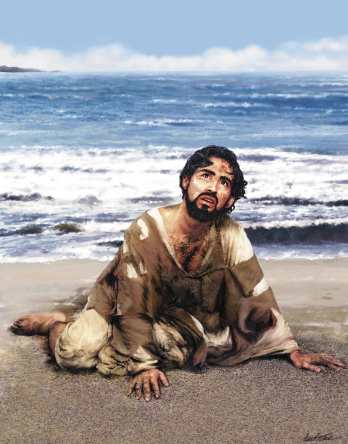
God heard his prayer and commanded the fish to vomit Jonah onto dry land.

Jonah_shore

 Then the Lord repeated Jonah’s marching orders: “Go to the great city of Nineveh and proclaim to it the message I give you” (3:1).

This time Jonah obeyed, and the glory came forth.   Jonah preached and the people repented. God had compassion upon the citizens of Nineveh, and did not bring destruction upon them.

What appeared to be a mortal defeat for Jonah turned into a glorious revival for a wicked city.

Read Mr. Markham’s poem again and you’ll discover more benefits of defeat, as outcomes of:

  • Straining in the wind.  Pressing on during adversity results in perseverance and strength of character.
  • Drinking in new beauty.  During times of distress we’re more aware of God’s glorious attributes at work in our spirits–attributes such as empowerment, faithfulness, peace, and grace.
  • Sending down deep roots.  Defeat often brings us to new depths of surrender and submission.  It also brings us to new depths of God’s love (Ephesians 3:17).
  • Experiencing grief.  Only those that know a mighty grief can know the mighty rapture.  Like diamonds against dark velvet, joy needs a backdrop of sadness in order to be appreciated fully.
  • Experiencing sorrow.  Sorrows create space for joy.  Joy is never so sweet and overwhelming as after sorrow.

God knows what he’s doing, and he doesn’t waste time or effort.  False starts and fruitless endeavors just don’t happen with our perfect Heavenly Father.

Therefore, when defeat comes into my life or yours, we can rest assured he is accomplishing his good purpose for us.

There will be victory in defeat.

Guaranteed.


(photo and art credits:  www.zazzle.co.nz.com; http://www.searchforbibletruths.blogspot.com.)


Read Full Post »

Tonight, the Thursday before Easter, we remember the Last Supper and the heart-wrenching scene in the Garden of Gethsemane.  It was there Jesus prayed, “Father, if you are willing, take this cup from me; yet not my will, but yours be done” (Luke 22:42).

In a matter of hours from that moment, Jesus would face unimaginable pain and suffering. Yet his prayers were not only for himself that night. He prayed for his disciples, and he even prayed for us—those who would believe in him in the future. (I marvel at such selflessness in a time of supreme crisis.) His desire was that God’s love and his presence would be in us (John 17:26).

As a result of his death on the cross and resurrection from the grave, Jesus made possible the fulfillment of that prayer. Our crucified, resurrected, and ascended Christ indwells every believer (Colossians 1:27).

Think of it! The all-powerful, all-wise Lord of the universe lives within us! Such an overwhelming, puzzling concept. What could that mean in practical terms?

I like Sarah Young’s explanation: We are intertwined with him in an intimacy involving every fiber of our beings (Jesus Calling, p. 332).

It means that God makes available to us everything we need:

  • Power to handle life’s challenges (2 Corinthians 12:9).
  • Wisdom to determine right actions from wrong (James 1:5).
  • Access to talk to him at any time (Hebrews 4:16).
  • Personalized purpose, to fulfill a God-ordained plan (Jeremiah 29:11).
  • Hope that can never be disappointed (Isaiah 40:31).
  • Resources that can never be exhausted (Philippians 4:19).

It means that in Christ we have:

  • Complete forgiveness (Hebrews 8:12).
  • Everlasting life (John 3:16).
  • Overflowing joy (Psalm 16:11).
  • Deep peace (John 14:27).
  • Attentive care (1 Peter 5:7).

Sometimes I act like the Israelites on their trek to the Promised Land. Remember the manna God provided so they wouldn’t go hungry? It tasted like wafers made with honey (Exodus 16:31). That sounds like baklava!! Yet they became so accustomed to the provision, they began to complain. Manna wasn’t good enough after a while.  “Yes, Lord,” they may have said.  “You have been very gracious to provide manna.  But we need meat!”

These blessings of “Christ-in-us” listed above are more precious even than miraculous manna. How could I take such astounding blessings for granted? Add to that the incredible price Jesus paid so I could enjoy those blessings. How dare I think, Yes, Lord, you have been very gracious, but I need more.

*     *     *     *     *     *     *   *     *     *

Dearest Jesus, as I contemplate your deep distress in the Garden, your suffering at the hands of Roman soldiers, and the unfathomable pain you endured on the cross, my petty wants become inconsequential.

Oh, God, forgive me for allowing familiarity to dull the senses—the senses of awe and gratitude for the sacrifice you made.  Willingly.  Lovingly.  

“Love so amazing, so divine, demands my soul, my life, my all” (from “When I Survey the Wondrous Cross”).  

So be it.

(Art credit:  www.ldschurchnews.com.)

Read Full Post »

 christmas-greetings-messages


When some folks say, “Merry Christmas” they mean, “I hope you have a fun and festive holiday.”

That would be in keeping with the definition of merry:  full of high-spirited gaiety, delightful, entertaining, joyful, and mirthful.

But centuries ago the word merry denoted peacefulness and blessedness.  “Merry Christmas” meant, “May you have a peaceful Christmas” and “May Christmas bring the blessing of God to you” (Christmas by Charles L. Allen and Charles L. Wallis, Fleming Revell Co., 1977).

An old carol highlighted this idea:

“God rest ye merry, gentlemen;

Let nothing you dismay.

Remember Christ our Savior

Was born on Christmas Day,

To save us all from Satan’s pow’r

When we were gone astray.”

Did you pause after the comma in the first line?  Without it, the meaning changes.  The anonymous poet was wishing peaceful, contented, joyful rest to others, as they remembered Christ their Savior.

“Merry Christmas,” then, can be a prayer within a greeting.  Something like:

Oh, Lord, may your spirit of peace rest upon the life of this person.  May he/she experience the blessing of your presence and your joy.”

There are many people around us who need a divine touch, especially during the Christmas season.  The merriment around these folks seems a mockery of their despair.  Perhaps that includes you.  May the prayers below speak a Merry Christmas blessing to you, especially if you are:

Lonely.  Oh, God, wrap a loving embrace of your comfort around those who do not have family or friends with them this Christmas.  I thank you for the promise that you are our refuge and strength, always ready to help when we need you (Psalm 46:1).  Be a warm solace, I pray, to the one who feels alone.

Enduring hardship.  Oh, God, may the blessing of Christmas include grace and mercy for your children who are suffering through difficulty.  Out of your compassionate mercy, ease their burden, and out of your unfailing grace, grant them strength and favor (Hebrews 4:16).

Struggling with painful memories of Christmases past.  Oh, God, shower your tender, loving care upon those with hurts from the past, hurts that cast a shadow over the joys of the present.  Grant them liberating freedom from emotional distress.  May your peace cover those memories, so they no longer cause anguish (John 14:27).

For all of us, Heavenly Father, may the blessing of Christmas include renewed wonder for the indescribable gift of your Son.  Thank you for providing through him the way to eternal life.  Such peace and blessing are ours in that single assurance! 

(art credit:  www.christmasgreetingsmessages.com.)

Read Full Post »

Boris Nicholayevich Kornfeld, political prisoner of the former Soviet Union.

Incarcerated in the late 1940s at Ekibastuz, a forced labor camp, in Siberia.

A doctor.

Because of his medical training, the camp authorities put him to work in the hospital.

Dr. Kornfeld was Jewish, but a Christian prisoner attracted his attention.  The man evinced a quietness of spirit, in spite of the horrors, deprivation, and hopelessness of their situation.  Often the doctor would hear this fellow prisoner reciting the Lord’s Prayer.

One day, a guard was brought into the surgery.  An artery had been cut during a knifing incident.  As Dr. Kornfeld began to repair the artery, he thought, I could make the sutures in such a way that this horrid man would slowly bleed to death later.  The authorities would ever know.

But no sooner did the idea cross his mind than Dr. Kornfeld’s stomach turned at the cruelty of his own thoughts.  Words from the Lord’s Prayer came to his mind, and he spoke them silently in his heart:  Forgive us our sins as we forgive those who sin against us.

Day by day, Dr. Kornfeld sensed change occurring in his spirit.  He wanted to speak to the Christian prisoner about his experience in the surgery, to discuss what was happening within himself, but the fellow had been transferred to another gulag.  The doctor told no one about his growing faith in Jesus.

As he was being transformed on the inside, Dr. Kornfeld’s character began to change.  He started saying “No” to some of the sordid practices of the prison camp. Once he reported on an orderly who had stolen food from a dying patient.  Such misdeeds were actually quite common.  After all, why waste food on someone who was going to die anyway?

But telling the authorities what was going on put Dr. Kornfeld in danger.  No one was going to appreciate his sense of fairness and kindness.  Every prisoner lived for himself, doing whatever was necessary to survive.

One evening, Dr. Kornfeld examined a patient named Alex, who had undergone surgery for cancer.  He felt compelled to describe to Alex his journey toward faith in Christ.  The words came in a flood.  For at least several hours, Kornfeld spoke to the young cancer patient.

The next morning, Dr. Kornfeld was dead.  Someone had beaten him in the head with a mallet.

Alex thought long and hard about the doctor’s story and his life-changing faith.  He, too, decided to become a Christian.  Miraculously, Alex survived the gulag and wrote about his experiences there.  The book was smuggled to the West and published.

More books followed, all revealing the cruel and disastrous results of the Soviet system under the leadership of Stalin.  (At least sixty-five million Russian citizens were murdered in the gulags.)

That prisoner-become-author was Alexander Solzhenitsyn, who won the Nobel Prize for Literature in 1970.  The Gulag Archipelago and One Day in the Life of Ivan Denisovich were two of his most famous works.  Many credit his writings as the beginning of the end of the Soviet Union.

Photo of Aleksandr Solzhenitsyn in 1953, right...

Photo of Aleksandr Solzhenitsyn in 1953, right after his release from the special Gulag camp at Ekibastuz (Photo credit: Wikipedia)

But certainly Dr. Boris Kornfeld also deserves credit.  His influence was an important catalyst.  And what about the nameless Christian who introduced Dr. Kornfeld to Jesus?

He also was used by God in a chain of events to achieve great impact upon the world.

But no one knew, including himself.  He very likely died in the gulags.

Oh, but consider his home-going to heaven.  Think of Jesus, wrapping his arm around the shoulders of this saint, saying “Well done, my devoted one.  Have I got a story for you!  Come and let me share what you have been a part of!”

We must not allow fear or anonymity to dissuade or discourage.  God may use any one of us to change the world, but he may very well wait to reveal our impact until he can tell us all about it — face to face!

*     *     *     *     *     *     *     *     *     *

Heavenly Father, may I never miss an opportunity to be a part of your grand, over-arching plan.  May the legacy of Dr. Kornfeld, Alexander Solzhenitsyn, and millions of nameless martyrs compel me to be courageous and passionate for you.  I have nothing important to lose and everything worthwhile to gain.

Read Full Post »

Conventional wisdom teaches that we are in control of our own destinies, that hard work and perseverance will assure achievement of goals.  To a point that’s true.  Laziness and a lack of follow-through do not lead to success.

But.  Those truisms fail when disaster strikes.

Ask Job; he’ll tell you.  He was an extremely wealthy man.  In fact, he was the greatest man among all the people of the East.

Job also enjoyed a large, loving family.  His children liked each other so much they partied together.

Job was also a blameless and upright man—totally undeserving of what happened to him (Job 1:1-4).

He was stripped of everything.  All of his wealth.  All of his wonderful children.

Recent tornado victims know the magnitude of such horror. Home and all its contents, gone.  Family members, gone.  I can only imagine their emotional pain and heartache.

And what was Job’s reaction?

If you had asked me that question a couple of years ago, I would have answered that Job was incredibly accepting, that he did not blame God.  And those statements are true.

But there’s more:

“Job got up and tore his robe and shaved his head” (1:20a).  OK, that makes sense.  Those were customs of the day for expressing grief.

And then do you know what Job did?

“He fell to the ground in worship” (v. 20b).

What?!  How can a person possibly worship at a time like that, when your whole world comes collapsing down around you?

All Job had left was his foundation—a foundation of faith in God.

Worship was his expression of that faith, declaring God’s worth to him—in spite of horrific calamity.  For Job, God was enough.

From Job we learn that true worship is not reliant upon circumstances.  We don’t have to be on top of the world to worship.  In fact, a sacrifice of praise (Hebrews 13:15) is surely very precious in God’s view.

Second, true worship is not reliant upon emotions.  We don’t have to be filled with joy in order to worship.  We can worship God with our tears, expressing our trust in spite of the pain.

Job couldn’t rely on answers that would give meaning for his suffering.  God gave him none.  What Job did rely upon was God’s character:

  • “His wisdom is profound, his power is vast” (9:4a).
  • “He performs wonders that cannot be fathomed, miracles that cannot be counted” (9:10).
  • “If it is a matter of strength, he is mighty!  And if it is a matter of justice who will summon him?”  (9:19).
  • “You gave me life and showed me kindness, and in your providence watched over my spirit” (10:12).
  • “To God belong wisdom and power; counsel and understanding are his (12:13).
  • “Can anyone teaching knowledge to God, since he judges even the highest?” (21:22).

In the end, knowing God is more important than knowing answers.

*     *     *     *     *     *     *     *     *     *

Heavenly Father, I shake my head in wonder as people of faith such as Job neither blame you nor give up on you in the face of calamity.  Instead, they rely upon you all the more tenaciously.  They worship, affirming that you are still their sovereign, loving God.  They testify of your strength and peace.  Thank you for being a God who comes alongside us with your wisdom and grace, especially when we’re hurting.  Thank you for powerful examples to follow, such as Job.

Read Full Post »

English: William Tyndale, Protestant reformer ...

English: William Tyndale, Protestant reformer and Bible translator. Portrait from Foxe’s Book of Martyrs. Česky: William Tyndale (portrét ve Foxeově Knize mučedníků) (Photo credit: Wikipedia)


“If God be on our side, what matter maketh it who be against us?”
–William Tyndale (1494-1536)


Perhaps you’ve heard of Tyndale Publishing, best known for The Living Bible?

Then perhaps you’ve heard of William Tyndale, after whom the company is named. He’s been called by some “the Father of the English Bible.” His passion was to get the Bible into the hands of the common man.

You see, several centuries before his time, the Church Council of Toulouse (in France, 1229) forbade the use of the Bible by ordinary people. The Pope and priests felt that the common man could not understand the Bible, that clergy were the only ones who could properly interpret scripture.

Actually, Tyndale was not the first person to translate the Bible into English. That honor belongs to John Wycliffe, who lived in the 1300s. He translated from Latin into pre-renaissance English.

But Gutenberg hadn’t invented the printing press yet. All copies of Wycliffe’s translation had to be written out by hand.

Tyndale was perfectly suited for the task God gave him. He was skilled in seven languages: ancient Hebrew, ancient Greek, Latin, Italian, Spanish, French, and English. By the time Tyndale was ready to pursue his dream, the printing press had been in use for almost seventy-five years. So Tyndale sought permission and financial backing from the bishop of London to translate the New Testament from the original Greek into post-renaissance English. Permission was denied.

That didn’t stop Tyndale. He traveled Europe, looking for a place to settle. Worms, Germany, a Lutheran city, became his home.


English: John Wycliffe in his study

English: John Wycliffe in his study (Photo credit: Wikipedia)


I can’t help but notice: German was not on his list of known languages. The right location may not have been a comfortable choice for Tyndale, but it was God’s choice.

By 1525, the New Testament in English was complete. Because of the printing press, several thousand pages could be produced in one day. In Wycliffe’s day, only a few pages could be hand-copied each day.

The newly-printed Bibles were smuggled into England in barrels, covered with cloth and articles for sale. Sometimes they were packed in bales that looked like cloth, or even hidden in sacks of flour.

It wasn’t long before the bishops and priests in England discovered that English Bibles were being sold. Officers of seaports were instructed to find and burn all copies.

Yet Bibles were still smuggled in.

A clever Catholic bishop of London decided he would buy all copies of the Bible that were being printed. He contacted a merchant in Germany to make arrangements. The bishop’s plan was to burn every Bible, once they arrived in England.

What that bishop didn’t know was: that merchant in Germany was a friend of Tyndale’s.

Yet the friend made a deal with the bishop anyway. Why? So he could give the proceeds from the bishop to Tyndale. More copies than ever were printed and sent to England. The bishop could not possibly buy every copy.

Imagine his shock when that bishop learned later it was his money, spent to keep English Bibles out of England, that actually paid for a veritable flood of Bibles into the country!

One might expect that Tyndale worked on to translate the Old Testament and lived well into old age, able to write and minister under God’s loving care. One would be wrong.

For nine years, Tyndale did escape authorities and was able to continue his work. But a man named Phillips, a frequent guest in Tyndale’s home, betrayed him. Tyndale was tried for heresy and condemned as a heretic. In 1536, he was strangled and then burned at the stake.

I’m tempted to ask, “Why, God? Tyndale was obedient to you. He left his home country, his friends, everything familiar. He worked so hard, ministered to others, and helped the poor. You miraculously blessed his work, and protected him for nine years. Yet in the middle of translating the Old Testament, Tyndale was arrested and martyred. Why, God?”

One commentator remarks: When God’s work for Tyndale was completed, God took Tyndale out of this life; and God gave his faithful servant the privilege of leaving this life through a martyr’s death (www.prca.org).

My perspective is so short-sighted. I tend to see death (martyrdom in particular) as tragic and distasteful. But from eternity’s point of view, “if God be on our side, what matter maketh it who be against us?”

Heaven awaits!

* * * * * * * * * *

Thank you, Father, that there is no cause to fear suffering and death. You have promised to be with us, to give us the strength to endure, just as you did for William Tyndale. And then, after just a little while, you will take us to our real home of eternal bliss. Glory!

Read Full Post »

Hardship

Hardship (Photo credit: Wikipedia)

On Monday our starting point was Acts 14:22: “We must go through many hardships to enter the kingdom of God.” Not exactly an encouraging affirmation, is it!

But we discovered that problems can actually be opportunities—opportunities to improve our perspective, foster appreciation, and draw us closer to God.

Another benefit? Problems build character.

And why is that a valuable endeavor? Wise King Solomon answered that question eons ago: “I know, my God, that you test the heart and are pleased with integrity” (1 Chronicles 29:17).  That means,  when I face problems with integrity, I bring pleasure to my Heavenly Father.  Now that’s a goal worth pursuing.

integrity

integrity (Photo credit: glsims99)

Integrity is firm adherence to a code or standard of values. The one and only true standard is God’s standard, laid out in his Word.  Integrity includes righteousness, courage, perseverance, and faith–character traits that don’t develop without pressure.

The key is to live within the spiritual realm with him. Then the physical realm becomes less important. It’s as if we exist in an alternative reality. No wallowing in self-pity. No rehashing the negative aspects of the situation. No time wasted considering the “what-ifs.”

Instead we “count it all joy when we meet various trials” (James 1:2). How?

1. Practice his presence by speaking to him throughout the day.   Keep rehearsing God’s attributes. Remember all his benefits. Think of the blessings he has already provided.

2. Acknowledge those little demons of worry, shame, or inadequacy. Call them by name and present them before God. Notice how they cower as God proclaims his everlasting love (Jeremiah 31:3). Watch them retreat as he affirms his infinite power (Jeremiah 32:27).

3. Anticipate what God might accomplish through these difficult circumstances. Wonderful possibilities exist as he sends us in new directions and uses us to minister to others.

No doubt there are more steps we can take. But these offer a good start. And what will be the result? Difficulties develop perseverance, and perseverance produces maturity—the one positive character trait that covers them all (James 1:2).

Heavenly Father, you know even better than I how easy it is to verbally affirm these truths; it’s another to live by them moment by moment. I still have much to learn about counting it all joy in the midst of trials. But I do aspire to be a mature person, able to say, “It is well with my soul.”   No.   Matter.   What.   Thank you for continuing to work on me, for never giving up.

IT IS WELL

IT IS WELL (Photo credit: Amydeanne)

Read Full Post »

Not long ago I came across these words in Acts 14:22: “We must go through many hardships to enter the kingdom of God.”

I don’t like the sound of that! Especially the word must. And considering the recent converts Paul was speaking to that day, it seems awfully harsh. Shouldn’t Paul have softened his message a bit by saying, “We might go through hardships?”

Raphael, St Paul Preaching in Athens

(Photo credit: Wikipedia)

Yet Paul was saying nothing that Jesus hadn’t warned his disciples about: “In this world you will have trouble.” (John 16:33, emphasis added).

The reality begs the question why. Why is hardship inevitable? God Almighty is sovereign over all. It’s well within his power to protect us from difficulty. So why doesn’t he?

Here are some possibilities:

1. “Our light and momentary troubles are achieving for us an eternal glory that far outweighs them all” (2 Corinthians 4:17). Paul could have said his troubles were heavy and ongoing rather than light and momentary. He had been falsely accused, beaten, stoned, imprisoned, and more. But Paul’s focus wasn’t on his earthly life. He was already focused on his future life in heaven. Every time he endured suffering, it meant the glory yet to come would be all the more splendorous by comparison. Paul understood:  Problems focus our perspective.

English: Saint paul arrested

English: Saint Paul arrested (Photo credit: Wikipedia)

2. Hardships remind us of what Jesus endured for us. Anything we might suffer cannot begin to compare to what he suffered on the cross—the extreme pain, the loathsome humiliation, and the unbearable separation from his Heavenly Father. Problems foster appreciation for our precious Savior.

3. “Faith must be tested because it can be turned into a personal possession only through conflict” (Oswald Chambers, My Utmost for His Highest). Faith does not grow without testing. Trials provide the best opportunity to become intimate with God. And what could be more valuable than an intimate relationship with our loving, wise Heavenly Father? Therefore, we need to remember: Problems draw us closer to God.

Heavenly Father, thank you for caring so deeply about me that you discipline me. I want to reach that level of maturity where I rejoice in problems because of the growth opportunities they provide and the intimacy with you that will result. Continue to chip away at the hesitancy and obstinacy in my spirit that stands in the way.

Read Full Post »

« Newer Posts

Still Traveling

Impressions Becoming Expressions

Living Our Days

Gaining a heart of wisdom

He Said What?!

I'm Patty, and my husband and I are living with our adult son who has autism and epilepsy. I love sharing lessons learned from life around me, especially life with Aaron.

Meditations of my Heart

Impressions Becoming Expressions

Linda Stoll

Impressions Becoming Expressions

Debby Thompson

Impressions Becoming Expressions

Signora Sheila

Notes on Life, Faith & Italy

Colleen Scheid

Writing, Acting, Living in God's Love

Mitch Teemley

The Power of Story

Heidi Viars

Finding the Image of God