Feeds:
Posts
Comments

Archive for the ‘Uncategorized’ Category

father-playing-with-kids-in-park

Lauren’s husband, Mike, was the quintessential family man. He took the kids to the park, in order to give Lauren a break from mothering and homeschooling. He pitched in with the folding of laundry and the execution of science experiments. He quickly turned the Honey-Do list into Honey-Did, because Mike actually enjoyed puttering around the house, making repairs and improvements.

One Saturday he climbed up on the roof to check for a leak around the chimney. Somehow he lost his footing, tumbled to the ground, and hit his head on the cement driveway. He never regained consciousness, and died the next day.

FOR THOSE WHO GRIEVE

When such unspeakable tragedies occur to those we know and love, what words can we say to the family in order to comfort or help? Every possibility seems terribly inadequate:

  • “Mike was such a good guy.”
  • “We’re going to miss him.”
  • “We are so sorry.”

Actually, those three statements offer good places to begin.  Experts in grief support tell us that affirming the positive qualities of the loved one is very meaningful to a grieving family. A short story that highlights one of those qualities is also appropriate. The assurance that the loved one will be missed offers comfort as well.  And even a simple but heartfelt “We-are-so-sorry” communicates caring and support.

FOR THOSE WHO SUFFER

In addition to the loss of a loved one, there are other situations that may be less traumatic, but still leave us tongue-tied, wondering what we can say—situations like divorce, lay-offs, scandal, and serious illness.

Again, we’d do well to turn to the experts who tell us to:

  • Express sympathy. “I am so sorry you are going through this tough time.”
  • Offer affirmation. “I’ve always been impressed by your _____.”  Then name the strengths and personality traits that will be especially valuable during this time of trial. Such encouragement may help her see that God has equipped her, and he will see her through.
  • Listen.

Serious-Conversation

Yes, just listen.

Perhaps instead of worrying about saying the right thing, we’d be wise to let the hurting person share what’s on her heart.

A listening ear is a precious gift we can give in a world that overflows with chatter from electronics, technology, family, friends, coworkers, neighbors, etc. In fact, there seem to be more talkers these days than listeners.

Rearrange the letters of listen and you can make the word silent. To be good listeners we have to be silent and let the other person talk, uninterrupted. However, communication should still occur through:

  • eye contact, which indicates our interest and her importance to us,
  • facial expressions, as we respond to her words,
  • brief comments or questions now and then, that indicate we’ve heard her.

FOR THOSE WHO ARE DISCOURAGED

It is vital that we keep each other supported because Satan and his cohorts constantly whisper lies into our spirits. Lies such as:

“Who do you think you are anyway? And what makes you think you’re capable of accomplishing anything worthwhile? You are inadequate, unimportant, and practically useless. Get to the back of the line where you belong!”

The truth is: We’re sons and daughters of the King.  He has created each of us with spiritual gifts and talents to fulfill a specific purpose.

We can affirm others with such comments as:

  • “I am so glad God created you with _____.”  Again, name the strengths, talents, and personality traits that you admire.
  • “You know what else I appreciate about you?” Share your observations of her being courageous or wise or persevering—whatever might encourage her most, considering her current circumstances.
  • “For these reasons and more, I count it a great privilege to know you.”

Such “pleasant words are like honeycomb, sweetness to the soul and health to the body” (Proverbs 16:24).
honey(pp_w350_h233)

*     *   *     *     *     *     *     *     *     *

Father, I thank you for the privilege of being your voice, to minister encouragement to others. You’ve given us your heart to express love and compassion to a hurting world. We pray for your Spirit’s wisdom and strength to be at work in us and through us, because we so desire to offer your right words at the right time.

(Photo credits:  www.visualphotos.com; http://www.thecripplegate.com; http://www.celebrationchurchlive.com.)

Read Full Post »

Munttar17

In a desert land he found him,

in a barren and howling waste.

He shielded him and cared for him;

he guarded him as the apple of his eye

(Deuteronomy 32:10, italics added).

Notice the verbs: found, shielded, cared for, and guarded. Just as God watched over the Hebrew nation in the wilderness, God is surely watchful over each of us. See if these stories trigger memories of your own–when God found, shielded, cared for, and guarded you.

FOUND:

Growing up in a Christian home, I learned about Jesus before taking my first steps. At age four, after hearing the crucifixion story, I asked Jesus to be my Savior and constant Companion. Even as a preschooler, I understood my need for Someone to take the punishment I deserved for my naughtiness, so I could receive God’s gift of eternal life. If Jesus was willing to suffer and die in my place, how could I say, “no?”

81dcb5dcf618c976c041e845ebb0dd25

Praise God he seeks after lost sheep—even the little ones (Luke 15:4)!

Where did God find you?

 SHIELDED:

Numerous times over the years I have felt shielded from harm, including serious car accidents.

One time while approaching a stoplight, I hit a rain-slicked patch of city street, with cars in front of me and a bus to the right. My car began to slide and swerve; I started pumping the brakes. But there was no way to stop soon enough and avoid collision with the slowing line of vehicles ahead.

I took a chance and turned a bit to the right, hoping beyond hope there would be enough room for me to squeeze ahead of the bus, where the lane was open. Surely God intervened and created the needed space. (I think he also alerted the bus driver to apply his brakes and leave room for me!) My car did come to a safe stop, with room to spare.

God has shielded me in other important ways, too. He’s protected me from life-choices that would have led me down treacherous paths. He’s saved me from unhealthy relationships.

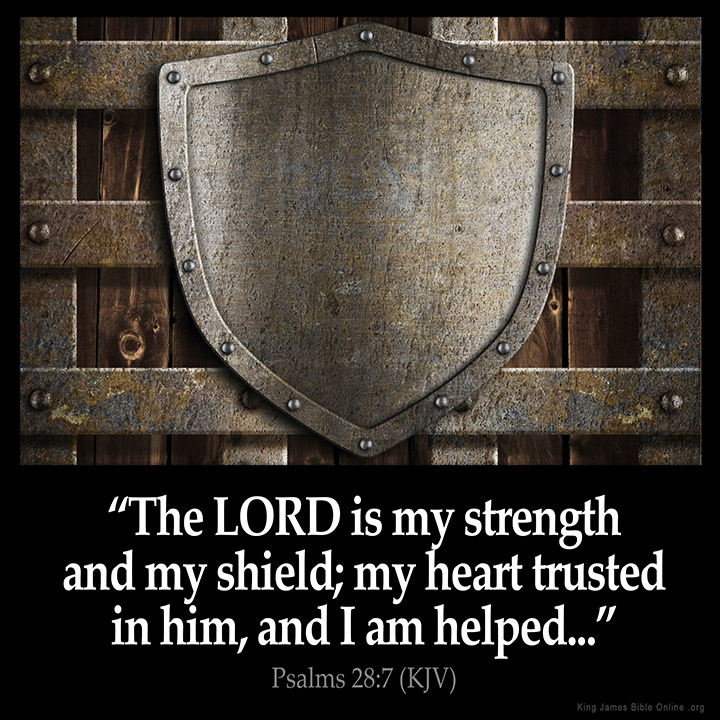
Psalms_28-7

Praise God he is our shield! We can trust in him, and receive the help we need (Psalm 28:7).

How has God shielded you?

CARED FOR:

I couldn’t find the dental insurance form I needed to drop off at Dr. H.’s office. Jeremy (our younger son and a middle schooler at the time) assisted me in a thorough search.  No form. While out on my walk, it suddenly occurred to me the form may have been gathered up with the newspaper. Sure enough, that’s where it was. Being Wednesday, those papers—and the dental form—should have been long gone in the recycling truck, but Jeremy was saving newsprint for his art teacher. God not only revealed to me the location of that form, but kept it safe, saving me the hassle of getting a new one and filling it all out again.

a6b7d3947c75be26393ae18a51f35ccc

Praise God for his loving attention, even in small matters like dental forms (1 Peter 5:7)!

How has God cared for you?

GUARDED:

One spring day in 1985, an elderly gentleman hit the gas pedal instead of the brake, at the stop sign on our corner. He drove his station wagon right through the garage wall. Several feet more to the right and he would have plowed into our daughter’s room, and she was playing there at the time. The driver was protected, too, sustaining only minor injuries.

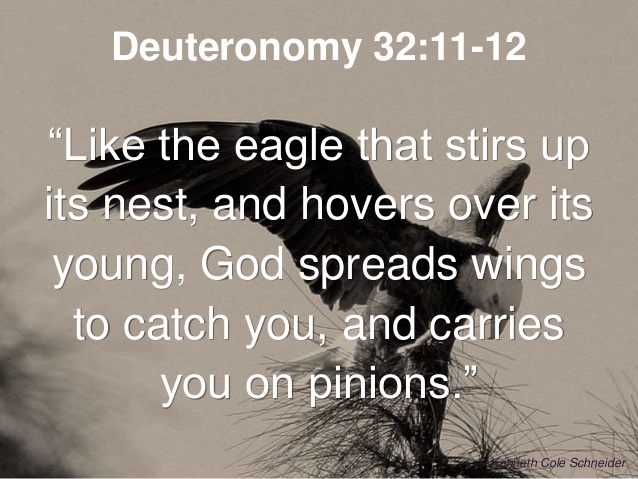
god-of-the-bible-gcsrw-25-638

Praise God he guards us like an eagle, hovering over its young (Deuteronomy 32:11).

How has God guarded you?

THE APPLE OF HIS EYE:

The last phrase of Deuteronomy 32:10 explains why God is so attentive to his people. We are the apple of his eye. Some translations replace apple with pupil. God protects us as the pupil of his eye.

Just as our eyesight is precious to us, so we are precious to God.

As we’re careful to provide protective care for our eyes, shielding them from danger, for example, so God provides loving, protective care of us.

May we continually praise our God for all he is to us. First, he found us, and then became our attentive Shield, Provider, and Guard.

bbd550f7373b204033320b16c5638e3c

(“You make me glad by your deeds, O Lord; I sing for joy at the works of your hands” — Psalm 92:4.)

 In the Comments below, please share your personal stories of how God found you, or how he has proved himself as your Shield, Provider, and Guard. Let’s celebrate together God’s powerful deeds on our behalf!

(Art and photo credits:  www.biblewalks.com; http://www.pinterest.com; http://www.kingjamesbibleonline.com; http://www.imagefriend.com; http://www.slideshare.net; http://www.pinterest.com.)


Read Full Post »

4294b8e0861224468e7e42b56456b714


My first teaching job was in a small community southwest of Lexington, Kentucky. Although the school included first through sixth grades, there were only five teachers. Second grade was divided, some students included in first, the rest with third. I was assigned the first/second split.

The first morning of school went by quickly as we read stories, played a few learning games, and completed a class chart of favorite summer activities. Soon it was time to march to the cafeteria for lunch.

The children lined up to receive their plates of food, and then were instructed to pick up napkins, utensils, cartons of milk, and straws – all without benefit of trays. Little hands struggled to hold so many items–much less carry them all without accident. (And why were the first and second graders seated farthest from the serving line? I never had the nerve to ask.)

lunch

So began my habit of standing at the end of the counter, wrapping utensils and a straw in a napkin, then perching a milk carton on an empty corner of the plate as the students passed by.

One second grader, Ricky, was much too manly to use a straw. Each day he would proclaim, “I don’t need no straw.”

Each day I would patiently correct him: “I don’t need a straw.” Ricky would repeat it again after me.  It almost became a joke between us, as the exchange occurred day after day, month after month.

One noontime in March, while focused on wrapping the next set of flatware, I heard Ricky’s voice proudly proclaim, “I DON’T NEED A STRAW!”

My eyes popped, Ricky’s twinkled, and his broad smile indicated his pleasure in remembering–all by himself–how to correctly form his request.

A quick hug, a few pats on the back, and an “I-am-so-PROUD-of-you!” let him know how I felt.

It never occurred to me to say, “Well, it’s about time, Bud! You DO realize we’ve repeated this little ceremony over one hundred times, don’t you?”

No. This was a moment to celebrate! Our perseverance had paid off. And perhaps this one little grammatical victory would prompt Ricky to conquer the next. I was thrilled.

Do you suppose that’s how God feels when our “practice makes perfect?”

When:

1313

  • Our quiet time with him finally becomes a near-daily habit?
  • We remember to express gratitude and praise to him throughout the day?
  • We’re able to think before we speak more consistently?
  • We forgo some purchase for pleasure in order to supply someone else with necessities?
  • We put aside our agenda to do a favor for someone else?

Yes, I believe God is thrilled with our steps of progress, just as I was with Ricky’s effort. If God withheld his pleasure until we reached perfection, we’d never experience even one good thing (Psalm 84:11). He’d always be in discipline-mode.

But Isaiah tells us: “The Lord longs to be gracious to you; he rises to show you compassion” (30:18).

David reminds us that out of his grace and compassion he guides our steps and takes delight when we follow his way (Psalm 37:23).

Another psalmist proclaimed that the Lord delights in those who fear him, who put their hope in his unfailing love (147:11).   No mention of delight reserved only for those who are perfect.

Ah, but what about Jesus’ statement in Matthew 5:48:   “Be perfect as your Heavenly Father is perfect?”

Yes, that is the standard, but God does not disapprove of us because we have not achieved that goal.   He knows perfection this side of heaven is impossible. What he does approve of is effort—to press on like Paul to “receive the heavenly prize for which God through Christ Jesus, is calling us” (Philippians 3:12-14).

When we stumble, we keep going. When we fall, we get up and try again.

But listen closely.  You’ll hear God celebrating our progress (Zephaniah 3:17).

Zephaniah-317-

*    *     *     *     *   *     *     *     *     *

We praise you, Heavenly Father, for being a gracious, compassionate God,

who is slow to become angry and always abounding in loving-kindness.

Even as we strive to be more like you,

we can rest in the knowledge that you will not condemn us

when we stumble and fall.

Thank you for your readiness to forgive and your everlasting love.  

Thank you for continually drawing us closer to you and your perfection. 

(Psalm 103:1-2, Romans 8:1; 1 John 1:9; Jeremiah 31:3).

Photo credits:  www.pinterest.com; http://www.grist.org; http://www.neabscobaptist.org; http://www.untilsheflies.com.)


Read Full Post »

il_570xN.485491692_idn6

“Mom, what’s that lovely perfume you’re wearing?” I exclaimed while greeting my mother-in-law with a hug.

“It’s called White Linen,” she responded. “I like it because it’s crisp and clean and not too heavy.”

The scent stayed with me, but I didn’t mind. Not only did the perfume have a pleasing aroma, but it belonged to one of the sweetest, most generous women I’ve ever known.

The apostle Paul taught that we should leave a pleasant scent wherever we go. But he wasn’t talking about perfume or cologne. He meant that our very lives ought to emit the fragrance of Christ:

“Through us, [God] brings knowledge of Christ.

Everywhere we go, people breathe in the exquisite fragrance.

Because of Christ, we give off a sweet scent rising to God,

which is recognized by those on the way of salvation—

an aroma redolent with life.”

(2 Corinthians 2:14-15, The Message)

 I’ve been privileged to enjoy the exquisite fragrance of a number of saints over the years:

  • My grandmother, who loved and served Jesus with a passion. She demonstrated kindness and thoughtfulness, and never raised her voice. (At least not that I heard!)
  • My parents, who lovingly guided me, and demonstrated what a Christian marriage should be:  two people committed to the best interest of the other.
  • A youth pastor who showed personal interest in each kid, and whose prayers were so heartfelt, we knew this guy was up-close-and-personal with God.
  • A professor and his wife at the seminary Steve attended, who took us under their wings and lovingly mentored us with great wisdom.
  • A mother of three who led the first women’s Bible study I attended.  She provided strong teaching, but better yet, an example of what it means to be a godly woman of excellence.
  • An older couple who listened, supported, and encouraged us as Steve began his pastoral career.
  • A younger couple who came alongside us in ministry over thirty years ago and are still caring friends to this day.
  • A choir director who taught by example what a calm and gentle spirit (2 Peter 3:4) looks like.
  • Countless friends and acquaintances over the years who have loved on us and prayed for us.

Some of these wonderful people have already departed for heaven. Yet their beautiful fragrance lingers in my life to this day—a memorable blend of selflessness, generosity, and grace.

And I wonder, Where would I be without their enduring examples providing strength and guidance?

To be honest, I would surely have ruined my life with poor choices, spurred by emotional immaturity, and spiritual depravity. But God provided all these saints and more, that I might acquire even a faint aroma of Christ. 

And now I plead with myself, YOU serve Jesus by being a sweet fragrance for others, redolent with the life of Christ. YOU be the listener, encourager, and grace-giver. YOU provide the example of Christian maturity. 

*     *     *     *     *   *     *    *     *     *

Oh, Father, I thank you for the countless people you have brought into my life, whose positive impact provided wisdom, direction, and inspiration. Guide me, I pray, to live just as fragrantly, spreading your love, grace, and joy wherever I go.

Whose exquisite aroma lingers in your life?  Tell us about him/her in the comments below.

(Photo credit:  www.etsy.com.)

Read Full Post »

Last week, on April 22nd, I read the devotion, “Listen to Me Continually,” by Sarah Young (Jesus Calling, Integrity Publishers, 2004).

Did you happen to read it, too?


writing-fountain-pen-400


As you may know, Sarah determined a number of years ago to listen to God with pen in hand and write down whatever she believed he was saying to her. Those meditative moments became this book.

God’s messages through Sarah often speak timely challenges to me.  Last Thursday was no exception.

First, a bit of background.

As I write this, my to-do list is a bit long, even though I’m retired. (To those who are still employed or still have children at home under your charge, that sounds ridiculous, I know. But let me tell you, retirement does not change how busy you are, just what you are busy doing.)

Not only is that list of tasks long, but I have a strong desire to do a thorough job on each item. After all,


if-a-jobs-worth-doing-its-worth-doing-well-quote-1

(“If a task is worth doing, it is worth doing well.”)


Except that goal can easily lead to perfectionism, which I do have to fight against.

So here is what Sarah sensed Jesus telling her for April 22nd:

When Jesus died, he set us free. That includes freedom from compulsive planning.

And that’s exactly what I have been doing: figuring out when I could accomplish certain jobs, deciding whether a few tasks could be postponed, wondering if I’d be able to accomplish everything–on time.

Jesus continued; Sarah wrote more:

When we’re distracted by a whirlwind of thoughts, we cannot hear his voice.


bored-baby2


Oh, Lord, that is so true. Sometimes my thoughts are a stress-inducing jumble of “Stay on task! Don’t waste a minute! Don’t forget that! Do this first!” No wonder I feel overwhelmed.

Then Jesus and Sarah hit me between the eyes:

“A mind preoccupied with planning pays homage to the idol of control.”

Oh, my. I never thought of planning as a possible idol, something excessively adored.

But there is truth in that idea. I do prefer to be in control, to feel competent in handling my responsibilities, to know that everything will be accomplished efficiently and in a timely manner.

That sounds an awful lot like pride, doesn’t it.

I don’t think the problem lies in the planning, as if it’s a sin to make a to-do list.

The sin is in the attitude.  I need to ask myself:   Is my planning an effort toward making an impression? Rooting for compliments? Looking for a pat on the back?  I have to be honest.  Sometimes, yes.

Jesus reminded me (through Sarah) that my attention needs to be on him, not on the best ways to complete a task list. I need to listen to him, not the voices telling me to hurry to do this; scurry to do that.

And what will be the result? Stress will melt away, and I’ll enjoy the peaceful, God-enhanced, abundant life he’s promised.  I’ll be more useful to him and compliant to his will instead of mine.

That sounds much more satisfying and enjoyable, doesn’t it.

*     *     *     *     *     *     *     *     *     *

Heavenly Father, I am so sorry that I’ve allowed a preoccupation with planning to become an idol. Help me to hold very loosely the plans I make, in order to embrace the interruptions and changes ordained by you. Teach me also to release control of the to-do list to you.  Amen.

Photo credits:  www.imgbuddy.com; http://www.picturequotes.com; http://www.eastbabtlife.com.)


Read Full Post »

“You have made man a little lower than the heavenly beings…

You made him ruler over the works of your hands…

All the beasts of the field, the birds of the air, and…

All that swim the paths of the seas” (Psalm 8:5-8, italics added).


4553514-More-Underwater-Fish-1


“Paths of the seas.” What might that refer to?  That question crisscrossed Matthew Maury’s mind frequently.

Maury had always loved the sea, prompting him to join the U.S. Navy at age 19, in 1825.

Life at Sea

The second ship on which he served, the Vincennes, included a library. Matthew was eager to learn and spent his spare time studying navigation. Sometimes he chalked out problems in spherical geometry on cannon balls. When the Vincennes circumnavigated the world, Matthew received practical experience in the subject.

Upon returning to the States, Matthew took an examination in navigation and passed. He was then appointed acting sailing master on the Falmouth. Along with the ship’s commander, he was responsible for navigating the course, steerage, and sail trim.

Next Matthew determined to learn about winds and currents. He discovered that no one had charted such information for the treacherous Cape Horn off the southern tip of South America. He kept meticulous records during the voyage and wrote about his findings in a paper, published by the American Journal of Sciences and the Arts.

In 1834, Matthew married Ann Herdon, and they settled in Fredericksberg, Virginia.

Maury’s life was certainly following a positive trajectory. And no doubt, as a strong Christian believer since boyhood, he saw each new opportunity as a blessing from God.

Plan B

But in 1839, Matthew was injured in a stagecoach accident.  The final result:   permanent lameness.  Never again would Maury be able to work aboard a naval vessel.  His career came to an abrupt end, and Maury fell into despair.

Surely he must have wondered, What am I to do, Lord? The sea is all I know.

But Maury did not allow his despair to debilitate him. He used his convalescence to continue studying navigation, meteorology, winds, and currents.

Was God behind that compulsion? Perhaps so. In 1841, Maury was offered a position as manager of the U.S. Naval Observatory and the depot for charts and instruments. This position was perfect for him, requiring the exact knowledge and abilities he had acquired.


4 arthur


In 1852-1853, Maury brought together ten major maritime powers of the world. In unanimous agreement, they began to compile unified records benefiting all mankind. For the next thirty-five years, more than a million ships’ logs were sent annually to the observatory. From those records were developed wind and current charts for the globe.

Pathfinder of the Seas

Meanwhile, Maury sought for the meaning of that mysterious phrase in Psalm 8:8, “the paths of the seas.”

As he studied those ships’ logs being sent to the observatory, he compiled charts of ocean-wind and sea currents. He set adrift weighted bottles that would float slightly below the surface of the water, where they would not be impacted by wind.

Instructions inside each bottle informed the person who found it to return the bottle, with the location and date of its discovery. From his charts and experiments, Maury was able to determine the “paths of the seas,” including the Gulf Stream.

Pathfinder of the Wind

Maury also proved the truth of Ecclesiastes 1:6:

“Blowing toward the south, then turning toward the north, the wind continues swirling along; and on its circular courses the wind returns.”

Further study and experiments indicated that the wind did indeed move in circular patterns. Today we call them jet streams. Maury’s investigations led to a better understanding of weather, and predictions became more reliable.

Plan C

But despair entered Maury’s life again when the United States declared civil war. As a citizen of Virginia, he felt obligated to side with the South, giving up the position in Washington at his beloved observatory. Jefferson Davis, President of the South, sent Maury to England as an ambassador for the Confederate States.

After the war Matthew spent three years exiled in England. Many honors were conferred on him during that time, but his heart was still in the U.S.

Did he wonder once again what God might be planning? Perhaps he prayed, “Lord, if it be your will, arrange circumstances so that we may return to America.”

In 1868, the U.S. offered general amnesty to ex-patriots and Matthew sailed back to the States. He accepted a position at Virginia Military Institute as professor of meteorology, a position he held from September 1868 to the day he died, February 1, 1873.


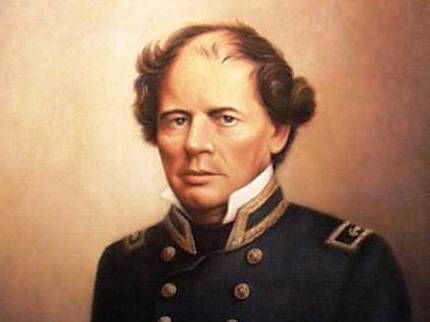
maury2187


Matthew Fontaine Maury, a self-taught navigator of the seas, astronomer, meteorologist, author, and educator, always sought to prove:

“The Bible is true and science is true,

and therefore each, if truly read,

but proves the truth of the other.”

–Matthew Maury


And though he may not have set out to do so, Maury also proved:

“I know the plans I have for you, plans to prosper you and not to harm you, plans to give you hope and a future” (Jeremiah 29:11).

With the advantage of hindsight, we can readily see this promise grandly fulfilled in Maury’s life. Yes, he suffered pain and hardship. All saints of God do (Romans 8:17).

But! God brought Maury through every challenge and used him in mighty ways—ways that impact our world to this day.

*     *     *     *     *     *     *     *     *     *

Lord, I am deeply grateful you are the one who plans each of our lives. What comfort to know that an all-seeing, all-wise God is orchestrating not only the main events of life, but every single day. I pray for your grace, in order to be accepting of disappointments, knowing that you will bring good out of every situation. In fact, you may very well be preparing something important. I want to trust you without hesitation.

(Psalm 139:16; Romans 8:28; Ephesians 2:10)


Sources:  The Founders’ Bible, https://answersingenesis.org; http://www.cbn.com; http://www.creation.com.)

Photo and art credits:  www.travelblog.org; http://www.firstladies.org.)

Read Full Post »

 Zwald-62


One of the “Letters to the Editor” in the most recent issue of Country Magazine caught my attention. The writer, James, related an event from his boyhood days on a farm in the 1940s.

Seems he had injured his hand quite severely one day while tightening a chain. But work on a farm doesn’t wait, especially during hay-baling season when the hay is ripe for harvesting. So in spite of his injury, James had to wear rough work gloves as he operated the wire baler. Every day for a week when he removed the gloves, the scab on his hand would come off and the wound would bleed profusely again.

On Sunday afternoon he plopped down on the living carpet to take a nap. His dog, Shadow, came to lie down beside him. But instead of settling in for a snooze himself, Shadow began to lick James’ wound. It actually felt good, James explains, so he let the dog continue.

The next morning James was astonished to see that his wound was completely healed. “It was as if the injury had never happened.”

Not until much later did James find out that a dog’s saliva contains healing properties. That’s why, when injured, they will lick their own wounds over and over.

I found James’ story particularly interesting because of a question that had been niggling in my mind this Easter season: Why did Jesus bear the scars of the crucifixion—in his hands, feet, and side–after the resurrection? It was certainly within God’s power to return Christ’s physical body to perfect wholeness, “as if the injuries had never happened.”

Come to find out, I’m not the first one to consider this question. As far back as the seventh century, Saint Bede of England (672-735, A.D.) wrote about the possibilities. Many others throughout the ages of the church have contemplated the reasons, including the following:

  1. The scars were proof to the disciples that he was the same person after resurrection as before. Had Jesus been completely restored, his followers may have assumed that their first inclination was correct: that what they saw was an apparition of Christ. After all, he appeared to them out of nowhere—an impossibility for a physical body.

But they not only saw him, Jesus invited them to touch him, so there could be no doubt (Luke 24:36-42).

  1. The scars were part of the proof of the prophecy that Jesus spoke of himself, that he would suffer, be killed, and rise again on the third day (Matthew 16:21). “This is what I told you,” Jesus reminded them (Luke 24:44).
  1. The scars provided evidence of Jesus’ physical body. Early in church history there were those who taught that Jesus didn’t really suffer on the cross. He was not truly human, therefore he only appeared to suffer.

They could not fathom the sinless Son of God submitting himself to such humiliation and horrific pain.   But dismissing the agony of Christ on the cross as well as the scars is incomprehensible.

Those three answers do quiet our curiosity, but what relevance might Jesus’ scars provide for us today?

  1. The scars prove that Jesus knows what it means to suffer. Crucifixion is the most cruel of death penalties, the worst that man can deliver. No one can say, “Jesus doesn’t know what I’m going through.” No, he is well-acquainted with grief. He knows what it’s like to bear scars of suffering.
  1. The scars prove God’s love and compassion. As the Son of God, he didn’t have to suffer on our behalf. Surely he could have devised a less abhorrent way. Instead, he identified himself with humanity by becoming human himself. He took our physical, emotional, and spiritual pain upon himself.   And he will wear the scars of suffering for eternity (Revelation 5:6).
  1. The scars remind us of what is to come. On Good Friday, Jesus body was beaten, bruised, and pierced. On Easter Sunday, those wounds became scars. A miraculous healing of gruesome wounds had occurred in a matter of hours.

One day a miraculous healing of our gruesome wounds will take place. Pain, suffering, loss, illness, and physical challenges will cease. Every negative aspect of life will melt away.

*     *     *     *     *     *     *     *     *     *

Oh, Lord Jesus, thank you, THANK YOU for carrying our pains, our disfigurements, all the things wrong with us.  Thank you for taking the punishment we deserve and making us whole.  You are the one and only source of eternal salvation.  And only through your eternal bruises are we healed.  Out of overwhelming gratitude, we give ourselves to you.  We want to follow your example and please you.  Make us into what gives you pleasure.  

All glory to you, Jesus, forever and always!”  

 (Isaiah 53:4-6; Hebrews 5:9, 13:21, MSG)

Photo credits:  www.motherearthnews.com

Read Full Post »

Jesus-Praying-Last-Supper-570x377


Whether I heard it or read it, I don’t remember. But the words caught me by surprise, and I jotted them down:

“What was uppermost in Jesus’ mind as Good Friday approached?

“Joy.”

Do you find that surprising, too?

Yet at least three times on the eve of his crucifixion Jesus spoke about joy (John 15:11; 16:22, 24; 17:13)–a most unusual topic and completely unnatural.  Who thinks about joy when they know that catastrophe is about to strike?

Jesus, that’s who.

Within the next twenty-four hours he would face excruciating pain, total abandonment by his Father, and the most horrific death ever devised.

But his concern was for his disciples, not himself.  Jesus wanted them to remember the important principles of love, obedience, and joy–an empowering joy that no one could take away from them.

Perhaps you remember the scene. Jesus and his disciples had just finished their last Passover supper together. After the meal, he taught his final lesson.

The first mention of joy came near the end of his teaching about the vine and the branches:

“I have told you this

so that my joy may be in you

and that your joy may be complete”

(John 15:11).

The word, “this,” refers to the ways Jesus had just mentioned that will contribute to joy:

1.  Live close to him and produce much good in and through your life (vs.4-8).

2.  Live in obedience to Jesus and experience the warmth, peace, and care of His love (vs. 9-10).

 Note that Jesus wanted his joy to be in the hearts of his disciples. What characterized his joy, compared to that of others?

  1. Strong awareness of the Father’s love for him, and his own love for the Father (vs. 9-10).
  1. Absolute surrender and self-sacrifice of himself to his Father, and the joy of doing what his father had sent him to do. Even during his great travail in the Garden of Gethsemane, his one desire was to do his Father’s will (Luke 22:42).

Jesus’ joy coexisted with the profound sorrow of his impending suffering, because he was already well-acquainted with the satisfaction and fulfillment of obedience.

  1. The understanding that joy deferred to the future is anticipatory joy in the present. “For the joy set before him he endured the cross” (Hebrews 12:2).

And finally, Jesus told his disciples that he desired complete joy for them. What does complete joy look like? It is:

  • Not so much an emotion as it is a conviction (Keith Krell, “Moment by Moment,” http://www.bible.org).
  • Inner contentment, resulting from continually cultivating an intimate relationship with Jesus.
  • Constant, not dependent on circumstances.
  • Enduring, day after day. Indestructible.
  • Perfect—the perfect, joy-filled fulfillment of the destiny for which God created you, even when a portion of that destiny is suffering.

I’m thinking of the martyrs–Stephen, Polycarp, Ignatius of Antioch, William Tyndale, John Wycliffe and countless others who demonstrated complete joy even as they died in anguish.

Polycarp, disciple of the Apostle John and Bishop of Smyrna for many years, refused to revile Jesus. For that he was burned at the stake.

But before the flames rose up, Polycarp prayed:

“O Lord God Almighty, Father of thy blessed and beloved Son, Jesus Christ, through whom we have been given knowledge of thyself…I bless thee for granting me this day and hour, that I may be numbered amongst the martyrs, to share the cup of thine Anointed and to rise again unto life everlasting…”

Such devotion, courage, and supernatural strength are impossible to fathom apart from the enablement of the Holy Spirit.

Can you hear the grace in Polycarp’s voice as he blessed God for the privilege of dying a martyr?

That is complete joy, only experienced by those who trust in Jesus implicitly.

Complete joy that Jesus purchased for us at Calvary.

*     *     *     *     *     *     *     *     *

We marvel, Heavenly Father, in the extreme paradox that is the cross. Out of the evil unleashed upon your Son comes your holy, righteous goodness–upon us. Out of the horror of the crucifixion that Jesus endured comes inexpressible and glorious joy, to those who put their faith in him–not a temporary feeling of elation, but deep, abiding, abundant joy. 

All praise to you, our loving, gracious God!       

(Acts 3:13-16, 1 Peter 1:8, John 6:47, John 10:10)


(Photo credit:  www.rejesus.co.uk.)


Read Full Post »

 cartoon-little-green-men-5535229


I was talking to a few aliens the other day–little green guys from outer space–trying to explain some earth-phenomena, since life in their galaxy is so different from ours.

First, a bit of background to explain what prompted the conversation.

Elena, our two-year old granddaughter, and I were exploring the church grounds across the street from her house.  She loves looking for treasures: sticks, stones, acorns, leaves, etc.


tumblr_ml0oqnNcYG1r68th6o1_1280


On this particular day I noticed the oak trees sporting chubby little buds. Another pair of trees were bursting with bud-clusters, ready to explode into bright pink finery.

Elena and I inspected the juvenile growth. I tried to explain what would soon happen. But with no remembrance of last spring, her understanding was no doubt very limited. I might as well be explaining this to an alien, I thought.

That’s when my imagination kicked in.

What if inhabitants from another galaxy did come to visit Earth? And what if they had never seen buds or seeds before?  Imagine trying to educate them on the process of germination…

“Now, inside this seed is the beginning of life. If we plant it in soil, making sure to choose a sunny spot, and we shower it with water when the weather doesn’t supply rain, it will grow into a plant, bush, or tree.”

They look at me with doubt in their big, round eyes.

“I know it seems impossible. The seed is just a small, lifeless speck.  But I can tell you, having seen it happen repeatedly, that’s what seeds do.”

So the little green guys and I plant the seed in a sunny spot and shower it with water.

A few moments later, one of them wants to dig it up to see the first signs of life.

“Oh, no,” I explain. “It takes time for the water to seep into the seed and for the miracle of germination to take place. But believe me. If we come back in a week or ten days, there will be a little green shoot coming up out of the soil in that very spot.”


Oak sapling


They like the idea of green, but shake their little round heads in disbelief.

I have to admit.  The progression of tiny seeds to plants, much less tall trees, does sound ludicrous.

And yet that’s exactly what God does.

Sometimes our lives resemble brown, lifeless seeds. There is no sign of hope that circumstances might change for the better.

Sometimes we think it’s too late for a reversal of destiny. It seems our best, productive years are behind us.

Not so fast.

Consider George*, our friend who has retired.  Twice. During his first career, George worked his way up in law enforcement to chief of police; his second career, associate pastor. Ten years or so later, he and his wife moved north to be near family.  When the boxes were unpacked and the pictures hung on the walls, George sat down and thought, Now what? I’m not ready to park on the porch and drink iced tea. What can I do, Lord?

No immediate answer.


four-men-walking-on-a-golf-course


One day George went golfing with his brother-in-law. They were paired with two more men at the course, to make a foursome. One just happened to be a high-ranking officer on the police force. As George and Tom* became acquainted, Tom expressed how they needed a chaplain on the force to minister to the officers. Stress was high, their jobs becoming more and more difficult as the years passed.

George’s heart started beating faster. A chaplain to police? Could this be the answer to his prayer? It would almost be like a merger of his first two careers into one challenging and fulfilling third career.

Yes, it was. For the next five or six years, George served as chaplain of police in his new community, impacting hundreds of lives in the name of Jesus.

We’ve all known people whose circumstances looked as promising as brown, lifeless seeds. Yet God caused miraculous change, and the lives of those folks burgeoned into glorious fruitfulness.

We can learn like those little aliens of my imagination. We can feed our hope by feasting on the miraculous springtime evidence around us. We can wait with confident expectation for the fulfillment of God’s plan.

And if hope seems all but gone, we can cling to the Source of hope.


romans_15_13_the_power_of_the_holy_spirit_powerpoint_church_sermon_Slide03


(“May the God of hope fill you with all joy and peace as you trust in him, so that you may overflow with hope by the power of the Holy Spirit”–Romans 15:13.)


*Names have been changed.


(Art & photo credits:  www.dreamstime.com; http://www.brilliantbotany.com; http://www.imagkid.com; http://www.allposters.fr.; http://www.slideteam.net.)


Read Full Post »

life-is-not-fair


“Here’s something that happens all the time and makes no sense at all: Good people get what’s coming to the wicked, and bad people get what’s coming to the good. I tell you, this makes no sense.”

Haven’t we all said or at least heard such comments? It’s a fact: life is not fair. But knowing it and accepting it are two different responses.

That quote above came from a guy who had it all—fame, wealth, and power. If anyone could claim that life had been fair to him, it was this guy. Yet in spite of the veneer of an enchanted life, he, too, experienced disappointment and confusion.

What was his name? King Solomon, the wisest man who ever lived. Those sentiments of his at the beginning of the post come from Ecclesiastes 8:14, as interpreted in The Message.

No doubt you’ve experienced your share of disappointment and confusion, too. Perhaps you’re floundering right now, desperately in need of a handhold to keep you from falling.

Selwyn Hughes, that wise, Welsh pastor from a generation ago, recommends we fight uncertainty with certainties.

Certainties would include truths from scripture that apply to our situations. Truths that we can hold tightly in our hearts, such as:

  1. God is in control over the difficulties as well as the blessings. Yes, he could rescue us from trouble in an instant. But in his infinite, all-knowing wisdom, he has chosen not to. The reasons why may never be revealed. What we do know is this: God never acts or withholds action without purpose.

 Think of Joseph, a poster-child for unfair treatment. Yet, to the brothers who sold him into slavery, he said, “You intended to harm me, but God intended it for good to accomplish what is now being done, the saving of many lives” (Genesis 50:20).


Joseph-brothers-reunited


God brings good out of all things—even the problems, hurts, and pain (Romans 8:28).

  1. God has you in his mighty hand—mighty in power (Psalm 89:13), mighty to save (Zephaniah 3:17), mighty in deed (Jeremiah 32:19).
  1. Out of his infinite might, God will provide strength to get us through. “God is our refuge and strength, an ever-present help in trouble” (Psalm 46:1).
  1. Even as we plod through adversity, “The Lord is good to those whose hope is in him, to the one who seeks him” (Lamentations 3:25). That goodness includes his comforting presence, his provision, his blessings in the midst of difficulty, and more.

King Solomon also observed:

“The good life is reserved to the person who fears God, who lives reverently in his presence,…the evil person will not experience a “good” life. No matter how many days he lives, they’ll all be as flat and colorless as a shadow—because he doesn’t fear God” (Ecclesiastes 8:12-13, The Message).

 In other words, life with God is far superior to life without God–no matter what.

These certainties are just a few God has graciously provided in his Word that can be applied when uncertainty threatens. But if you’re like me, simply reading them doesn’t help for very long. “Out of sight, out of mind” happens frequently.

Perhaps we can make the most of God’s promises by:

  • Keeping a list, particularly those that apply specifically to our situations. As the list grows, so will our faith.
  • Copy especially meaningful promises on Post-Its and tuck them in unlikely places. When we spot them they’ll provide a pleasant surprise and uplift. Possibilities include: inside a cabinet door, on the coffee container, on the dashboard. Move them every week to keep the surprise (and uplift) fresh.
  • Memorize promises while doing mindless tasks like washing the dishes, waiting at red lights, taking a walk. Soon you’ll be able to pray the promises back to God—anytime, anyplace–to bolster your spirit and strengthen your faith.


 Rainbow


Let’s stand on the certainties of scripture and God’s promises because:


“To stand is more important than to understand.”

–Selwyn Hughes, Every Day Light


*     *     *     *     *     *     *     *     *     *


Thank you, Heavenly Father, for the handholds in scripture, the truths and promises that help us keep our balance, so we can stand in the midst of adversity. Although I do not understand why troubles and heartache sometimes attack, I do understand that you are unequivocally reliable and you will see us through. I praise you, for you are the strength of my heart (Psalm 73:26b).


(Photo & art credits:  www.mygratitudelife.wordpress.com; http://www.ncbv.org; http://www.sjeciowa.org.)


Read Full Post »

« Newer Posts - Older Posts »

Sylvia Schroeder

Impressions Becoming Expressions

Mitch Teemley

The Power of Story

Still Traveling

Impressions Becoming Expressions

Living Our Days

Gaining a heart of wisdom

He Said What?!

I'm Patty, and my husband and I are living with our adult son who has autism and epilepsy. I love sharing lessons learned from life around me, especially life with Aaron.

Meditations of my Heart

Impressions Becoming Expressions

Linda Stoll

Impressions Becoming Expressions

Signora Sheila

Where faith meets la dolce vita

Heidi Viars

Finding the Image of God