Feeds:
Posts
Comments

Archive for the ‘Uncategorized’ Category

taste_041_hannah_adams_harding

Hannah Adams

(born October 2, 1755)


“Hannah!” Silence. “Han-nah?” Still silence. “HAN-NAH A-DAMS!” her father bellowed.

Hannah finally came scurrying into the keeping room, her long skirts swishing. “I’m sorry, Father.   I was reading one of your books out on the porch and didn’t hear you.” The proof was in her hand, her thumb tucked between the pages.

He should have known. Hannah always seemed to have her nose in a book when chores were done, and easily tuned out the world while reading.  He himself was an avid reader with a large personal collection of books. How could he fault her for a strong desire to learn?

“Yes…well…I’ve something…rather disappointing to share with the family,” he faltered, “and there’s no time like the present, as they say.”

With that introduction, Mr. Adams sat his family down to share dismal, embarrassing news: his business of selling books and English goods had failed; his inherited fortune was gone.

Hannah was only seventeen, but willingly did her part to help support the family. She taught school, tutored, as well as crafted and sold bobbin lace. However, what spare moments Hannah found she continued to devour her father’s books. And with her outstanding memory, she retained much of what she read. Hannah also began to write.

Mr. Adams generated income by taking in Harvard divinity students as boarders and tutoring them. One student gave Hannah a book about the world’s religions. As she read about the Christian denominations, Hannah (a Congregationalist) became more and more disturbed.

This author isn’t offering subjective facts; he’s inserting his own negative opinions about each one–except his own denomination, she thought. I could construct a better volume than this—an unbiased one. And the proceeds could further help the family.

Hannah began her new reference work in 1778. Her intent was “to avoid giving the least preference of one denomination above another and to present the arguments and sentiments of each sect in believers’ own words, according to the group’s general collective sense” (1).

The result: The Alphabetical Compend of the Various Sects Which Have Appeared from the Beginning of the Christian Era to the Present Day. It was published in 1784 and sold well. But Hannah did not benefit; the agent absconded with most of the proceeds from the first edition.

Six years of diligent, painstaking work appeared wasted.

A Bostonian minister, James Freeman, helped Hannah gather a number of subscribers for the second edition (1791). It was even more profitable than the first, and finally Hannah enjoyed a small income from her efforts. As the years passed, she produced two more editions (1801, 1817). Hannah Adams was now the first woman of America to become a professional writer.

In 1799, her Summary History of New-England was published, followed by The Truth and Excellence of the Christian Religion Exhibited in 1804.

In between, Hannah lobbied Congress for the first copyright law (as a result of her first publishing experience, perhaps?). She sent a petition dated July 27, 1789. The law went into effect the following spring.

Several prominent intellectuals in Boston greatly respected Hannah’s work, and became her patrons. They even established an annuity for her. In 1810, she left her home in Medfield, Massachusetts and moved to Boston, where she soon joined company with literary friends “in whose conversation I enjoyed the feast of reason and the flow of soul,” she wrote. (A gifted wordsmith, indeed.)

One of those friends, Joseph Buckminster, allowed her access to his private library. There she researched two works: A History of the Jews (1812), and Letters on the Gospels (1824). In all, Hannah wrote nine books, and became one of the most famous women in America at the time.

People remarked that Hannah was a frail, timid, and modest woman. The latter trait was referenced in an article based on her memoirs, published in The Ladies Magazine after her death (1831):

“She must have had much more to tell of the history of her mind, its struggles, and trials, and triumphs, and the effect of all these in forming her character. But her humble opinion of herself induced her to attach less importance to trifling details than her readers would have done” (2).

Hannah also demonstrated:

  • loyalty–especially to her family,
  • inner strength in the time of trial and disappointment,
  • perseverance and patience, as she conducted careful research to produce each volume of history.

You may wonder if Hannah was related to John Adams, our second president, or his son, John Quincy Adams, the fourth president. She was their distant cousin. In fact, Hannah once visited John Adams’ home, staying for two weeks. She spent most of her time–(Care to guess?)– in the library.

It’s no wonder that, in her girlhood dreams of heaven she said, “[My] first idea..was of a place where we should find our thirst for knowledge fully gratified.”  Indeed, one of the joys of heaven will surely be just that.

Hannah Adams is a woman I look forward to meeting in heaven. And I know just where I’ll find her.*

Notes:

  1.  www.womenhistoryblog.com
  2. http://www.questia.com

Other sources:  www.christianity.com; www.bostonathenaeum.org; www.womenshistory.about.com; www.librarycompeny.org; www.brittanica.com.

Portrait:  www.bostonathenaeum.org

*in the celestial library!


Read Full Post »

(Following is a personalized version of Psalm 103:1-5. Scripture quotes are in bold type, personal worship-thoughts* are in regular type. Perhaps you’ll pray along?)


aPsalm103_1-3


1 Praise the Lord, O my soul; all my inmost being, praise his holy name.

2 Praise the Lord, O my soul, and forget not all his benefits–

Oh, Lord, my heart overflows with love and gratitude for all you are to me and all you do for me. If I recorded these benefits, the volumes produced would surely fill a library.

But just as parents and grandparents are pleased when children say, “thank you,” I want to “praise your holy Name,” to extol you for the sum of all your attributes. In my life you have expressed your:

  • Power, by supplying my needs–sometimes in miraculous ways
  • Love and Goodness, with blessings beyond measure
  • Wisdom, as you’ve guided me day by day in the ways that are best for me
  • Patience, when I’ve been slow to learn and reluctant to obey
  • Mercy, by forgiving me of my sins, especially when I knew better
  • Faithfulness, with your constant presence and attention

May I always be mindful of your benefits, and vocal about them to others.


daily-bible-verse-1024x512


3 who forgives all your sins and heals all your diseases, 

May I never take for granted the horrific price you paid at Calvary with the life of your Son. May I never tire of praising you for making me a new creation, one who can be in relationship with you, the all-powerful God of the universe.

I praise you for being the Healer of all diseases, whether of body, soul, or spirit. You heal broken hearts, broken lives, broken relationships, broken minds—either instantaneously, over time, or when we’re transported to heaven.


a5651813e095c28655b6c63d958164c3


4 who redeems your life from the pit and crowns you with love and compassion 

I praise you that not only have you saved me from the pit of hell, but from the depths of depression, discouragement, and disappointment. You are “a redeeming God who is able to bring freshness to places that seem rotten and decayed” (Carole Ladd)—places like hurt, unfair circumstances, and unfulfilled dreams.

I praise you for encircling me with your love and compassion, symbolized by a gleaming crown, and reminding me: those who know Jesus are royalty (1 Peter 2:9)! I bow in humble wonder at the incredible privilege you bestow, to be a daughter of the King of kings.


Psalms103.5


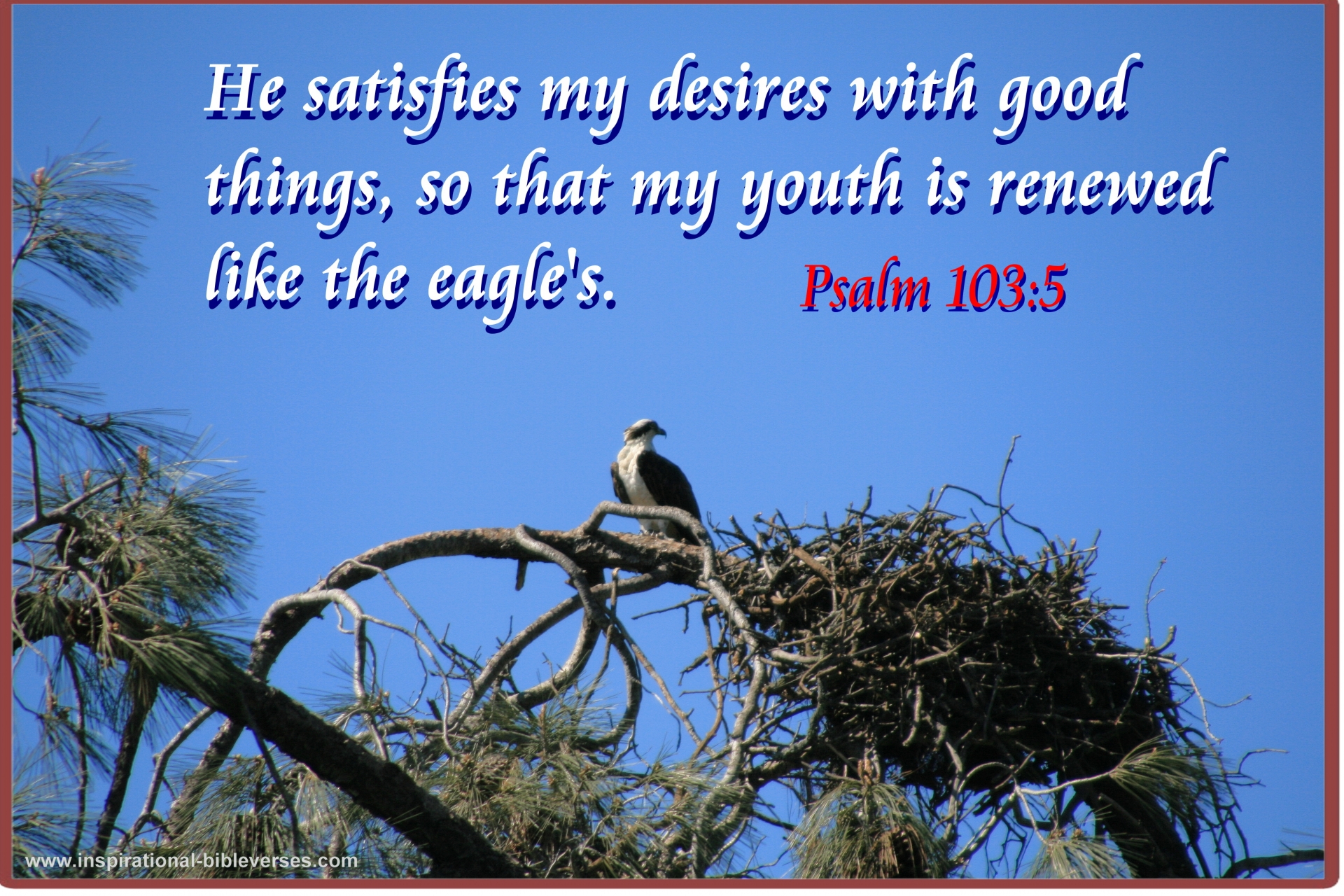
5 who satisfies your desires with good things so that your youth is renewed like the eagle’s.

 I praise You, O God, for knowing exactly which good things to grant me—those things that will produce a good outcome. (I know that catering to my every pleasure would ultimately be to my detriment.)

I praise you that even into old age you will strengthen my spirit so I can remain vibrant, optimistic, and full of hope. On the wings of your wisdom I’ll be able to soar (Proverbs 24:5).

Finally, may your praise always be on my lips; may my soul always boast in you, because you are a good and gracious God—always and forever (Psalm 34:1, 145:7-8)!


*Prior to composing this worship-prayer, I researched some of the terminology in these verses, to expand my understanding of the passage. Sources included: Be Exultant by Warren Wiersbe; www.bible.org; Jesus Calling by Sarah Young; Thrive, Don’t Simply Survive by Carole Ladd; and The Daily Study Bible Series, Psalms, by George A. F. Knight.


(Photo credits:  www.suggestkeyword.com; http://www.studentdevos.com; http://www.pinterest.com; http://www.suggestkeyword.com.)

Read Full Post »

1437425671836

Most Sunday mornings I have no trouble engaging in worship. Between the lyrics of the songs, scripture-readings, and the leader’s comments, I’m quickly transported into God’s presence and worshiping with gladness (Psalm 100:2). Sometimes my heart soars to the very gates of heaven and the joy overflows as tears.

But not always. There are other times when my heart seems numb, for no apparent reason. Why is that, and should I be concerned?

Perhaps. If I’ve allowed unconfessed sin to fester, then my connection to God will be negatively impacted.

But what if I have addressed my shortcomings with God, and still feel disconnected? What then?

I need to remember the following:

  • Worship is sometimes an act of the will. “Put your hope in God,” the psalmist said, “for I will yet praise him” (Psalm 42:5). Worship wasn’t meant to be reserved only for moments of elation; it’s a choice. Job is a perfect example. After he was stripped of everything—cattle, flocks, servants, even his children—Job worshiped (Job 1:20). That astounds me.

Job_113-1180

  • God isn’t as concerned about our feelings during worship as he is about our sincerity (John 4:24). We can earnestly worship even if spiritual bliss eludes us.
  • God hasn’t promised we’ll always feel his presence. Sometimes he intentionally hides his face (Isaiah 45:15). It’s part of our maturation process that he occasionally allows a bit of distance between him and us.

I remember the first day of kindergarten. My mother dropped me off in front of the school, and told me to go inside to the classroom we had visited.

I would have much preferred if she had walked with me and made sure all was well before leaving me to fend for myself. What if I couldn’t find the right classroom, or the teacher wasn’t there?

But allowing me this bit of separation was part of my maturing process. I needed to learn I could trust Mom’s instructions—even when she wasn’t in sight. (Lest you think my parents were negligent, kindergarten was just inside the school door, to the left!)

In review:

  1. Sometimes worship is an act of the will.
  2. Sincerity is more important than feelings.
  3. Sometimes God distances himself a bit to grow our trust.

But would we be wrong to do what we can to forge a stronger connection to God, and, as a result, engage our emotions more fully?

I don’t think so.

David offers several examples in the psalms, when he expressed his honest feelings of abandonment, depression, dejection and more. He did not end his honest proclamations on a negative note, but concluded with expressions of praise and assurance, which surely impacted his emotions. (See Psalm 77:1-15 for one example).*

David-Praying-170x300

We can foster a stronger connection to God, and augment our worship with:

  • Gratitude – Even on our way to church, we can thank him for creation and his many blessings. Gratitude turns our gaze toward heaven.
  • Meditative Prayer – Before the service begins, praise God for his attributes, demonstrated day by day the previous week. Meditation ushers us into the presence of God.
  • Focus – Stay attentive to the words of the music, the scripture, the prayer. Fight against wandering thoughts. “If worship is mindless, it is meaningless” (Rick Warren).
  • Visualization – Imagine God on his throne, radiant with light, majestic and glorious, raised up in the sanctuary. See our resplendent God who is highly worthy of our full attention!

jesus-on-throne-no-face1

As our spirits become engaged in these ways, the emotions of awestruck wonder, unspeakable joy, and overwhelming love will undoubtedly follow!

*     *     *     *     *     *     *     *     *     *

What do you do that helps to connect you with God during worship? Share with us in the Comment section below!

*(No doubt these psalms were not written during Sabbath worship. Surely David worshiped God every day, to his benefit and for God’s pleasure. But that’s a topic for another post!)

(Art & photo credits:  www.ohbejoyfulchurch.org; http://www.bibleencyclopedia.com; http://www.banah.org; http://www.godthetruth.ws.)

Read Full Post »

Depressed young woman


“I don’t understand why this is happening,” Kelly cried. “Doesn’t God want me to be happy?”

*     *     *

“I’m not sure what God is doing, but business is bound to pick up soon,” Dave asserted. “I’m working harder than ever—like seventy hours a week. God helps those who help themselves, right?”

*     *     *

“I thought I was where God wanted me to be, but that loser job was not a good fit—such boring work and for such a lousy salary,” moaned Erika. “I just had to quit! But I’ll be OK. God loves me; he’ll take care of me.”

*     *     *

Ever hear comments similar to these? Each one represents a misunderstanding about God. The truth is:

  • God’s primary concern is our welfare, not necessarily our happiness (Philippians 4:19). The two are not synonymous.
  • God has not promised to help those who help themselves. That proverb is not in the Bible.
  • Neither has God promised to take care of us if we live irresponsibly (2 Thessalonians 3:10).

So, I’m sorry, Kelly, Dave, and Erika. Somewhere along the way you’ve heard these ideas about God’s ways which were misrepresented as truth.

But how can we know the truth of how God works in our lives? (They might ask!)

By becoming better acquainted with God’s Word. Within its pages we find such wonders as perfect wisdom, inspiring encouragement, hope-giving promises, and practical instruction.

For example:

Kelly, God loves you too much to grant everything you want. Over-indulgence leads to spoiled children. Discipline demonstrates true love; permissiveness demonstrates foolishness. Sometimes God exercises tough love in order to develop our characters, grow our faith, and prepare us to serve him in greater capacities.


no-pain-no-gain

(“The Lord disciplines those he loves”–Hebrews 12:6a).

Dave, God is compassionate and good to his people (Psalm 103:4-5). He has promised to be our help, but it has nothing to do with our effort prompting him to come alongside. It’s the person who trusts in God wholeheartedly and follows his ways who may anticipate divine help:

“You who fear him, trust in the Lord—

he is their help and shield.”

–Psalm 115:11

and…


16072

(“May your hand be ready to help me, for I have chosen your precepts” –Psalm 119:173.)


Erika, God certainly does care for you (1 Peter 5:7), but he does not condone irresponsibility. A wise course of action would include prayerful assessment of the current job as well as other possibilities, while asking God for his guidance. Meanwhile:

“Do your best.

Work from the heart for your real Master, for God,

confident that you’ll get paid in full

when you come into your inheritance.

Keep in mind always that

the ultimate Master you’re serving is Christ.”

–Colossians 3:22-24 (The Message)

To all of us: When our corner of the world is rocked by challenges and disappointment, our best strategy is to turn to God’s Word. We can steady ourselves with the truth about his character and his ways, even experience joy and peace as those truths soak deep into our hearts (Psalm 119:35, 165).

“It is only when we understand who God is

that we begin to understand what he does.”

– Selwyn Hughes

*     *     *     *     *     *     *     *     *   *

Thank you, Father, for the precious gift of your Word, for the way it continues to minister afresh, day by day, year after year, with reliable truth and uplifting encouragement. As if that wasn’t enough, you reveal yourself through its pages, allowing us to know you, the King of the universe. Open my eyes that I may see even more wonderful things in your Word (Psalm 119:18)!

b4015e676ff0bec5726ece111fd8d5ee

(Art & photo credits:  www.med-health.net; http://www.kristamcgeebooks.com; http://www.biblepic.com; http://www.pinterest.com.)

Read Full Post »

romans1-7

“Grace and peace to you from God our Father

and from the Lord Jesus Christ.” 

–Romans 1:7b


With those words the Apostle Paul greeted the Christians of Rome in a letter.

Turn a few pages in your Bible to Paul’s next epistle, 1 Corinthians, and you’ll read:

“Grace and peace to you from God our Father

and the Lord Jesus Christ.” 

–1 Corinthians 1:3


Notice any similarities?! In fact, all thirteen letters written by Paul and included in our New Testament begin with the same or similar greeting. Sometimes the wording changes a bit, but he always expresses the desire for God’s grace and peace to be upon his friends.

Was there purpose behind his choice, or was he simply following polite protocol for the day, much as we might say, “Hello, how are you?”

grace

GOD’S GRACE

Perhaps Paul’s intent was to highlight for his readers, first and foremost, the foundation-truth of God’s grace. It is only because of his loving kindness toward us that he:


“Grace is the overflow of God’s total self-sufficiency.”

–John Piper


And I would add, toward those with no sufficiency in themselves.

We deserve none of his benevolence.

“We’ve compiled a long and sorry record as sinners and proved that we are utterly incapable of living the glorious lives God wills for us” (Romans 3:23, The Message).

 And yet, his goodness to us, his grace, is mentioned 104 times in the NIV translation of the New Testament—that’s how overarching it is–woven throughout scripture; woven into every day of our lives.

godspeace0711

GOD’S PEACE

In addition to grace, Paul includes peace in his greetingspeace that indicates a state of untroubled tranquility, harmony, and well-being.

Peace is surely an aspect of God’s grace, one of the blessings he bestows upon us out of his loving kindness. So why did Paul choose to mention it separately?

Perhaps because we fail to appropriate it.  Paul wanted to remind his readers that God’s precious gift of peace is always available:

  • Peace with ourselves as we place our wills, our hopes, and our futures in his capable hands (Philippians 4:6-7).
  • Peace with circumstances, as we affirm that his perfect peace is available to those who think on God and trust in him (Isaiah 26:3).
  • Peace in our relationships, as he provides the grace to love as he loves (Romans 14:19).

GOD’S GRACE WITH YOU

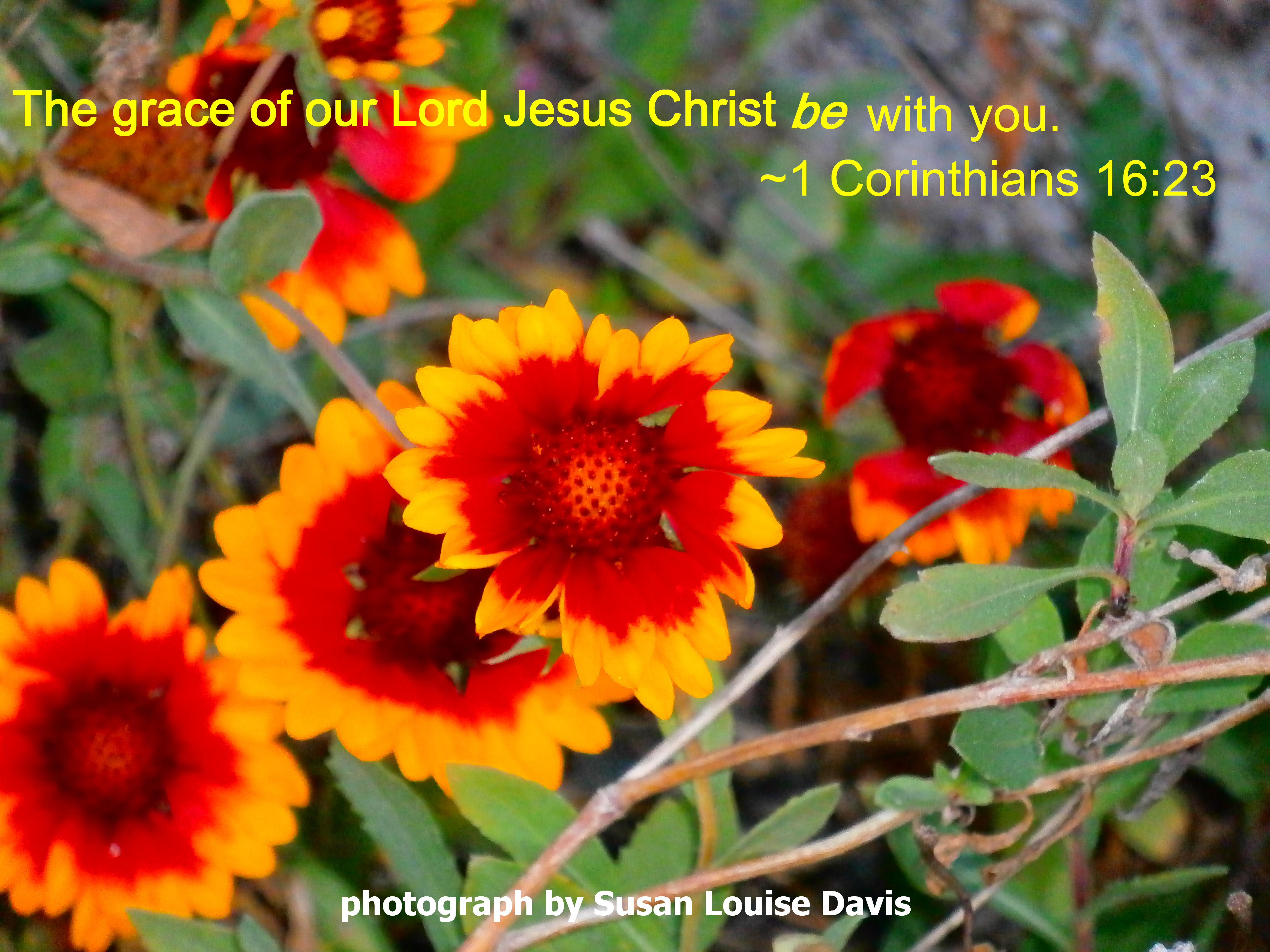
As already mentioned, Paul began his letters with “grace and peace to you.” Turn to the end of each letter and you’ll read his signature closing: “Grace be with you.” For example:

1-corinthians-16-23

“The grace of our Lord Jesus be with you.” 

–1 Corinthians 16:23

Now why would Paul make that slight change? Is it important?

Perhaps he wanted his readers (including us!) to be mindful that God’s grace is always with us—day and night, in trouble or triumph, through the ordinary as well as the extraordinary. Maybe Paul chose the phrase as a worthy send-off.  After his listeners and readers had paid careful attention to the instructional content of his letters, came the time to apply it…

…by God’s grace, which was always with them.  And just as surely, God’s grace is always with us.

*     *     *     *     *    *     *     *     *     *

Thank you, Heavenly Father, for the unmerited favor of your grace that has brought us salvation, strength, kindness, and incredible riches in the spiritual realm. All of your grace is always with us—no matter who we are, no matter where we find ourselves. In fact, you long to be gracious to us, to rise and show us compassion. You astonish us!

(Titus 2:11; 2 Timothy 2:1; Ephesians 2:7; Isaiah 30:18)

Art & photo credits:  www.suggestkeyword.com; http://www.knoxchristian.com; http://www.www1.usw.salvationarmy.org; http://www.inbetweenthepinesamightyoakgrows.files.wordpress.com.) 

Read Full Post »

???????????????????????????


Music.

It has the power to thrill our hearts, calm our fears, and strengthen our resolve.

Music energizes, encourages, and inspires. It even augments our connection to God.

So it’s no wonder that, in the Bible:

  • There are more than 400 references to singing.
  • There are fifty direct commands to sing.
  • The longest book is a collection of songs.

It would seem that music is important to God.  In fact, God himself sings.


GOD SINGS

David proclaimed,

psalm32_7-paul

(“You are my hiding place; you will protect me from trouble

and surround me with songs of deliverance — Psalm 32:7”)

 Granted, we may not hear an actual melody, but the power of his Word sings comfort, hope, and strength into our spirits., much as we can “sing high praises” of someone, without a tune.

The sons of Korah, who were temple musicians, composed Psalm 42. In verse eight they state, “At night his song is with me.” Job also spoke of God “who gives songs in the night” (Job 35:10).  In other words, even when we face dark circumstances, God gives his song of help, salvation, and deliverance.

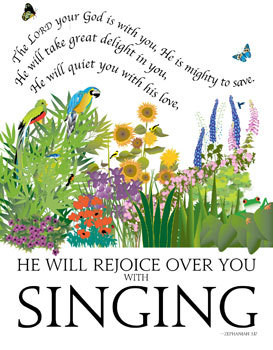
One more affirmation that God sings is found in this uplifting verse from Zephaniah:

zephaniahweb_large

(“The Lord your God is with you, he is mighty to save.

He will take great delight in you, he will quiet you with his love,

he will rejoice over you with singing”–3:17.)

His songs can inspire courage, like a rousing march.  His songs can be like sweet lullabies, expressing peace and love.  And they can be joyful and upbeat, expressing delight in who we are becoming.

The power of God’s songs is in his attributes expressed.


NATURE SINGS

An anonymous psalmist wrote:

il_570xN.403823930_lgif


“All the earth bows down to you, [God]; they sing praise to you,

they sing praise to your name–Psalm 66:4.”)

Other scriptures offer more specificity:

  • Trees of the forest sing for joy before the Lord (1 Chronicles 16:33).
  • Meadows, flocks, valleys, and grain shout for joy and sing (Psalm 66:13).
  • Birds of the air sing among the branches (Psalm 104:12).
  • The heavens sing for joy (Isaiah 44:23).
  • Mountains burst into song (Isaiah 49:13).

Did you notice a theme? All creation sings for joy to their Maker.

Perhaps the biblical poets were speaking metaphorically, giving musical voices to creation where none really exist (except for the birds, of course). However, is it not possible that a choral symphony is wafting on the wind–it’s just that our human ears cannot hear that particular range of decibels? (Just like we can’t hear a dog whistle.)

Imagine:

  • Trees providing sweeping arias
  • Meadows and valleys echoing the refrain
  • Birds creating the grace notes
  • The heavens resounding in a mighty chorus of melody and harmonies
  • The mountains booming deep, rich bass notes

The power of nature’s song may very well be ringing around us this very moment.


WE SING


Planetshakers-BandCrowd-Melbourne-Planetshakers-Awakening-1

Praise God he has given us the ability to sing also. What a precious gift to fuse melody, harmonies, and rhythm that augment the meaning of our words—sometimes even supersede the necessity of words—as we express our praise, gratitude, devotion and love to God.

But what if we can’t sing or play an instrument? What then?

Meet Antonio, a lover of music who lived long ago. Imagine his bitter disappointment as he grew from boyhood to youth and realized he would never sing or play an instrument well.

But a wise friend told him, “There are many ways to make music. What matters is the song in the heart.” That friend happened to be a violin-maker. And because of his influence, Antonio was encouraged to become a violin-maker himself. Perhaps you’ve heard of him. Antonio Stradivarius?

We would all do well to remember his friend’s wise words:

What matters is the song in our hearts.

Ephesians-5-19

“Sing and make music in your heart to the Lord,

always giving thanks to God the Father for everything,

in the name of our Lord Jesus Christ.”

(Ephesians 5:19-20)

The power of our songs is to touch God’s heart.

(Art & photo credits:  www.dreamstime.com; http://www.heartlight.org; http://www.cards.ccojubilee.org; http://www.etsy.com; http://www.christianitymalaysia.com; www,denisehighes.com.)

Read Full Post »

7615789806_fecc12133d


One evening last week, before a sweltering heat wave arrived, I parked on the back deck to read. The sun had dropped behind the old oak tree to the west. Shadows danced and flickered on leaf, grass and flower; a few birds added soft background chatter.

All of a sudden I had company. A butterfly joined me, landing gracefully on my knee. I don’t remember ever being visited up-close-and-personal by a butterfly. I studied him in wonder.

Orange stripes and white splotches stood out against black and chocolate-brown wings. Along the feathery perimeter, white scallops created a fluted edge.

But what astounded me most were his antennae. Tiny black and white stripes encircled each one. And the tips appeared dipped in fluorescent yellow paint.

I didn’t dare move, anxious to prolong the magical moment as long as possible, to enjoy his presence and inspect him further.

His markings were remarkably symmetrical, and I wondered if, while in the cocoon, butterfly wings grow folded in such a way to produce the effect—much like folded-paper ink blots. (I did check online, but found no answer to this specific question. Do you happen to know?)

I  even studied the vein lines—dozens and dozens of them—some large and pronounced, others barely visible. They, too, appeared symmetrical.

For the duration of his visit, the butterfly remained quite still. I found myself stilled, too, enveloped in a sweet interlude of peace.

Twice my new friend winked his wings at me. “Good evening,” I imagined him saying. “Isn’t our Creator God amazing? ‘In wisdom he made us all. We are both marvelously made!’”*

Oh, yes. This butterfly was marvelously made alright. Stunning, actually. And I felt the beauty of the Lord upon me (Psalm 90:17)—his favor and splendor–as one of his loveliest, most graceful creatures honored me with his presence.

I was also reminded:

  • A butterfly visitation is a God-visitation, as his eternal power and divine nature are magnificently displayed (Romans 1:20).
  • God is a Master Artist. How awe-inspiring to discover such minute details as tiny, even stripes on an insect’s antennae.
  • Just as I delighted in the butterfly’s presence, God offers supreme delight to those who bask in his presence (Psalm 16:11).
  • God’s presence also offers calm and peace, not only for a moment but forever (Isaiah 26:3).
  • God’s blessings sometimes come in surprising, unexpected ways. He even provides unnecessary blessings—like butterfly landings–just because he loves us.

All too soon my delicate visitor departed. But the delight lingers, because a God-visitation is not quickly forgotten.

Psalm.......

He has caused his wonders to be remembered;

the LORD is gracious and compassionate.

–Psalm 111:4

Later, on the internet I found this picture, a member of the same family as my winged friend. His kind are known as Red Admirals.  Can you see those tiny stripes?


Red Admiral Butterfly


What experience in nature lingers in your mind as a God-visitation? Tell us about it in the comment section below!


*Psalm 104:24b; 139:14


(Photo credits:  www.flickr.com; http://www.allaboutgod.net; http://www.goodpixgallery.com.)


Read Full Post »

89211a5ee0ee45323b75c828d833bbb6


In one scene of What’s Up Doc? (an old screwball comedy from 1972, starring Barbra Streisand and Ryan O’Neal), a hotel concierge wants the gruff house detective to stop a particular woman from leaving the hotel.

“And how am I supposed to do that?” inquires the detective with much sarcasm.

“Use your charm,” replies the concierge.

So when the woman enters the lobby and heads for the doors, the detective…

…trips the unsuspecting victim, causing her to sprawl in a most unladylike fashion on the floor.

Charming indeed.

I dare say some folks are just about as clueless as that detective when it comes to such an illusive quality as charm. Just what is it that makes a person charming?

One important quality, for sure, is respect.

And it happens to be a biblical concept:

“Show proper respect to everyone.”

(1 Peter 2:17)

M-m-m. Everyone. Not just the people at church on a Sunday morning, or at the meeting with the boss on Monday—but with family, and those with whom we have little in common, and even those we don’t particularly like.

But how do we demonstrate such over-arching respect?

Here are ten possibilities. (And while you’re reading, consider:  Which of these strategies, when administered to you, have made you feel especially respected?)

  1. Politeness – even at home. Be on the alert for rudeness, sarcasm, and inconsiderate comments or behavior. Even family members deserve to be treated politely. Make home a haven of kindness.
  1. Tact.  Perhaps your mother was like mine, offering the frequent reminder, “THINK before you speak.” It was wise advice.

think_T

  1. Gratitude.  Never let an opportunity pass by to say “thank you” for the least of favors or the smallest of gifts. Try to be a person who notices.
  1. Thoughtfulness — demonstrates that you value the other person. Let the Golden Rule be your guide.
  1. Compliments — especially in the hearing of others. Plant a lot of positive input into the people around you, and make their souls blossom.

56f7958a5053fef8b1e517686af11ee8

  1. Focused Listening—with eyes as well as ears. Even if you can recite his last sentence word for word, but your eyes were on the door, on the kids, or on a screen (as in TV, computer, iPhone, etc.) he will assume you’re not interested.
  1. Reliability.  Keep promises and commitments; be on time for appointments or engagements. Consideration of these matters indicates you truly care about the other person.

Respect also requires that we avoid certain behaviors:

  1. Avoid comparisons to others. Suggesting that Jake be more like Zeke is deflating and demoralizing, not helpful.
  1. Avoid criticism unless absolutely necessary. Share judgments carefully, sandwiched between positive and affirming comments. NEVER criticize in front of others.

It-is-usually-best-to__quotes-by-Author-Unknown-72

  1. Avoid making corrections, especially in the company of others. Does it really matter if an event happened on Tuesday, not Wednesday, or that the car was a Ford and not a Chevy? Interrupting with unimportant corrections borders on rudeness. Yes, it does.

I’ve heard some people say, “If So-and-So wants respect, she needs to earn it.”

In my younger years, I made similar remarks, too. I wish I’d known better.

The truth of the matter is:

“The way we treat others is more about who we are,

not who they are.”

(Source unknown)

Perhaps the above list can be our guide.

So! Did you agree wholeheartedly with one or more of these evidences of respect–because you’ve been treated that way, and felt valued as a result? Tell us about it in the comment section below!

(Art & photo credits:  www.pinterest.com; http://www.wpclipart.com; http://www.pinterest.com; http://www.quotescover.som.)


Read Full Post »

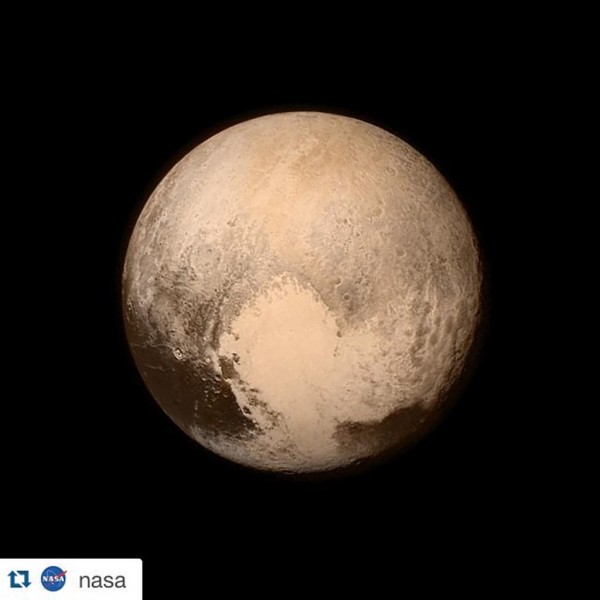
Tuesday afternoon, our older son, Eric, held up his iPhone so I could see the screen. On display was an unimpressive image of a sphere, various shades of beige to brown against a black background. Not much of an attention-grabber.

“What am I looking at?” I inquired.

pluto-best-image-new-horizons-e1436876696310

“Get ready to be amazed,” he teased. “It’s Pluto.  The New Horizons spacecraft just arrived there after a 9 ½-year flight, and sent this photo back to NASA.”

First, I was impressed by how far the spacecraft had traveled: over three billion miles. Even at thousands of miles per hour, it took New Horizons almost a decade to reach Pluto.  Incredible.

Then I noticed how well-lit the dwarf planet appeared, considering its distance from the sun (3.6 billion miles).  Also astounding.

And I marveled how a tiny sphere of rock that far-distant, is still controlled by the sun’s strong gravitational pull, keeping it in orbit within the solar system. In fact, there are even more dwarf planets beyond Pluto that are maintained in a stable, elliptical orbit around the sun.

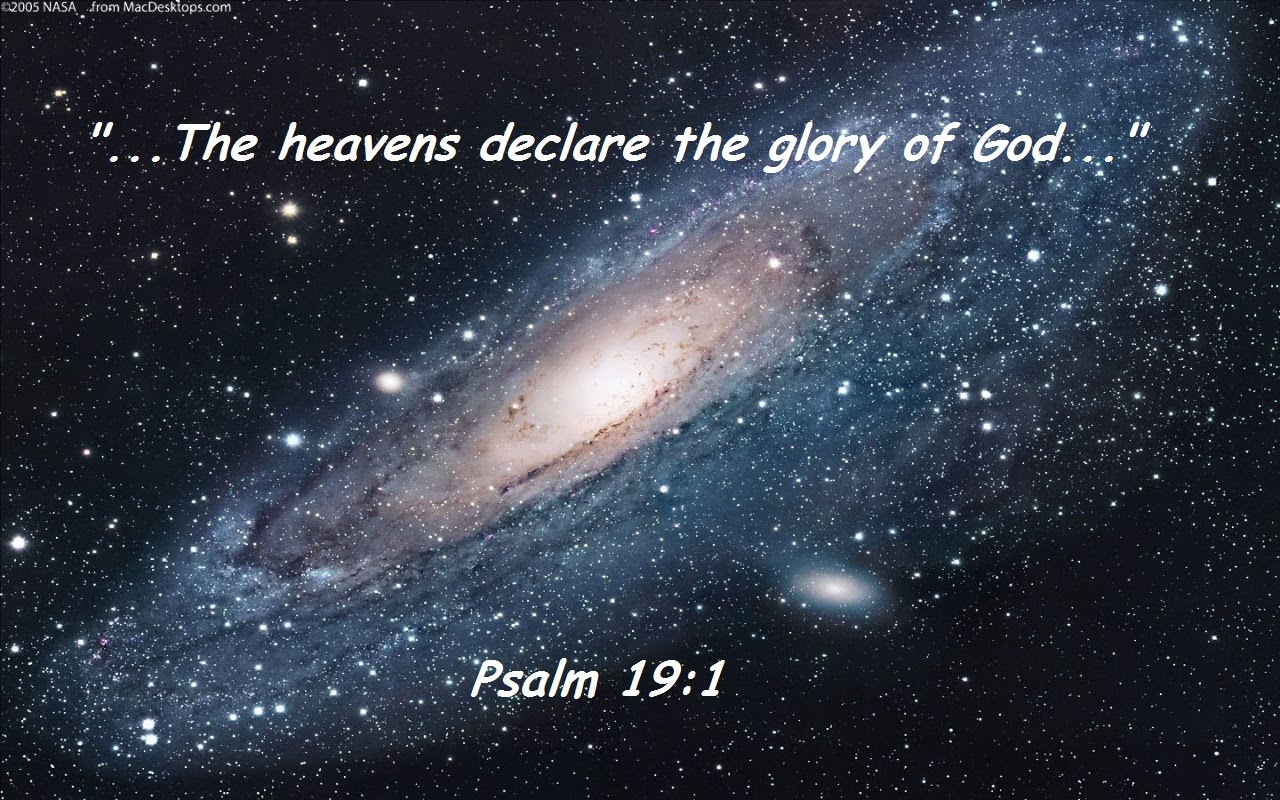
It’s no wonder David proclaimed:

maxresdefault


“The heavens declare the glory of God;

the skies proclaim the work of his hands.”

–Psalm 19:1

We’d be smart to consider the heavens with David.  Our attention is so often focused on to-do lists, calendars, and bank accounts, we forget we’re just specks in the cosmos. Even Planet Earth is less than a tiny pinhead of matter, when compared to the universe.

Yet we view the sun as playing a supporting role in our lives, giving us light and keeping us warm. In fact, the sun is the star (pun intended!) of the Solar System Show. It occupies center stage, and accounts for 99.8% of the mass in our planetary system.

In actuality, the sun is the most important influence to our existence. It is perfect in size, perfectly distanced from earth, burning at the perfect temperature and brightness in order to sustain life here on our little planet.

Sun

Yet another sun is even more perfect.   “The Lord is a sun” (Psalm 84:11).

Just as the physical sun is a glorious object in creation, so our God is glorious in light and splendor (Psalm 104:1-2).

The sun has existed since time began, and will continue to exist until time (as we know it) ceases. God, too, spans all of time (Isaiah 40:28).

The sun is a source of incomprehensible power. To produce the same amount of energy as the sun, 100 billion tons of dynamite would have to be detonated every second! Yet our God is even more powerful. He is the Creator of our mighty sun, the sovereign Lord of the universe (Jeremiah 32:17).

The sun provides light; the Lord provides the light of his presence and understanding (Psalm 44:3; 2 Corinthians 4:6).

The sun provides warmth; our God provides the warmth of comfort and consolation (2 Corinthians 1:3).

Without the warmth and light of the sun we would soon die. Without the Light of Life (Jesus) in our lives, we would forfeit eternal life (1 John 1:5-7).

The sun’s glowing beams shed beauty and joy; our God sheds beauty and joy into our hearts (Isaiah 61:3).

mark-mawson-sun-beams-through-stormy-sky-sydney-new-south-wales-australia-pacific

*     *     *     *     *     *     *     *     *     *

Thank you, Father of the heavenly lights, for illuminating our lives from without and within.  We praise you for your dazzling splendor!  May we walk in the light of the Sun of Righteousness, and reflect his radiance to those around us.

 James 1:17; Malachi 4:2, 1 Corinthians 3:18

(Photo credits:  www.earthsky.org; http://www.youtube.com; http://www.suddenlinkfyi.com; http://www.allposters.com.)

Read Full Post »

10256822_s-300x200

Years ago, friends of my parents decided to name their second son after a family member: Glenn Allen. But as the little guy began to demonstrate his extrovert personality (with humor and lots of energy!), they chose to legally have his name changed. Glenn just didn’t fit the bouncy, talkative toddler he had become.

Glenn Allen became Peter Glenn. But then someone in the family started calling him Breezy, for the way he merrily careened through life. And that’s the name that stuck.

Just as Breezy’s parents desired a personality-defining name, Old Testament patriarchs called God by new names as his personality, as well as his power, were revealed to them.

For example, Abraham was the first to call God, Jehovah-jireh (the Lord Will Provide), when God produced the ram to take the place of Isaac on the altar (Genesis 22).

31118_000_011_09

Hagar, a servant girl in Abraham’s household, was the first to call God, El Roi (the God Who Sees), when she fled to the desert (Genesis 16).

Other names given by Old Testament personalities include:

  • Jehovah Nissi (the Lord Is My Banner), proclaimed by Moses after the defeat of the wicked Amalekites (Exodus 17).
  • Jehovah Shalom (The Lord Is Peace), declared by Gideon as God prepared him to defeat Israel’s enemy, the Midianites (Judges 6).
  • Jehovah Raah (The Lord my Shepherd), given by David in Psalm 23.

I wonder, dare we create new names for God—names that indicate those moments when our understanding of him was enriched? For example:

  • El Pele (The God Who Surprises)

Home_Depot_Store_Wide

Last summer, shortly after moving into our new house, we headed out to purchase tools and supplies. Our neighbor happened to be in her yard, and we stopped to introduce ourselves. In the conversation Steve mentioned an electrical problem we were experiencing that required a trip to Home Depot.

“Well, be sure to ask for Bill*,” she said. “That’s my husband and he just happens to work in the electrical department there.”

Sure enough, Bill was able to help us purchase what we needed. He even stopped by when his shift ended to work on our circuit breakers.

  • El Naphash (The God of Catharsis)

St.-Petersburg-Beach-Florida-Sunset

How often has God sent encouragement, exactly when needed, or provided respite and refreshment during a stressful time?

Years ago one Sunday morning, I sat in church with Kleenex pressed to my cheeks.  The tears would not stop.  In two weeks we would be sitting in a new church, in a new community, where my pastor-husband had been assigned by our denomination.  Soon our five years with this congregation on the Florida Gulf Coast would only be memories.  It seemed much too soon to say good-bye.

After church, Garry and Cindy approached us.

“Listen,” Garry explained.  “I just won a weekend getaway at one of the hotels out on the beach, and we want you two to have it.”

After a bit of “Oh-no-we-couldn’t-possibly” and “Yes, we insist,” Steve and I consented.  I worried that the packing and long to-do list wouldn’t be completed on time; Steve thought we were on track.  (Turned out, we were!)

For two blissful days we forgot about boxes and focused on beach walks, shell gathering, and sunsets over the Gulf.  We returned home refreshed and reenergized to finish the tasks at hand.

Through Garry and Cindy, God provided the stress-relief we desperately needed.

  • El Neshamah (The God of Ideas) 

inspiration

Numerous times over the years I’ve needed ideas for: 1) teaching concepts to my elementary students, 2) communicating truths to Sunday School classes or Bible study groups, or 3) a fresh perspective in a blog post.  Numerous times God has supplied.

Sometimes I hear or read some little snippet, and God turns that spark into an idea.

One Sunday, not long ago, the worship leader used three words within the same prayer: salvation, restoration, and transformation.   For the next day or two I collected more  ____-tion words, thinking they might be expanded into a post somehow. The result? “Oh God,” published June 18.

Praise God he is always revealing himself in fresh, new ways, inspiring greater trust in him and informing us more fully of his character and provision.

*     *     *     *     *   *     *     *     *     *

To our God of Never-Ending Glory: Thank you for your love and faithfulness expressed in countless ways. You are holy and magnificent, yet you crown us with goodness and compassion, blessing and honor.  You care about every aspect of our lives.  For these reasons and more, we praise your glorious name(s)!

What new name would you declare for God, based on your experiences with him?  Share your contribution in the Comment section below!

*Name changed.

(Art & photo credits:  www.growingyourbaby.com; http://www.lds.org; http://www.dailytech.com; http://www.floridaescape.com; http://www.633woman.com.)

Read Full Post »

« Newer Posts - Older Posts »

Sylvia Schroeder

Impressions Becoming Expressions

Mitch Teemley

The Power of Story

Still Traveling

Impressions Becoming Expressions

Living Our Days

Gaining a heart of wisdom

He Said What?!

I'm Patty, and my husband and I are living with our adult son who has autism and epilepsy. I love sharing lessons learned from life around me, especially life with Aaron.

Meditations of my Heart

Impressions Becoming Expressions

Linda Stoll

Impressions Becoming Expressions

Signora Sheila

Where faith meets la dolce vita

Heidi Viars

Finding the Image of God