Feeds:
Posts
Comments

Archive for the ‘God’s Provision’ Category

If you or a family member are among the 16 million people in the U.S. who suffer from COPD, you’ve no doubt checked into the pros and cons of oxygen tanks (unwieldy and weighing up to 20 pounds) vs. oxygen concentrators (small, and just 5 pounds or so).

These latter devices can be carried around, even in a backpack. That’s much easier than wheeling a cumbersome, heavy tank everywhere. Such an amazing invention.

Whichever device is chosen, the increased oxygen flow is life-giving to the patient, improving their quality of life and providing peace of mind.

As Christians, we carry something with us that is also life-giving—into eternity. It improves our quality of life in astounding ways, and provides such overwhelming peace of mind, it surpasses understanding.[1]

This entity is lighter than air even though it possesses the awesome weight of God’s glory (the infinite wonders of who he is) and the full height and depth of his love. It doesn’t have to be pulled along or carried on the hip or back; it’s carried within the spirit.

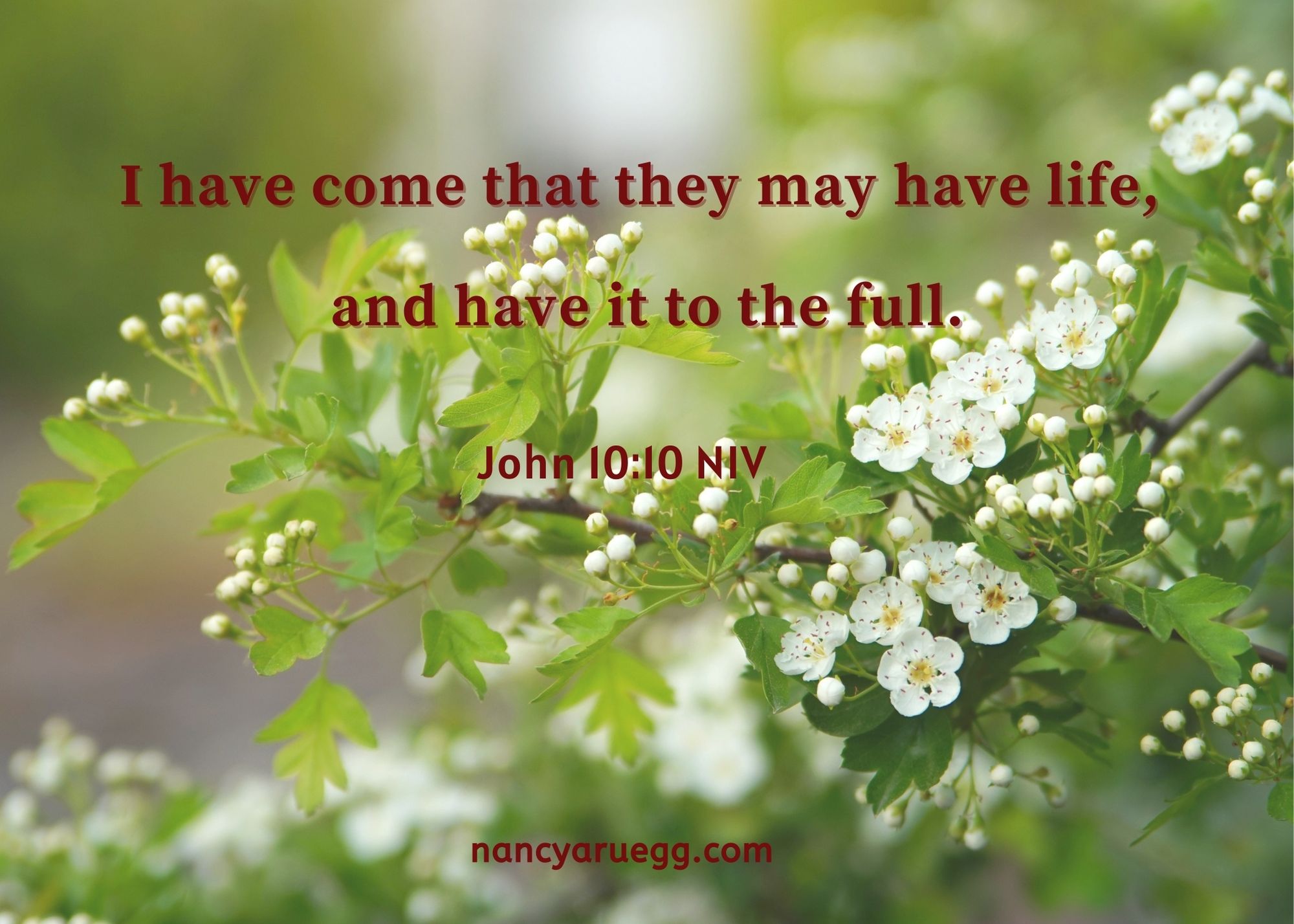
What is this invisible reality? God’s kingdom. We are Kingdom Carriers[2]—if we’ve accepted his Son Jesus into our lives. That choice leads to the abundant life he promised.[3]
Carry an oxygen concentrator and you can supply yourself with that one necessity for as long as the battery lasts, about 8 hours. But as Kingdom Carriers? Oh my!  God provides numerous necessities for a lifetime and beyond. Some come quickly to mind, such as the peace of mind mentioned above, wisdom for decision-making, and the assured hope of a glorious future.[4] 

But what else do we carry in our invisible Kingdom satchels? Here are a few examples:

  • God’s encouragement. Within the pages of his Word we find heartening promises, assuring each of us, “You’re not alone; I’m here to help you. Remember, with me all things are possible.”[5]
  • God’s equipping. He provides courage in distress, serenity in difficulty, strength under pressure, comfort in pain, and more.[6]
  • God’s faithfulness. Reflect on the numerous times God has graciously protected and provided. With King David we can affirm:
  • The truth about our identity. We are God’s children, created in his image for divine purpose.[7]
  • Joy—even in the midst of trouble. Paul is our example. “In all our troubles,” he wrote, “my joy knows no bounds” (2 Corinthians 7:4). We can live like that too!
  • Security. “There isn’t a single moment when you’re not tucked next to the heart of God.”[8]

Our Kingdom backpacks even include a new wardrobe!

And what does this new wardrobe include? A long coat of humility that envelops everything else, soft gloves woven of kindness and gentleness, quiet slippers of patience (as opposed to tap-shoes of exasperation), and a large scarf of forgiveness that covers a multitude of grievances (vs. 11-13).

Now, at least several questions present themselves:  

Are we putting to good use these amazing provisions? What can we do to avail ourselves more readily?

And, as Kingdom Carriers, are we sharing the life-giving, peace-imparting contents of our invisible backpacks with those around us?

*     *     *     *     *     *      *      *     *      *

I praise You, O God for transferring us from the domain of darkness to the kingdom of your beloved Son. You, the King of the universe, have made us your sons and daughters!  Now, wherever we go, we carry within us your invisible kingdom—and all its amazing qualities. May we be faithful to access what you’ve provided and generously share them with others.   

(Colossians 1:13; 2 Corinthians 6:18; Luke 17:21; John 10:10; Hebrews 13:16)


[1] Psalm 145:13; John 10:10; Philippians 4:6-7

[2] A phrase coined by Elaine Olsen, Peace for the Journey, 141. (Elaine is one of my former second-grade students!)

[3] John 3:16; 3:3; 10:10

[4] James 1:5; 1 Peter 1:3-6

[5] Psalm 23:4; 46:1; Matthew 19:26

[6] Psalm 27:1; Psalm 9:9-10; Isaiah 40:28-31; Psalm 147:3

[7] John 1:12; Ephesians 2:10

[8] Chrystal Evans Hurst, Kingdom Woman, p. 157; Isaiah 40:11

Art & photo credits: http://www.wikimedia.org; http://www.canva.com; http://www.heartlight.org; http://www.wikimedia.org; http://www.heartlight.org; http://www.flickr.com.

Read Full Post »

A nail is driven out by another nail;

habit is overcome by habit.

So said Desiderius Erasmus, Dutch philosopher and theologian of the 1500s.

Desiderius Erasmus

Research in recent times has proven his statement true.  One of the best ways to break a bad habit is to replace it with a good one.

That’s why President Reagan replaced his cigarettes with jelly beans, dieters replace chips with popcorn, and late-night TV addicts forego talk shows to read calming books.

Some of the most stubborn bad habits are those that occur in the mind. It’s no easy task to shut down anxious, negative, or covetous thoughts—even when we know they contribute nothing to our well-being.

But if we apply Desiderius’ advice, we can retrain our brains toward healthy, even delightful thinking. For example, we can:

Replace anxiety with trust.

Worry spirals us downward into fear; trust-statements provide the way out–trust-statements such as these:

  • I can trust the One who died for me. He will thwart every plan that should be stopped and complete each one that results in his greatest glory and my highest good.[1]
  • God is with me and for me. His strength enables me, and his light guides my way.
  • Time and again I’ve witnessed God’s provision and protection, his miracles and blessings. “All that I have seen has taught me to trust him for all that I have not seen.”[2]

As other trust statements come to our attention, we can record them in our journals or in Notes on our phones. Then we’ll be prepared when the slide into worry begins.

Replace negativity with positivity and praise.

Continual praise is what changes the emotions,

lifts the darkness, offers hope, frees the mood

and blesses God so that evil is driven out.

Praise changes everything.

–Arnold Prater[3]

Throughout the day take a praise-pause now and then. Praise God for his power to keep this world on its axis, tilted just right to support life. Praise him for the proofs of his creativity in nature, for his goodness and loving mercy that prompted him to make a way to heaven for us.

Of course, the demands of the day often distract us from such thoughts. But if we post reminders here and there—around the house, on the visor of the car, at our places of work—we can jump-start this habit.

Replace covetousness with gratitude.

Gratitude doesn’t change the scenery;

it merely washes clean the glass you look through

so you can clearly see the colors.

–Richelle E. Goodrich

Too often our attention gravitates toward wants instead of haves, fostering discontentment and envy–emotions we’d do well to eliminate.

One helpful strategy is keeping a gratitude journal. Even brief entries can be effective. I only record one or two things each day, but discovered there’s benefit in the process of reviewing the day to glean the highlights. An added delight: rereading old entries and feeling grateful all over again.

Of course, developing good habits is not as easy as driving out a nail. What about those days when we fail? That’s the time to remember: even in failure there is progress.

Failure points to the inadequacy of striving on our own, and turns us toward greater dependence on God.

We learn, on the one hand,

that we cannot trust ourselves

even in our best moments,

and, on the other,

that we need not despair even in our worst,

for our failures are forgiven.

–C. S. Lewis[4]

We can begin our habits of trust-statements, praise, and gratitude right there!


[1] Based on a quote from J.H.M., Streams in the Desert (Zondervan, 1997) 295.

[2] Ralph Waldo Emerson

[3] Bonding with God (Marno Books, 2000) 78.

[4] Mere Christianity (MacMillan, 1952) 78.

Photo credits: http://www.flickr.com (2); http://www.heartlight.org (2); Nancy Ruegg; http://www.wikipedia.org; http://www.heartlight.org.

Read Full Post »

“The Lord is my Shepherd; I shall not want” (Psalm 23:1 KJV).

Many of us memorized those words as children. And some of us may have thought, “Wow! That means God will give me whatever I want!”

So we prayed for new bicycles, the latest gadgets, and swimming pools in our backyards—absolutely certain that if God gave us these hearts’ desires, we’d be truly satisfied.

Some of our prayers were answered affirmatively. A new bicycle with sparkling spokes actually materialized by the Christmas tree. Or Aunt Kate heard the pleas for Mattell’s Magical Music Thing, and sent it as a birthday gift.

But as the years went by, the wise and introspective among us realized:

1. When one desire is fulfilled, another quickly takes its place.

Years ago I heard that a famous actress had accumulated seven houses, each one a different style from the others. Why? Because moving from one to another eased her boredom. (I wonder how long it took to become discontented with House #4, or #5, or #6, before she hired an architect to start the next?)

2. God isn’t in the business of making wishes come true.

Psalm 23:1 doesn’t mean: “I’m one of God’s flock! I’m gonna live on Easy Street!”

If he did grant every whim, we’d soon become self-centered and spoiled.

Perhaps a clarifying interpretation of the opening scripture would be: “God is my loving Care-Giver. All that I enjoy in my relationship with him far outweighs anything this world has to offer. I really don’t need another single thing.”

Ah, to be as soul-satisfied as King David, the author of this psalm!  How can we become that contented?

One place to begin is with gratitude and praise.

Think of all we enjoy as a result of our relationship with God.  Peace, joy, and provision quickly come to mind.

Here are a few more:

  • Companionship with a perfect Friend—every moment of every day–into eternity.  He is always listening, always watchful, always diligent.
  • Hope. No situation is beyond the control of our Almighty God.
  • Settledness, because he is in control, and “makes good things even out of hard times” (Erica Hale).
  • Truth. We don’t have to muddle through life like a do-it-yourselfer with no instruction manual. “The unfolding of [God’s] words gives light; it gives understanding to the simple” (Psalm 119:130).

The bottom-line is this: No possession or position, no place or person on earth can fill our hearts with contentment.

3. True satisfaction flourishes when we affirm that in God we have all we need.

Remember Jesus’ invitation in Matthew 11:28?

Are you weary of the dissatisfaction that results from striving for the next desire?  Are you burdened by unfulfilled wishes and dreams?

Come to Jesus.  Count the scores of blessings he’s already provided in the past, is currently providing this very moment, and has already prepared in the glory of heaven yet to come.

Cultivate true satisfaction in your heart with gratitude and praise!

*     *     *     *     *     *     *     *     *     *

What helps you cultivate true satisfaction?  Please share in the Comments section below!

Art & photo credits: http://www.canva.com; http://www.flickr.com; http://www.rawpixel.com; http://www.wikimedia.org.

(Revised and reblogged from 7-10-14 while we enjoy house guests.)

Read Full Post »

Betsy gasped at the revolting scene before her. Yes, she’d been warned by Stephen Grellet, a family friend, but even his graphic descriptions could not have prepared her for this.

In a space meant for sixty women, three hundred women and children[1] swarmed over every square foot, some barely clothed. Screaming and shouting assaulted the ears.

But the worst offense was the stench of unwashed bodies, vomit, human waste and more which saturated the meager straw on the floor. Small barred windows offered little fresh air for relief.

The place: Newgate Prison in London England. The time: 1813.

Newgate prison. Credit: Wellcome Library, London.

In that first moment inside Newgate, Betsy knew that “God wanted her to minister hope to these women who were being treated like animals and had lost their desire to live.”[2]

The jailers told Betsy and her companion, sister-in-law Anna Bruxton, not to enter the cells, that the women were bound to attack her.

But Betsy insisted, and they marveled when her quiet presence actually calmed the women. Betsy read the Bible and then prayed for the prisoners. Many dropped to their knees.

After that first visit, Betsy began to dream of better ways to deal with prisoners—especially those guilty of nothing more than stealing apples to feed their starving children. She wondered, Instead of severe punishment as the only purpose of confinement, what if rehabilitation was provided?  

Betsy went to work immediately.  She organized her Quaker friends (a group which quickly expanded) who made clothing for the inmates and their children.

Betsy recruited volunteers to visit the prisoners, read the Bible and tell them about Jesus, then pray with them, just as she did. No doubt many chose to believe in Jesus as a result.

Mrs. Fry reading the Bible to prisoners.

Betsy arranged for clean straw to be brought in regularly. A prison school was established, paving the way for children and mothers alike to escape destitution. Betsy also convinced prison authorities to hire a matron and female monitors for the women.

It’s no wonder people began to call her the Angel of Newgate. But financial backing proved difficult. None of the male-dominated organizations were interested. Nevertheless, Betsy was able to raise support through friends.

As she worked, Betsy prayed:

“Lord, may I be directed what to do and what to leave undone, and then may I humbly trust that a blessing will be with me in my various engagements—enable me, O Lord, to feel tenderly and charitably toward all my beloved fellow mortals.”[3]

News of Betsy’s reforms began to spread. In 1818 Betsy was invited to speak before a House of Commons committee concerning prison conditions. She was the first woman ever brought before such a body as a witness.

Her experience as a Quaker minister helped Betsy deliver a clear and powerful speech. And members of Parliament responded affirmatively. But when she spoke against capital punishment, any action toward prison reform stagnated.

Disappointed but not discouraged, Betsy continued her efforts toward further reforms. At the time many prisoners were shipped to Australia. Women were chained, then transported to the docks in open carts. Crowds gathered to mock and throw all kinds of filth at them.

Betsy initiated change by offering to escort each convoy and keep order if prison officials used covered carriages. They agreed.

She also supplied each woman with a bag of useful items including materials for a patchwork quilt, giving them something to do on the long voyage. Better yet, when the women arrived they could sell the finished quilts.

Inside the hull of the Edwin Fox, the last surviving convict ship. Just 157 feet long, she transported at least 180 prisoners each voyage.

Also in 1818, an American emissary John Randolph visited England to see Betsy’s work firsthand. He wrote, “I have witnessed there miraculous effects of true Christianity upon the most depraved of human beings. Bad women, sir, who are worse, if possible, than the devil himself: and yet the wretched outcasts have been tamed and subdued by the Christian eloquence of Mrs. Fry.”[4]   

Five years later sympathies in Parliament had changed and the Gaols Act of 1823 was passed. It included many of Betsy’s recommendations from three years before.

The new reforms didn’t apply to local jails or debtors’ prisons. Betsy and her brother Joseph traveled the British Isles to gather evidence of the conditions and then presented additional reform legislation.

And yet Betsy accomplished still more. “She established night shelters for the homeless, libraries for coast guards, societies to help the poor, and the Institution for Nursing Sisters to modernize British nursing. She also influenced Florence Nightingale’s training program.”[5]

For more than thirty years Elizabeth Fry championed these causes in the name of Christ. And to think, one year before that first visit at Newgate, she wrote in her diary, “I fear that my life is slipping away to little purpose.”[6]

But of course God would never let that happen to someone who trusts in him.

Addendum: Elizabeth Gurney (1780-1845), married Joseph Fry in 1800; they had eleven children.


Notes:

[1] The youngsters had no one else to care for them

[2] https://setapartgirl.com/story-elizabeth-fry/

[3] From Great Women of the Christian Faith by Edith Deen, quoted at https://setapartgirl.com/story-elizabeth-fry/

[4] https://christianhistoryinstitute.org/magazine/article/to-act-in-the-spirit-not-of-judgment-but-of-mercy

[5] https://christianhistoryinstitute.org/magazine/article/to-act-in-the-spirit-not-of-judgment-but-of-mercy

[6] (https://christiansforsocialaction.org/resource/heroes-of-the-faith-elizabeth-fry/ ).

Sources:

https://christianfocus.org/elizabethfry

https://christianhistoryinstitute.org/magazine/article/to-act-in-the-spirit-not-of-judgment-but-of-mercy

https://christiansforsocialaction.og/elizabethfry

https://setapartgirl.com/elizabethfry

https://encrustedwords.ca/elizabethfry

Art & photo credits: http://www.wikimedia.com; http://www.lookandlearn.com; http://www.wikimedia.com; http://www.lookandlearn.com; http://www.wikimedia.com; http://www.picryl.com; http://www.dailyverses.net.

Read Full Post »

Because God says we’re forgiven (Psalm 103:8-12), let’s refuse to dwell on past sins.

Sins are so remitted, as if they had never been committed.

Thomas Adams

Because God proclaims us righteous (1 Corinthians 1:30), let’s refuse to be haunted by past failures.

Do you know what you imply when you say that you are a Christian? It is that you are as guiltless in God’s sight as Christ Himself.

G. V. Wigram

Because God has already asserted his 100% approval of us (Ephesians 1:4-5), let’s stop pursuing perfection.*

Because God has made clear his love for us (Romans 5:8), let’s not tarnish that love with disbelief.

All shall be well, all shall be well . . . For there is a force of love moving through the universe that will hold us fast and never let us go.

Julian of Norwich

Because God pronounces each of us his masterpiece (Ephesians 2:10 ISV), let’s not berate his workmanship.

All who are in Christ form the highest, finest, and most beautiful expression of [God’s] thought and purpose. They are masterpieces upon whom he bestowed his best.

Herbert Lockyer, Seasons of the Lord, 330

Because God says, “Fear not” (Isaiah 41:13), let’s not doubt his unlimited power to help.

Because God affirms he’s our unfailing source of strength (Isaiah 40:29-31), let’s refuse to say we’re weak.

It is impossible for that man to despair who remembers that his Helper is omnipotent.”

Jeremy Taylor

Because God declares he’ll instruct us and watch over us (Psalm 32:8), let’s not strike out foolishly on our own.

With the goodness of God to desire our highest welfare, the wisdom of God to plan it, and the power of God to achieve it, what do we lack?

A. W. Tozer

Because God promises to work for our good (Romans 8:28), let’s not fret about the what-if’s.

Because God provides the way for victorious living (1 John 5:4-5), let’s not live in defeat.

Daily living by faith in Christ is what makes the difference between the sickly and the healthy Christian, between the defeated and the victorious saint.

A. W. Pink

This means, my friends, we can live each day guilt-free, grace-imbued, love-wrapped, purpose-filled, worry-free, strength-infused, fully-equipped, highly blessed, and victory-assured—because God Almighty says so!

*We don’t have to earn God’s love and acceptance. Neither do we have to pursue perfection, as if it’s necessary in order to please God or be accepted by him.

Photo credits: http://www.piqsels.com; http://www.freeimg.net; http://www.pixabay.com; http://www.canva.com.

Read Full Post »

A glowing horizon and a bright crescent moon provided a delightful inspiration one morning. What if I stayed on the lookout for more of God’s blessings that day and kept a list?

The time was spring—sunbeams spangled the sky, a light jacket warded off cool breezes, daffodils and hyacinths dotted neighbors’ yards, and the birds sang their equivalent of the “Hallelujah Chorus.” By day’s end that list included twenty delights. (You can access that list here.)

Spring is an easy time to count blessings, when creation displays God’s glory in numerous ways.

But what about winter, when skies are often overcast, when much of the landscape offers only shades of gray and brown, and when most birds are silent or absent altogether? Is it possible to find twenty delights in quick succession?

As a matter of fact, yes.

Let’s begin with the first matter of morning: coffee.

Within minutes of hitting the start button, our coffee maker gurgles with gusto as the last of the water pumps through, thus providing the first item for my list:

#1: That happy burbling sound indicating the coffee is almost ready!

#2: The sublime flavor and fragrance of coffee.

#3: The fact that black coffee has no calories! (Yes, I realize the first three mercies on this list involve coffee. But I’m sure you agree: its supreme delight warrants attention to the details!)

#4: The view out the kitchen window, especially when it includes virtual mountains—a pale gray cloudbank spreading along the horizon, looking every bit like a ridge of the Smokies.

#5: For that coffee, my new Ember mug (a Christmas gift), keeping the last sip as hot as the first.

#6: The lamp on my desk perfectly backlighting the graceful steam curls from my mug. Mesmerizing!

#7: Sunshine pouring in the south-facing windows across the back of our house, especially welcome after several days of gray.

#8: Blowing cantaloupe-sized bubbles (sometimes bigger) with my fingers. (I discovered this bit of fun during the early days of pandemic hand-washing. With sudsy hands, make a ring of forefinger and thumb and blow!)

#9: Running an errand in my new, cozy and comfy boots—the outcome of a two-month search.

#10: A collection of herbal teas to choose from, once I’ve met my daily quota of caffeine.

#11:  Lazing in our recliners before the fireplace, with books, computers, and tea, reveling in the warmth, crackle, and wood-scent.  All five senses contentedly engaged.

(The view over our slipper-tops.)

#12: Discovering by chance the last item needed for my Colors of Winter list. Red was easy—cardinals and holly berries. Orange—robins and red foxes. Yellow—prairie grass. . .

. . . Green—the pines and evergreens. Blue—blue jays and blue-gray Northern bayberries. And finally, for purple, a snow-dusted beautyberry shrub. 

For eyes that seek, winter offers more than brown and gray after all.

#13: Restoration through creativity, as a scented candle flickers, restful music provides background, and occasional sips of tea offer refreshment. Again, all senses engaged.

(My latest effort–Thanks to inspiration from Pinterest!)

#14:  Playtime with the grandgirls.

(Calico Critters lined up for their baths.)

#15: The luxury of a cozy nap!

#16: A snow flurry, providing more stars for another list, included in my post two weeks ago, “Emblems of Love.”

(Photo taken on our deck)

#17: Fairy lights and candles to dispel the gloom of a wintry dusk.

#18:  A happenstance glimpse of a fox trotting by, as we view the snowfall one last time before dark.

#19:  Popcorn—a guilt-free snack (if prepared properly) and . . .

#20: . . . dark chocolate–just one square, offering a lesson in savoring. How wonderful researchers have determined dark chocolate is good for us!

The more we look, the more we see of God’s mercies and immense graces—a truth that applies even in bleak winter.

Have you been on the lookout? What mercies and graces have you seen? Please share an example or two in the comment section below!

Photo credits: http://www.maxpixels.net; http://www.pixabay.com; http://www.pixaHive.com; Nancy Ruegg (2); http://www.pxhere.com; http://www.flickr.com; Nancy Ruegg (4).

Read Full Post »

Ask a group of people to name a taste of heaven and likely answers will include a favorite meal, a beloved quiet spot, or a happy get-together with family and friends.

But British minister William Romaine (1714-1795) suggested a different way to experience a taste of heaven that doesn’t involve cooking, traveling, or gathering.  His recommendation:  gratitude to God.

Gratitude to God

makes even a temporal blessing

a taste of heaven.

–William Romaine

Such tastes of heaven are not few and far between either. During every one of the 1,440 minutes of each day, blessings descend, including such privileges as:

  • Just getting out of bed in the morning and being able to move about
  • enjoying the privilege of communicating with others–including with God himself
  • receiving adequate strength to fulfill the day’s responsibilities
  • taking in helpful information and experiencing delight through our five senses
  • encouraging others with kindness and increasing our own joy in the process

Though none of these are rare blessings, they still hold great value.

If you remember the dignity of the Giver,

no gift will seem small or mean,

for nothing can be valueless that is

given by the most high God.

–Thomas á Kempis

Not only do the gifts themselves hold value, they demonstrate the depth and value of God’s gracious love toward us—when we’re grateful for them. 

To be grateful is to recognize

the love of God in everything He has given us—

and He has given us everything.

Every breath we draw is a gift of His love,

every moment of existence is a grace,

for it brings with it immense graces from Him.

–Thomas Merton

Therefore, we’d do well to follow the advice of nineteenth-century Scottish minister and author J. R. MacDuff: 

Little did Reverend MacDuff know what secular researchers would discover about gratitude a century beyond his lifetime. The benefits include more than a sense of well-being.  Grateful people enjoy:

  • Better sleep
  • A stronger immune system
  • Improved mental health
  • Increased optimism
  • Better relationships*

In addition, a few discerning Christ-followers have noted:

1. Gratitude soothes over the irritations of life as attention is directed away from trouble and toward the blessings that remain.

We would worry less if we praised more. 

Thanksgiving is the enemy of discontent and dissatisfaction.

–Harry Ironside (1876-1951),

pastor, author, theologian

In other words, a grateful heart is a contented and satisfied heart.  Doesn’t that sound like a taste of heaven?

2. “Gratitude bestows reverence, allowing us to encounter every day epiphanies, those transcendent moments of awe that change forever how we experience life and the world” (John Milton).

Every day epiphanies?  Transcendent moments of awe? These too sound like glorious tastes of heaven.

3. “Gratitude unlocks the fullness of life” (Melody Beattie) . . . as we begin to see the wealth we already own, the blessings we already enjoy, the prayers God has already answered.

The unthankful heart discovers no mercies;

but let the thankful heart sweep through the day and,

as the magnet finds iron, so it will find in every hour,

some heavenly blessings!”

–Henry Ward Beecher

Imagine naming a blessing for each iron shaving here!

In this week leading up to Thanksgiving 2021, what tastes of heaven are you enjoying? Please share a sample with us in the comment section below!

* https://www.healthline.com/health/benefits-of-gratitude-practice#takeaway

Photo credits: http://www.flickr.com; http://www.pxfuel.com; http://www.maxpixel.net (2); http://www.wikimedia.org.

Read Full Post »

Fixate on current events and become anxious.

Consider the bleak projections for the future and become fearful.

Dwell on your own struggles and become discouraged.

Focus on personal inadequacies and become doubtful.

Mull over regrets and become guilt-ridden.

Contemplate fading dreams and become despondent.

Permit negativity free reign and become depressed.

How easy it is to drift away from the truths that provide prosperity of soul.

We must choose to remember the following.

NO MATTER what we see happening, no matter the fear beginning to build, we can affirm: “For every visible reason for terror, there is an invisible and immensely more powerful reason for trust.” [1]

O Lord, God of our ancestors,

you alone are the God who is in heaven.

You are ruler of all the kingdoms of the earth.

You are powerful and mighty;

no one can stand against you!

–2 Chronicles 20:6 NLT

NO MATTER that we may not know the way forward; we do know the loving, all-powerful, and trustworthy Way Maker who has promised:

NO MATTER that life is a struggle right now, God will use it for good.  “There is coming a day [when] . . . We will have the glorious truth of our difficult ‘now’ laid out before us in a way that makes perfect sense, that will leave us panting a breathless ‘hallelujah’ for the process we’ve walked to get there.” [2]

“You do not realize now what I am doing,

but later you will understand.”

–John 13:7

NO MATTER how inadequate you feel because of failures, shortcomings, and doubts, you must remember:  “Weakness . . . is the very thing that qualifies you. Never mind your feelings of inadequacy; it is God’s work, not yours. 

“Simply make yourself available, and let go of any need to impress others, or prove yourself worthy, or achieve ‘success.’  What matters is that God has chosen you, and that God claims you as His own.” [3]

NO MATTER what you’ve done, “You no longer have to fear the consequences of your past, for your sovereign God promises that he will cause everything in your life to work together for your good and Christlikeness.” [4]

“Blessed are those whose transgressions are forgiven. . .

. . . Blessed is the one whose sin

 the Lord will never count against them.”

–Romans 4:7-8

NO MATTER that your dreams may be fading; “the death of your dream [is] not the death of God’s dreams for [you].” [5]

NO MATTER that circumstances conspire to steal your joy, you can . . . “Begin to rejoice in the Lord and your bones will flourish like an herb, and your cheeks will glow with the bloom of health and freshness. Worry, fear, distrust, care-all are poisonous! Joy is balm and healing, and if you will but rejoice, God will give power.” [6]

“Do not be worried,

for the joy of the Lord

is your strength and your stronghold.”

Nehemiah 8:10 AMP

NO MATTER the uncertainties and challenges of life, we have an all-powerful, wise and caring Companion for the journey, who provides all we need to experience prosperity of soul.

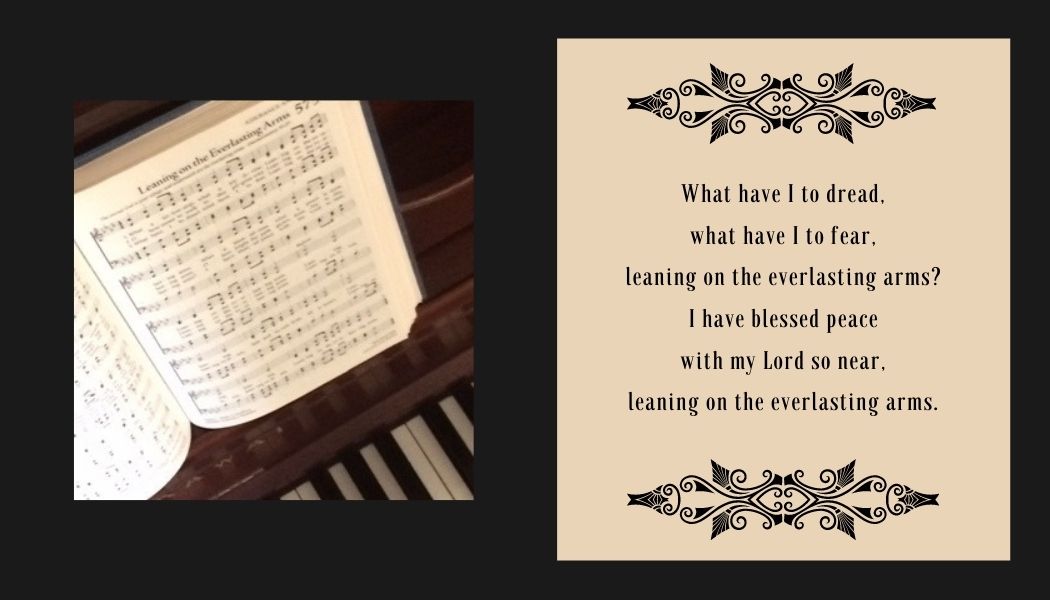
Stanza #3 from “Leaning on the Everlasting Arms” by Elisha A. Hoffman

[1] Elisabeth Elliot, These Bold Ashes, 11.

[2] F. Elaine Olson, Peace for the Journey, 101.

[3] Brother David Vryhof

[4] Kay Arthur, His Imprint, My Expression, 274 and Romans 8:28.

[5] Tasha June, Take Heart, 25.

[6] A. B. Simpson

Photo credits: http://www.pxfuel.com; http://www.piqsels.com; http://www.www.pixfuel.com; http://www.wikimedia.org; http://www.canva.com; http://www.heartlight.org; Nancy Ruegg.

Read Full Post »

More than 1,000 miles east of the Philippines lies the Mariana Trench, the deepest point of earth’s oceans—so deep it reaches into the earth farther than Mount Everest reaches into the sky.  That’s more than 36,000 feet, or close to seven miles.

Not even today’s sophisticated submarines can submerge to that depth without imploding from the pressure of 15,000 pounds per square inch–the equivalent of a full-grown elephant standing on your big toe.

But in 2014 oceanographers constructed a cube-shaped basket, attached it to cables, and dropped it into the depths of the trench.  The descent took four hours. 

They left the basket in place for twenty-four hours, to gather data by camera and hopefully collect samples of life—if it existed at all in such inhospitable conditions.

At the end of twenty-four hours, they used acoustic signals to release the weights that had caused the basket to fall.   With the help of flotation devices, it then rose to the surface.  Against all odds, here is what the scientists found in the trap:

The new species of fish, about eleven inches long, received the name Mariana Snailfish.

Video revealed their activity in the depths—swimming, tail-swishing, foraging—what you’d expect from healthy fish.  They appeared to be perfectly content, unfazed by the bone-crushing pressure of the water around them.

So how do they survive?

God has especially equipped them.  For example, instead of bones snailfish skeletons are made of cartilage that can withstand pressure. These fish also produce certain fatty acids that help cell membranes stay flexible. Even at the molecular level, the muscles of the Mariana Snailfish contain certain enzymes that help them flourish at the bottom of the ocean.

In addition, scientists believe the following characteristics also contribute to their survival: big stomachs,  transparent skin, thinner muscles, and incompletely closed skulls. 

Just as the Mariana Snailfish can withstand extreme physical pressure, we can endure extreme mental, emotional and spiritual pressure—with God’s special equipping.

First, he’ll gladly help us develop resiliency—the ability to handle significant sources of stress. The snailfish manifests several characteristics in the physical realm that can be applied in the spiritual.

A Big Appetite

The large stomach reminds us that those who have a big appetite for God’s truth in the Bible also tend to be survivors; they’re strengthened to withstand the pressures of life.

Abraham Lincoln was just such a person, enduring great pressure from politicians, the press, and the burden of civil war.  He had this to say about scripture:

Transparency

This quality reminds us to be transparent about our concerns–before God and a few good friends. Just telling someone else about our stresses has been proven by researchers to reduce anxiety—a truth scripture has taught all along.[1]

It’s worth noting that just as the Mariana Snailfish lives completely at peace in the midst of physical pressure, we can live completely at peace in the midst of emotional stress as God frees us from worry and trusted, grace-filled friends support and encourage.[2]

Flexibility

These fish are also examples of flexibility—deep down at the cellular level.  You’ve probably heard the maxim, “Blessed are the flexible for they shall not be bent out of shape.”  The flexible person will look to God for the adjustments needed to handle the pressures of life  and search out his guidance for how to cope.

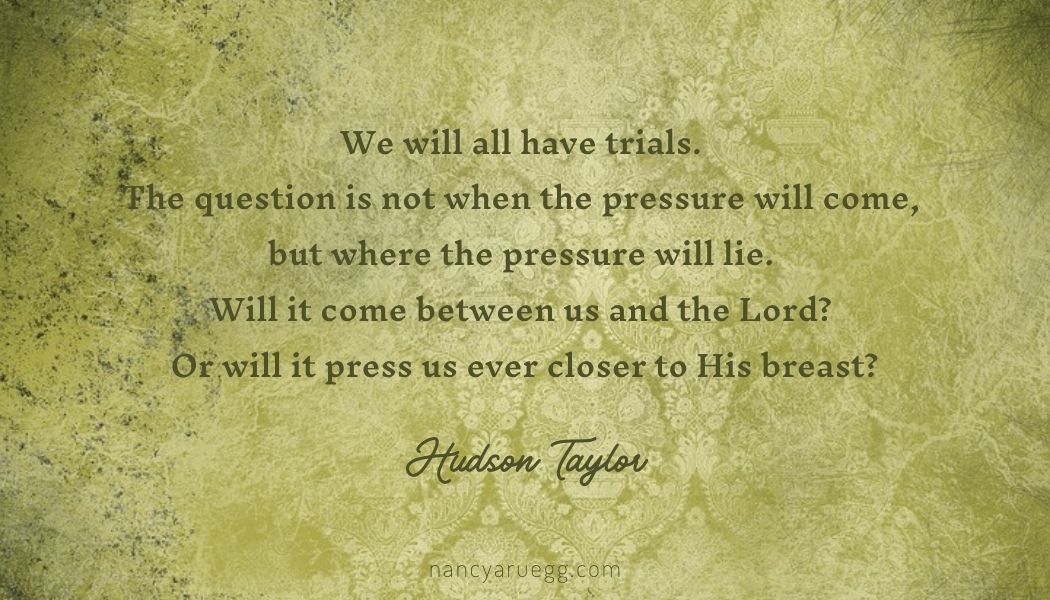
The great missionary to China, Hudson Taylor, would have us remember:

If we allow the stresses of life to accomplish the latter, they will not only be survivable, they will be accompanied by the deep contentment of nearness to God.[3]

Notes:

[1] Ecclesiastes 4:9-10

[2] James 1:2-4; Philippians 4:6-7; Proverbs 12:25

[3] Philippians 4:11-13; Psalm 23:4; Psalm 27:1

Sources:

  1. https://www.washington.edu/news/2017/11/28/theres-a-deeper-fish-in-the-sea/
  2. https://www.nature.com/articles/d41586-019-01158-x
  3. https://theconversation.com/the-deepest-dwelling-fish-in-the-sea-is-small-pink-and-delicate-88991
  4. https://www.natureasia.com/en/research/highlight/12923

Art & photo credits: http://www.wikimedia.com; http://www.flickr.com (3); http://www.rawpixel.com; http://www.pxfuel.com and http://www.maxpixel.com; http://www.piqsels.com; http://www.maxpixel.net.

Read Full Post »

In the cool of morning two weeks ago, I sat on our deck before the sun had cleared the distant trees–much less those close by.   Below, the creek bed of lush foliage loomed dark and still, but above me birds chattered happily while one lone cardinal out-sang them all.  Thankfully the cicadas hadn’t started their ruckus yet.

a bit later in the morning

From several blocks away, commuter traffic already rumbled, and high in the sky the occasional jet roared northward.  Yet the serenity of my immediate surroundings superseded the extraneous noise.

And I sensed God saying to me:

Breathe in the stillness, in spite of traffic din and aircraft drone. 

I’m referring to the serenity you feel in your spirit because of what you see around you:  quiet trees unmoved by breeze, the tranquil creek bed, and the peaceful yard to the east where golden light silently presses against deep shadow—portraits of stillness in spite of the noise.

Be mindful that, as the sun faithfully turns darkness into day, my face shines faithfully upon you with the golden light of peace (1).  I push back the shadows of worry and fear while the noise in the world clamors around you—political factions arguing against one another, loud voices contending for self-serving agendas, terrorists, criminals, and thugs wreaking havoc, and more (Philippians 4:6-7).


Learn from the birds and woodland creatures who find refuge in the thick foliage of bush and tree. You too can find refuge—in me.  In fact, peace grows in direct proportion to time spent with me (2).

Picture yourself surrounded by my protective, calming presence and affirm:

  • I will never stop caring for you or supplying your every need (3)
  • I will never leave you to struggle alone (4)
  • I will never fail you, no matter how the future unfolds (5)

Focus the eyes of your spirit on such promises. Feel their truths calm your heart (6).

Even as the noise of this world grows louder because the end of time draws near, breathe in such peace-generating realities often.  Let them usher you into my Presence, surround you with comfort, and encourage your soul (7).

I long for you to live within the tranquility and protection of my Presence.

*     *     *     *     *     *     *     *     *    

Thank you, Father, for even wanting to be my shelter. Thank you for your loving care expressed in countless ways over the decades.

I know you are trustworthy. I praise you for your unfailing love that will see me through whatever the future holds. In addition, you will provide quiet refuge within my spirit where I can rest in you.

Help me keep focused on you, to live in the shelter of your love no matter the noise of the world.

(1 Peter 5:7; Psalm 9:10; Psalm 32:10;

Isaiah 26:3; Psalm 119:114)

Notes:

  1. Numbers 6:24-26
  2. Isaiah 26:3
  3. Philippians 4:19
  4. Isaiah 41:10
  5. Hebrews 13:5c
  6. Psalm 119:50b
  7. Psalm 119:165

Photo credits: Nancy Ruegg (2), http://www.flickr.com; http://www.canva.org; http://www.dailyverses.net; www. heartlight.org.

Read Full Post »

« Newer Posts - Older Posts »

Sylvia Schroeder

Impressions Becoming Expressions

Mitch Teemley

The Power of Story

Still Traveling

Impressions Becoming Expressions

Living Our Days

Gaining a heart of wisdom

He Said What?!

I'm Patty, and my husband and I are living with our adult son who has autism and epilepsy. I love sharing lessons learned from life around me, especially life with Aaron.

Meditations of my Heart

Impressions Becoming Expressions

Linda Stoll

Impressions Becoming Expressions

Signora Sheila

Where faith meets slow living

Heidi Viars

Finding the Image of God