Feeds:
Posts
Comments

Archive for the ‘Uncategorized’ Category

I don’t listen to my car radio anymore.  The fuzzy sound coming from the twelve-year old speakers is annoying.

But the silence has turned into a gift, a time for prayer and worship.

As I leave our neighborhood and pass the ponds and large live oak trees draped with Spanish moss, I praise God for the beauty of creation, within steps of our home:

  • The glassy surface of the ponds, reflecting blue sky and mounds of clouds
  • The stately trees, with branches spread wide, as if to praise God with me
  • The family of sandhill cranes, stretching their graceful necks to the ground in search of  breakfast
  • The rich green grass, arrayed in dew-diamonds

And with the psalmist I want to add my enthusiastic voice.

“Praise the Lord, O my soul.  O Lord my God, you are very great;  You are clothed with splendor and majesty…How many are your works, O Lord!  In wisdom you made them all, the earth is full of your creatures.  I will sing praise…as I rejoice in the Lord (Psalm 104:1, 24, 33-34).

Oh, yes!

On the way to my hair appointment the other day, that’s exactly what I was doing:  praising God for the beauty around me.

And then, boom.  My mind veered off to a troubling event that happened years ago.  Before I even realized what was happening, my thoughts were swirling around in a cesspool of negativity.

When I caught myself, I said out loud in a firm but frustrated voice:  “LET. IT. GO!”

And just as suddenly as that cesspool opened up, I found myself singing an old chorus from my childhood, but with new words.  Do you remember:

“Hallelu, Hallelu, Hallelu, Hallelujah!  Praise ye the Lord?”

My altered rendition went like this:

Let it go, let it go, let it go, let it go now!

Praise ye the Lord!  (Repeat.)

Praise ye the Lord!  Let it go, now!  (Repeat three times.)

PRAISE YE THE LORD!

Did you figure out the tune?  Do you remember this song?

Well, no sooner did I start singing that silly song, than I was smiling to myself.  My spirit was downright laughing!

And the cesspool drained away.

I don’t know how ugly matters can flood into my mind, even as I’m praising God.  I don’t know how to keep the mess out once and for all.

What I am learning is this:

As soon as I recognize that the floodgates of negativity have opened, my best offensive move to close them up again is praise and gratitude.

And why does it work?

“Satan so hates genuine praise that his fiery darts of discouragement are not effective against us when we respond in praise” – Bill Thrasher  (A Journey to Victorious Praying, Moody, 2003, p. 206).

Evidently, Satan hasn’t given up on me yet; he’s still firing darts of discouragement to render me ineffective.  You know–reduce me to one of those people who revels in self-pity and the pity of others.

I do not want him to score a single point, much less win the victory!

My aim is to adopt David’s attitude:

“My heart is steadfast, O God,  my heart is steadfast: I will sing and give praise” (Psalm 57:7).

Note that David wrote this psalm when he had to flee for his life from murderous King Saul (1 Samuel 22-24).

M-m-m.  Surely David had to avoid a few cesspools of negativity under such circumstances.  Those words, “My heart is steadfast,” may have been spoken through gritted teeth.

But even when praise is more of a forced discipline than a natural delight, God is undoubtedly pleased.  Perhaps even more so.  Like a parent especially appreciative when the teenager loads the dishwasher.   Even when he doesn’t want to.

*     *     *     *     *     *     *     *     *    *

So, here I am, Lord –my toes a bit soiled from getting too close to that cesspool again.  But thanks to you, thanks to the power you’ve given me through praise, it’s only my toes!  Thank you for pulling me away from the brink.  Thank you for turning me around and refocusing me on your glorious wonders.  May “my mouth be filled with your praise, declaring your splendor all day long” (Psalm 71:8)!  Amen. 

(Photo credits:  www.rajschoolofmotoring.co.uk ; http://www.laradunning.wordpress.com ; http://www.istockphoto.com ; http://www.ourhealingmoments.com )

Read Full Post »

Kind words do not cost much. Yet they accomplish much. ~  Blaise Pascal

“Kind words do not cost much.  Yet they accomplish much.”

*     *     *     *     *     *

“Do you wish people to think well of you?  Don’t speak well of yourself.”

*     *     *     *     *     *

The power of a man’s virtue should not be measured by his special efforts,

but by his ordinary doing.”

*     *     *     *     *     *

Do the above quotes remind you of Proverbs in the Bible?  They do have a similar tone, and certainly impart wisdom.  But they were not penned by King Solomon.  Credit goes to Blaise Pascal (1623-1662).

Portrait of Pascal

His name probably sounds familiar.  Chances are, you studied him in school, either in math class or science, maybe both.

Pascal’s first noteworthy accomplishment?  He formulated  a basic theorem of projective geometry, called Pascal’s theorem– at age sixteen!

He invented a calculating device, to help his father, who was a tax collector–when he was only nineteen.

A Pascaline, an early calculator.

(A Pascaline, Pascal’s early calculator)

Another set of experiments produced his famous law of hydraulics.  He contributed important study on the vacuum, on the weight and density of air, and the arithmetic triangle.

Pascal also developed the theory of probability, which is still used today.

And he invented the syringe, the hydraulic lift, as well as the first mechanical computer.  A computer language is named after him.

Such broad giftedness wrapped up in one young man!  But Pascal was actually embarrassed by all his talents.

Even as he was studying mathematics and conducting scientific experiments, Pascal was also exploring spiritual matters.  He and his sister joined a group of Catholics in France, called Jansenists, who believed that salvation was a gift of God’s grace, and could not be earned through good works.

Pascal said, “There is a God-shaped vacuum in the heart of every man which cannot be filled by any created thing, but only by God, the Creator, made known through Jesus Christ.”

In 1654, Pascal was thrown from a carriage when the horses bolted.  The horses died, but Pascal was unhurt.  He felt convinced God had saved him, and he began thinking seriously about what God might want him to do.

That night Pascal had a vision of the crucifixion and experienced a profound renewal in his spirit.  From that point forward, scientific work was of secondary importance in his life.

At that time, Pascal wrote:  “Certainty!  Joy!  Peace!  I forget the world and everything but God!…I submit myself absolutely to Jesus Christ my Redeemer.”

Pascal recorded  this and other statements about his mystical experience on a piece of parchment, then sewed the document into his coat.  There it remained hidden until it was discovered after he died.  Pascal was only thirty-nine years old.

(Pascal’s “Night of Fire” parchment)

Also discovered after his death:  twenty-seven bundles of notes for a major work defending the Christian faith.  These notes were published posthumously and titled Pensees, or Thoughts.  It became a classic of Christian thinking.

 Pascal’s truth-gems include:

“The supreme function of reason is to show man that some things are beyond reason.”

“Happiness is neither without us nor within us.  It is in God, both without us and within us.”

“If our condition were truly happy, we would not seek diversion from it in order to make ourselves happy.”

“People almost invariably arrive at their beliefs not on the basis of proof but on the basis of what they find attractive.”

Perhaps his most famous statement in the Pensees is a short essay titled “The Wager.”  Here are a few excerpts:

“Either God exists, or He does not.  Which will you gamble on?  If God exists, you win everything.  If He does not exist, you lose nothing.  Do not hesitate, then:  gamble on His existence!”

In other words:

Thank You, Father, for wise men and women such as Blaise Pascal, who express themselves in such rare and beautiful ways.  Their words stretch our intellects and stir our hearts. 

Yet Your greatest joy would be for their words to touch our lives so that tomorrow we are nearer Your best for us–words such as that quote about virtue not being measured by special efforts but by ordinary doing.  Help me to remember that it is in the ordinary that I can reflect You most brilliantly.

 (References:  Eerdman’s Christian Classics;  www.christianitytoday.com ; www.ccel.org; www.answersingenesis.org. ; http://www.brainyquote.com ; http://www.goodreads.com ) 

Photo and graphics credits: http://www.smallactsofkindness.wordpress.com ; http://www.wikipedia.com ; http://www.famousquotesabout.com; http://www.conflicted collegechristians.wordpress.com.


Read Full Post »

Mr. Chump thinks he’s pretty smart.

He doesn’t need experts; he already knows what’s best.

He doesn’t need repairmen; he fixes things himself.  Of course, many items turn out to be very poorly made, so parts don’t go back together the way they’re supposed to.  Frequently he’s forced to replace such items.  It never dawns on him how often that scenario occurs.

Mr. Chump also thinks he knows better than God.

“So many things in this world just don’t make sense,” he loudly complains to his neighbor.  “For example, why did God create mosquitoes?  And what’s up with the rain?  Sometimes we get too much, and sometimes not enough.  What would be wrong with a little balance?  And why does winter have to be so cold?

“And look at this tall, strong oak tree here, with all of its tiny acorns,” Mr. Chump continues.  “And then over there, on that puny, limp vine lying on the ground, huge, heavy pumpkins grow.  It makes no sense.

“People talk about an all-wise God in control of the universe, but there are just too many inane situations in nature for me to believe in Intelligent Design, much less God.”

And then an acorn falls on his head.  And his neighbor quietly remarks:

“What if that had been a pumpkin?”

Poor Mr. Chump.  Little does he realize that:

“God is exalted in his power.   Who is a teacher like him?  Who has prescribed his ways for him,  Or said to him, ‘You have done wrong?’  (Job 36:22-23).

Or…

“What a wonderful God we have!  How great are his wisdom and knowledge and riches!  How impossible it is for us to understand his decisions and his methods!  For who among us can know the mind of the Lord?  Who knows enough to be his counselor and guide?…For everything comes from God alone.  Everything lives by his power, and everything is for his glory.  To him be glory evermore (Romans 11:33-36 TLB).

I begin to shake my head in pity for Mr. Chump, who doesn’t understand that God most certainly knows what he is doing.

Then I realize:  there are times when I am no different from Mr. Chump.  Oh, I may not complain that acorns should grow on vines and pumpkins on trees.  But I allow negative thoughts to swirl around in my mind that sound an awful lot like complaining.  Thoughts like…

…This situation is unbearable, Lord.  When will you intervene?

…I don’t know why I keep hoping for such-and-such to happen.  It would appear I’ve been working and waiting for nothing.  Am I wasting my time, God?

…I’m frightened, Lord.  What is going on?  Where are you?

So what can I do to avoid behaving like Mr. Chump?

Paul’s idea in the Romans passage above is a great place to start.  Paul confesses he’s at a loss, that the depths of God are beyond his reach.  So he humbly sits down at the brink, and adores the depth.*

Worship.  That’s the answer.

Move over Mr. Chump.  Make room for adoration, gratitude, and trust.

Amend that.  Move out, Mr. Chump.  Your foolishness is not welcome here.


*paraphrased from Matthew Henry’s Commentary


(photo credits:  www.alexandriavaappliancerepair.com ; http://www.onlineathens.com ; http://www.flickr.com ; http://www.godmeandacupofcoffee.blogspot.com )


Read Full Post »

Think of the last time you . . .

. . . gazed in wonder at a blazing sunset,

. . . marveled at the heavenly aroma of lilacs or orange blossoms, or

. . . listened to a melody that brought tears to your eyes.

God has equipped us with amazing physical senses, enabling us to experience and enjoy the display of his creative genius.

But physical manifestations are not his only outlet of expression.  God also revels in displaying his fullness in our hearts.  The question is:  how do we become aware of such revelations in the abstract realm of our spirits?

A.W. Tozer presents a possibility in his classic, The Pursuit of God.  He suggests we use the senses of our hearts.

The Bible gives us glimpses of how these internal senses might work.

1.  TASTE

David urges us to “taste and see that the Lord is good (Psalm 34:8).  That verse reminds me of a father urging his child to try a bite of some new food.  “Try it—you’ll like it!” he says.

As Christians, we can “try” God—offer him a prayer, believe in a promise, trust in his love and care.  He will not ignore such efforts!  When we come near to God, he will come near to us (James 4:7).

2.  SMELL

Although Psalm 45 was written as a wedding song, perhaps for King Solomon, it also has prophetic qualities, looking forward to the day when Christ and his bride, the church, will be united forever.  Verse 8 mentions the groom’s fragrant robes:

“All your robes are fragrant with myrrh and aloes and cassia,” wrote the psalmist.

Think of a favorite candle with a delightful aroma.  Do you light it and then leave it?  No, more than likely you place that candle in close proximity, so you can breathe in deeply the lovely fragrance and relish the pleasure.

We can draw near to God and relish the pleasure of his presence—the fragrance of his peace, joy, and comfort.

3.  HEARING

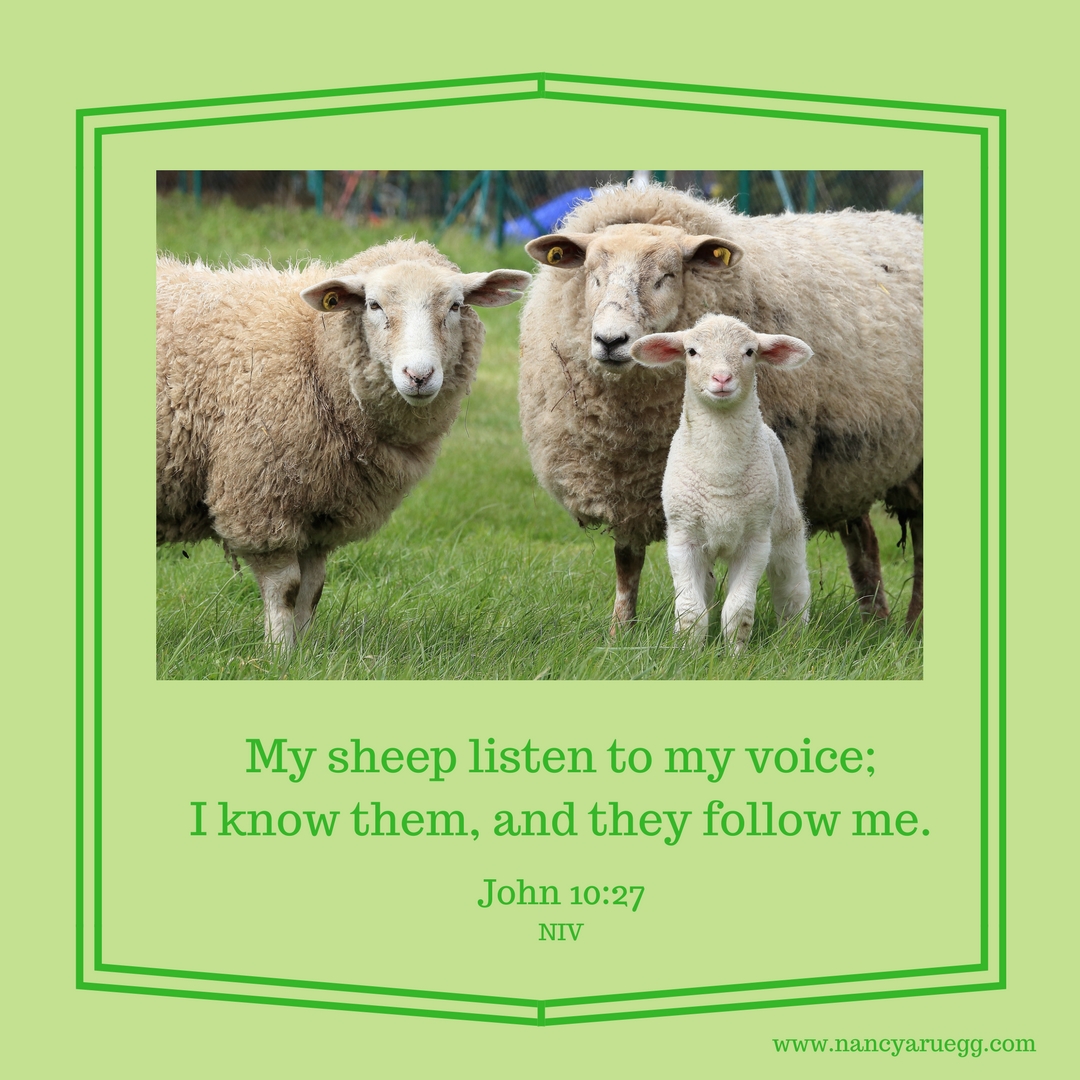
Jesus said, “My sheep listen to my voice; I know them, and they follow me” (John 10:27).

His voice represents wisdom, guidance, encouragement, and security.  Our primary source for those benefits?  The Bible.  But God also speaks to his children in other ways:  through creation, other people, events, even inner impressions.

Times of stillness are necessary.  If every moment is filled with chatter, we will not be able to hear God.

4.  TOUCH

Talk to those who have sought God during a crisis and without exception they will attest to sensing God’s presence with them.  For me, it’s like a holy heart-hug, infusing me with peace of mind and strength of heart.  Not that I am impervious to hurt or discouragement, but the touch of God provides respite and hope.

How?  Through praise and worship, especially as I meditate in the psalms.

5.  SIGHT

“Blessed are the pure in heart, for they will see God” (Matthew 5:8).

The verb tense used here is called “future continuous.”  The verse could read:  “They shall be continually seeing God for themselves.”

I’m reminded of a time Steve and I visited friends at their new home.  We turned off a familiar busy street and were almost immediately surrounded by tall trees.  The homes were set back from the road, barely visible.  The neighborhood was a bit of country set down in the middle of our metropolis.


“Who knew this area even existed?” I said to Steve.  He agreed.

We had both passed that street numerous times, but never saw it.

Isn’t that how it is with God?  We’re so busy, dashing from one task to the next, we never see God at work around us.  We aren’t looking for him so we miss him.

But!  When we are attentive for evidence of God’s presence and power, we will see him!

“When the habit of inwardly gazing Godward 

becomes fixed within us,

we shall be ushered onto

a new level of spiritual life.”

– A.W. Tozer

*     *     *     *     *     *     *     *     *     *

Thank you, loving Father, that you do expand my understanding as I seek to know you more and strive to comprehend more fully the greatness of your glory.  Teach me to use the five senses of my heart to accomplish those goals.  With great anticipation, I look forward to the new levels of spiritual life to which you will guide me!    

(Photo credits:  www.flickr.com (2); www.roshchodeshnewmoon; http://www.canva.com http://www.pixabay.com; www.flickr.com.)

Read Full Post »

Years ago, I taught one year of kindergarten before “graduating” to fourth grade.  One aspect of that year proved especially delightful: the humorous things those five year-olds would say.  I started writing them down, to enjoy again in the future.  The future is now!

For example:

Alice and Lisa spent most of recess one day digging a hole in the sandbox.  “We digged so deep,” Alice said, “we could hear the people in China walking around.”

After giving instructions for an art activity, I asked if anyone had a question.  Lee raised his hand to inquire, “What’s the capital of North Dakota?”

Megan was recuperating from strep throat.  She informed me, “I could have gotten dramatic fever.”

Lauren asked me one day, “Mrs. Ruegg, what’s your last name?”

Such moments were pure fun-shine, lighting up my spirit.

Did you know scientific study is discovering that laughter provides a number of health benefits? (Just as research has proven the benefits of happiness, as we considered in the last post.)

You see, laughter enhances your intake of oxygen as you breathe more deeply.  That, in turn, positively impacts your heart, lungs, and muscles.

Laughter releases endorphins in the brain.  Endorphins are one of the brain chemicals known as neurotransmitters that send electrical signals through the nervous system.  When stress or pain occurs, endorphins are released.  They help reduce the impact of such factors on the brain.  Endorphins lead to a feeling of euphoria, and laughter is a big contributor.

Laughter also…

…reduces stress and generates a relaxed feeling.

…helps dispel depression and anxiety, thus improving our moods.

…fosters connection with other people.

Once again, secular research is proving what scripture has said all along:

 “A cheerful heart is good medicine” (Proverbs 17:22).

But there is no need to invest in joke books, watch humorous You-Tube videos, or teach kindergarten!  You’ll receive a healthy dose of cheer in these ways, too:

Possibility #1:  Spend time with positive people.

Research indicates up to 80% of our laughter is not generated by funny movies or comedians on Sirius radio. Most laughter occurs during everyday comments in everyday social situations.

Another fact proven by research:  most positive people have a sense of humor.  It would stand to reason that Christians should be the most positive people around.  Spend time with positive, Christian people and you’ll no doubt find yourself laughing frequently.

Possibility #2:  Celebrate the small joys as well as the monumental.


Psalm 126:1-3 relates the experience of exiles returning from captivity in Babylon to Israel.  They laughed and sang for joy, feeling as if they were living a dream.

“The Lord has done great things for us,” they cried, “and we are filled with joy” (v. 3)!

Sometimes we, too, laugh and shout spontaneously at the announcement of good news—acceptance to that university of choice, a job promotion, a new baby on the way.

But the Lord does great things for us frequently.  The more I celebrate his goodness, the more joy and laughter I’ll experience.

Just the other day, I was washing dishes (Such a boring, unpleasant chore!) when a large, black and yellow butterfly fluttered by the window.  To be honest, I didn’t laugh or sing out loud, but my heart was overjoyed just the same.  That butterfly felt like a little love-gift from God, making that moment at the sink less burdensome.

Throughout each day, we would do well to follow David’s example:  “I’m thanking you, God, from a full heart.  I’m writing the book on your wonders.  I’m whistling, laughing, and jumping for joy; I’m singing your song, High God” (Psalm 9:1-2, The Message).


Possibility #3:  Revel in God’s presence.

Psalm 16:11 reminds us that God fills us with joy in his presence.  Just conversing with him throughout the day can be incredibly uplifting.

Brother Lawrence, in The Practice of the Presence of God (Whitaker House, 1989), suggests that we tend to stifle joy by spending only brief moments in worship.

“If God can find a soul filled with a lively faith, he pours his grace into it in a torrent that, having found an open channel, gushes out exuberantly.”

That exuberant gushing out of God’s grace, that bubbling overflow of all his glorious riches into our lives—might it take the form of rejoicing laughter sometimes?  I think so.

Karl Barth, that great theologian of the twentieth century, might agree with me.

He said:

 “Laughter is the closest thing to the grace of God.”

(photo credits:  www.marciaballestero.com ; www.sciencemadefun.net ; www.positivemindconsulting.com ; www.sallyandsam.blogspot.com ; www.powerfulintnetions.org ; www.izquotes.com ) 


Read Full Post »

Not by Sight: A Fresh Look at Old Stories of Walking by Faith  -             By: Jon Bloom, John Piper

Imagine…

…the woman caught in adultery (John 8:2-11), walking home after her encounter with Jesus.  What must she have been thinking?

…Zacchaeus, the despised tax collector, coming to your door to return the money he owed you—plus four times more (Luke 19:1-10).  What would have been your reaction?

…how it felt to be Joseph Barsabbas, the candidate not chosen to replace Judas Iscariot (Acts 1:26). How might he have responded?

These are just three out of thirty-five scenarios Jon Bloom explores in his book, Not by Sight: A Fresh Look at Old Stories of Walking by Faith (Crossway Books, 2013).    Indeed, they are fresh, creative takes on familiar Bible stories.

And although quite short, just three pages or so in length, each vignette still gives plenty of food for thought. I found them to be compelling, insightful, and instructive—encouraging my walk of faith.

One of my favorites is “Staying Faithful When Things Get Worse.”  Jon imagines what Joseph must have been thinking as a falsely accused prisoner in Egypt.  For at least twelve years he endured the hellish conditions and tormenting hopelessness.  Those should have been the best years of Joseph’s life—his youth.  Many would have said, “What a waste.”


Imagine year nine, Jon suggests.  Surely Joseph fought against depression and discouragement, even as he recited to himself the promises of God.  No doubt he reviewed in his mind the stories of his ancestors—Abraham, Isaac, and even those of his own father, Jacob.

Jon Bloom imagines Joseph affirming repeatedly that, just as God had been faithful to them, he would be faithful to Joseph.  Each patriarch had faced situations that seemed impossible.

Abraham and Sarah were much too old to have a child.

The older brother, Esau, would never serve his younger brother, Jacob–even if the age difference between twins was slight. That promise of God went against all tradition and logic.

Jacob was a poor runaway.  He couldn’t possibly become a wealthy herdsman.

But each man and his family had been blessed, just as God had promised.  Why?  They remained faithful.  Yes, they made mistakes and failed to obey God on occasion.  But they never turned their backs on him, even when circumstances turned bleak.

Jon Bloom also imagines Joseph reaffirming his faith in God and his willingness to wait for him to act.  Meanwhile, he would continue to honor God, even within prison walls.

As Jon brings the vignette to a close, he shares fresh application:

Even in the care of Almighty God, circumstances may get worse, not better.  “Faith in God’s future grace for us is what sustains us in those desperate moments,” Jon says.  Our hope is best placed in God, in his promises, and especially the assurance of eternal bliss in heaven yet to come.

Jon Bloom perfectly fulfills the role of a writer, as defined by Anais Nin, American author of the twentieth century:  “The role of a writer is not to say what we all can say, but what we are unable to say.”

Page after page, this is what Jon Bloom did for me.  No doubt he will do the same for you.

(Art Credits:  www.angieblattner.theworldrace.org ; www.illustrationartgallery.com )

Read Full Post »

Years ago in my hometown, when the community pool was built, Dad often took my brother and me swimming.  I marveled at the way my father could slice the water with a smooth dive, roll over on his back, and float.  Without even moving his arms and legs, he could remain on top of the water.  Amazing!

When I tried it, I sank–immediately.

“Daddy!  Show me how to float!” I cried.

First, he helped me to lie flat-out on top of the water.  His hand gently supported the middle of my back.  And then Dad said the strangest thing.

“Now, relax.”

What?!  Every fiber of my being was tense.  I just knew that if I relaxed, my nose would instantly fill up with heavily chlorinated water.

But I trusted Dad.  He wouldn’t trick me into a catastrophe.  So I tried to relax.

Easier said than done.  Try as I might, my body would not relax.  My focus was more on the possibility of sinking than it was on the one thing that would keep me afloat.

“That’s OK,” Dad probably said.  “This is just your first try.  Keep practicing, and all of a sudden you’ll get the feel of it.  That’s how it happened for me.”

This experience came to mind as I read Charles Spurgeon’s comment on an excerpt from Isaiah 30:15.

First, the scripture-excerpt:  “In quietness and confidence shall be your strength.”

And now, the Spurgeon quote:  “We are sinking by our struggles when we might float by faith.”

But learning to relax in the spiritual realm is just as difficult as it was to relax on my back in that swimming pool.  It is so much easier said than done–at least for me.

Why is fretting and worrying my default mode?  It’s so pointless.  Resting in God is the only way to hope and peace (Psalm 62:5).

The big question is how.  How can I relax into quiet confidence that will be my strength, and keep me afloat?

Perhaps the answer is in that word practice.  As I reaffirm over and over God’s glorious attributes, as I review His wonderful promises, my focus will change and my spirit will learn how to rest.

What attributes might be wise to focus on?  King David included a number of them in his glorious psalm of thanksgiving, found in 1 Chronicles 16:8-36:

  • Power (vs. 9, 12, 14) – He is able to work wonders.
  • Integrity (v. 15) – He is totally trustworthy.
  • Holiness (v. 29) – He is absolutely pure and righteous, totally set apart from anyone else in the universe.
  • Goodness (v. 34) – His blessings to us are bountiful and frequently displayed.
  • Love (v. 34) – Not based on our paltry deeds, but on his kind and gracious nature.

And what promises would build my confidence?  Here are three for a good start:

  • “As for God, his way is perfect; the word of the Lord is flawless.  He is a shield for all who take refuge in him” (Psalm 18:30).
  • “My God will meet all your needs according to his glorious riches in Christ Jesus” (Philippians 4:19).
  • “I will lead the blind by ways they have not known, along unfamiliar paths I will guide them; I will turn the darkness into light before them and make the rough places smooth.  These are the things I will do; I will not forsake them” (Isaiah 42:16).

Notice:  He promises protection, provision, and guidance.  Everything we might face is covered.

Thinking back to those summer days at the community pool, I’m reminded of two things that happen when we float:  1) Our eyes are focused upward.  2) Our ears cannot hear very well, situated as they are beneath the surface.  Noise is silenced.

Those two things need to happen in the spiritual realm if we’re to float by faith.  Our eyes need to be focused upward on our powerful, loving, promise-keeping God, and our ears need to be stopped to the voices of worry.

The former will undoubtedly take care of the latter.

(Photo credits:  www.sciforums.com ; www.dailyencouragement.net ; www.flickr.com ; www.confessionsofasmowflake.com )

Read Full Post »

Group of sparrows.

Group of sparrows. (Photo credit: Wikipedia)

“Are not two sparrows sold for a penny?  Yet not one of them will fall to the ground apart from the will of your Father…So don’t be afraid; you are worth more than many sparrows” (Matthew 10:29, 31).

Why did Jesus choose sparrows for this illustration?

They’re so small and common.  (Have you ever felt unimportant and ordinary?)

Sparrows were of such little value in Jesus’ day, they were sold two for a penny.  The poor would buy them to eat—a cheap source of protein.

Nobody much cared about sparrows in Bible times; most folks still don’t care today.  They’re just drab little birds we see every day—hardly worth our attention.

But the smallest, drabbest sparrow doesn’t slip by God’s attention.  Not one can fall to the ground without God knowing.  And if he knows and cares about the sparrows, he certainly knows and cares about each of us.  Verse thirty-one makes it clear:  “You are worth more than many sparrows.”

There’s a modicum of comfort in the knowledge that God sees our situations.  To be honest, though, the fact that he just knows isn’t all that helpful.

Better yet is the news that not one sparrow can fall without God’s consent.

Nothing happens to us that hasn’t first received the stamp of approval from God Almighty.

“Wait a minute,” you might say.  “If a sparrow falls, he’s likely to die.  Not much comfort in that either– knowing that God gave his OK!

Here’s what I want to embrace:  we have the mind of Christ (1 Corinthians 2:16b), right?  When it’s my turn to fall off the branch, I want to be able to affirm, “Yes, Lord.  Whatever you think is best is A-OK with me.  I know I can trust you because you love me.  And I rejoice in the promise that whatever happens, you will bring good from it.”   (Remind me of that truth when I start to wobble, will you?)

But here’s the best news:  Notice that Jesus didn’t speak of God as some detached, omnipotent being.

He said, Father.

It is our gracious and kind Heavenly Father who tenderly watches over his little sparrows.

Red Bike

Red Bike (Photo credit: swanksalot)

Think of a loving mother who witnesses her small son falling off his bike.  When he gets up with a scraped knee, she won’t just say, “Oh, I saw that happen, Johnny.  I’m so sorry you’re hurting.”  Small comfort in that.

No, that mother will run to her son, hold him in her arms, talk to him reassuringly, take him to the house, and patch him up.  That’s just what a loving parent does.

When trouble comes, our loving Heavenly Father is right there with us, just like that mother.

He holds us.  Isaiah wrote, “He gathers the lambs in his arms and carries them close to his heart” (40:11).

He talks reassuringly to us, especially through His Word.  With the psalmist, we can pray, “Strengthen me according to your word” (Psalm 119:28b).

God is our refuge and sanctuary; he is our home, our dwelling place. (Psalm 91:1-2).

And God patches us up; he restores our souls (Psalm 23:3).  He renews our energy, purpose, and hope.

So, “Don’t be afraid,” he says. “If I take care of the sparrows, I will most certainly take care of you, because you are worth more than many sparrows.”

See? You’re not small, unimportant, and ordinary–not at all!

*     *     *     *     *     *     *     *     *     *

Thank you, Lord, for not playing favorites.  What glorious news that each of us is precious to you!  Thank you also for being an attentive God who tenderly watches over us.  And especially thank you for being an involved God, always acting on our behalf, and always for our good.  We are in awe of you, our loving, gracious Heavenly Father!    

Read Full Post »

Why is it we’re never satisfied?

As kids, we could hardly wait to grow up—to stay up late, drive a car, and never have to go to school.

As adults, we sometimes wish we were kids again—to play all day, take a nap, and never have to go to work.

As kids, time seemed to move slowly—especially when looking forward to a special event.  Remember how L-O-O-O-N-G it took for Christmas to come?

As adults, time seems to move extremely fast—especially as Christmas approaches and the cards haven’t been sent, the gifts haven’t all been purchased yet, and the tree still sits in a bucket of water on the back porch.

We might go shopping and come home with a new bedspread and pillows.  For a while we’re delighted over the difference those items make to the decor.

In no time, though, our focus shifts from those lovely things to other needs we identify around the house.

Reminds me of what oil tycoon, John D. Rockefeller (1837-1939) said.  He was asked, “How much is enough?” And he answered, “A little bit more.”

Español: John D. ...

John D. Rockefeller, ca 1875

This from a man with an estimated fortune of $1.4 billion.  In fact, Rockefeller was one of the wealthiest persons of all history.  Not even Bill Gates or Sam Walton come close.

But before we dismiss Mr. Rockefeller as selfish and greedy, it’s important to know he was generous with his fortune.  His financial records indicate that $550 million were donated to schools, health organizations, scientific research, and the arts.

But his comment (perhaps spoken with a twinkle of humor in his eye) speaks to the attitude of many.  We believe that with just a little more, we’d be content.

That’s a lie.

So what is the truth of the matter?  What’s the real reason we’re never satisfied?

The answer might be that contentment is the result of our focus.  Our attitude is impacted by what occupies our thoughts.  Therefore, we would be wise to:

 1.  Stay focused on who we are right now, and where we are right now.  Every age and stage has its advantages and disadvantages.

2.  Stay focused on what God is providing, what we have currently. 

3.  Stay focused on God’s attributes and blessings.  “The fear of the Lord leads to life:  then one rests content, untouched by trouble” (Proverbs 19:23).

To fear the Lord means to have reverence and awe for him.  Such an attitude leads to many benefits in life, including:

  • peace of mind, because our powerful and loving God is in control
  • joy of heart, because of the pleasure in his bountiful blessings,
  • contentment of spirit, because we’ve already received so much.

That’s how I want to live—totally satisfied, in complete serenity, as a worshipful tribute to my gracious God.

*     *     *     *     *     *     *     *     *     *

Thank you, Heavenly Father, for the gifts of serenity and satisfaction, when I focus on you.  May my days be filled with your praise!

Photo credits: http://www.flickr.com; http://www.rawpixel.com; http://www.commons.wikipedia.org; http://www.wallpaperflare.com (2).

Read Full Post »


“These are the days when the Christian is expected

to praise every creed except his own.” 

—  G. K. Chesterton


Indeed.  Christians are often labeled narrow-minded, because we uphold what the Bible teaches:  that faith in Jesus is the only way to heaven.  We are fair game for pundits to disparage and comedians to ridicule.

This fellow, Chesterton, is right on.  Christians are expected to be kind to others; others are not always kind toward us.

A person might think Chesterton is a current commentator on American culture, but he was born in London in 1874, and died in 1936.

Do you know him?

G. K. did not start out to become a writer, much less a defender of the Christian faith.  He set out to become an artist.  But his first job upon leaving art school was to read manuscripts for a publisher.

In his spare time, he tried his own hand (and mind) at writing.  Several essays were published in magazines, and it wasn’t long before two newspapers began publishing his column.

Over a period of thirty years in journalism, G. K. wrote 4000 essays.  Dale Ahlquist, President of the American Chesterton Society, points out the immensity of that number: you would have to write an essay every day for eleven years to reach that total.


Mr. Ahlquist adds to the marvel of this feat by reminding us: every one of Chesterton’s essays was an example of fine journalism—often witty and thought-provoking at the same time.  For example:

“When we were children we were grateful to those who filled our stockings at Christmastime.  Why are we not grateful to God for filling our stockings with legs?” 

But unlike many journalists, G. K.’s writing talent swept across numerous genres.  During his lifetime, he wrote hundreds of books, both fiction and nonfiction, two anthologies of poetry, five plays, and over 200 short stories.

It’s no wonder he’s credited with being one of the most prolific authors of his time.


While his career as a writer was burgeoning, Chesterton married Frances Blogg.  She was an important influence, helping to turn him from his agnostic beliefs to embrace Christianity.  His writings often reflected his faith.  For example:

“Christianity has not been tried and found wanting; it has been found difficult and left untried” (from What’s Wrong with the World).

“There are those who hate Christianity and call their hatred an all-embracing love for all religions.” – (from Illustrated London News, 1/13/06)

“…the curtness of the Ten Commandments is an evidence, not of the gloom and narrowness of a religion, but, on the  contrary, of its liberality and humanity. It is shorter to state the things  forbidden than the things permitted: precisely because most things are permitted, and only a few things are forbidden.” – (from Illustrated London News, 1-3-20)

Even after his death, Chesterton’s influence lived on.  One of his books, The Everlasting Man (1925) was instrumental in leading C. S. Lewis from agnosticism to Christianity.

An evangelical Protestant scholar has said, “There has not been a more articulate champion of classic Christianity, virtue, and decency.”

Here are a few more examples of G.K.’s thoughtful writing:

“One sees great things from the valley; only small things from the peak.”

“I would maintain that thanks are the highest form of thought, and that gratitude is happiness doubled by wonder.”

 “If I can put one touch of rosy sunset into the life of any man or woman, I shall feel that I have worked with God.”

 Words of wisdom?  I think so.  And if…


 …“he who walks with the wise grows wise” (Proverbs 13:20a), then we have certainly benefited from spending a few moments with G. K. Chesterton.


(Photo credits:  www.saltandlighttv.org , www.catholicnewsagency.com , www.lifesitenews.com , www.biblegodquotes.com)


Read Full Post »

« Newer Posts - Older Posts »

From the Inside Out

Impressions Becoming Expressions

Sylvia Schroeder

Impressions Becoming Expressions

Mitch Teemley

The Power of Story

Still Traveling

Impressions Becoming Expressions

Living Our Days

Gaining a heart of wisdom

He Said What?!

I'm Patty, and my husband and I are living with our adult son who has autism and epilepsy. I love sharing lessons learned from life around me, especially life with Aaron.

Meditations of my Heart

Impressions Becoming Expressions

Linda Stoll

Impressions Becoming Expressions

Signora Sheila

Where faith meets slow living

Heidi Viars

Finding the Image of God