Feeds:
Posts
Comments

Archive for the ‘Thanksgiving’ Category

22690681597_c01dc3a625_b


Lots of folks will be trekking to the grocery store today or tomorrow, picking up ingredients for their traditional Thanksgiving feast: turkey, dressing, mashed potatoes, cranberry sauce, pumpkin pie, and more.

But that’s probably not what the Pilgrims and their Indian guests ate in 1621. According to the two primary sources that survive, their feast included wildfowl (wild turkey among them, for sure, but those taste nothing like a Butterball), waterfowl, cornbread or corn porridge, and venison. Perhaps vegetables from their gardens were also on the menu, but they received no mention.

Soon after that first Thanksgiving, our American forefathers added a custom to the meal: putting five grains of corn at each place around the table as a memorial to those first Pilgrims—a people of strong faith who had faced persecution and even imprisonment in England.

So the small band left everything—extended family and friends, jobs, homes, and goods—to establish a colony for the glory of God and the advancement of the Christian faith (according to the Mayflower Compact).


brooklyn_museum_-_embarkation_of_the_pilgrims_-_robert_walter_weir_-_overall

“Embarkation of the Pilgrims”

by Robert Walter Weir


You may remember a late departure from England delayed their arrival in America by two months. To complicate matters further, they were blown off course by a storm. Instead of arriving at Jamestown, Virginia where other colonists already lived, they landed at present-day Massachusetts.

In numbing cold and deep snow the Pilgrims began the overwhelming task of building a colony from scratch. Shelter was their highest priority, and construction of a common house began immediately.

At night the men stayed on land while the women and children returned to the Mayflower, thanks to the captain, Christopher Jones, who anchored the ship a mile offshore. Jones knew that if he left, they would all die.

But even the ship offered little relief from the frigid temperatures. To keep their children warm, the mothers would actually sleep on them.


290px-mayflowerharbor

“Mayflower in Plymouth Harbor”

by William Halsall


It’s no wonder that severe illness decimated the Pilgrims. At one point, only seven colonists were strong enough to care for the others. Half of the original 102 colonists died, many of them the women who had protected their children from the bitter cold. Most of the children survived.

The trial of rampant illness was compounded by the lack of food. During that first dreadful winter in America, corn had to be carefully rationed. Each person received just five grains at a time.

And thus began the custom among early settlers to put corn kernels at each place for Thanksgiving—in memory of those resolute and persevering men and women who suffered so much to live for the glory of God and share the good news of Jesus with the American Indians.


mtmznzi0ota1ndy3mjkymjkx

William Bradford


Sometime later, Governor William Bradford of the Massachusetts colony wrote, “We have noted these things so that you might see their worth and not negligently lose what your fathers have obtained with so much hardship.”

*     *     *     *     *     *     *     *     *     *

Forgive me, Lord God. I do forget these things and become focused on the delight of gathering with family and friends on Thanksgiving Day. I neglect to soberly note the worth of the Pilgrims’ sacrifices, that they might live for your glory. Their perseverance, courage, and passion put me to shame.

Help me to be a voice of remembrance to those around me. May we not negligently lose what the Pilgrims and other heroes/heroines have obtained for us with so much hardship.


Sources:


The Higher Happiness by Ralph W. Sockman (1950), p. 45.

The Founders’ Bible by Shiloh Road Publishers, pp. 95-104.

http://www.eagleforum.org; “Thanks-living Time–The Extraordinary Example of the Pilgrims.”


(Photo & art credits: http://www.flickr.com; http://www.wikipedia.org (2); http://www.biography.com.)


 

Read Full Post »

For a number of months, the pastoral staff of our church has been preaching from the gospel of Mark. Yesterday the text was chapter fifteen, the account of Jesus’ trial and crucifixion.

Pastor C. graphically described the flogging, the nailing of limbs to the cross, and the slow death by asphyxiation so we might better grasp the appalling circumstances of Jesus’ death and appreciate, at least in part, the supreme sacrifice he endured for us. Tears kept burning my eyes as I contemplated Jesus’ physical pain and emotional suffering—for me.


jesus-crucifixion


Next Sunday, the sermon text will come from chapter sixteen of the same gospel—the description of astounding events surrounding Jesus’ resurrection from the dead, his escape from a sealed tomb, and his sudden appearance to a group of men in a locked room.  (Further details are described in the other gospels.) The wonder and splendor are in sharp contrast to the preceding horror.


1705097-bigthumbnail


Now according to the traditional church calendar, such sermons in November are terribly out of sync. Usually we save the sobering remembrances of Christ’s crucifixion for Lent. And it’s Easter morning we celebrate “He is risen! He is risen indeed!” with euphoric joy.

But my husband, Steve, noted after church, “It might seem strange to some people that we’d focus on Jesus’ death and resurrection at this time of year, but actually, I see it as the perfect time. Next week is Thanksgiving Sunday.   And of all the things we have to be thankful for, nothing is more precious than Christ’s sacrifice in our place and his gift of eternal life.”


0bd29ca7ead2ae25d9149affae57cd32


So true, I thought and nodded in agreement. How dreadful my life would be if Jesus had not taken my sin upon himself and provided the God-enhanced life I’ve enjoyed all these years.


56a5f1acb40e811ef83713585c1324ba


“I also find it fascinating,” Steve continued, “that Mark fifteen would just happen to be the text for today. Pastor C. couldn’t have known months ago when he planned this series that a lot of people would be distraught and even angry about the presidential election. Other issues have folks divided too—from racial tension on the national level to family concerns on the personal level.

“But there is one central fact that should overshadow everything else and help us keep a proper perspective: Jesus’ death and resurrection and all the incredible implications.”


untitled


Smart man, that Steve.

The crux* of our lives is the cross, because it put on display the wondrous love of our God and Savior (John 3:16) and his omnipotent power over sin and death (1 Corinthians 1:18).  All matters of our day-to-day lives are secondary — including disappointments, irritations, and frustrations.


*     *     *     *     *     *     *     *     *     *


Oh, Jesus, keep me mindful it was my sin you took upon yourself that dark Friday. Every selfish deed, every outburst of anger or hurtfulness, every unkind, impure, or prideful thought—you paid the price.

That price included torn flesh, spilled blood, and excruciating pain beyond my ability to imagine. Yet such unthinkable suffering resulted in hope and healing for me.

Remind me to let go of  petty irritations, and prideful self-centeredness, to live instead in continual gratitude, awe, and celebration of you, precious Savior!


 *In Latin, crux means cross.


(Art & photo credits:  www.christiannews.com; http://www.desktopnexus.com; http://www.pinterest (2); http://www.azquotes.com.)

 

Read Full Post »

every-day-we-should-hear-at-least-one-little-song-read-one-good-poem-see-one-e-403x403-nk4ndt


(“Every day we should hear at least one little song,

read one good poem, see one exquisite picture,

and, if possible, speak a few sensible words.”

–Johann Wolfgang von Goethe, 1749-1838)

Author and lawyer, von Goethe, was much too easily satisfied.

Yes, a day without music would be dreary.

Poetry does feed the soul and intellect in ways that prose does not.

An exquisite picture does lift the spirit.

It’s also true that sharing a few words of wisdom can be satisfying.

Yet, is that enough for one day?  What about:

  • Offering the music of “thank you” or “you go first” or “I love your smile?”
  • Reading and pondering several verses of scripture?  That will feed the soul and intellect even more than poetry.
  • Creating an exquisite picture of kindness by finding ways to be helpful and engaging?  Such artful living often impacts people more than we realize.
  • Speaking a few sensible words of encouragement, and feeling uplifted ourselves?

But beyond von Goethe’s suggestions of music, poetry, art, and wisdom are many more possibilities for a day full of delight.  We can:


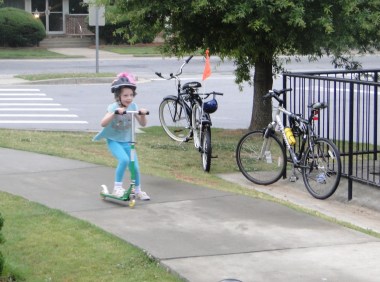
scooter-girl


  • Savor a pleasurable moment or memory–better yet, when the two happen back-to-back.  Just today a neighbor girl whooshed by on her scooter, and I was reminded of happy, long ago days doing some whooshing of my own on bicycles or skates.  I smiled.
  • Make a discovery or learn something new.  Read.   Listen.  Think.  Recently in C. S. Lewis’s The Weight of Glory (Eerdman’s Publishing, 1949), I came across this statement:  “Obedience is the road to freedom, humility the road to pleasure, unity the road to personality” (p. 36).  Well deserving of some careful pondering, I think.
  • Celebrate at least one small miracle of nature:  a magnificent cloud formation, bright green growth on the tips of evergreen boughs, a cardinal’s song echoing through the woods.
  • Engage the creative side:  draw (even if it’s doodling), paint (even if it’s adding color to someone else’s art), or write (even if it’s in a journal that no one else will see).
  • Offer a smile–wherever we are.  “Every time you smile at someone, it is an action of love, a gift to that person, a beautiful thing.  Peace begins with a smile” (Mother Teresa).  Better yet, add words–a cheerful greeting, a compliment, a bit of gratitude.


1d01b85e5982b13020291f2742000bdc


  • End the day by counting blessings.  Drift off to sleep in an attitude of prayer–a prayer such as this:

*     *     *     *    *     *     *     *    *     *

Thank you, Father, for your gifts that offer daily delight–gifts like the warm pleasure of childhood memories bubbling to the surface unexpectedly, discoveries that challenge the mind and inspire the soul, and miracles of nature that amaze.

Thank you, oh God, for creating us in your image, including the ability to imagine, design, and produce.  Thank you for the deep satisfaction of the creative process.

And thank you for the astounding privilege to be a positive influence in this world, an ambassador for your Son.


50702841368e60c6ee2fb6cc62167f23

(Art & photo credits:  www.doublequotes.net; http://www.beactive.com; http://www.pinterest.com (2).

Read Full Post »

41pJcI5AU1L


“Haste makes waste,” Benjamin Franklin wisely observed. And most of us would agree. When we hurry, we spill things, drop things, forget things, trip over things.

But Ben’s proverb may be true in a way he never intended.

Haste makes waste of the beauty around us, the joy and goodness to be found in the present moment.

 If we’re not careful, we rush right by such priceless splendors as:

  • Tiny leaves courageously reaching for sun in spite of snow


tulip-spears-in-snow


  • Evergreens encrusted with raindrop jewels


IMG_0545

  • The first butterfly of spring (‘Just spotted one like this yesterday!)


white butterfly


  • An impromptu hug from family member or friend


hug


  • A wisp of a bug living between flower bud and leaf


IMG_0564

(See it?  On the left side of the bud!)

  • A child’s giddy grin, wreathed in chocolate


boy-709943_960_720


But how do we become people who live aware—vigilantly watchful for beauty, goodness, and joy?

Ann Voskamp would say: begin a list of wonders. Many of you know she challenged herself to live aware and record One Thousand Gifts (the title of her book about the quest and its impact on her life). Somehow the act of collecting and writing helps us become more intentional.

Spring is the perfect time to practice living with joyful awareness.

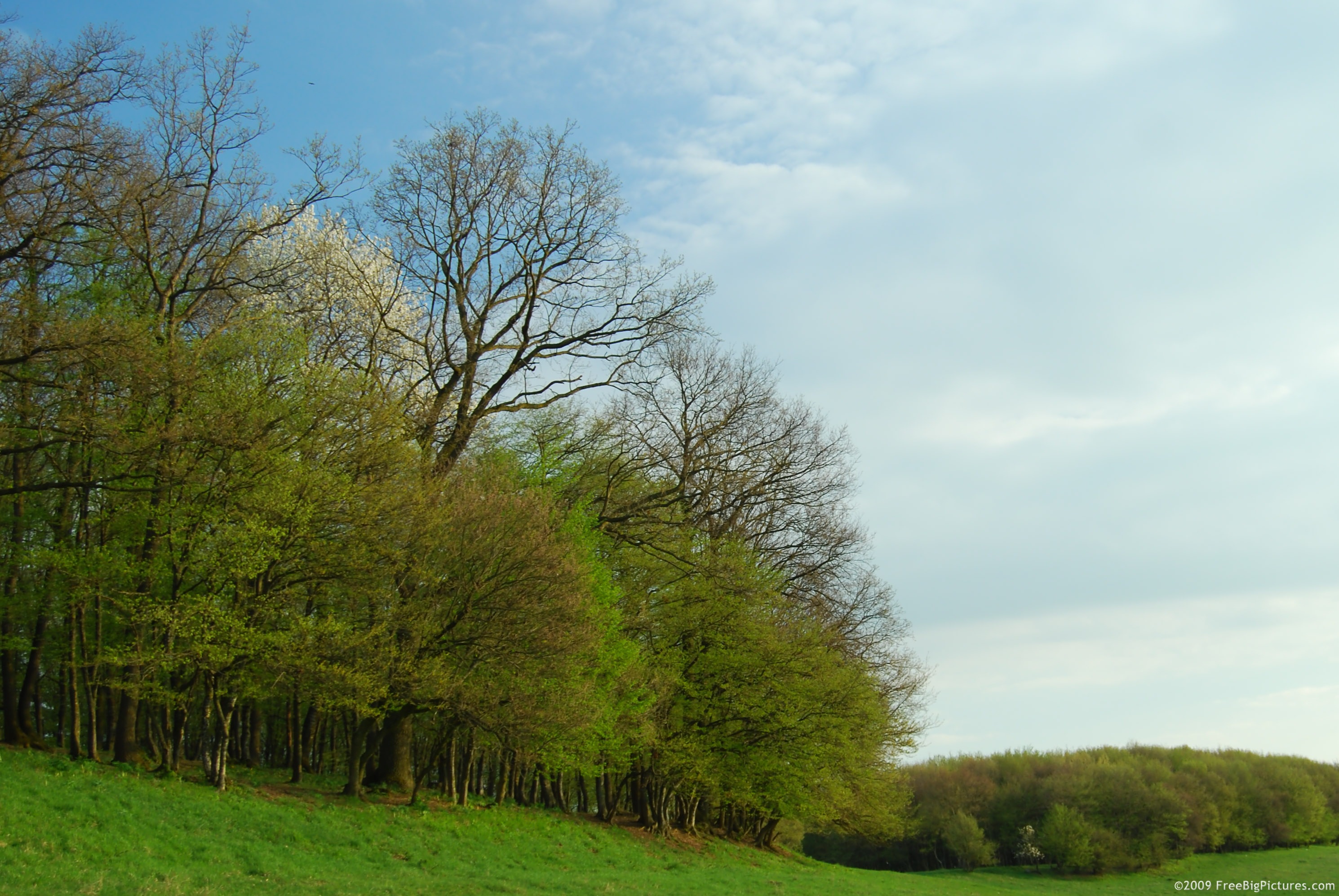
Have you noticed the greening of the landscape, beginning at ground level with the grass, and working skyward through bush and shrub? The largest trees will be the last to unfurl their leaves in a grand display of emerald luxuriance.


spring-forest


Perhaps even more glorious is the splendor of the magnolia, dogwood, and redbud in full bloom. Their individual beauty can only be surpassed when clustered together.


50c5394d8fb4fdfd00476cf7b7962bd9


And of course, the blooming of flowers, the songs of birds and the scampering of squirrels give us much to savor.

But beautiful or joyful as these may be, what’s the value of paying attention to such details?

Heightened awareness of all these gifts (and more) fosters gratitude.   And gratitude positively impacts the way we see the world and experience life.

Of course, appreciation in itself is rather meaningless. How silly to say “thank you” to the air. No, gratitude must be expressed to someone. And all we have, all we enjoy, is due to the loving kindness of a singular Someone—our benevolent Father.

When we express our thankfulness to him, we’re ushered into his presence.  Yes, right into the throne room of Almighty God.

Now you may have been wondering as you skimmed this post, When is she going to get to the part about “How to Be Rich—Today?” (That was the title, in case you missed it!)

Here’s what we can do:

Focus on what we already have, not on what we lack.


111123-580x386


“It is only with gratitude that life becomes rich.”

(Dietrich Bonhoeffer)

You see?  We’re already rich.

*     *     *     *     *     *     *     *     *     *


Thank you, God, for countless, precious blessings every day—blessings that make me smile or gaze in awe at the wonders you’ve created. May your praise always be on my lips, as I seek to live aware of your bounty around me. And may my gratitude bring joy to your heart also.


(Art & Photo Credits:  www.amazon.com; http://www.tulipsinthewoods.com; Nancy Ruegg; http://www.scalar.usc.edu; http://www.hookedonthebook.com; Nancy Ruegg; ww.pixabay.com; http://www.freebigpictures.com; http://www.pinerest.com (2).

Read Full Post »

00000000000000000000000001-Thanksgiving-dinner

“You prepare a table before me, 

In the presence of my enemies” 

–Psalm 23:5


You, oh God, are my Host at the table of life!

You have prepared for me a veritable buffet of experiences and opportunities. Some have been delicious and delightful, created (it seemed) solely for my enjoyment—events such as close encounters with birds or butterflies, an afternoon of laughter and reminiscing with old friends, or a spontaneous hug from a toddler.

Other experiences you’ve prepared because they were good for me: challenges, changes, and uncertainties.   You wanted to build strong character within me and grow maturity in my spirit.

However, there have been times when I wondered what you were serving! Forgive me for saying so, but occasionally you’ve mixed together circumstances that appeared as distasteful as pickles and cream cheese. Remember those times you put us in a new community long before I was ready, and how I struggled to let go of the familiar and loved?

Well, just as I never suspected how delicious pickles, cream cheese (and a bit of corned beef) could actually be, I also never suspected how much the people and experiences in a new community would greatly enhance my life.

I’ve also noticed that some of the dishes being served aren’t just for my sake, but for others at the table—especially the younger ones. Take Brussel sprouts, for example. If the children see me eating my portion, perhaps they’ll be inspired to eat theirs, too. In like fashion, as a participant at the table of life, You allow me to join with You in fulfilling larger, far-reaching purposes (way beyond Brussel sprouts)!

Even when enemies such as trial or pain try to swoop in and spoil the celebration, I can rejoice because You are with me, to strengthen and uphold. You’ve given me Your Word, where I can feast on Your attributes and promises. By your power, those enemies will be held at bay—outside the banquet room!

And on this Thanksgiving Day, as every cook prays his/her feast will turn out right and good, I praise You that everything You prepare for me is right and good.

Thank you, Jehovah-Jireh, my Provider, for your plenteous supply of righteousness and goodness in my life.

Happy Thanksgiving, Father!


(Photo credit:  www.thanksgivingdinnermenu.net.)


Read Full Post »

quote-there-is-no-sweeter-manner-of-living-in-the-world-than-continuous-communion-with-god-brother-lawrence-79-6-0625


“That does sound wonderful,” a young mother says, “but Brother Lawrence was a monk, working in the garden or kitchen all day. He could pray as he went about his chores. I work in a noisy office and then deal with three noisy kids when I get home. How can I experience continuous communion with God?”

Her dilemma is all too familiar, even for someone like me who’s retired!

So I began a list of possibilities to help me live in more continuous communion with God. Perhaps an idea or two will appeal to you.

  1. Begin the day with God–even as I get out of bed.  “This is the day the Lord has made; let us rejoice and be glad in it,” the psalmist urged (118:24).  OK, what can I rejoice in and be grateful to God for, as I anticipate the day?


 4255fe9d2387aa9fd42edb1385be1e12


  1. Wear a reminder-bracelet—even a paper one! Write a scripture on it (such as Isaiah 26:3), or an encouraging statement, such as: “He is beneath me as my foundation, He is beside me as my friend, He is within me as my life” (Barbara Johnson, Women of Faith speaker).
  1. Copy a meaningful scripture on a 3 x 5 card. Post it on the inside of a kitchen cabinet door, the visor of the car, or the inside of a closet. Move it around every few days so the element of surprise serves to grab my attention.
  1. Sing to God (while driving quiet streets or doing noisy chores!)
  1. Keep my blessings journal more faithfully. (Even though I established the habit years ago, I still allow some precious gifts to go unrecorded. More attentiveness will add more joy to my days.)
  1. Get outside. Find at least one marvelous gift in creation, and praise God for his genius.


fall-leaf


  1. Follow this advice from Barbara Johnson (mentioned above): While using a household product, see if the name or its attributes remind me of God and my relationship with him. One example: Fresh Start laundry detergent. While loading the washer I can pray, “Thank you, Father, that every day is a fresh start with you. Your mercies are new every morning.”  (Interested in more products and their implications?  Click on “A.M. Attitude Adjustment.”)
  1. Post a verse on the bathroom mirror. Work at memorizing it.
  1. Each time I sip my coffee or tea, I can also “Taste and see that the Lord is good” (Psalm 34:8) by savoring the blessings of the moment.  Thankfulness opens my heart to his presence and my mind to his thoughts.**


morning_on_the_mountain_basic_white_mug-r450ce7cdc09d429bb2a9eeb23f5c6f2a_x7jg9_8byvr_324


  1. End the day with God, recalling his blessings or reciting his scripture.


Now if you’re like me, a bracelet on the wrist or a 3 x 5 on a cabinet door soon become such common sights, I barely notice them anymore. Perhaps if I rotate through some of the suggestions, they’ll retain their impact.

Sunday might be the day for an outdoor respite.  Monday might be Bracelet Day; Tuesday could be Taste-and-See Day.

You get the idea.

Bottom line: I want my mouth filled with God’s praise; I want to declare his splendor all day long, simply because he is worthy of praise (Psalm 71:8; 1 Chronicles 16:24-25).

But how glorious is this:  our all-gracious God chooses to bless us when we seek to bless him—blessings such as:


101209-590x393


So…


“…For a short time, fly from your business;

hide yourself for a moment from your turbulent thoughts.

Break off now your troublesome cares,

and think less of your laborious occupations.

Make a little time for God, and rest for a while in Him.

Enter into the chamber of your mind,

shut out everything but God

and whatever helps you to seek Him, and,

when you have shut the door, seek Him.

Speak now, O my whole heart, speak now to God:

‘I seek Thy face; Thy face, Lord, do I desire.'”

—  Anselm

(1033-1109, Archbishop of Canterbury, caring pastor, author)


   *     *     *     *     *     *     *     *     *     *


What strategies help you to enjoy continuous communion with God?  Please share in the Comments section below!


**based on a statement by Sarah Young, Jesus Calling,p. 343


(Art & photo credits:  www.azquotes.com; http://www.pinterest.com; http://www.guilford.ces.ncsu.edu; http://www.zazzle.co.uk; http://www.ourdailyblossom.com.)

Read Full Post »

tumblr_n6al7hhRSw1rzadffo1_500


For long stretches of time, life can roll along quite satisfactorily. The kids are healthy and doing well in school. Bills are paid on time. The house and cars are holding together with no major repairs required.


Stone_mold


And then suddenly, we hit a stone wall. The promotion goes to someone else.   The company requires a move across the country. An addiction is disclosed. A life-threatening prognosis is delivered.

Pow.   We’re broadsided by disappointment, fear, and pain.

For a few moments we’re frozen in disbelief.

We grieve.

And that’s to be expected.   These are normal reactions.

What we want to avoid is parking at the stone wall, allowing it to consume our thoughts and prohibit forward movement.

That’s much easier said than done, right? That wall of trouble looms over us–thick, tall, and menacing. It’s not like we want to meditate on it; the ugly thing demands attention.

But, oh, praise God, he can tear down walls! (Remember Jericho?)


80a8523580822ed8e5556777b2c3a552


We can also defy the enemy who built the wall. Satan, the father of all strife (1 John 5:19), is the one with whom we must battle.

How? There are a number of worthy tactics, but let’s focus on three:

Let the Lord Jesus Christ be as near to you as the clothes you wear and be strengthened (Romans 13:14 CEV).  We can praise him for such affirmations as the following to lift our spirits and nourish hope.

He is our:


6b7162242c49e27d145b54f99f524f14


Sing or recite scripture and be revived (Psalm 119:25b).

Start writing down every verse that applies to your situation, and read through them frequently.  Fellow blogger, Bev Rihtarchik (over at Walking Well with God) chooses one meaningful verse, and copies it on a slip of paper to carry in her pocket. When worry comes to call, out comes the verse—truth, in black and white.  Now there’s a surefire way to boost our faith!

Count your blessings and be encouraged.

Yes, it’s an old cliché, but naming God’s benefits is soothing balm to the soul.

Several years ago, I struggled through a particularly challenging year, giving me the opportunity to practice the disciplines of forgiveness, perseverance, renewing the mind, and more.

I continued to keep my blessings journal, more eager than ever to notice the evidence of God at work around me.


photolibrary_rf_photo_of_woman_writng_in_journal


On December 31, I tallied the entries. Imagine my astonishment to count twenty more than any other year to that point, and I’d been keeping that journal over twenty-five years.

God had indeed been at work.  but if I not been recording the evidence, I surely would have missed the generous extent of his blessing.

*     *     *     *     *     *     *     *     *     *

Oh, how I praise you, Heavenly Father, that you are in control. I can move on from that stone wall–strengthened by you, led by you, and encouraged by you. Help me to see the unseen steps ahead as an adventure with you, and fill my heart with your hope. You are my Rock whose works are perfect; all your ways are just. You are a faithful God who does no wrong (Deuteronomy 32:4). I cannot praise you enough!


(Photo credits:  www.vesselforchrist.tumblr.com; http://www.survivingtoxicmold.com; http://www.pinterest.com (2), http://www.web.md.com.)
 

How do you fight the battle against discouragement, fear, and hurt?  Please share with us in the comment section below!

Read Full Post »

 picture-uh=715ce81d4af48c56d62e992073bfe9-ps=3da463e4536b201b56c385877e59a7

 (Photo from http://www.trulia.com.)

“There it is, Mom, “ Steve remarked, as he pointed to a little white house in the middle of a city block. “That’s where we lived when I was growing up.”

“Oh, yes,” she replied. But did Mom really remember?

We were on an excursion through Columbus, Ohio, taking Steve’s mother past the landmarks of her life. Alzheimer’s disease had already stolen away much of her vibrancy and warmth, and, of course, her memory.

 corner

Steve drove by West High School and continued his commentary. “That’s where we all went to school, you, Dad, Karen, and me. You were the very first homecoming queen.  How about that?  No wonder Dad asked you out.”

She murmured assent to Steve’s comments, but added nothing of her own.

 unnamed

We drove past the brick ranch they built out in the country in 1966. Horses used to reside beyond the back fence. Just a few houses had dotted the area back then. By this time, however, they had been swallowed up by dozens more. The saplings Mom and Dad had planted were now tall shade trees.  And the glorious flower beds and window boxes that Mom had tended were gone. She registered no recollection.

 unnamed

But when we approached her childhood home, a white Dutch Colonial on a quiet street, all of a sudden she perked up.  Pointing to a second-story window, Mom stated firmly, “That was my room, right up there.”

In the midst of the fog that is Alzheimer’s, one memory–one glimmer of light–shone through that morning. Steve and I almost gasped at the wonder of the moment. Mom remembered!

And the rarity of her memories pointed to the preciousness of this ability. Memory is a gift to be treasured. The older I grow, the more I appreciate the miraculous power of the brain to store millions of memories—with astounding detail–and yet access a particular one in a mille-second.

 1033249144001_2034162247001_900944612-159-1355440419795

Not only do sights trigger memories, but also smells. Researchers say this sense is the most powerful memory-inducer. For me, the aroma of fresh-baked bread always takes me back to my grandmother’s kitchen.

Sounds trigger memories as well—particularly music. Tastes and textures work the same phenomenon.

But surely God had more purpose in mind for giving us memory than the pleasant pastime of reminiscing.

Indeed.

Memories foster gratitude, as we contemplate God’s goodness to us in the past:

  • His countless blessings (even when we haven’t been a blessing to him).
  • Those times he led us through the shadow of death, so that we might experience more completely the glory of his light.
  • Moments when we almost gave up hope, and God surprised us with his creative, abundant provision.
  • Leaving behind what we once were and celebrating what we have become, solely because of his Son, Jesus.

Memories foster faith, as we remember how God has met our needs in the past. See if each phrase from Psalm 103 doesn’t trigger a memory in your mind, and a song of praise in your heart:

“Oh, my soul, bless God,

Don’t forget a single blessing!

He forgives your sins—every one.

He heals your diseases—every one.

He redeems you from hell—saves your life!

He crowns you with love and mercy—a paradise crown.

He wraps you in goodness—beauty eternal…

…God makes everything come out right.

He puts victims back on their feet…

…God is sheer mercy and grace;

Not easily angered, he’s rich in love.

He doesn’t treat us as our sins deserve,

Nor pay us back in full for our wrongs.

(Psalm 103:2-10, The Message)

Memories inform the present and provide hope for the future. As we meditate on all those times God has wrapped us in his goodness (v. 5), we are strengthened for what we face today. As we consider the many times he made everything come out right (v. 6), we can trust he will continue to make our paths straight.

Of course, there are some memories we would like to erase—those that generate sadness, hurt, or regret. How do we deal with those? Here are a few suggestions I’ve collected over the years:

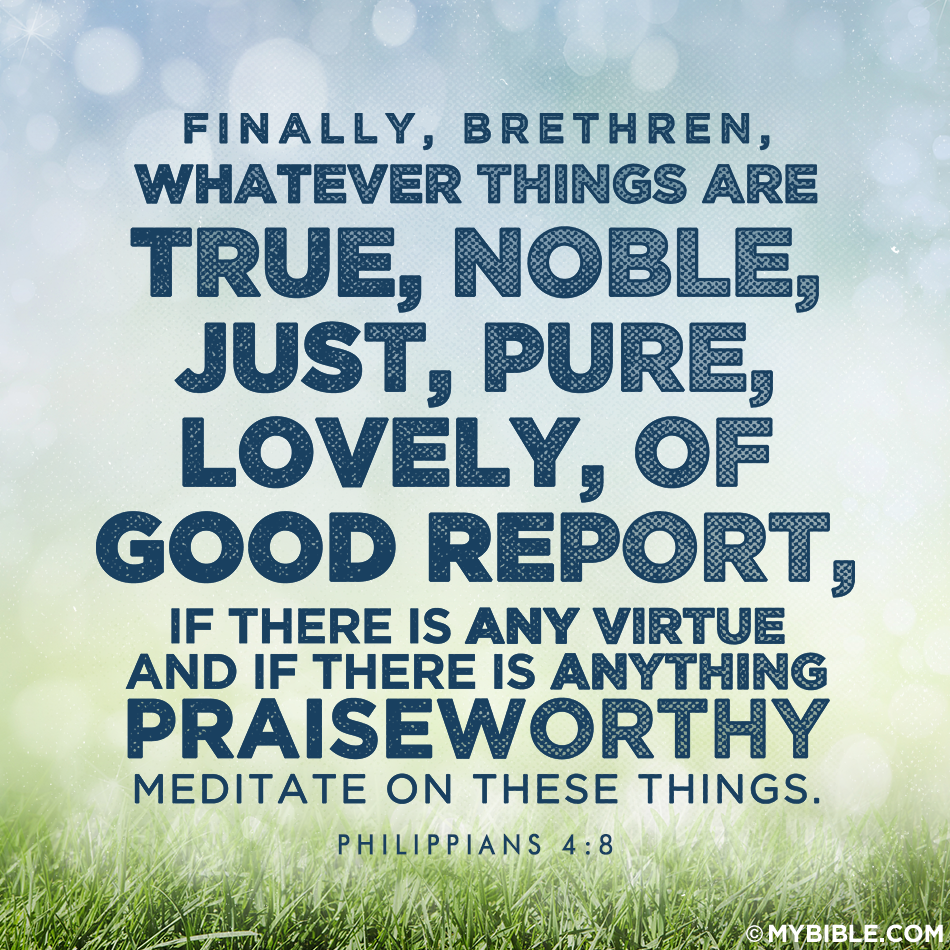
  1. We must resist self-pity—even in our thought life. Nowhere in scripture do we read that rehashing the negative is therapeutic. God’s way is to focus on the positive (Philippians 4:8).

Phil-4-8


  1. We can follow Paul’s example. He forgot what was in his past and pressed on to what lay ahead (Philippians 3:13). Not that amnesia had set in. Paul simply did not allow past failures to cripple his relationship with God and his service for God. God had forgiven and forgotten; Paul did too. No doubt he applied Philippians 4:8, not only to self-pity, but also to guilt. 
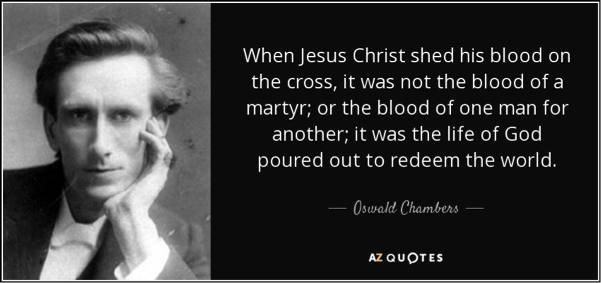
  1. We can leave the past in God’s hands. Oswald Chambers said it so well:

 c6d7d32bbdc18d2507a48f8aefa26359

(“Leave the irreparable Past in His hands, and step out into the Irresistible Future with Him”

–My Utmost for His Highest, Dec. 31.)
 

*     *     *     *     *     *     *     *    *     *    

Father, I do thank you for the gift of memories—the ability to remember with joy and appreciation the people, places, and experiences of the past. I even thank you for the not-so-good memories, knowing that you use every difficult situation for the development of my maturity (James 1:2-3). And may I take advantage of the wisdom gained in the past to guide me in the present, and lead me into the Irresistible Future with you.


Art & Photo credits:  www.trulia.com; http://www.westhighalumni.com; Steve’s photo collection; http://www.allrecipes.com; http://www.god.com; http://www.pinterest.com.

Read Full Post »

praise-band-300x225


The drummer begins a snappy, energizing beat.

The guitarists add moving chords.

The keyboard player joins with a compelling melody and attention-grabbing harmony.

Then the leader of the band enthusiastically proclaims, “This is the day the Lord has made; let us rejoice and be glad in it! Please stand and join me as we praise and worship our awesome God!”

It’s a familiar scene for those who attend a contemporary or blended worship service.

Have you ever wondered why we are invited to praise and worship? Aren’t the two words just synonyms for each other?

That’s what I thought for a long time.   Then a worship leader explained that the upbeat praise songs we sing first are designed to help us focus on God instead of the many mind-distractions vying for attention.

After a time of praise, he said, we are more receptive to the quieter, more reverent songs of worship. He likened our musical journey to the movement of Bible time worshipers, from the outer courts of the temple to the inner court.

Since then, I’ve learned more insights into the difference between praise and worship. For example:

Praise is an expression of approval and admiration, exalting God for who he is. We praise him for his wonderful attributes, like love, wisdom, power, and holiness. He is certainly worthy of every word of praise we can offer (Psalm 18:3).

But we can also praise people for their attributes. Even the family dog earns praise for being a good boy or girl! Praise is relatively easy to give. It costs us nothing except a little thoughtfulness and a little time.

A close relative of praise is thanksgiving. Just as we praise God for who he is, we express gratitude for what he does.

Worship, on the other hand, is exclusive. God is the only One worthy of our worship (Luke 4:8).

The word, worship, comes to us from Old English: weorth (worth) and scipe (ship). When we express our awe, love, and respect to God, we are proclaiming his worth to us.

True worship also includes humility, honesty, and surrender (John 4:24; Psalm 119:7):

  • Humility as we recognize God’s supremacy,
  • Honesty as we confess our inadequacy and sin,
  • Surrender as we relinquish our wills to his all-wise control.

Worship also draws us closer to God (Psalm 145:18), which is not just for Sunday mornings. Worship (as well as praise and thanksgiving) is designed by God to permeate our every day lives.

It’s as if praise, worship, and thanksgiving are tributaries, streaming together to form one great river. Three becoming one. Not like a braid, with three plaits woven side-by-side but still separate entities. No–a blending together into a whole, the parts no longer distinguishable.

Praise from a worshipful heart—one that is characterized by humility, honesty, and surrender—is the most sincere.

Thanksgiving that celebrates God’s goodness in his actions and praises God’s greatness of character, is the most complete.

Worship that includes sincere praise and complete gratitude is the most beautiful.


*     *     *     *     *     *     *     *     *     *


Every day, Lord, you manifest your greatness to me. May I be quick to offer you praise, thanksgiving, and worship, because you are worthy of no less. And thank you for the gift of worship, for the overwhelming privilege of basking in your glorious and holy Light.


(Photo credit:  www.blog.nextlevelworship.com.)


Read Full Post »

 d30200c131346a4ffed9f197bbee764d

(“You thrill me, Lord, with all you have done for me!  I sing for joy because of what you have done” — Psalm 92:4 NLT.)

God lavishes his gracious kindness upon us in countless ways, doesn’t he?

In appreciation for all he’s done, I have a suggestion. Let’s each write him a personal psalm for Valentine’s Day.  A love gift, on a love-focused holiday, for our loving God.  (You have more than a week to prepare your gift!)

Is that an overly sentimental idea?

Perhaps the timing is, but the matter of creating personal psalms has nothing to do with sentimental poetry.

I can hear some of you already. “Me—compose a psalm? I struggle to put a personal message on a birthday card!”

If that sounds like you, “Be strong and courageous. Do not be terrified; do not be discouraged, for the Lord your God will be with you” (Joshua 1:9)!

God waits with eager anticipation for you to enjoy an intimate Father/child relationship with him (2 Corinthians 6:18).

f2c43794cde3dc013fef692a6c7eabf1

 And what parent is not overjoyed when a son or daughter shares his/her innermost thoughts and feelings?

Remember, a psalm is simply a heartfelt prayer or song.  Key word: heartfelt.  Our psalms do not have to rhyme. We don’t have to use fancy literary devices like metaphors, imagery, or parallelism unless we want to.

These psalms are for our Heavenly Father.  He takes great pleasure in the sincere, unpretentious efforts of his children, just as all parents do.  We can even ask for his help to string the words together that will express our hearts.

Sometimes the hardest part is getting started—that first thought. An easy solution is to use a biblical psalm as a model.

?????????????????????????

To begin, you might choose a favorite verse. Read it slowly, several times. Rewrite it in your own words.  These questions might help to push your thinking further:

  • Is there a phrase or word that stands out?   Explain to God why it is important to you.
  • Do you feel a connection with this particular verse?  Add a personal experience when God’s activity in your life made this verse especially meaningful for you.

Following is one way to create a personal psalm, based on Psalm 3:3a: “You are a shield around me, O Lord.”

f74d4bae680c7ed0bb80f31d68a4bd72

1.  Choose a key word.  “Shield” is an obvious choice.

2.  Use the question-words who, what, where, when, why, and how to jump-start your thought processes.  Not all of them will spark an idea, but several will.  For example:  How is God a shield for me? What is he shielding me from? Why is it important for me to remember that he is my shield?

3.  Prayerfully and thoughtfully answer your questions. Meditate for a moment, then begin to write. One word can become the basis for the first sentence. A word or idea from that sentence can be expanded upon and become another sentence.

Before you know it, a psalm is born!


I praise you, oh God, for being like a shield

when disturbing thoughts are hurled my way.

You deflect those poisoned-arrows

with your shield of scriptural truth

and tender compassion.

Help me remember

you are all-powerful and all-wise.

There is no circumstance or emotional battle

that you cannot handle.

Your strong shield protects me

from the assault of Satan and his cohorts—

those negative, discouraging thoughts

that try to attack the peace and joy you’ve given me.

You are my almighty Warrior-God,

unsurpassed in power.

Satan cowers in your presence!

Help me avail myself of your protection

at every onslaught.


Once your psalm is complete, it’s time for presentation.  Read your psalm out loud to God. You will sense his presence as he comes to listen! How do I know?

OLYMPUS DIGITAL CAMERA

(“Come near to God and he will come near to you” — James 4:8.)

Keep your journal or notebook handy. Further thoughts may occur to you as you read, or afterward as you reflect. One more question to consider: In what ways has your relationship to God been impacted through this composing process?  You may wish to write about that, too.

I must confess, I’ve written a number of personal psalms. But recent reading on the subject has inspired me to pursue new avenues of this form of worship.

In future psalms I want to increase my reflection time, be more specific, add more detail, and actually read my psalms out loud.  I’m looking forward to expressing the depths of my heart more openly and discovering new depths of my Heavenly Father.

If you already write personal psalms, or should decide to write one, I’d love to hear about your experience!


(Art and photo credits:  www.pinterest.com; http://www.healthcentral.com; http://www.dwellingintheword.wordpress.com.)

Read Full Post »

« Newer Posts - Older Posts »

From the Inside Out

Impressions Becoming Expressions

Sylvia Schroeder

Impressions Becoming Expressions

Mitch Teemley

The Power of Story

Still Traveling

Impressions Becoming Expressions

Living Our Days

Gaining a heart of wisdom

He Said What?!

I'm Patty, and my husband and I are living with our adult son who has autism and epilepsy. I love sharing lessons learned from life around me, especially life with Aaron.

Meditations of my Heart

Impressions Becoming Expressions

Linda Stoll

Impressions Becoming Expressions

Signora Sheila

Where faith meets slow living